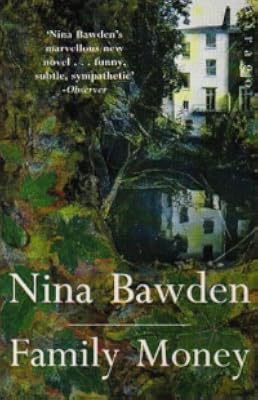
Family Money
by Nina Bawden
On This Page
Description
Fanny Pye's London house, bought for a song many years earlier, is now worth a small fortune. When she intervenes in a street brawl and is hospitalized, her children tactfully suggest that she move to the suburbs, coincidently releasing some useful "family money." Fanny has different views about inheritance and property, and is far more concerned that she cannot properly remember the events of that night which ended in the death of a stranger. Then, as her amnesia clears, she is overwhelmed show more by a terrible sense of danger. show lessTags
Recommendations






















Member Reviews
This is quite a hard book to summarise. On the surface, it's the story of a woman – a widow – who suffers a concussion and starts to behave just a little erratically, and how her grown-up family react. But every time I thought I had a handle on it, it surprised me by moving into a wider focus. At first I thought it would be another satire on the eighties – yuppies and house prices – and groaned with boredom. Then it looked like turning into one of those stories about how families misunderstand each other, partly because of love and concern, partly out of carelessness, and partly because of selfish motives. But by the end I realised it was just a book about people: and especially how Fanny comes to terms with the impact of her show more concussion and the fact that she is – suddenly – feeling old. I enjoyed Bawden's acuity on social and family relations and sharp sense of humour, and the sympathetic portrayal of Fanny. I'll definitely be reading more of her. show less
Family Money; Nina Bawden’s 1991 novel is the kind of novel that I think Nina Bawden does particularly well. A novel of family, concerning money, old age and the battle for independence, it’s one which feels very topical still.
London, and a huge spike in property prices means that houses bought many years earlier are now worth a small fortune. As the novel opens, a group of friends gathered together for dinner, discuss the possibilities that the properties owned now by their respective mothers could afford them.
Bawden’s characters do tend to come from the upper middle classes – though like Bawden herself, many of them also have a social conscience or left-wing sensibilities. One of the peripheral characters in Family Money is a show more labour peer – while another is a working class, daily housekeeper who has always dreamt of owning her own home, coveting the security it would give her, for the first time in her life.
Fanny Pye, Harry and Isobel’s mother – owns a large house backing on to the canal. Bought years earlier when Fanny and her husband returned from ambassadorial duties abroad – it is now a potential goldmine. Now, her husband is dead, and Fanny is living alone quite ably. Still active she thinks nothing of dining alone at her favourite restaurant, where she is well known, and walking home through the dark precinct lost in her own thoughts and memories.
“Lonely suddenly, she turned from the window and marched sturdily through the rest of the precinct towards the road at the end; not a main road, but a wide one that was always lined with parked cars and busy at night, especially around the time the pubs closed. They must be closing now, Fanny thought, hearing car doors slam, voices shouting. She had not thought it was quite so late.”
When Fanny intervenes in a street brawl late one night she is hospitalised and briefly struggles to remember the most basic things. Fanny is horrified when she forgets her daughter-in-law – and feeling suddenly horribly vulnerable she does her best to cover up her memory lapses in front of her family.
“She didn’t feel fine. She felt papery. The word came into her head, unsought for, unbidden. While Ivy settled her in the comfortable Victorian chair in the ground floor room – Daniel’s study, that was her study now – she puzzled over its origin. If her mind was going to play tricks on her, she must learn how to deal with them. If she could trace the source of each random thought, hold tight to the thread that wound through the labyrinth, then she would be in control again, not at the mercy of her own mind bent on mischief. ‘Papery,’ she said aloud, but speaking softly so that Ivy, on her way down to the basement kitchen, would not hear her. The word was flimsy on her dry tongue. Crumpled. Tissue paper. Smooth tissue paper between the folds of silk dresses. Flat. One-dimensional.”
Fanny is allowed home, most of her memory has returned but frighteningly she still can’t remember exactly what happened that evening, when a man died. Her family think she should sell up and move somewhere smaller – but Fanny doesn’t think quite the same as they do about property and inheritance. Some of her ideas shock Harry and Isabel, who worry about showing their concern, should anyone think them mercenary.
Following her return from hospital, Fanny’s niece Rebecca moves in to the top floor. Fanny slowly attempts to return to normal, the shadow of that evening hanging over her. As Fanny stands at her bedroom window she sees a young man standing on one of the houseboats on the canal who always seems to be staring straight at her house. Fanny finds herself becoming oddly drawn to the young man from the houseboats, after running into him at the library, what is it about him that has made her begin to feel so uneasy one minute, while finding him friendly and neighbourly the next.
Nina Bawden combines the tense uncertainty of a thriller with a wonderfully astute novel of family. Fanny might well be my favourite Nina Bawden character to date. As Fanny struggles with feelings of over whelming fear, she has to make decisions about her future – as her family continue to let her know exactly what they think she should do. In the midst of all this Fanny runs into an old friend, who she and her sister used to call Dumbo.
There is also a lovely (slightly ambiguous) twist, right at the end which I thought was rather brilliant. All in all, Family Money is a really excellent Bawden novel. show less
London, and a huge spike in property prices means that houses bought many years earlier are now worth a small fortune. As the novel opens, a group of friends gathered together for dinner, discuss the possibilities that the properties owned now by their respective mothers could afford them.
Bawden’s characters do tend to come from the upper middle classes – though like Bawden herself, many of them also have a social conscience or left-wing sensibilities. One of the peripheral characters in Family Money is a show more labour peer – while another is a working class, daily housekeeper who has always dreamt of owning her own home, coveting the security it would give her, for the first time in her life.
Fanny Pye, Harry and Isobel’s mother – owns a large house backing on to the canal. Bought years earlier when Fanny and her husband returned from ambassadorial duties abroad – it is now a potential goldmine. Now, her husband is dead, and Fanny is living alone quite ably. Still active she thinks nothing of dining alone at her favourite restaurant, where she is well known, and walking home through the dark precinct lost in her own thoughts and memories.
“Lonely suddenly, she turned from the window and marched sturdily through the rest of the precinct towards the road at the end; not a main road, but a wide one that was always lined with parked cars and busy at night, especially around the time the pubs closed. They must be closing now, Fanny thought, hearing car doors slam, voices shouting. She had not thought it was quite so late.”
When Fanny intervenes in a street brawl late one night she is hospitalised and briefly struggles to remember the most basic things. Fanny is horrified when she forgets her daughter-in-law – and feeling suddenly horribly vulnerable she does her best to cover up her memory lapses in front of her family.
“She didn’t feel fine. She felt papery. The word came into her head, unsought for, unbidden. While Ivy settled her in the comfortable Victorian chair in the ground floor room – Daniel’s study, that was her study now – she puzzled over its origin. If her mind was going to play tricks on her, she must learn how to deal with them. If she could trace the source of each random thought, hold tight to the thread that wound through the labyrinth, then she would be in control again, not at the mercy of her own mind bent on mischief. ‘Papery,’ she said aloud, but speaking softly so that Ivy, on her way down to the basement kitchen, would not hear her. The word was flimsy on her dry tongue. Crumpled. Tissue paper. Smooth tissue paper between the folds of silk dresses. Flat. One-dimensional.”
Fanny is allowed home, most of her memory has returned but frighteningly she still can’t remember exactly what happened that evening, when a man died. Her family think she should sell up and move somewhere smaller – but Fanny doesn’t think quite the same as they do about property and inheritance. Some of her ideas shock Harry and Isabel, who worry about showing their concern, should anyone think them mercenary.
Following her return from hospital, Fanny’s niece Rebecca moves in to the top floor. Fanny slowly attempts to return to normal, the shadow of that evening hanging over her. As Fanny stands at her bedroom window she sees a young man standing on one of the houseboats on the canal who always seems to be staring straight at her house. Fanny finds herself becoming oddly drawn to the young man from the houseboats, after running into him at the library, what is it about him that has made her begin to feel so uneasy one minute, while finding him friendly and neighbourly the next.
Nina Bawden combines the tense uncertainty of a thriller with a wonderfully astute novel of family. Fanny might well be my favourite Nina Bawden character to date. As Fanny struggles with feelings of over whelming fear, she has to make decisions about her future – as her family continue to let her know exactly what they think she should do. In the midst of all this Fanny runs into an old friend, who she and her sister used to call Dumbo.
There is also a lovely (slightly ambiguous) twist, right at the end which I thought was rather brilliant. All in all, Family Money is a really excellent Bawden novel. show less
Her children, solicitous of her (or perhaps her half-a-million-pound house) try to make plans for her. Fanny, however, has ideas of her own, as well as a mutual fascination with an enigmatic young man living on the canal at the end of her garden which only grows as her memory returns.
Bawden takes an unflinching look at her characters with their assumptions and their self-justification. They are privileged but they are also needy. She is not afraid to mock them but there is compassion too, and a warm, understated humour.
Fanny negotiates her physical weakness and her erratic memory with dignity and irony. She looks back with a clear eye at the life she has led and the trials she may face.
This kind of book has rather fallen out of show more fashion. Superficially it is a domestic tale of the moneyed upper-middle classes. It would be easy to ask, who cares? But this apparently simple story, lightly told, is beautifully structured.
It asks questions about age, class, morality, mortality, friendship and love, all in less than 300 pages of crisp, cool prose. And there’s a nice little twist at the end. show less
Bawden takes an unflinching look at her characters with their assumptions and their self-justification. They are privileged but they are also needy. She is not afraid to mock them but there is compassion too, and a warm, understated humour.
Fanny negotiates her physical weakness and her erratic memory with dignity and irony. She looks back with a clear eye at the life she has led and the trials she may face.
This kind of book has rather fallen out of show more fashion. Superficially it is a domestic tale of the moneyed upper-middle classes. It would be easy to ask, who cares? But this apparently simple story, lightly told, is beautifully structured.
It asks questions about age, class, morality, mortality, friendship and love, all in less than 300 pages of crisp, cool prose. And there’s a nice little twist at the end. show less
Fanny Pye has been widowed for 18 months and is just learning to live life on her own terms when she witnesses a brutal attack, and is, herself, visciously attacked. The assault leaves her with no memory of the event. It is also the catalyst for her children to urge her to sell her home, and to move into a smaller, safer place. Since the value of her home has gone sky-high, concern for their mother is not her children's only motive. Both her son and her daughter have an eye towards their expected inheritance. However, Fanny has her own plans.
Nina Bawden was a favorite childhood author, and I enjoyed this book as well, though without quite the same relish. We grow up and lose our childish attachments and perspectives, don't we?
Still, I show more liked this book very much, especially the suspense as her possible attacker makes several re-appearances. show less
Nina Bawden was a favorite childhood author, and I enjoyed this book as well, though without quite the same relish. We grow up and lose our childish attachments and perspectives, don't we?
Still, I show more liked this book very much, especially the suspense as her possible attacker makes several re-appearances. show less
A thoughtful book about family, property, conscience, friendship and growing old.
Ratings
Members
- Recently Added By
Author Information

55+ Works 4,553 Members
Nina Bawden was born in Ilford, Essex, England on January 19, 1925. She received a B.A. in 1946 and a M.A. in 1951 from Somerville College, Oxford. During her lifetime, she wrote more than 40 books for both children and adults. Her first adult novel was published in 1953. Her books for adults include Circles of Deceit, The Ruffian on the Stair, show more and Dear Austen. Her first children's book The Secret Passage was published in 1963. Her children's books include Kept in the Dark, Humbug, The Birds on the Trees, Carrie's War, The Outside Child, Granny the Pag, and Off the Road. She received numerous awards for her work including the 1976 Guardian Children's Fiction Prize for The Peppermint Pig and the 1977 Yorkshire Post Novel of the Year Award for Afternoon of a Good Woman. She was made a CBE in 1995 and received the ST Dupont Golden Pen Award for a lifetime's contribution to literature in 2004. She died on August 22, 2012 at the age of 87. (Bowker Author Biography) show less
Series
Belongs to Publisher Series
Virago Modern Classics (432)
Common Knowledge
- Canonical title
- Family Money
- Original title
- Family Money
- Original publication date
- 1991
- Related movies
- Family Money (1997 | TV series | IMDb)
- Epigraph
- The first man who, having enclosed a piece of ground, bethought himself of saying This is mine, and found people simple enough to believe him, was the real founder of civil society.
Rousseau
God has pl... (show all)aced men in families.
George Cadbury - Dedication
- To George Hardinge
- First words
- Towards the end of the party, they began to talk about house prices again.
- Quotations
- If this library had a reference section Fanny had not found it, and in general it seemed a poor place to her, ... short of what she thought of as `proper' books in hard covers, as well as any indication, such as a subject ind... (show all)ex, that the occasional visitor might be after something other than a threadbare copy of a Henry James novel or a warm place to rest for a while.
- Last words
- (Click to show. Warning: May contain spoilers.)Then, as the plane banked and turned and she looked from her window at the glittering city, strung along the dark, thick, curling snake of the river, she remembered that she had stuffed the insurance documents into a file of old bills, looking like nothing of any importance, and that she had told no one about them.
- Original language
- English
Classifications
Statistics
- Members
- 152
- Popularity
- 216,340
- Reviews
- 5
- Rating
- (3.50)
- Languages
- English
- Media
- Paper, Audiobook
- ISBNs
- 10
- ASINs
- 2