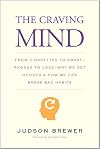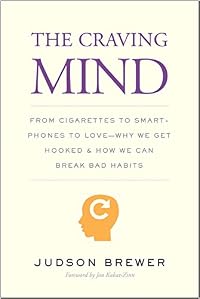
The Craving Mind: From Cigarettes to Smartphones to Love – Why We Get Hooked and How We Can Break Bad Habits
by Judson Brewer
On This Page
Description
We are all vulnerable to addiction. Whether it's a compulsion to constantly check social media, binge eating, smoking, excessive drinking, or any other behaviors, we may find ourselves uncontrollably repeating. Why are bad habits so hard to overcome? Is there a key to conquering the cravings we know are unhealthy for us? This book provides groundbreaking answers to the most important questions about addiction. Dr. Judson Brewer, a psychiatrist and neuroscientist who has studied the science show more of addictions for twenty years, reveals how we can tap into the very processes that encourage addictive behaviors in order to step out of them. He describes the mechanisms of habit and addiction formation, then explains how the practice of mindfulness can interrupt these habits. Weaving together patient stories, his own experience with mindfulness practice, and current scientific findings from his own lab and others, Dr. Brewer offers a path for moving beyond our cravings, reducing stress, and ultimately living a fuller life. show lessTags
Recommendations



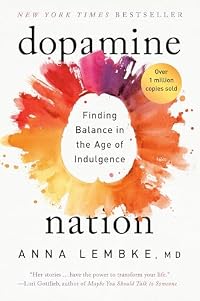
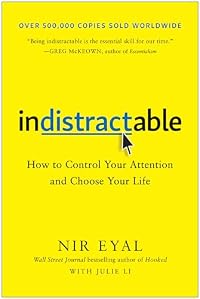
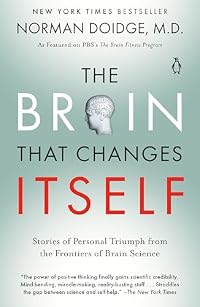
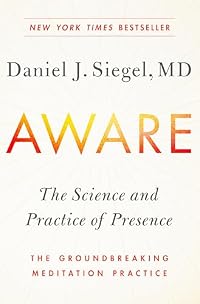





Member Reviews
This checked a lot of boxes for my preferred nonfiction reading, with lots of good review from past reads on habits, addiction, brain function, and mindfulness.
The book has been described by others as accessible, and I guess it is, especially in comparison to what I imagine the scholarly articles and books referenced in his notes would be like. But I still found it challenging, and I can’t I say I completely understood every concept he introduced. Even though it had a diagram and everything, I still didn’t completely get dependent origination, for example. Thankfully, I don’t think that was vital to getting something out of the book.
He spent Part 1 giving examples of different types of habits and addictions, and those chapters show more were interesting, especially the idea of addiction to self. In Part 2, he shared his ideas for how a mindful approach can be used to break habits and addictions. I thought chapter 10—Training Resilience—was the best chapter in this section, and if he’d lost me a bit during the previous chapter, this one brought me back.
The main idea is to use your triggers or stressors as a compass to see which way you’re going and its ultimate destination. In other words, instead of fighting against what’s happening, you take a closer look, and a closer look at how you’re inclined to react, instead of just mindlessly reacting. His idea is that doing so will free you up to choose a different action than what’s been your default. One thing I really want to retain is the following passage:
I read it at chapter-a-day speed, which was about my limit on how much I could absorb at a time.
Recommended. show less
The book has been described by others as accessible, and I guess it is, especially in comparison to what I imagine the scholarly articles and books referenced in his notes would be like. But I still found it challenging, and I can’t I say I completely understood every concept he introduced. Even though it had a diagram and everything, I still didn’t completely get dependent origination, for example. Thankfully, I don’t think that was vital to getting something out of the book.
He spent Part 1 giving examples of different types of habits and addictions, and those chapters show more were interesting, especially the idea of addiction to self. In Part 2, he shared his ideas for how a mindful approach can be used to break habits and addictions. I thought chapter 10—Training Resilience—was the best chapter in this section, and if he’d lost me a bit during the previous chapter, this one brought me back.
The main idea is to use your triggers or stressors as a compass to see which way you’re going and its ultimate destination. In other words, instead of fighting against what’s happening, you take a closer look, and a closer look at how you’re inclined to react, instead of just mindlessly reacting. His idea is that doing so will free you up to choose a different action than what’s been your default. One thing I really want to retain is the following passage:
When starting any type of un-or antiresistance training...we can apply these three types of gym metrics to our reactivity throughout the day. How often do we react by taking something personally?...How heavy is the burden, meaning, how contracted do we get? And finally, How long do we carry it around? Gaining a clear view of our reactivity will naturally point us to its opposite: letting go.
I read it at chapter-a-day speed, which was about my limit on how much I could absorb at a time.
Recommended. show less
The topic is incredibly interesting and the author obviously knowledgeable, but the book is not well written. It's choppy, filled with (ironically) self-referential stories about the author's own experiences, and doesn't really provide much instruction, unless you count the the epilogue promoting his startup. He seems to try to write a hybrid of a pop science and self help book and a memoir and it just doesn't hold together.
I read this book to see what it can bring to the improvement of teaching and learning - although this is not quite its focal point.
However, Brewer clearly connects addiction and its perceived rewards to the human condition and our way of (non)thinking, charts his life's course as an example of how meditation can move a person away from addictive behavior to mindfulness and joyful immersion into meaningful activities such as learning and working. A good read that should spark some interesting thoughts.
However, Brewer clearly connects addiction and its perceived rewards to the human condition and our way of (non)thinking, charts his life's course as an example of how meditation can move a person away from addictive behavior to mindfulness and joyful immersion into meaningful activities such as learning and working. A good read that should spark some interesting thoughts.
Aside from a veeeeeery long title that summarizes the book, it was rather Buddhist in its outlook, research, and science.
At times this book was really interesting. But it was not constantly good. The categorisation at the end was disappointing.
хорошая первая часть о типах зависимости. слишком простая вторая часть поверхностного понимания буддизма
The first chapter pretty much tells you everything you need to know. I do recommend reading it, but after that first part, I felt like I got what I needed.
Members
- Recently Added By
Lists

Men's healing resources
728 works; 1 member
Author Information
18 Works 813 Members
Judson Brewer, M.D., Ph.D., is director of research at the Center for Mindfulness and associate professor in medicine and psychiatry at the University of Massachusetts Medical School. He is also an adjunct faculty member at Yale University and a research affiliate at Massachusetts Institute of Technology.
All Editions
Classifications
- Genres
- Nonfiction, General Nonfiction, Religion & Spirituality
- DDC/MDS
- 152.33 — Philosophy and Psychology Psychology Sensory perception, movement, emotions, physiological drives Motor Functions Motor Habits and Their Formation (Handedness, Etc.)
- LCC
- RC533 .B738 — Medicine Internal medicine Internal medicine Neurosciences. Biological psychiatry. Neuropsychiatry Psychiatry Psychopathology Neuroses
- BISAC
Statistics
- Members
- 241
- Popularity
- 132,056
- Reviews
- 8
- Rating
- (3.59)
- Languages
- English, French, Spanish
- Media
- Paper, Audiobook, Ebook
- ISBNs
- 13
- ASINs
- 3