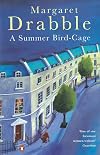
A Summer Bird-Cage
by Margaret Drabble
On This Page
Description
Attractive and witty, Sarah has just graduated from Oxford and started a new job at the BBC. As she immerses herself in the excitement of 1960s London, her beautiful older sister, Louise, marries the famous, though admittedly difficult, novelist Stephen Halifax. Louise initially revels in the newfound wealth and glamor that her marriage affords her, but soon she finds her relationship the subject of bitter gossip and scathing tabloid headlines. Despite the distance that has always existed show more between the two sisters, Sarah finds herself bound to Louise as she faces the scrutiny of London society and the two begin to forge a connection they had previously thought impossible. With Margaret Drabble's signature eye for the subtleties and intricacies of everyday life, A Summer Bird-Cage is captivating, a dazzling, resonant portrait of two young women struggling to find their footing in a city as fickle as it is intoxicating. show lessTags
Recommendations



















Member Reviews
Published in 1962 when the author was 23, Margaret Drabble’s engaging first novel centres on the rivalry between sisters Louise and Sarah Bennett, both highly educated, both in their early twenties. Sarah, freshly down from Oxford and unsettled as to a possible career, returns home from a Paris sojourn to serve as bridesmaid for Louise, who is marrying the novelist Stephen Halifax. Sarah, three years younger than her sister, does not understand why Louise is marrying a man who lacks passion and whom Sarah at one point describes as “thin-lipped.” Indeed, Sarah seems to find Stephen distinctly odd and somewhat creepy. And yet, though certainly puzzled, Sarah is not wholly preoccupied or worried by her sister’s unexpected decision show more to attach herself to Stephen as she is too busy trying to navigate her post-college life while awaiting the return of Francis, her boyfriend, who is away at Harvard for the term. There is little warmth between the sisters. Sarah regards Louise with unemotional and somewhat scornful curiosity, having learned at an early age that self-involved Louise will do as she likes and is either unable or unwilling to reciprocate the kind of sisterly affection that, as a girl, Sarah only too readily bestowed upon her and had thrown back in her face. Rather than communicate with Louise directly and risk rejection, Sarah is content to pick up tidbits concerning her sister’s activities from friends who encounter Louise, or simply glimpse her, here and there, with or without her husband, in England or Rome or Paris, and from these reports deduce Louise’s possible state of mind. The ongoing contest between the sisters, which touches almost every aspect of their lives, finds its sharpest focus in the intellectual and the physical: Sarah managed to outdo Louise at university, and she often remarks on Louise’s transcendent beauty, comparing her own modest gifts in the looks department unfavourably to her sister’s. The crisis that triggers the novel’s comic finale brings Louise and Sarah together, where they discover their attitudes toward Stephen, toward marriage and toward motherhood are remarkably similar, though by this time each is facing a future that holds little beyond uncertainty. The author may have been very young when it was written, but nothing about this novel comes across as half-formed apprentice work or juvenilia: this is a sophisticated and assured work of fiction, psychologically astute, socially aware, sensitive to the perplexing contradictions in human nature, and exhibiting a finely tuned ear for dialogue. In A Summer Bird-Cage Drabble introduces issues--such as the role of women in society and the tensions between the sexes--that would occupy her throughout the 1960s and to which she would return again and again throughout her career. Almost sixty years after its initial release, A Summer Bird-Cage is well worth reading: for its entertainment value as well as its historical significance. It is also a fascinating introduction to the work of a uniquely accomplished, probing and ambitious writer, one of the finest to emerge in post-war England. show less
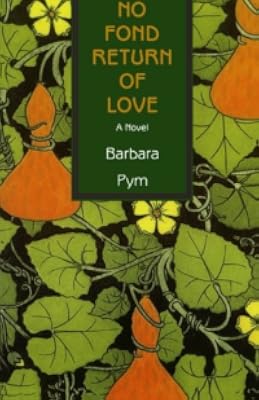
I have a weakness for quiet books set in England that shine a light--a piercing light for all the quietness of the text--on society. Luckily there are a number of authors through the years who have done this: Jane Austen, Angela Thirkell, and Barbara Pym, among others. This half a century old first novel of Margaret Drabble's fits in this same tradition of socially revealing character driven novels infused with moments of sly wit.
Sarah is recently graduated from Oxford and living in Paris as an English tutor when she is summoned home to act as a bridesmaid for her stunning older sister Louise's wedding. Sarah does not understand how her sister can be marrying Stephen, even if he is rich and a semi-famous author. He is snobbish and show more unappealing but Louise is determined to marry him, accepting the reality of a rather cold-blooded, loveless marriage. After the wedding, Sarah continues to drift along in her own life, taking an uninspired job, living with a friend who is getting divorced, and occasionally running into people who report back to her about her sister's apparent loneliness in her new marriage. And then she sees Louise again herself and witnesses what people have been whispering all along, that Louise married Stephen for money and keeps his best friend, a famous theater actor, on the side for fulfillment. As she watches her sister, Sarah wonders what shape her own life will take.
Sarah is perceived by others as a bubbly bon vivant of sorts but that's a very superficial view of her character. She is casually and thoughtlessly intelligent, well-educated and a member of the socially advantageous middle class. She's acerbic and astute about the society around her, even if she is a card-carrying member of it as well. Neither she nor Louise seem particularly happy and the pervading feeling of the novel is of a mild dissatisfaction with life. The social dynamic is changing, allowing more opportunity for women but it hasn't quite gotten there entirely by the time the novel opens in early 1960s London and the questioning of the limited choices available to women was still not terribly common. Sarah tells the novel in the first person, giving the reader her perspective of not only the strained relationship between the sisters but also her mocking, yet envious, derision of Louise and Stephen's pretentious affluence as well as about her own weary and unfulfilled days. There is a thread of existential angst that runs through the narrative and a sharp social commentary as well. This is an astute character study, both literate and literary. There's not much of a plot running through it so those looking for action will be better served elsewhere. As I already knew from later works, Drabble writes beautifully and she has captured the idle beauty of a certain class of women trying to find her best path in life. show less
Sarah is recently graduated from Oxford and living in Paris as an English tutor when she is summoned home to act as a bridesmaid for her stunning older sister Louise's wedding. Sarah does not understand how her sister can be marrying Stephen, even if he is rich and a semi-famous author. He is snobbish and show more unappealing but Louise is determined to marry him, accepting the reality of a rather cold-blooded, loveless marriage. After the wedding, Sarah continues to drift along in her own life, taking an uninspired job, living with a friend who is getting divorced, and occasionally running into people who report back to her about her sister's apparent loneliness in her new marriage. And then she sees Louise again herself and witnesses what people have been whispering all along, that Louise married Stephen for money and keeps his best friend, a famous theater actor, on the side for fulfillment. As she watches her sister, Sarah wonders what shape her own life will take.
Sarah is perceived by others as a bubbly bon vivant of sorts but that's a very superficial view of her character. She is casually and thoughtlessly intelligent, well-educated and a member of the socially advantageous middle class. She's acerbic and astute about the society around her, even if she is a card-carrying member of it as well. Neither she nor Louise seem particularly happy and the pervading feeling of the novel is of a mild dissatisfaction with life. The social dynamic is changing, allowing more opportunity for women but it hasn't quite gotten there entirely by the time the novel opens in early 1960s London and the questioning of the limited choices available to women was still not terribly common. Sarah tells the novel in the first person, giving the reader her perspective of not only the strained relationship between the sisters but also her mocking, yet envious, derision of Louise and Stephen's pretentious affluence as well as about her own weary and unfulfilled days. There is a thread of existential angst that runs through the narrative and a sharp social commentary as well. This is an astute character study, both literate and literary. There's not much of a plot running through it so those looking for action will be better served elsewhere. As I already knew from later works, Drabble writes beautifully and she has captured the idle beauty of a certain class of women trying to find her best path in life. show less
This was a sheer delight of a book and not quite a frivolous as the synopsis led me to believe, though perhaps that's more of a result of time passing and a look back at this novel, now almost 60 years old. There is much to consider about family, sibling relationships and the pros and cons of marriage. The novel does take you back though to a place in your 20s when the whole world is spread out in front of you and seems full of choices and the narrative voice of Sarah, the story teller, and her nascent feminism, is delicious.
21st c. hindsight however does make me ponder the character of Stephen - almost certainly a gay man and deeply closeted, his own life and others around him a misery. What a different world it is today and I could show more easily imagine the novel being told from his point of view. The sorrow there. show less
21st c. hindsight however does make me ponder the character of Stephen - almost certainly a gay man and deeply closeted, his own life and others around him a misery. What a different world it is today and I could show more easily imagine the novel being told from his point of view. The sorrow there. show less
Another book picked up on a whim in a second hand bookshop. This was Margaret Drabble's debut novel, and it is difficult not to see some of her relationship with her own sister A.S. Byatt in this tale of sibling rivalry among recent graduates in early 60s London.
For me this was interesting purely for what it shows about her future development as a writer - the story itself is rather slight and I don't think anyone would consider this one her best work.
For me this was interesting purely for what it shows about her future development as a writer - the story itself is rather slight and I don't think anyone would consider this one her best work.
Written in 1962, this book takes us back to the beginning of the era when women were starting to push back against the assumption that, even if they went to college, they would marry and have kids right after. Sarah, our narrator, is a bit surprised that her older sister, the stunningly beautiful Louise, is not just marrying, but marrying Stephen, a writer who is distinctly odd. The sisters have never been close, so Sarah has no idea why Louise might be marrying who she does. Stephen, an author of very literary books, does have money, but even that doesn’t seem to make it all make sense. Sarah doesn’t give it too much attention, though; she’s having her own crisis of trying to figure out what she wants to do with her life now that show more she’s graduated. Nothing really interests her. She might like to write a humorous novel, a la Kingsley Amis, but no idea how to go about it. She might wed but the man she might want to marry is studying in America. So she works at a job that she doesn’t respect. Louise’s situation catches her attention when Sarah discovers that Louise has been having an affair with John both before and after her wedding.
This is a novel that is about women in the state of dissatisfaction. Sarah is dissatisfied with her business and personal life. Louise is dissatisfied with her husband and with her lover. Their mother is dissatisfied with her own life and with theirs. Sarah’s friend has just left her husband, an ultimate dissatisfaction. The men seem much happier with their lives, although we don’t really get to see that much of them. It’s interesting to note that all the dilemmas the women face are one’s that women today still face; there was a shift in the early 60s when many more women decided to have more of a life than being married and having children but there hasn’t been much change since then. I’m not sure there could be any more change; women (and men) must still face the existential question of what to do with their lives, and no matter what one does they will be missing out on something else. Although written fifty years ago, this book is a bit dated but still pertinent. show less
This is a novel that is about women in the state of dissatisfaction. Sarah is dissatisfied with her business and personal life. Louise is dissatisfied with her husband and with her lover. Their mother is dissatisfied with her own life and with theirs. Sarah’s friend has just left her husband, an ultimate dissatisfaction. The men seem much happier with their lives, although we don’t really get to see that much of them. It’s interesting to note that all the dilemmas the women face are one’s that women today still face; there was a shift in the early 60s when many more women decided to have more of a life than being married and having children but there hasn’t been much change since then. I’m not sure there could be any more change; women (and men) must still face the existential question of what to do with their lives, and no matter what one does they will be missing out on something else. Although written fifty years ago, this book is a bit dated but still pertinent. show less
Set in the very early 60's in London, this book tells of a year post-graduation in the life of a middle-class woman. Recently graduated from Oxford and returned from Europe to act as bridesmaid in her unapproachable sister's wedding to a snobbish author both women turn out to dislike, the young protagonist learns to see her sister as human and capable of great failings she could never have imagined for her. The novel explores the predicament of young women who are intelligent, well educated, but somewhat aimless…and naive about love, money and class. Well written and very much a product of its times, as the heroine attempts to find her place in a world no longer defined for women by marriage, love and babies. Reminded me a bit of the show more early, feminist Margaret Atwood novels.
I also found it fascinating to learn of Margaret Drabble's real-life long-time feud with her real-life sister, the famous author A. S. Byatt! I did wonder how similar that dynamic is to the one between the sisters in this novel. show less
I also found it fascinating to learn of Margaret Drabble's real-life long-time feud with her real-life sister, the famous author A. S. Byatt! I did wonder how similar that dynamic is to the one between the sisters in this novel. show less
Sarah has come to be a bridesmaid in her older sister's summer wedding. This is the story of Sarah and Louise's rocky adult relationship; told from Sarah's perspective as she comes to terms with her sister's new marriage. Sarah had idolized her sister as a child, and goes through a year of self-discovery as she finds her new place in the relationship with Louise. I liked this story, although it did drag in parts. I give it an A!
Members
- Recently Added By
Author Information

68+ Works 13,791 Members
Margaret Drabble was born on June 5, 1939 in Sheffield, England. She attended The Mount School in York and Newnham College, Cambridge University. After graduation, she joined the Royal Shakespeare Company at Stratford during which time she understudied for Vanessa Redgrave. She is a novelist, critic, and the editor of the fifth edition of The show more Oxford Companion to English Literature. Her works include A Summer Bird Cage; The Millstone, which won the John Llewelyn Rhys Prize in 1966; Jerusalem the Golden, which won James Tait Black Prize in 1967; and The Witch of Exmoor. She also received the E. M. Forster award and was awarded a Society of Authors Travelling Fellowship in the 1960s and the Commander of the Order of the British Empire in 1980. (Bowker Author Biography) show less
Common Knowledge
- Original publication date
- 1963
Classifications
Statistics
- Members
- 449
- Popularity
- 68,281
- Reviews
- 9
- Rating
- (3.78)
- Languages
- English, Italian, Spanish
- Media
- Paper, Ebook
- ISBNs
- 17
- ASINs
- 18