A Writer's Reality
by Mario Vargas Llosa
On This Page
Description
Mario Vargas Llosa's novels have shown a fascination with the art of fiction making. In this book he invites readers to enter into his confidence as he unravels six of his own novels, explaining how his method of writing evolved.Tags
Recommendations









Member Recommendations
Member Reviews
Mario Vargas Llosa in 1976 at age 40, already an author of four outstanding literary novels.
Peruvian Nobel Prize winner Mario Vargas Llosa wrote this series of eight highly entertaining and perceptive essays on the nature, purpose and spirit of fiction, especially the novel, in English, as part of a lecture series at Syracuse University. The last six essays are tied to one of his specific novels. Here are the chapter headings: 1. An Invitation of Borges’s Fiction 2. Novels Disguised as History 3. Discovering a Method for Writing – The Time of the Hero 4. On Being Nine and First Seeing the Sea – The Green House 5. Playing with Time and Language – Captain Pantoja and the Special Service 6. From Soap Opera to Serious Art – Aunt show more Julia and the Scriptwriter 7. The Author’s Favorite of his Novels – The War of the End of the World 8. Transforming a Lie into Truth – The Real Life of Alejandro Mayta. As a way of sharing some of the author’s many keen insights, below are quotes, on from each of the first six essays, along with my comments:
“This is why Borges despised the novel as a genre; because it is impossible to dissociate the novel from living experience, by which I mean human imperfection. In a novel you cannot be only perfect; you must also be imperfect. The imperfection that is essential in a novel was for Borges inartistic and, therefore, unacceptable.” ---------- A novel can spotlight all aspects of a character’s outer and inner life (and indirectly the reader’s life), however mundane, trivial, egotistical or immature, even shedding light on the stream of inner thoughts, both conscious and unconscious. I suspect a major reason for the popularity of the novel over the last nearly two hundred years is the fact we modern people love to read about day-to-day life with all its messy imperfections – we can’t get enough of tragedy and comedy, heroes and antiheroes, irony and parody, symbol and allegory, wordplay and dialogue, romance and decadence, fantasy and science fiction, realism and naturalism, horror and satire, imagined utopias and dystopias, drama and more drama, happy endings, bad endings and everything in between. The novel is king and there is little sign of any future dethronement.
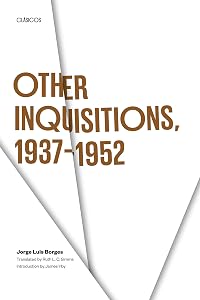
“The novel was forbidden in the Spanish colonies by the Inquisition. The Inquisition considered this literary genre, the novel, to be as dangerous for the spiritual faith of the Indians as for the moral and political behavior of society, and, of course, they were absolutely right. We novelists must be grateful to the Spanish Inquisition for having discovered before any critic did the inevitable subversive nature of fiction.” ---------- In a very real sense, a novel is a second world, frequently a competing second world. And this is exactly the reason why the hardheaded despise what a novel stands for. “I never read fiction. I’m only interested in ____." (fill in the blank: history, science, economics, commerce, etc.). So fumes legions of no-nonsense, practical, nose-to-the-grindstone men and women who want their world fixed, solid and serious. As anyone with imagination and a bit of wisdom knows, such an attitude bespeaks a narrow, controlling mindset. It’s also bad for one’s health.
“The narrator and time give fiction its sovereignty, its independence from the real world. A novel is never similar to the real world; a novel is always a separate world, a world that has something essentially different from real reality. The difference between fictitious reality and real reality is the presence of the narrator, which in real reality does not exist, and of the time structure, which in fiction is never similar to that of real life.” ---------- So the narrator makes all the difference; or, in other words, how the story is told – first person, third person or various other ways. Also the way an author orchestrates time – one continuous flow moving forward from first to last page or some other variation. Personally, I tend to enjoy a passionate first-person narrator caught in crisis where the author fills in the juicy past details and events leading up to the crisis (The Kindly Ones, The Goldfinch, Bodies Electric, Double Indemnity, Notes from the Underground, A Fan’s Notes). But irrespective of how the author fashions narrator and time, this is the aesthetic difference – a novel is a fictional reality constructed by a literary vision. For those of us who love reading novels, we live through multiple lives in uniquely invented worlds.
“When you write a novel you must not shrink from the idea of distorting or manipulating reality. Distortion and manipulation of fact are necessary in a novel. You must lie without any scruples, but in a convincing way so that the reader accepts your lies as truth. If you succeed in the deception, something true will come through these lies, something that did not exist before, something that was not evident before. But if your intention is just to reproduce things of reality in fiction, you will probably fail as a writer because literature, in order to persuade and convince the reader, must become a sovereign world, independent, a world that has emancipated itself from its mother, from reality.” --------- VALIS, The Man in the High Castle, The Magus, The Last Good Kiss, Inverted World – novels filled to the brim with lies and distortion, manipulation and falsification. But by opening ourselves to these gifted writers, we, as readers, can participate in powerful truths. My personal observation is “real" reality is vastly overrated.
“Some books have been made into marvelous films, and some have been destroyed by films. To tell a story with images is quite different from telling a story with words. So you must be totally free to adapt, to change, to introduce new elements. The cinema is, like the novel, one aspect of fiction. In a film, as in a novel, you create a fiction that becomes a separate reality that must be persuasive and convincing.” --------- This statement really underscores the uniqueness of a novel. Attempting to take words from a literary masterpiece and simply transpose them to the screen can spell disaster. Of course, with a creative director, the opposite can happen: a classic film can be made of a bad novel, the prime example that comes to mind for me is “The Graduate” based on the forgotten novel by Charles Webb.
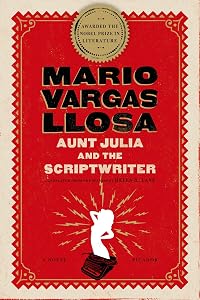
“With “Aunt Julia and the Scriptwriter” my idea was to write a novel with stereotypes, with clichés, with all the instruments of the popular novel, the soap opera, and the radio serial, but in such a way that these elements could be transformed into an artistic work, into something personal and original.” ---------- The novel is the grand, all powerful king in regard to how it can incorporate other genres effectively at will. Entire novels have been written as one genre: literary criticism of a poem – Pale Fire, epistolary novel – Lady Susan, diary – Go Ask Alice, non-fiction novel – In Cold Blood. The list could go on and on. In the hands of a capable novelist like Mario Vargas Llosa, even a soap opera and ham radio serial can be transformed into art. show less
Mario Vargas Llosa in 1976 at age 40, already an author of four outstanding literary novels.
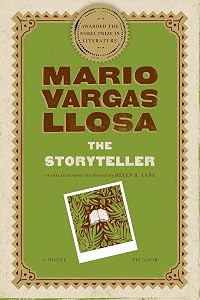
Peruvian Nobel Prize winner Mario Vargas Llosa wrote this series of eight highly entertaining and perceptive essays on the nature, purpose and spirit of fiction, especially the novel, in English, as part of a lecture series at Syracuse University. The last six essays are tied to one of his specific novels. Here are the chapter headings: 1. An Invitation of Borges’s Fiction 2. Novels Disguised as History 3. Discovering a Method for Writing – The Time of the Hero 4. On Being Nine and First Seeing the Sea – The Green House 5. Playing with Time and Language – Captain Pantoja and the Special Service 6. From Soap Opera to Serious Art – Aunt show more Julia and the Scriptwriter 7. The Author’s Favorite of his Novels – The War of the End of the World 8. Transforming a Lie into Truth – The Real Life of Alejandro Mayta. As a way of sharing some of the author’s many keen insights, below are quotes, on from each of the first six essays, along with my comments:
“This is why Borges despised the novel as a genre; because it is impossible to dissociate the novel from living experience, by which I mean human imperfection. In a novel you cannot be only perfect; you must also be imperfect. The imperfection that is essential in a novel was for Borges inartistic and, therefore, unacceptable.” ---------- A novel can spotlight all aspects of a character’s outer and inner life (and indirectly the reader’s life), however mundane, trivial, egotistical or immature, even shedding light on the stream of inner thoughts, both conscious and unconscious. I suspect a major reason for the popularity of the novel over the last nearly two hundred years is the fact we modern people love to read about day-to-day life with all its messy imperfections – we can’t get enough of tragedy and comedy, heroes and antiheroes, irony and parody, symbol and allegory, wordplay and dialogue, romance and decadence, fantasy and science fiction, realism and naturalism, horror and satire, imagined utopias and dystopias, drama and more drama, happy endings, bad endings and everything in between. The novel is king and there is little sign of any future dethronement.
“The novel was forbidden in the Spanish colonies by the Inquisition. The Inquisition considered this literary genre, the novel, to be as dangerous for the spiritual faith of the Indians as for the moral and political behavior of society, and, of course, they were absolutely right. We novelists must be grateful to the Spanish Inquisition for having discovered before any critic did the inevitable subversive nature of fiction.” ---------- In a very real sense, a novel is a second world, frequently a competing second world. And this is exactly the reason why the hardheaded despise what a novel stands for. “I never read fiction. I’m only interested in ____." (fill in the blank: history, science, economics, commerce, etc.). So fumes legions of no-nonsense, practical, nose-to-the-grindstone men and women who want their world fixed, solid and serious. As anyone with imagination and a bit of wisdom knows, such an attitude bespeaks a narrow, controlling mindset. It’s also bad for one’s health.
“The narrator and time give fiction its sovereignty, its independence from the real world. A novel is never similar to the real world; a novel is always a separate world, a world that has something essentially different from real reality. The difference between fictitious reality and real reality is the presence of the narrator, which in real reality does not exist, and of the time structure, which in fiction is never similar to that of real life.” ---------- So the narrator makes all the difference; or, in other words, how the story is told – first person, third person or various other ways. Also the way an author orchestrates time – one continuous flow moving forward from first to last page or some other variation. Personally, I tend to enjoy a passionate first-person narrator caught in crisis where the author fills in the juicy past details and events leading up to the crisis (The Kindly Ones, The Goldfinch, Bodies Electric, Double Indemnity, Notes from the Underground, A Fan’s Notes). But irrespective of how the author fashions narrator and time, this is the aesthetic difference – a novel is a fictional reality constructed by a literary vision. For those of us who love reading novels, we live through multiple lives in uniquely invented worlds.
“When you write a novel you must not shrink from the idea of distorting or manipulating reality. Distortion and manipulation of fact are necessary in a novel. You must lie without any scruples, but in a convincing way so that the reader accepts your lies as truth. If you succeed in the deception, something true will come through these lies, something that did not exist before, something that was not evident before. But if your intention is just to reproduce things of reality in fiction, you will probably fail as a writer because literature, in order to persuade and convince the reader, must become a sovereign world, independent, a world that has emancipated itself from its mother, from reality.” --------- VALIS, The Man in the High Castle, The Magus, The Last Good Kiss, Inverted World – novels filled to the brim with lies and distortion, manipulation and falsification. But by opening ourselves to these gifted writers, we, as readers, can participate in powerful truths. My personal observation is “real" reality is vastly overrated.
“Some books have been made into marvelous films, and some have been destroyed by films. To tell a story with images is quite different from telling a story with words. So you must be totally free to adapt, to change, to introduce new elements. The cinema is, like the novel, one aspect of fiction. In a film, as in a novel, you create a fiction that becomes a separate reality that must be persuasive and convincing.” --------- This statement really underscores the uniqueness of a novel. Attempting to take words from a literary masterpiece and simply transpose them to the screen can spell disaster. Of course, with a creative director, the opposite can happen: a classic film can be made of a bad novel, the prime example that comes to mind for me is “The Graduate” based on the forgotten novel by Charles Webb.
“With “Aunt Julia and the Scriptwriter” my idea was to write a novel with stereotypes, with clichés, with all the instruments of the popular novel, the soap opera, and the radio serial, but in such a way that these elements could be transformed into an artistic work, into something personal and original.” ---------- The novel is the grand, all powerful king in regard to how it can incorporate other genres effectively at will. Entire novels have been written as one genre: literary criticism of a poem – Pale Fire, epistolary novel – Lady Susan, diary – Go Ask Alice, non-fiction novel – In Cold Blood. The list could go on and on. In the hands of a capable novelist like Mario Vargas Llosa, even a soap opera and ham radio serial can be transformed into art. show less
Ratings
Members
- Recently Added By
Author Information

393+ Works 34,591 Members
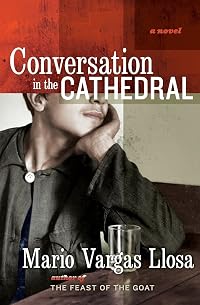
Mario Vargas Llosa was born in Arequipa, Peru on March 28, 1936. He studied literature and law at the National University of San Marcos and received a Ph.D from the University of Madrid in 1959. He is a writer, politician, and journalist. His works vary in genre from literary criticism and journalism to comedies, murder mysteries, historical show more novels, and political thrillers. His books include The Time of the Hero, The Green House, Conversation in the Cathedral, Aunt Julia and the Scriptwriter, The Feast of the Goat, and The War of the End of the World. He has received numerous awards including the Rómulo Gallegos International Novel Prize, the Premio Leopoldo Alas in 1959, the Premio Biblioteca Breve in 1962, the Premio Planeta in 1993, the Miguel de Cervantes Prize in 1994, the Jerusalem Prize in 1995, and the Nobel Prize in Literature in 2010. (Bowker Author Biography) show less
Some Editions
Common Knowledge
- Canonical title
- A Writer's Reality
- Original title
- A Writer's Reality
- Original publication date
- 1988 (English Lectures) (English Lectures); 1990 (Spanish publication) (Spanish publication); 1991 (English publication) (English publication)
- First words
- As a student I had a passion for Jean Paul Sartre and I firmly believed in his thesis that the writer’s commitment was to his own times and to the society in which he lived, that words were actions, and that through writing... (show all) a man might influence history.
Classifications
- Genres
- Literature Studies and Criticism, Fiction and Literature
- DDC/MDS
- 863 — Literature & rhetoric Spanish Literature Spanish fiction
- LCC
- PQ8498.32 .A65 .A5 — Language and Literature French, Italian, Spanish and Portuguese literatures Spanish literature Provincial, local, colonial, etc. Spanish America
- BISAC
Statistics
- Members
- 116
- Popularity
- 281,272
- Reviews
- 2
- Rating
- (4.13)
- Languages
- 5 — Arabic, English, German, Farsi/Persian, Spanish
- Media
- Paper, Ebook
- ISBNs
- 6
- UPCs
- 1
- ASINs
- 2