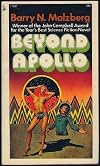
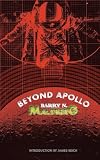
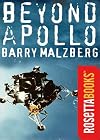
Beyond Apollo
by Barry N. Malzberg
On This Page
Description
Winner of the first John W. Campbell Memorial Award. "A mind-bending read . . . certainly entertaining, often very funny and very thought-provoking." --Medium A two-man mission to Venus fails and is aborted; when it returns, the Captain is missing and the other astronaut, Harry M. Evans, is unable to explain what has happened. Or, conversely, he has too many explications; his journal of the expedition--compiled in the mental institution to which NASA has embarrassedly committed show more him--offers contradictory stories: he murdered the Captain, mad Venusian invaders murdered the Captain, the Captain vanished, no one was murdered and the Captain has returned in Evans's guise. As the explanations pyramid and the supervising psychiatrist's increasingly desperate efforts to get a straight story fail, it becomes apparent that Evans's madness and his inability to explain what happened are expressions of humanity's incompetence at the enormity of space exploration. "Barry Malzberg's dark, bleak vision of the future is one of the most terrifying ever to come out of science fiction." --Robert Silverberg "Beyond Apollo is a masterpiece; a multi-faceted rumination on repression; a virulent critique of the space program and America's obsession with space." --Science Fiction and Other Suspect Ruminations "A light shone through a crystal. The reader never gets to see the crystal or the light, only the resulting refraction . . . a very satisfying work of post-modern science fiction." --Speculiction "Veins of gold . . . a beautiful and heart-breaking book."--Fantasy and Science Fiction "Written with wit . . . the most original and pleasing SF novel of the last five years."--Brian Aldiss, New Review show lessTags
Recommendations





















Member Reviews
What the hell did I just read? An LSD trip scribbled onto the page, the deconstruction of the sci-fi genre? Who knows.
Beyond Apollo is imaginative and bizarre, often straddling the line between nonsense and cleverness, sometimes leaving that line far behind.
What I truly enjoyed about the book is that unlike pretty much every book I've ever read, Beyond Apollo gives you nothing to latch onto. You cannot be sure of anything, cannot grasp on to any genuine shred of personality from the main character, Harry, as he journeys through his own madness.
Harry spends a lot of time imagining having perfunctory and bland sex with the wife he seems to loathe and spends even more time homoerotically contemplating every man he meets. Did he murder the show more Captain of the Venus ship? I don't know. Did they even go to Venus? I don't know.
Harry is such an unreliable and metatextual narrator that I'm still confused about what I just read. But I liked it. show less
Beyond Apollo is imaginative and bizarre, often straddling the line between nonsense and cleverness, sometimes leaving that line far behind.
What I truly enjoyed about the book is that unlike pretty much every book I've ever read, Beyond Apollo gives you nothing to latch onto. You cannot be sure of anything, cannot grasp on to any genuine shred of personality from the main character, Harry, as he journeys through his own madness.
Harry spends a lot of time imagining having perfunctory and bland sex with the wife he seems to loathe and spends even more time homoerotically contemplating every man he meets. Did he murder the show more Captain of the Venus ship? I don't know. Did they even go to Venus? I don't know.
Harry is such an unreliable and metatextual narrator that I'm still confused about what I just read. But I liked it. show less
This is a small stunner of a book. Malzberg is one of the better pure writers to ever do 'science fiction' and one of the lights of the New Wave of the 1960s and early 1970s. Of course a lot of s.f. people hated this book back in the day for its very frank treatment of sex and its refusal to say things clearly -- or, rather, undisputably. Harry M. Evans is the ne plus ultra of the unreliable narrator. This book has a savage, jumpy purity that makes it nearly as fresh and snarling today as it was 46 (!) years ago.
This here is a very unusual novel.
Most of the time I read it, I was equally disgusted and remorseful for the kinds of pathetic sexualizations that came out of the early 70's. Being a New Wave SF novel, thoroughly in league with the heyday's literary works of "genius" in that the complicated concerns of mainstream knocked heads with a heavily SFnal landscape, I shouldn't have guessed otherwise. Sexuality was always made so large that they became frankly absurd. And the best novels turned this on its head and gave us Pure Absurdity.
I think Beyond Apollo, which might rightfully be renamed Beyond Venus, is one of those novels.
The fixation on sex is fully intentional every step of the way. It's rife with a lack of self-awareness and show more hyperawareness, impotence and hyperpotence, guilt and anger with his wife and wanting relations with his male captain, and possibly murder. Multiple murders. In all kinds of ways.
On the surface, it's just a failed expedition to Venus in a two-man capsule and trying to come to terms with being the only survivor.
Things get REALLY weird like an LSD trip when the MC tells us he will write the story as a novel, starts mixing his identities, gets super fixated on sex, aliens living on Venus, his multiple failures and rationalizations, his horrible marriage, and even the possibility that all of outer space is just a story we just made up. That timelines are like revisions in the story. That the universe is nothing more than a meta-fiction. That time travel, the re-ordering of the Solar-System, and a sense that everything is as malleable as virtual reality is a major question... or that, indeed, the narrator is BUGSHIT INSANE.
Actually... the whole novel is kinda brilliant. If not always consistently great, it is nonetheless brilliant. I'm willing to hate it a little while appreciating just how it always keeps us teetering on the edge of full collapse. :) Is this a novel about a man who goes into total mental fugue after a bad breakup with his wife? Or could he have been significantly f***ed with by the Venusians?
Who knows? :) Either way, it's pretty damn great. I love to hate it a little, too. :) Or a lot. But damn... PROPS. show less
Most of the time I read it, I was equally disgusted and remorseful for the kinds of pathetic sexualizations that came out of the early 70's. Being a New Wave SF novel, thoroughly in league with the heyday's literary works of "genius" in that the complicated concerns of mainstream knocked heads with a heavily SFnal landscape, I shouldn't have guessed otherwise. Sexuality was always made so large that they became frankly absurd. And the best novels turned this on its head and gave us Pure Absurdity.
I think Beyond Apollo, which might rightfully be renamed Beyond Venus, is one of those novels.
The fixation on sex is fully intentional every step of the way. It's rife with a lack of self-awareness and show more hyperawareness, impotence and hyperpotence, guilt and anger with his wife and wanting relations with his male captain, and possibly murder. Multiple murders. In all kinds of ways.
On the surface, it's just a failed expedition to Venus in a two-man capsule and trying to come to terms with being the only survivor.
Things get REALLY weird like an LSD trip when the MC tells us he will write the story as a novel, starts mixing his identities, gets super fixated on sex, aliens living on Venus, his multiple failures and rationalizations, his horrible marriage, and even the possibility that all of outer space is just a story we just made up. That timelines are like revisions in the story. That the universe is nothing more than a meta-fiction. That time travel, the re-ordering of the Solar-System, and a sense that everything is as malleable as virtual reality is a major question... or that, indeed, the narrator is BUGSHIT INSANE.
Actually... the whole novel is kinda brilliant. If not always consistently great, it is nonetheless brilliant. I'm willing to hate it a little while appreciating just how it always keeps us teetering on the edge of full collapse. :) Is this a novel about a man who goes into total mental fugue after a bad breakup with his wife? Or could he have been significantly f***ed with by the Venusians?
Who knows? :) Either way, it's pretty damn great. I love to hate it a little, too. :) Or a lot. But damn... PROPS. show less
This book is a great example of why I read science fiction.
Many types of fiction provide opportunities for writers to experiment with odd types of stories and imaginative ways of telling them. There are certainly many, many examples of traditional, even boring story telling in science fiction, but the very nature of the thing seems to lend itself to experimentation.
You can read this book just as an entertaining story, a kind of mystery about why an exploratory mission to Venus, as the first step toward colonization, failed, with its Captain dead and the surviving crewmember, Evans, seemingly deranged. The story then becomes Evans' repeated attempts to either explain what happened, or avoid explaining what happened.
But, along the way, show more Malzberg gives us more to think about. Evans, who refers to himself sometimes in the third person and at some remove from himself as narrator, talks of the book he will write about the mission he is on. That sets in place a doubt in the reader's mind about whether or not we are reading a true account or a concoction. And within the story, there are certainly concoctions, as Evans is questioned about what happened on the mission and how the Captain died. It's as if the truth is too hard to describe, or as if a mere factual account would fail to do justice to the question.
I liked the adventure, but it's also this inability to find a firm footing for truth in the story that I found fascinating and that made the book, for me, more than just a fun read. show less
Many types of fiction provide opportunities for writers to experiment with odd types of stories and imaginative ways of telling them. There are certainly many, many examples of traditional, even boring story telling in science fiction, but the very nature of the thing seems to lend itself to experimentation.
You can read this book just as an entertaining story, a kind of mystery about why an exploratory mission to Venus, as the first step toward colonization, failed, with its Captain dead and the surviving crewmember, Evans, seemingly deranged. The story then becomes Evans' repeated attempts to either explain what happened, or avoid explaining what happened.
But, along the way, show more Malzberg gives us more to think about. Evans, who refers to himself sometimes in the third person and at some remove from himself as narrator, talks of the book he will write about the mission he is on. That sets in place a doubt in the reader's mind about whether or not we are reading a true account or a concoction. And within the story, there are certainly concoctions, as Evans is questioned about what happened on the mission and how the Captain died. It's as if the truth is too hard to describe, or as if a mere factual account would fail to do justice to the question.
I liked the adventure, but it's also this inability to find a firm footing for truth in the story that I found fascinating and that made the book, for me, more than just a fun read. show less
(...)
It is no surprise that a book that is essentially anti-explanation, anti-narrative and anti-idealism still manages to irritate certain readers in the 21st century.
Not everybody has the stamina of the active nihilist, and authors that pop our fluffy dreams are much easier to accuse of being crazy, nonsensical druggies than to take serious, and believe.
Please read the full review on Weighing A Pig
It is no surprise that a book that is essentially anti-explanation, anti-narrative and anti-idealism still manages to irritate certain readers in the 21st century.
Not everybody has the stamina of the active nihilist, and authors that pop our fluffy dreams are much easier to accuse of being crazy, nonsensical druggies than to take serious, and believe.
Please read the full review on Weighing A Pig
So good and so frustrating. I picked this up for a dollar and chose a cover that wasn't as good as the one pictured, but I honestly didn't want the Titty Cover. Anyway, this is a really fantastic book and achievement of craft, but it has the most boring 60s/70s science fiction sexual politics imaginable, to a degree that almost embarrassing. I couldn't put it down, but I still feel unsatisfied with it. No puns intended.
Members
- Recently Added By
Lists

Read These Too
458 works; 9 members
Talk Discussions
Past Discussions
Lee Moyer Cover Recreations in Good Show Sir! — bad science fiction and fantasy covers (November 2024)
Author Information

265+ Works 4,514 Members
Some Editions
Awards and Honors
Notable Lists
Series
Belongs to Publisher Series
Common Knowledge
- Original publication date
- 1972
- People/Characters
- Harry M. Evans
- Important places
- Venus
- Epigraph
- RECOVERY
{ ** Five paragraphs ** }
Trm Bissell: 1968 - Dedication
- For Joyce, Stephenie Hill and
Erika Cornell
And in memory of Herbert Finney
1898-8/27/61 - First words
- I loved the Captain in my own way, although I knew that he was insane, the poor bastard.
Classifications
Statistics
- Members
- 347
- Popularity
- 90,535
- Reviews
- 12
- Rating
- (3.53)
- Languages
- English, French, German
- Media
- Paper, Audiobook, Ebook
- ISBNs
- 14
- ASINs
- 13