On This Page
Description
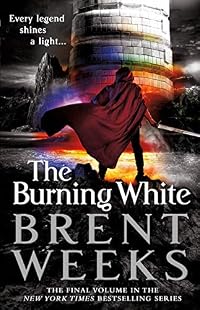
In the stunning conclusion to the epic, bestselling Lightbringer series by Brent Weeks, kingdoms clash as Kip must finally escape his family's shadow in order to protect the land and people he loves. Gavin Guile, once the most powerful man the world had ever seen, has been laid low. He's lost his magic, and now he is on a suicide mission. Failure will condemn the woman he loves. Success will condemn his entire empire. As the White King springs his great traps and the Chromeria itself is show more threatened by treason and siege, Kip Guile must gather his forces, rally his allies, and scramble to return for one impossible final stand. The long-awaited epic conclusion of Brent Weeks's bestselling Lightbringer series. show lessTags
Recommendations





Member Reviews
***MASSIVE SPOILERS***
Kip, a fat good-for-nothing overcoming his own self-loathing to become a great leader and great man. He made choices not for his self-image but -- as we see in his decision to not become the Lightbringer -- his friends and the people he loved. His scene on Orholam's Glare was one of the saddest moments in literature
Karris, a woman broken by her role in a war that broke the world ascended to become not only a religious symbol, but a maternal one. She is strong, fierce, and cunning enough to go toe-to-toe with Andross. She is the one who had to make some really difficult decisions and learn how to live with them. I am also thrilled she was the one to deliver the final blow to the King of Wights.
Teia, a slave turned Blackguard turned Order assassin, back to one of the Mighty. Teia was admittedly my least favorite character in the series, but mostly due to the way her inner voice was written. Forgivable considering her arc, and especially considering she single-handedly annihilated the entire Order.
Andross, an absolute asshole of a man but formidable in his intellect and cunning. I was at first distraught that this manipulative, cruel, and generally soulless man was the Lightbringer, but I loved how Weeks wrote him into hating his own ascension. He felt he didn't deserve it, and that Dazen and Kip were more worthy of the title than him. Nearly four decades of manipulation and bribery finally led to his goal, but it was remarkably bittersweet for him. But you can see a 'sliver' (as Karris puts it) of humanity in him, and I truly think he will grow into his role as the Lightbringer. Next to Gavin/Dazen, Andross is probably my favorite character due to his ruthlessness but (very) hidden compassion for his sons and the satrapies. A man willing to commit atrocities and unspeakable acts if he thinks it's the best outcome.
And finally, Gavin/Dazen. By far my favorite character arc in this series. His struggles as he goes from most powerful man in the world, to slave, to an absolute shell of what he once was, back to a redemption that made me tear up multiple times. Showcasing his madness, the way he was manipulated, and showing how he responded to that manipulation felt incredibly human. His biggest sin was pride, and instead of promising to no longer be a prideful man, he uses that pride to bring about real and great change in the world.
I rarely review books but this series is absolutely worth it. I will definitely struggle to fill the hole in my heart after finishing this series. Thank you, Mr. Weeks!
There are few books, let alone series, that I would agree to re-read at the drop of a hat.
This is one of them.
I have so much fun, so much respect for the sheer audacity, the roaring plot-lines, the twists and the reveals, even the funny-ass quips, that I usually ignore or gloss over any ACTUAL problems I might have had with the writing. Or the original choice to make so many of our MCs so freakishly morally ambiguous. So full of glaring faults and so equally full of fantastic heroism.
When we finally get to this last book in the Lightbringer series, I'm hopelessly in love. There is nothing that could stop me from devouring this book and crying and raging and even scratching my head and then railing against it.
Huh? Railing against the show more book? Well... yeah. If anyone knows the Jonah story, and I assume everyone does, Weeks takes all aspects of it and weaves it heavily into the series. Swallowing characters into deep prisons, railing against fate, finally finding peace, if not forgiveness, for all the things that have been done? It's all here. But first we're made to WORK for it. And when I mean work, I mean we get to enjoy having our favorite morally grey characters get tortured and grow as people by the end.
I admit I am a super sucker for these kinds of storylines. I usually get pissed off at long series with characters who are essentially timeless and never learn s**t. If anything, the Lightbringer is ALL about learning. But most of the time it's "Oh, damn, no, that's horrible... I can't believe it's actually this bad... but no, it's worse... nooooooo.....". To have an end to this series that is actually uplifting and hopeful, if not perfect, is a REAL TREAT.
So what do I think about *spoiler* *spoiler* *spoiler*, or the fact that so much of the plot is resolved by way of *spoiler*?
I say I'm fine with it. It's not like we weren't prepared for it from the very first book. Or that the real burden is on true ethical behavior. You might say that the purpose of this book was to throw out the whole adage of "many shades of grey" and give it the full polychromatic treatment. And I loved it.
And now that I've finished this, I've gotta find the time to do all five again in a row! And start crying again. Yeah, I know... fanboy. show less
This is one of them.
I have so much fun, so much respect for the sheer audacity, the roaring plot-lines, the twists and the reveals, even the funny-ass quips, that I usually ignore or gloss over any ACTUAL problems I might have had with the writing. Or the original choice to make so many of our MCs so freakishly morally ambiguous. So full of glaring faults and so equally full of fantastic heroism.
When we finally get to this last book in the Lightbringer series, I'm hopelessly in love. There is nothing that could stop me from devouring this book and crying and raging and even scratching my head and then railing against it.
Huh? Railing against the show more book? Well... yeah. If anyone knows the Jonah story, and I assume everyone does, Weeks takes all aspects of it and weaves it heavily into the series. Swallowing characters into deep prisons, railing against fate, finally finding peace, if not forgiveness, for all the things that have been done? It's all here. But first we're made to WORK for it. And when I mean work, I mean we get to enjoy having our favorite morally grey characters get tortured and grow as people by the end.
I admit I am a super sucker for these kinds of storylines. I usually get pissed off at long series with characters who are essentially timeless and never learn s**t. If anything, the Lightbringer is ALL about learning. But most of the time it's "Oh, damn, no, that's horrible... I can't believe it's actually this bad... but no, it's worse... nooooooo.....". To have an end to this series that is actually uplifting and hopeful, if not perfect, is a REAL TREAT.
So what do I think about *spoiler* *spoiler* *spoiler*, or the fact that so much of the plot is resolved by way of *spoiler*?
I say I'm fine with it. It's not like we weren't prepared for it from the very first book. Or that the real burden is on true ethical behavior. You might say that the purpose of this book was to throw out the whole adage of "many shades of grey" and give it the full polychromatic treatment. And I loved it.
And now that I've finished this, I've gotta find the time to do all five again in a row! And start crying again. Yeah, I know... fanboy. show less
This book reads like it either had an amazing author and a poor editor (or overworked! There's over 900 pages in the hardcover edition!), or a poor author and an amazing editor. Since I've read the rest of Brent Weeks' books, I'd guess it's the result of both the author and the editor being so ready to be done with this series, and so behind on deadline, that they just shipped it.
While it is an impressive feat to tie up a 5 book series (that was supposed to be a trilogy) with so many disparate threads, this series was tied up using a clip-on bowtie. There were so many plot threads that were never resolved. Scenes with seemingly significant characters who were never mentioned again. Mid-scene POV slips (especially in Karis/Teia scenes) show more that I would expect of an amateur writer. Adding in POVs at the end that we've never had before. Things that could be fixed with a few additional drafts.
I did enjoy the twists and reveals in this book, much more than the confused lore of the third and fourth books. Some things finally came together.
Read it because you want to know how the whole saga ends, but don't expect an ending that answers all of your questions.
The immortals and their war, which was only even hinted at by the third book, and explicit from the fourth, seemed like they should be the main plot thread. After that point all mention of Koios and his people seemed extraneous - and anticlimactic. A bit more of Liv's POV could have increased the tension I felt about the Wight King's impending invasion. Instead we just get more and more lore about the immortals.
Yet in the final conflict we see only that Abbadon has been forced out of their world - for now. I'm assuming Weeks is writing a sequel trilogy/series to deal with this gaping issue, but if so it was poorly hinted. None of the characters seem the least concerned about the fact that immortals still have easy access to their world. There's no mention of how to prevent more wights from drawing them in, or defenses set up against Abbadon's return.
Kip's entire third and fourth book journey fighting Koios's forces was also completely undercut by Andross revealing his intended strategy. Why did I read all of that then, if it was pointless? If the point was Kip's growth, Weeks should have done a better job of convincing me it was worth all of that. The characters with the best arcs - Teia, Dazen - got little to no POV time in the finale. Even Karris had a more interesting journey than Kip. I felt great about Kip and his growth right up to that moment with Andross, and then Weeks ripped it out from under me. Even with five (that's right FIVE) epilogues, I did not get enough denouement considering how long of a build up there was.
I won't even get into the fact that nearly everyone lived (all POV characters) and everyone gets all their stuff back at the end! I loved it for Dazen, because boy does that guy deserve a break, but why does Kip also need to get resurrected, and then its hinted he even gets his drafting back. I didn't mind the whole "God is real and lectures us!" bit at the end until he started reviving people.
What I really wanted from this book - and this series - was for Dazen to be redeemed. We got that, but not nearly enough. He comes in to save them with the pirates, yeah that scene was awesome. But I needed more. This poor man has suffered so much over the course of five books - he deserves everything good in the world forever.
While it is an impressive feat to tie up a 5 book series (that was supposed to be a trilogy) with so many disparate threads, this series was tied up using a clip-on bowtie. There were so many plot threads that were never resolved. Scenes with seemingly significant characters who were never mentioned again. Mid-scene POV slips (especially in Karis/Teia scenes) show more that I would expect of an amateur writer. Adding in POVs at the end that we've never had before. Things that could be fixed with a few additional drafts.
I did enjoy the twists and reveals in this book, much more than the confused lore of the third and fourth books. Some things finally came together.
Read it because you want to know how the whole saga ends, but don't expect an ending that answers all of your questions.
The immortals and their war, which was only even hinted at by the third book, and explicit from the fourth, seemed like they should be the main plot thread. After that point all mention of Koios and his people seemed extraneous - and anticlimactic. A bit more of Liv's POV could have increased the tension I felt about the Wight King's impending invasion. Instead we just get more and more lore about the immortals.
Yet in the final conflict we see only that Abbadon has been forced out of their world - for now. I'm assuming Weeks is writing a sequel trilogy/series to deal with this gaping issue, but if so it was poorly hinted. None of the characters seem the least concerned about the fact that immortals still have easy access to their world. There's no mention of how to prevent more wights from drawing them in, or defenses set up against Abbadon's return.
Kip's entire third and fourth book journey fighting Koios's forces was also completely undercut by Andross revealing his intended strategy. Why did I read all of that then, if it was pointless? If the point was Kip's growth, Weeks should have done a better job of convincing me it was worth all of that. The characters with the best arcs - Teia, Dazen - got little to no POV time in the finale. Even Karris had a more interesting journey than Kip. I felt great about Kip and his growth right up to that moment with Andross, and then Weeks ripped it out from under me. Even with five (that's right FIVE) epilogues, I did not get enough denouement considering how long of a build up there was.
I won't even get into the fact that nearly everyone lived (all POV characters) and everyone gets all their stuff back at the end! I loved it for Dazen, because boy does that guy deserve a break, but why does Kip also need to get resurrected, and then its hinted he even gets his drafting back. I didn't mind the whole "God is real and lectures us!" bit at the end until he started reviving people.
What I really wanted from this book - and this series - was for Dazen to be redeemed. We got that, but not nearly enough. He comes in to save them with the pirates, yeah that scene was awesome. But I needed more. This poor man has suffered so much over the course of five books - he deserves everything good in the world forever.
Well, it's over. I really do love this series but that doesn't mean that I LOVED the last book. In fact, I think it was the weakest of the 5 novels. I've seen a lot of complaints about the heavy inclusion of God and religion, but to be honest that has been there since the beginning of the series. I think the way in which it was handled started to feel heavy handed and lingered for SO long that it became...annoying.
The other issue I take is that nothing really happened. I mean, there are big events, but the story doesn't feel like it moves. In fact, Dazen literally spends what feels like a third of the novel on a rock talking to God. Move. This. &$!@. Along.
Lastly, the ending. Oh, the ending. Maybe it's unwarranted and maybe I've read show more too much GoT-esque novels, but the heroes lost almost nothing. It felt like there was sacrifice, but much of it was softened in a deus ex machina type of way.
I know others will disagree and will like the almost hollywood-happy ending, but it felt wrong compared to the tone of the rest of the series. This entire story has been brutal at times, but the end felt more like a soft-landing.
Overall, this is still one of my favorite fantasy series I've read and I'm happy with the journey (even if I didn't LOVE the last book). Great series and worth the journey. Enjoy it! show less
The other issue I take is that nothing really happened. I mean, there are big events, but the story doesn't feel like it moves. In fact, Dazen literally spends what feels like a third of the novel on a rock talking to God. Move. This. &$!@. Along.
Lastly, the ending. Oh, the ending. Maybe it's unwarranted and maybe I've read show more too much GoT-esque novels, but the heroes lost almost nothing. It felt like there was sacrifice, but much of it was softened in a deus ex machina type of way.
I know others will disagree and will like the almost hollywood-happy ending, but it felt wrong compared to the tone of the rest of the series. This entire story has been brutal at times, but the end felt more like a soft-landing.
Overall, this is still one of my favorite fantasy series I've read and I'm happy with the journey (even if I didn't LOVE the last book). Great series and worth the journey. Enjoy it! show less
Such an enjoyable series. I have been absorbed in the audiobooks of the Lightbringer series for over 7 months. And I have enjoyed it so much. The final book is a gobsmacking 39 hours long in audio but I had a fabulous time. It has a couple of issues which is why it’s not quite going to get 5 stars from me. But there were surprises and “brave” decisions and at least one, NO, please don’t kill that person from me. But I am going to have to put most of my review behind spoiler tags.
The issues – some things petered out and didn’t come to anything – the Liv storyline just didn’t go anywhere other than healing someone you wanted to live, the Old Man of the Desert storyline also faded away rather.
The stuff I am conflicted on - show more killing Kip and having “God” resurrect him – I was horrified at Kip’s death as he was easily my favourite character and I wanted him to come back BUT…. (the whole no-one is ever really dead in sci-fi and fantasy can sometimes be over used) , Andross ending up as the “official” Lightbringer when he was a complete bastard was just like what? And then him suddenly changing society by starting to outlaw slavery etc – where did that all come from? – there was absolutely no indication that he had any wish to do that before.
Stuff that is controversial but I liked a lot – Gavin/Daizen meeting Orholom aka God – I actually think this was an incredibly brave decision by Brent Weeks to do. Stephen King chickened out at the end of The Dark Tower in doing this. And it is brave cos it can just become laughable but I thought Weeks handled it well and it wasn’t laughable in context at all. Though the fantasy side appears when Orholom changes stuff. Turns out Lightbringer was a spiritual journey as well.
The stuff I loved – the characters, Kip in particular totally grew on me from the “poor me” kid to the leader who sacrifices himself for others and was the source of my NOOOO moment, Gavin/Daizen, someone you never quite knew what you were supposed to think of him, arrogant, a mass murderer, a slaver, prideful, yet also brave and often kind and guilt ridden, Tia the slave made into a weapon by those around her, Andross Guile – just a total and utter bastard yet always interesting, Karys – almost a woman frozen by circumstances but becomes a war leader.
The magic system – it sometimes confused me but it’s such a great concept
I don’t usually write such long reviews so I think it is an indication of how much I enjoyed this series. If you like high fantasy to get absorbed in, then I recommend this series. show less
The stuff I am conflicted on -
Stuff that is controversial but I liked a lot – Gavin/Daizen meeting Orholom aka God – I actually think this was an incredibly brave decision by Brent Weeks to do. Stephen King chickened out at the end of The Dark Tower in doing this. And it is brave cos it can just become laughable but I thought Weeks handled it well and it wasn’t laughable in context at all. Though the fantasy side appears when Orholom changes stuff. Turns out Lightbringer was a spiritual journey as well.
The stuff I loved – the characters, Kip in particular totally grew on me from the “poor me” kid to the leader who sacrifices himself for others and was the source of my NOOOO moment, Gavin/Daizen, someone you never quite knew what you were supposed to think of him, arrogant, a mass murderer, a slaver, prideful, yet also brave and often kind and guilt ridden, Tia the slave made into a weapon by those around her, Andross Guile – just a total and utter bastard yet always interesting, Karys – almost a woman frozen by circumstances but becomes a war leader.
The magic system – it sometimes confused me but it’s such a great concept
I don’t usually write such long reviews so I think it is an indication of how much I enjoyed this series. If you like high fantasy to get absorbed in, then I recommend this series. show less
Finally! The final book! I loved this book, but it wasn’t without its share of weak points. While the past plot points were carefully and slowly built up in the other 4 books, the ending here feels slightly rushed. The magic system was so complex and the rules of it made perfect sense in the past books. But in this book the rules are bent, often without much more of an explanation other than ‘because…God.’ Theology is a huge plot point in this book and, while that’s fine and commonplace in fantasy series, it still seemed a bit of a hurried excuse for some of the ways the story is tied up. I mean, who can really explain God? He just is. And so He seems an easy way to tie up loose ends. Maybe more of an explanation for why He show more behaved the way He did in the previous books? More of a reasoning for why He intervened where He did and why He stayed frustratingly absent when some of the beloved characters could’ve used Him? He left a sour taste in my mouth because I felt He wasn’t explained well enough.
The first part of this book went slow. Very slow. The Mighty’s story and dialogue still felt contrived and the buildup for the war was slow, although steady, only for the entire thing to resolve in too few of pages.
While I appreciated that everyone’s story lines seemed to (for the most part) be ended and explained well enough, I did find myself thinking that maybe they were ended a little ::too:: neatly? Some characters seem to even have a complete personality change which I don’t understand why. Not every character should have to neatly fall into a category of villain or hero. That’s not how humans work.
Let me be clear though, even with these couple of nitpicky details, I loved this series. All of it. There wasn’t a single point where I thought “I’m not enjoying this”. Even it’s weak points were still much better than average and it’s numerous high points were exceptional. The characters are well fleshed out and have, for the most part, well rounded personalities. By the end you’re invested in the outcome of this world and all in it.
The thing this series does best is plot twists, and Weeks keeps them comin’ all the way through the end. Nothing was safe from a plot twist until you closed the book. It made for an exciting read that rarely grew stale.
All in all, this series is high on my list of my favorite series ever and I would recommend it to any fantasy lover. show less
The first part of this book went slow. Very slow. The Mighty’s story and dialogue still felt contrived and the buildup for the war was slow, although steady, only for the entire thing to resolve in too few of pages.
While I appreciated that everyone’s story lines seemed to (for the most part) be ended and explained well enough, I did find myself thinking that maybe they were ended a little ::too:: neatly? Some characters seem to even have a complete personality change which I don’t understand why. Not every character should have to neatly fall into a category of villain or hero. That’s not how humans work.
Let me be clear though, even with these couple of nitpicky details, I loved this series. All of it. There wasn’t a single point where I thought “I’m not enjoying this”. Even it’s weak points were still much better than average and it’s numerous high points were exceptional. The characters are well fleshed out and have, for the most part, well rounded personalities. By the end you’re invested in the outcome of this world and all in it.
The thing this series does best is plot twists, and Weeks keeps them comin’ all the way through the end. Nothing was safe from a plot twist until you closed the book. It made for an exciting read that rarely grew stale.
All in all, this series is high on my list of my favorite series ever and I would recommend it to any fantasy lover. show less
This was the fifth and final book in the Lightbringer series. The title is The Burning White but a good alternate title would have been The Enthusiastic Pep Talks. More on that later. I mostly enjoyed this entire series. It has a few issues, but nothing that bothered me too much. I was pretty happy with this last book, and the ending was mostly satisfying.
Before I go on to write about my own thoughts, if anybody read this and didn’t see the hidden Postlude after the author’s acknowledgments, or the web address at the very end that led to one more final bit, you may have missed some things. The bit on the web was also narrated, I think by the same person who did the audiobooks. I listened to a sample at one point and they sounded the show more same. I ended up having to turn off the narration though and just read the text for myself. He was reading too slow, plus I wanted to hear the characters with their “real voices”. You know, the ones I had been hearing in my head for the past several weeks. But I enjoyed those little extra surprises after I thought I was done. It was nice to be rewarded for being thorough. ;)
So… pep talks. GOOD GRIEF! I almost feel strongly enough about this to use multiple exclamation points, but I’ll settle for putting it all in caps. I think every single main character got at least one pep talk in this book, usually more. First the character with the incoming pep talk usually starts off by telling or thinking what a horrible person they are, and we get the litany of all the things they’ve done wrong. Then somebody tells them why they’re actually a wonderful person and we get the litany of all the things they’ve done right. Every main character seems to think deep down that they’re horrible and worthless no matter what amazing things they’ve done. This I think grated on my nerves more than anything in the entire series. It all started to sound the same and I kept getting bogged down in those sections. Different characters, similar self-recriminations, similar platitudes. In smaller doses it might have been ok. There was a little bit of this in the earlier books, but it went way beyond my threshold in this one. Sometimes there were interesting reveals hidden in those pep talks, and I think the pep talks were used as a vehicle for delivering those, but I wanted to slash that vehicle’s tires.
Aside from that complaint, the story was good, and I liked the ending pretty well. I did have a few minor annoyances I’ll mention in the spoiler tags. This last book felt more predictable to me than the previous books, though. I think at this point the things that already happened had to lead to a logical ending and since this was originally supposed to be a shorter series, the author might have run out of twists by this point that would fit logically with the intended end. Everything did lead to an ending that made sense and felt satisfying, but I kind of missed those “What?!” moments in this book.
The series in general has all the fun of epic fantasy without being too full of tropes. There is a prominent “chosen one” theme, but not done in quite the way I’ve seen it done anywhere else. There’s a lot of humor, although some of it is on the juvenile side. The author also used the word “breasts” so many times in this series (more so in the first two books) that it inspired a “Boob Quotient” chart. The first book doesn’t have any great female characters, but there is some improvement on that side in later books. Most of the main characters were likeable and fun to read about. The ones that weren’t didn’t get as much page time anyway. There’s a lot of fun banter between the characters which is something I particularly enjoy.
One thing that did distract me some throughout this series were the real-world quotes and references. It’s not so much that the things he used weren’t logical in his fantasy world, just that they sounded so real-world that it pulled me out of the story. In the first book there were a lot of jokes clearly inspired by common real-world jokes, although that did get toned down a bit. There are a few Shakespeare references. Some of it didn’t bother me, like some of the general punny-ness that was Shakespeare-like without being direct quotes that I recognized. And Gunner was hilarious. He reminded me of Dogberry in Much Ado About Nothing. On the other hand, randomly having a character think the words “fretting upon this stage” was just too close to a direct quote for me, especially when it didn’t really fit the tone of how the character in question usually thought.
There are similar issues with Bible references. I mean, I admit I laughed on page 3 of the very first book when Kip walks “in the valley of the shadow of two great unnatural hills – the remnant of two of the great funeral pyres where tens of thousands had burned”, especially since Kip was in fact quite fearful of evil during his stroll through the valley of the shadow of death. After a while though, that kind of thing, combined with the other types of real-world references, started to get a bit jarring to me. There are also some Bible story parallels. It’s not an allegory by any means, but there are some very clear themes, and it gets a bit heavy-handed in this last book. Sometimes we had pep talks and heavy-handed Bible parallels in the same sections and I really loved those sections. ;) Other people might not even notice these things, though. If my quote at the beginning of this paragraph went over your head until I spelled it out, you might not notice it as much. If you didn’t even get it after I spelled it out, you’ll probably be blissfully oblivious through the whole thing.
So, as if this review isn’t long enough, I have just one more comment for the spoiler tags:
I would say I prefer happy endings, and I don’t like to see characters I’m attached to die, but I think I would have liked a few more consequences by the end. Dazen lost all his powers, two fingers, and an eye, but he gets everything back by the end. Karris nearly dies a few times and thinks she’s lost both Dazen and Kip, but in the end she has everything she wants. Kip completely dies but gets brought back to life, and while he can’t draft anymore there’s a little hint at the end that he thought he saw a flicker of green on the testing stick so we can probably assume his powers will come back eventually (the slowing healing versus Dazen's fast healing, like he quoted Orholam as mentioning during his wedding). Teia is able to function fairly normally with the glasses the Mighty gives her near the end. Ironfist is probably going to end up being the Blackguard commander again. Marissia shows up alive. It was just a bit much. Cruxer died, so that was sad, but I wasn’t that attached to him anyway.
I’m nitpicking a bit too much in this review maybe, because I would rather have an ending like this versus one that leaves me upset because a beloved character died. I think I like a tiny bit of negative along with a mostly positive ending to make me feel like I’ve earned my happy ending by swallowing a bit of realistic unhappiness. :)
Ok that was ridiculously long, but my last review was ridiculously short (for me), so I figure they balance each other out. show less
Before I go on to write about my own thoughts, if anybody read this and didn’t see the hidden Postlude after the author’s acknowledgments, or the web address at the very end that led to one more final bit, you may have missed some things. The bit on the web was also narrated, I think by the same person who did the audiobooks. I listened to a sample at one point and they sounded the show more same. I ended up having to turn off the narration though and just read the text for myself. He was reading too slow, plus I wanted to hear the characters with their “real voices”. You know, the ones I had been hearing in my head for the past several weeks. But I enjoyed those little extra surprises after I thought I was done. It was nice to be rewarded for being thorough. ;)
So… pep talks. GOOD GRIEF! I almost feel strongly enough about this to use multiple exclamation points, but I’ll settle for putting it all in caps. I think every single main character got at least one pep talk in this book, usually more. First the character with the incoming pep talk usually starts off by telling or thinking what a horrible person they are, and we get the litany of all the things they’ve done wrong. Then somebody tells them why they’re actually a wonderful person and we get the litany of all the things they’ve done right. Every main character seems to think deep down that they’re horrible and worthless no matter what amazing things they’ve done. This I think grated on my nerves more than anything in the entire series. It all started to sound the same and I kept getting bogged down in those sections. Different characters, similar self-recriminations, similar platitudes. In smaller doses it might have been ok. There was a little bit of this in the earlier books, but it went way beyond my threshold in this one. Sometimes there were interesting reveals hidden in those pep talks, and I think the pep talks were used as a vehicle for delivering those, but I wanted to slash that vehicle’s tires.
Aside from that complaint, the story was good, and I liked the ending pretty well. I did have a few minor annoyances I’ll mention in the spoiler tags. This last book felt more predictable to me than the previous books, though. I think at this point the things that already happened had to lead to a logical ending and since this was originally supposed to be a shorter series, the author might have run out of twists by this point that would fit logically with the intended end. Everything did lead to an ending that made sense and felt satisfying, but I kind of missed those “What?!” moments in this book.
The series in general has all the fun of epic fantasy without being too full of tropes. There is a prominent “chosen one” theme, but not done in quite the way I’ve seen it done anywhere else. There’s a lot of humor, although some of it is on the juvenile side. The author also used the word “breasts” so many times in this series (more so in the first two books) that it inspired a “Boob Quotient” chart. The first book doesn’t have any great female characters, but there is some improvement on that side in later books. Most of the main characters were likeable and fun to read about. The ones that weren’t didn’t get as much page time anyway. There’s a lot of fun banter between the characters which is something I particularly enjoy.
One thing that did distract me some throughout this series were the real-world quotes and references. It’s not so much that the things he used weren’t logical in his fantasy world, just that they sounded so real-world that it pulled me out of the story. In the first book there were a lot of jokes clearly inspired by common real-world jokes, although that did get toned down a bit. There are a few Shakespeare references. Some of it didn’t bother me, like some of the general punny-ness that was Shakespeare-like without being direct quotes that I recognized. And Gunner was hilarious. He reminded me of Dogberry in Much Ado About Nothing. On the other hand, randomly having a character think the words “fretting upon this stage” was just too close to a direct quote for me, especially when it didn’t really fit the tone of how the character in question usually thought.
There are similar issues with Bible references. I mean, I admit I laughed on page 3 of the very first book when Kip walks “in the valley of the shadow of two great unnatural hills – the remnant of two of the great funeral pyres where tens of thousands had burned”, especially since Kip was in fact quite fearful of evil during his stroll through the valley of the shadow of death. After a while though, that kind of thing, combined with the other types of real-world references, started to get a bit jarring to me. There are also some Bible story parallels. It’s not an allegory by any means, but there are some very clear themes, and it gets a bit heavy-handed in this last book. Sometimes we had pep talks and heavy-handed Bible parallels in the same sections and I really loved those sections. ;) Other people might not even notice these things, though. If my quote at the beginning of this paragraph went over your head until I spelled it out, you might not notice it as much. If you didn’t even get it after I spelled it out, you’ll probably be blissfully oblivious through the whole thing.
So, as if this review isn’t long enough, I have just one more comment for the spoiler tags:
I’m nitpicking a bit too much in this review maybe, because I would rather have an ending like this versus one that leaves me upset because a beloved character died. I think I like a tiny bit of negative along with a mostly positive ending to make me feel like I’ve earned my happy ending by swallowing a bit of realistic unhappiness. :)
Ok that was ridiculously long, but my last review was ridiculously short (for me), so I figure they balance each other out. show less
Members
- Recently Added By
Author Information

New York Time bestselling author Brent Weeks was born and raised in Montana. He graduated from Hillsdale College and is the author of the Lightbringer series and the Night Angel series. (Bowker Author Biography)
Some Editions
Awards and Honors
Awards
Series

Work Relationships
Common Knowledge
- Canonical title
- The Burning White
- Original publication date
- 2019
- People/Characters
- Kip Guile; Dazen Guile; Gavin Guile; Karris Guile; Tisis Guile; Adrasteia (Teia)
- Publisher's editor
- Hvide, Brit
Classifications
Statistics
- Members
- 906
- Popularity
- 29,493
- Reviews
- 31
- Rating
- (3.95)
- Languages
- English
- Media
- Paper, Audiobook, Ebook
- ISBNs
- 22
- ASINs
- 4