On This Page
Description
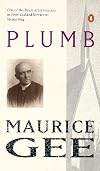
Long regarded as one of the finest novels ever written by a New Zealander, Maurice Gee's Plumb introduces us to the intolerant, irascible clergyman George Plumb, one of the most memorable characters in New Zealand literature half saint, half monster, superhuman in his spiritual strength and destructive in his utter self-absorption. What personal...Tags
Recommendations




















Member Reviews
This New Zealand novel won the 1978 James Tait Black Memorial Prize.
I have known much disappointment in my children, seeing so many of them disappoint themselves. although they have moved on the margins of my life, each has known his path to the centre, and all have come, all have taken comfort in their need. They have brought little comfort to me, but that is no proper complaint.......And the thorns that prick me now are the thorns of remembrance. Children, followers. Along that other way, where I found so few to accompany me, and for distances so short, I reached my goal.
George Plumb, a Presbyterian minister until he was sacked for heresy, jailed for sedition during the first world war, father of twelve, is reflecting on his life. He show more sees himself as an exceptional person, a man of integrity, determined to follow his own path no matter the consequences, but his story reveals a much smaller man. He surrounds himself with sycophants and believes that to associate with him is a privilege.
The story shifts back and forth between the past and the present. In the beginning, George and his wife Edie are united in their religious beliefs and goals, but they spend less and less time together. George spends his time talking at his acolytes, or isolating himself in his study, reading and thinking. Edie single-handedly looks after the children and the house, with no spare time, very little money, and not enough to eat. With every word George reveals himself to the reader as a monstrously selfish, ineffectual man.
I was impressed by Maurice Gee's writing, the depth of the characters and the multiple levels of the narrative, but I found the book hard to read because of the awfulness of George Plumb, who is based on the author's own grandfather. show less
I have known much disappointment in my children, seeing so many of them disappoint themselves. although they have moved on the margins of my life, each has known his path to the centre, and all have come, all have taken comfort in their need. They have brought little comfort to me, but that is no proper complaint.......And the thorns that prick me now are the thorns of remembrance. Children, followers. Along that other way, where I found so few to accompany me, and for distances so short, I reached my goal.
George Plumb, a Presbyterian minister until he was sacked for heresy, jailed for sedition during the first world war, father of twelve, is reflecting on his life. He show more sees himself as an exceptional person, a man of integrity, determined to follow his own path no matter the consequences, but his story reveals a much smaller man. He surrounds himself with sycophants and believes that to associate with him is a privilege.
The story shifts back and forth between the past and the present. In the beginning, George and his wife Edie are united in their religious beliefs and goals, but they spend less and less time together. George spends his time talking at his acolytes, or isolating himself in his study, reading and thinking. Edie single-handedly looks after the children and the house, with no spare time, very little money, and not enough to eat. With every word George reveals himself to the reader as a monstrously selfish, ineffectual man.
I was impressed by Maurice Gee's writing, the depth of the characters and the multiple levels of the narrative, but I found the book hard to read because of the awfulness of George Plumb, who is based on the author's own grandfather. show less
Ratings
Members
- Recently Added By
Lists

TML 200 Best Books 1950-1999
202 works; 10 members

The Modern Library (The Two Hundred Best Novels....
202 works; 1 member
Author Information

45+ Works 2,442 Members
Maurice Gee of New Zealand is a novelist and author of children's books. Gee's first book, The Big Season, was published in 1962. He has since produced nearly two dozens novels and collections of short stories and his work has appeared in such publications as Arena, Mate, Landfall, Islands, and Listener. Gee received the New Zealand Book Award in show more fiction in 1979 for Plumb, in 1982 for Meg, and in 1991 for The Burning Boy. Going West won the Goodman Fielder Wattie Book Award in 1993. In 1995 The Fat Man won the AIM Children's Book Award for Junior Fiction, as well as The Esther Glen Award, given for the most distinguished contribution to New Zealand literature for children and young adults. He had previously received The Esther Glen Award in 1983 for Motherstone. (Bowker Author Biography) show less
Some Editions
Awards and Honors
Awards
Notable Lists
Series

Belongs to Publisher Series
Work Relationships
Is contained in
Common Knowledge
- Original publication date
- 1978
- Dedication
- In memory of James and Florence Chapple
- First words
- On the morning of my departure I stood by the open window with my trumpet to my ear, hoping to hear the thrush in Edie's plumb tree. That bird and its forebears have sung to me for thirty years. I remind myself that other fam... (show all)ilies than mine have made their home in Peacehaven. On that morning though the bird was silent, so I put my trumpet aside and went along to breakfast. -Chaper 1
- Canonical DDC/MDS
- 823
- Canonical LCC
- PR9639.G4
Classifications
Statistics
- Members
- 152
- Popularity
- 214,723
- Reviews
- 1
- Rating
- (3.73)
- Languages
- English
- Media
- Paper, Ebook
- ISBNs
- 11
- ASINs
- 1