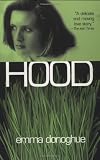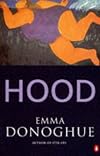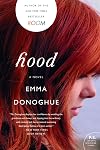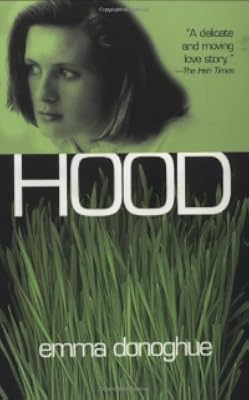
Hood
by Emma Donoghue
On This Page
Description
A tale of grief and lust, frustration and hilarity, death and familyPenelope O'Grady and Cara Wall are risking disaster when, like teenagers in any intolerant time and place--here, a Dublin convent school in the late 1970s--they fall in love. Yet Cara, the free spirit, and Pen, the stoic, craft a bond so strong it seems as though nothing could sever it: not the bickering, not the secrets, not even Cara's infidelities.
But thirteen years on, a car crash kills Cara and rips the lid off Pen's show more world. Pen is still in the closet, teaching at her old school, living under the roof of Cara's gentle father, who thinks of her as his daughter's friend. How can she survive widowhood without even daring to claim the word? Over the course of one surreal week of bereavement, she is battered by memories that range from the humiliating, to the exalted, to the erotic, to the funny. It will take Pen all her intelligence and wit to sort through her tumultuous past with Cara, and all the nerve she can muster to start remaking her life.
. show less
Tags
Recommendations


















Member Reviews
I am not sure whether to recommend this book or not. I loved it, but most of the book group did not. After our discussion, I could see their objections, but still really liked the book.
First and foremost, I loved the language. It didn’t work for everyone, but I was sold by a passage on the first page:
“Up these four storeys of shelves, time moves more slowly than outside on the quays of the dirty river. One window cuts a slab of sunlight; dust motes twitch through it. I shut my eyes and breath in.”
I was also intrigued with the plot. Pen, a closeted Irish lesbian is coming to terms with the sudden death of her long-time lover, Cara. She and Cara had a difficult relationship, and the book spans the seven days after Cara’s death, show more as Pen reflects over their 13 years together and apart.
I liked that the book made me think about the way that being closeted effects relationships. It also made me reflect on how two people can get caught in roles established at the beginning of a relationship, and be unable to move on from their.
Other people in the group complained that the process of Pen’s grief was not believable (I did find it a bit odd) and also had trouble with the characters. Cara, truly, is not very pleasant.
This is the first book I have read by Donoghue, who is probably best known for [Room]. Definitely I will seek out more of her work. show less
First and foremost, I loved the language. It didn’t work for everyone, but I was sold by a passage on the first page:
“Up these four storeys of shelves, time moves more slowly than outside on the quays of the dirty river. One window cuts a slab of sunlight; dust motes twitch through it. I shut my eyes and breath in.”
I was also intrigued with the plot. Pen, a closeted Irish lesbian is coming to terms with the sudden death of her long-time lover, Cara. She and Cara had a difficult relationship, and the book spans the seven days after Cara’s death, show more as Pen reflects over their 13 years together and apart.
I liked that the book made me think about the way that being closeted effects relationships. It also made me reflect on how two people can get caught in roles established at the beginning of a relationship, and be unable to move on from their.
Other people in the group complained that the process of Pen’s grief was not believable (I did find it a bit odd) and also had trouble with the characters. Cara, truly, is not very pleasant.
This is the first book I have read by Donoghue, who is probably best known for [Room]. Definitely I will seek out more of her work. show less
Like Room this is an interesting book, and I have mixed feelings about it.
The novel takes place during the worst week of Penelope O'Grady's life, her friend and lover Cara has died. It's not that simple of course, or it would be boring. Add in the fact that Penelope and Cara's relationship was on and off and at one point when Penelope was in school she had a crush on Kate, Cara's older sister who comes over from America for the funeral.
It was hard to get into. Most likely because it took a while to get used to how much the book's narrative jumped around in time.
For the most part the characters were interesting, although I really only liked the two characters of Jo and Mr. Wall. While Cara and Penelope sort of really annoyed me for the show more most part.
It's basically a book about relationships of all sorts, as well as how people in relationships go through grief and mourning.
Unfortunately just as with Room there were just parts of the plot, of the narrative that annoyed me and that took a bit of the enjoyment of a book that's very well written and plotted. show less
The novel takes place during the worst week of Penelope O'Grady's life, her friend and lover Cara has died. It's not that simple of course, or it would be boring. Add in the fact that Penelope and Cara's relationship was on and off and at one point when Penelope was in school she had a crush on Kate, Cara's older sister who comes over from America for the funeral.
It was hard to get into. Most likely because it took a while to get used to how much the book's narrative jumped around in time.
For the most part the characters were interesting, although I really only liked the two characters of Jo and Mr. Wall. While Cara and Penelope sort of really annoyed me for the show more most part.
It's basically a book about relationships of all sorts, as well as how people in relationships go through grief and mourning.
Unfortunately just as with Room there were just parts of the plot, of the narrative that annoyed me and that took a bit of the enjoyment of a book that's very well written and plotted. show less
Really beautiful writing and an interesting premise. I think it might just not be the book for me? I like books with plots. It was pretty boring and slow and the sex scenes were so unnecessarily graphic. It was like 50% descriptions of things I don't care about, 30% erotica, 20% flashbacks of their relationship, and 0% plot.
"I had never noticed before that the official title of the ‘Lord have mercy’ prayer was the gracious phrase ‘Invitation to Sorrow’. Hey there, Sorrow, how’ve you been keeping? Come on in. If your bike doesn’t have lights you can always crash on our sofa tonight. Oh, so you’ll be staying a while, Sorrow? Planning to get to know me better? Grand, so. There’s tea in the pot."
Hood is my third foray into the works of Emma Donoghue. Neither of my two previous attempts to engage with her writing have been, what I would call, successful. It's not that her books did not make an impression on me, it's just that the impression I got from her writing strongly reminded of a caricature character of a feminist pop singer in Father show more Ted.
The reason I still read Hood was because I accidentally downloaded it onto the kindle. Oh, well.
To my surprise, Hood I actually was quite an interesting story of the closeted relationship between Pen and Cara, set in Dublin during the early 1990s.
I will not come as much of a spoiler if I say that the book deals with Pen's coming to terms with the end of this relationship and in the process finding herself.
In a lot of ways, Hood reminded me of Greene's The End of the Affair, and I was wondering a couple of times if Greene's classic had had any influence on Hood. In hindsight, I doubt there was an influence, tho. Where Greene's story focuses on a character who is obsessed with himself and projects this on his lost lover, Hood's story begins with a story of Pen's obsession with Cara and materialises into Pen finding confidence in herself by having to interact with the world around her as an individual rather than as part of a couple.
There were a couple of aspects that I thought were great to read in addition of Pen's story: One was the description of Pen's and Cara's relationship in the context of Ireland in the early 1990s, in which the presence of the Catholic Church seemed to be ubiquitous (which did not help my trying to shake off the Father Ted impression I have).
Donoghue's description of people being on their guard in public and fearing for their jobs if they lived outwardly in same-sex relationships created an atmosphere of pretty tense isolation.
"What seemed like hundreds of strangers were clustered by the door to commiserate with Mr Wall as we struggled out. He was introducing Kate to many who would remember her only as the dark girl, the one who went off to the States with her mother and never came back. I held back, not wanting to hear him fumble for a title for me."
By the end of the book however, I was not sure whether this description was a representation of the times or whether it was used more as a plot device. Without going into detail, the end of the book seemed to indicate that some of the isolation may have existed in Pen's perception more than in the community around her. But then, Pen's reality is her perception, isn't it.
The second aspect that I found interesting was the way in which Pen's perception changes. Again, without spoiling the plot, Pen's grieving process was pretty realistic. It was both funny and sad to see her go through it.
‘It’s a very long story.’ The words glided out of my mouth, surprising me. ‘I’ll tell you when the tea’s made.’ This birth is long overdue, mother. It’ll be a tight squeeze. You’d better open your arms to this screaming red bundle, because it’s the only one I’ll ever bring you. ‘Grand,’ she said. ‘I’ll open a packet of biscuits.’
While all of this was fascinating, I still can only say that as a whole I liked the book. But just that.
Despite the setting and the character development, there were also aspects I really did not care for.
The first one was that despite the strong background setting, I never got the feeling that the novel rose to a level of literary excellence. While reading, I always had the feeling that I accidentally picked up a clumsily written installment of a steamy pulp romance series. This didn't work for me. I should clarify that there is nothing amiss with a steamy pulp romance but it was not what I was looking for in Hood.
What annoyed me more about this than the clumsy writing, tho, was that it distracted from the issues that had been touched on and that could have been elaborated on - like the relationship with Pen's mother or Mr Wall, or Kate.
But no, instead, Pen suddenly, and seemingly out of nowhere, obsesses about someone she only just met- Cara's sister ?
I just didn't get it. show less
Hood is my third foray into the works of Emma Donoghue. Neither of my two previous attempts to engage with her writing have been, what I would call, successful. It's not that her books did not make an impression on me, it's just that the impression I got from her writing strongly reminded of a caricature character of a feminist pop singer in Father show more Ted.
The reason I still read Hood was because I accidentally downloaded it onto the kindle. Oh, well.
To my surprise, Hood I actually was quite an interesting story of the closeted relationship between Pen and Cara, set in Dublin during the early 1990s.
I will not come as much of a spoiler if I say that the book deals with Pen's coming to terms with the end of this relationship and in the process finding herself.
In a lot of ways, Hood reminded me of Greene's The End of the Affair, and I was wondering a couple of times if Greene's classic had had any influence on Hood. In hindsight, I doubt there was an influence, tho. Where Greene's story focuses on a character who is obsessed with himself and projects this on his lost lover, Hood's story begins with a story of Pen's obsession with Cara and materialises into Pen finding confidence in herself by having to interact with the world around her as an individual rather than as part of a couple.
There were a couple of aspects that I thought were great to read in addition of Pen's story: One was the description of Pen's and Cara's relationship in the context of Ireland in the early 1990s, in which the presence of the Catholic Church seemed to be ubiquitous (which did not help my trying to shake off the Father Ted impression I have).
Donoghue's description of people being on their guard in public and fearing for their jobs if they lived outwardly in same-sex relationships created an atmosphere of pretty tense isolation.
"What seemed like hundreds of strangers were clustered by the door to commiserate with Mr Wall as we struggled out. He was introducing Kate to many who would remember her only as the dark girl, the one who went off to the States with her mother and never came back. I held back, not wanting to hear him fumble for a title for me."
By the end of the book however, I was not sure whether this description was a representation of the times or whether it was used more as a plot device. Without going into detail, the end of the book seemed to indicate that some of the isolation may have existed in Pen's perception more than in the community around her. But then, Pen's reality is her perception, isn't it.
The second aspect that I found interesting was the way in which Pen's perception changes. Again, without spoiling the plot, Pen's grieving process was pretty realistic. It was both funny and sad to see her go through it.
‘It’s a very long story.’ The words glided out of my mouth, surprising me. ‘I’ll tell you when the tea’s made.’ This birth is long overdue, mother. It’ll be a tight squeeze. You’d better open your arms to this screaming red bundle, because it’s the only one I’ll ever bring you. ‘Grand,’ she said. ‘I’ll open a packet of biscuits.’
While all of this was fascinating, I still can only say that as a whole I liked the book. But just that.
Despite the setting and the character development, there were also aspects I really did not care for.
The first one was that despite the strong background setting, I never got the feeling that the novel rose to a level of literary excellence. While reading, I always had the feeling that I accidentally picked up a clumsily written installment of a steamy pulp romance series. This didn't work for me. I should clarify that there is nothing amiss with a steamy pulp romance but it was not what I was looking for in Hood.
What annoyed me more about this than the clumsy writing, tho, was that it distracted from the issues that had been touched on and that could have been elaborated on - like the relationship with Pen's mother or Mr Wall, or Kate.
But no, instead, Pen suddenly, and seemingly out of nowhere, obsesses about someone she only just met
I just didn't get it. show less
i enjoyed much of this book, but something central to it also didn't quite work for me. a lot of the writing was stellar, with really nice turns of phrase or imagery. what i had trouble with, really, were many of the characters and their believability. i have thankfully never had to deal with the grief that the main character, pen, does in this book, and everyone handles grief differently and in their own way, but a lot of the conversations (especially with kate and mr wall - and his behavior as well) seemed to stretch the lines of plausibility. the emotion (of loss and confusion and changing identity and anger and lust) that underlay most everything was for me, a little too under the surface.
i didn't really like cara much at all, and show more wasn't too excited about pen either, although she seemed more relatable. (actually the only character i liked much at all was jo, and she wasn't really in most of the book.)
all that, and still, i was drawn back to the book every time i put it down. i found myself liking it and wanting to keep reading and keep reading. so even though i can say what i didn't like about it and i'm having more troubling saying what i did like in it, i am still left with a definite positive overall impression. and i'll certainly look to read more of her in the future.
"...their shoulders are peanut-red, scored with strapmarks. I have often wondered if the Irish consider it ungrateful to use sun block."
"This was a film so old and re-run I couldn't tell fact from fiction. It was a memory I saved for when I really needed it, in case I wore it out." show less
i didn't really like cara much at all, and show more wasn't too excited about pen either, although she seemed more relatable. (actually the only character i liked much at all was jo, and she wasn't really in most of the book.)
all that, and still, i was drawn back to the book every time i put it down. i found myself liking it and wanting to keep reading and keep reading. so even though i can say what i didn't like about it and i'm having more troubling saying what i did like in it, i am still left with a definite positive overall impression. and i'll certainly look to read more of her in the future.
"...their shoulders are peanut-red, scored with strapmarks. I have often wondered if the Irish consider it ungrateful to use sun block."
"This was a film so old and re-run I couldn't tell fact from fiction. It was a memory I saved for when I really needed it, in case I wore it out." show less
I did care about the characters and their complex lives I was uninterested in their dialect and the details of their sex lives ad infinitum. If this had been about heterosexuals, I would not have finished it. I did appreciate much of Donoghue's writing.
This is a moving love story. Pen and Cara, lesbian lovers, have been together for many years living in the same home as Cara's father. Cara is killed in an automobile wreck and the book traces Pen's grief in the first week after. The relationship between the two women was deep and complicated and Donoghue does an excellent job describing the complexity and confusion for Pen after Cara dies.
Some of the sex scenes between the women were a bit much for me, but all in all this is a beautiful book.
Some of the sex scenes between the women were a bit much for me, but all in all this is a beautiful book.
Members
- Recently Added By
Lists

Best Lesbian Fiction (And Narrative Non-Fiction)
155 works; 36 members

Books Read in 2014
2,343 works; 89 members

Good LGBT fiction for LGBT folk and friends
545 works; 50 members

Same Title
115 works; 3 members

Fiction (Non-Fantasy) by Irish Authors Set in Ireland
87 works; 3 members
Author Information

42+ Works 34,584 Members
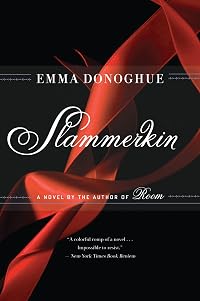
Emma Donoghue was born on October 24, 1969 in Dublin, Ireland. She received her BA degree from the University College Dublin and PhD in English from University of Cambridge. Her first novel was Stir. Her next novel was Hood which won the 1997 American Library Association's Gay, Lesbian and Bisexual Book Award for Literature. Her novel Slammerkin show more was a finalist in the 2001 Irish Times Irish Literature Prize for Fiction. The Sealed Letter, published in 2008, is a work of historical fiction. This work was the joint winner of the 2009 Lambda Literary Award for Lesbian Fiction. She continued writing several award winning novels including Room which was shortlisted for the Man Booker Prize in September 2010. Some of her other works include Astray, Three and a Half Deaths, and Frog Music. (Bowker Author Biography) show less
Some Editions
Awards and Honors
Awards
Common Knowledge
- Canonical title*
- Verlies
- Original title
- Hood
- Original publication date
- 1995
- People/Characters
- Penelope 'Pen' O'Grady; Cara Wall; Kate Wall; Mr. Wall; Jo; Sherry (show all 7); Robbie
- Epigraph*
- Ik hield het pad aan, hield de kap verborgen, hield wat hij verhulde al helemaal verborgen. Ik gaf het alleen 's nachts bloot, met andere vrouwen die misschien over hetzelfde pad naar het huis van hun oma liepen, allemaal met... (show all) hun eigen mandje lekkers.
Olga Broumas 'Roodkapje - First words
- Mayday in 1980, heat sealing my fingers together.
- Last words
- (Click to show. Warning: May contain spoilers.)The first drop touched the skin under my eye as the sky opened and sent down the rain.
*Some information comes from Common Knowledge in other languages. Click "Edit" for more information.
Classifications
Statistics
- Members
- 521
- Popularity
- 57,329
- Reviews
- 13
- Rating
- (3.65)
- Languages
- Dutch, English, French, Swedish
- Media
- Paper, Audiobook, Ebook
- ISBNs
- 15
- ASINs
- 2