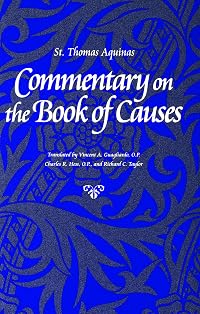
Commentary on the Book of Causes (Thomas Aquinas in Translation)
by Thomas Aquinas
48 Members (5.00)
On This Page
Description
"The Book of Causes, highly influential in the medieval university, was commonly but incorrectly understood to be the completion of Aristotle's metaphysics. It was Thomas Aquinas who first judged it to have been abstracted from Proclus's Elements of Theology, presumably by an unknown Arabic author, who added to it ideas of his own." "The Book of Causes is of particular interest because themes that appear in it are echoed in the metaphysics of Aquinas: its treatment of being (esse) as show more proceeding from the First Creating Cause; the triadic scheme of being, living, and knowing; and the general scheme of participation in which "all is in all." Thus, the Book of Causes provides a historical backdrop for understanding and appreciating Aquinas's development of these themes in his metaphysics." "Thomas's Commentary on the Book of Causes, composed during the first half of 1272, offers an extended view of his approach to Neoplatonic thought and functions as a guide to his metaphysics. Though long neglected and, until now, never translated into English, it deserves an equal place alongside his commentaries on Aristotle and Boethius." "In addition to the extensive annotation, bibliography, and thorough introduction, this translation is accompanied by two valuable appendices. The first provides a translation of another version of proposition 29 of the Book of Causes, which was not known to St. Thomas. The second lists citations of the Book of Causes found in the works of St. Thomas and cross-references these to a list showing the works, and the exact location within them, where the citations can be found."--Jacket. show lessTags
Recommendations





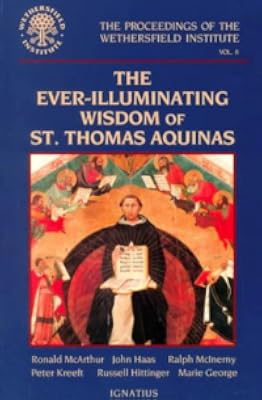
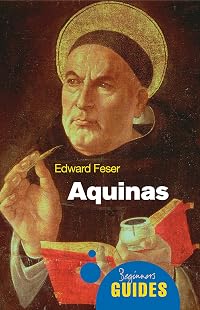
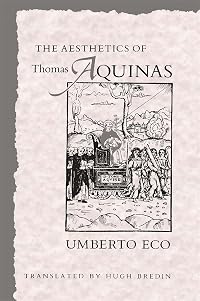
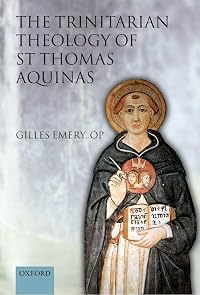

Member Reviews
Members
- Recently Added By
Author Information

2,198+ Works 27,938 Members
Thomas Aquinas, the most noted philosopher of the Middle Ages, was born near Naples, Italy, to the Count of Aquino and Theodora of Naples. As a young man he determined, in spite of family opposition to enter the new Order of Saint Dominic. He did so in 1244. Thomas Aquinas was a fairly radical Aristotelian. He rejected any form of special show more illumination from God in ordinary intellectual knowledge. He stated that the soul is the form of the body, the body having no form independent of that provided by the soul itself. He held that the intellect was sufficient to abstract the form of a natural object from its sensory representations and thus the intellect was sufficient in itself for natural knowledge without God's special illumination. He rejected the Averroist notion that natural reason might lead individuals correctly to conclusions that would turn out false when one takes revealed doctrine into account. Aquinas wrote more than sixty important works. The Summa Theologica is considered his greatest work. It is the doctrinal foundation for all teachings of the Roman Catholic Church. show less
Common Knowledge
- Original title
- Commentary on the Book of Causes (Thomas Aquinas in Translation) (Thomas Aquinas in Translation)
- Original publication date
- 1996
- People/Characters
- Aquinas, Thomas (Saint, 1225-1274); Albert the Great; Proclus; Aristotle (384-322)
- Important places
- Paris, France
- Original language
- English
Classifications
Statistics
- Members
- 48
- Popularity
- 626,221
- Rating
- (5.00)
- Languages
- English, Italian
- Media
- Paper, Ebook
- ISBNs
- 4