On This Page
Description
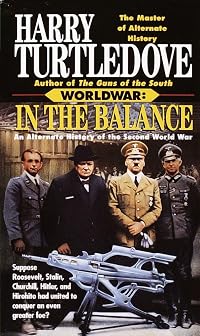
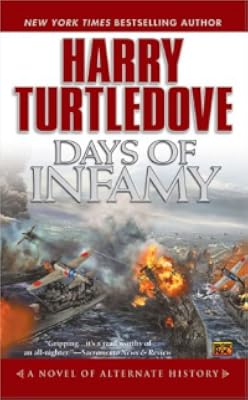
War seethed across the planet. Machines soared through the air, churned through the seas, crawled across the surface, pushing ever forward, carrying death. Earth was engaged in titanic struggle. Germany, Russia, France, China, Japan: the maps were changing day by day. The hostilities spread in ever-widening ripples of destruction: Britain, Italy, Africa...the fate of the world hung in the balance. Then the real enemy came. Out of the dark of night, out of the soft glow of dawn, out of the show more clear blue sky came an invasion force the likes of which Earth had never known-and worldwar was truly joined. The invaders were inhuman and they were unstoppable. Their technology was far beyond our reach, and their goal was simple: Fleetlord Atvar had arrived to claim Earth for the Empire. Never before had Earth's people been more divided. Never had the need for unity been greater. And grudgingly, inexpertly, humanity took up the challenge. In this epic novel of alternate history, Harry Turtledove takes us around the globe. We roll with German panzers, watch the coast of Britain with the RAF, and welcome alien-liberators to the Warsaw ghetto. In tiny planes we skim the vast Russian steppe, and we push the envelope of technology in secret labs at the University of Chicago. Turtledove's saga covers all the Earth, and beyond, as mankind-in all its folly and glory-faces the ultimate threat; and a turning point in history shows us a past that never was and a future that could yet come to be. show lessTags
Recommendations

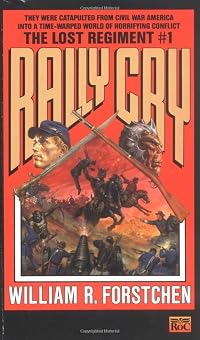
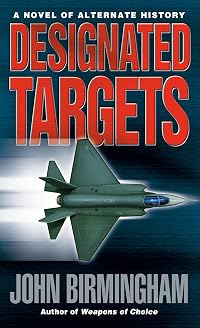
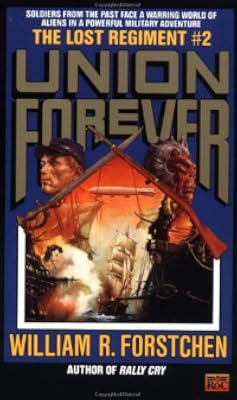
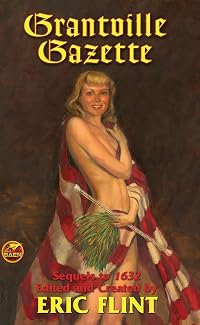

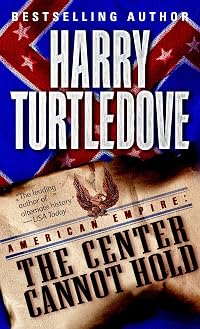
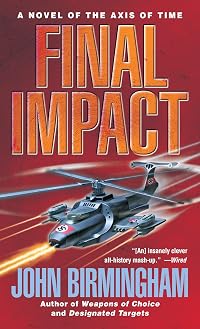
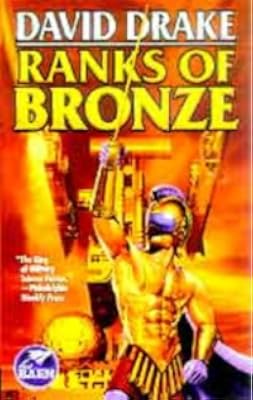
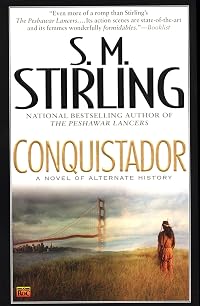




Member Recommendations
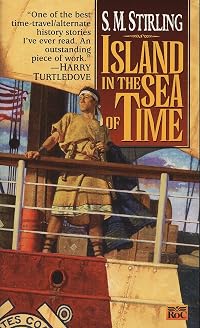
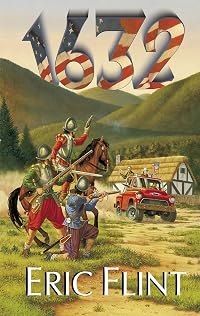
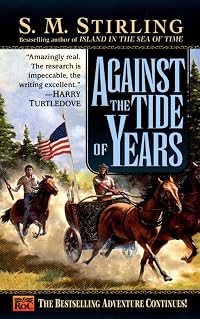
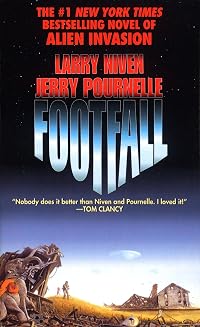
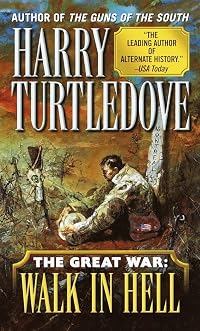
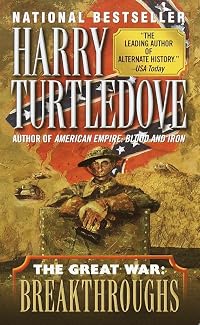
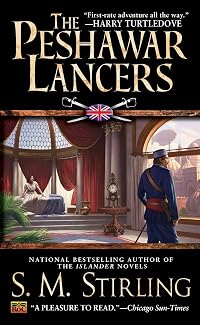
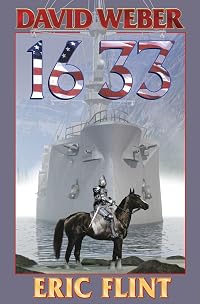
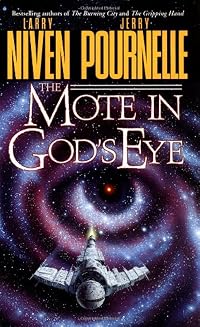
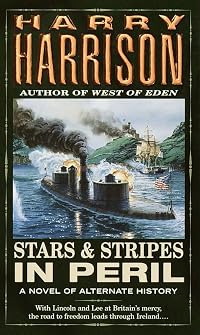
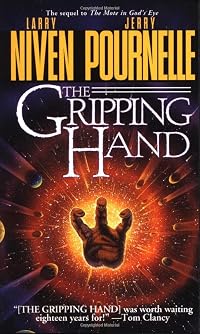
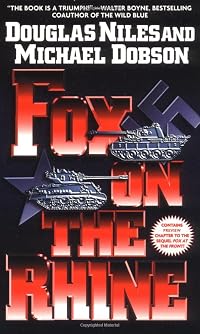
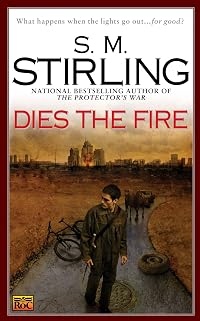
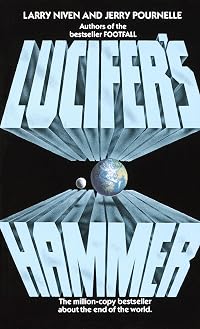
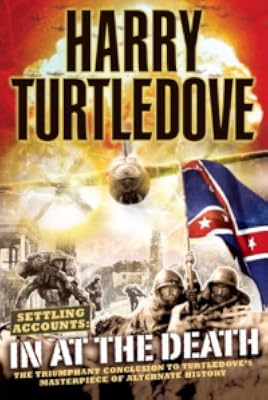
tottman Both are excellent stories of an alien invasion and the human resistance that follows. Out of the Dark is self-contained but with the possibility of sequels. Worldwar is the first of a 4 part series, all well worth reading.
20
Member Reviews
My reactions to reading this novel in 1994. Spoilers follow.
Turtledove sets the novel in 1942 when the free nations of the world are struggling against the totalitarian systems of Nazism and Communism. At that time – in June 1942 to be precise – aliens show up. They are intent on conquering all of Earth.
The central theme of this book is the same question that Britain and America faced in allying with Russia against fascism: Is the devil you know better than the devil you don’t? For a peasant in the Ukraine, can aliens be worse than the German armies’ path of murder and destruction? Should Russia actually help Nazi Germany develop the A-Bomb? Should America work with the Japanese? And, most heart-wrenching of all (and the most show more powerful conflict in the book) should the Jews of the Warsaw Ghetto actually help their Nazi oppressors against the “Lizards?”
This is a long, but never dull, novel that features a large cast of both real and fictional characters through whose eyes we see the various political and military theaters of the war. Oddly, most of the real characters appear on stage briefly and aren’t terribly interesting in themselves. The exceptions are Otto Skorzeny and George Patton. All the military action in this book is well-done, and Skorzeny leads a daring commando raid to retrieve spilled weapons grade uranium from a destroyed alien “Race” ship. This marks at least the second appearance in sf of Skorzeny. He was in Larry Niven and Jerry Pournelle’s Inferno.) The ship was destroyed by the huge Nazi artillery piece Dora – Turtledove doesn’t give an adequate impression of exactly how many men were needed to operate and support Dora. Another bit of WWII esoterica from our own history involves the Russian ploy of using bomb carrying bombs to destroy tanks. Here it works. In our history, the project was a complete failure since the dogs were accidentally conditioned to home in on the shape of Russian tanks and the smell of Russian fuel and not Nazi tanks. The winter battle at novel’s end where Patton defeats a large alien army on the plains of Illinois was well done, and a sense of Patton the man is conveyed. Another real character is a man I’d never heard of before – Mordechai Anielewicz. He’s a chemical engineer who turns out to be a clever guerilla leader during the Nazi occupation of Warsaw.
In addition to the fictional characters providing a viewpoint for the war, most of them are shown learning something about themselves, the world, and confronting their hatreds and prejudices. Panzer Major Heinrich Jäger finds himself falling in love with Russian Air Force pilot Ludmila Gorbunova. The Jewish guerillas he works with in recovering alien uranium force him to think about the Nazi atrocities he’s turned a blind eye to. A Chinese peasant woman is a victim of not only Japanese attacks (there aren’t any really sympathetic Japanese characters in this novel) but is also exploited by a native man and captured by aliens. Yet, she discovers she can be as smart and as adaptable as any man, and finds love (after being widowed and her child killed by the Japanese) with Bobby Fiore, an American minor league baseball player who surprises himself by falling in love with her and being excited about the prospect of having a child with her. (Indeed, I thought having so many American characters as members of a baseball team was a nice, original touch – not many baseball players in sf stories – as well as playing on Turtledove’s love of baseball.) His teammate, Sam Yeager, begins to think about the place of America’s blacks as he evacuates Chicago through black slums and sees how blacks react – and are reacted to – by troops fighting the Lizards. He also has a lot of fun helping out in the early stages of the Manhattan Project as well as being guard/caretaker/liaison/sort of friend to two captured Lizards. His years (and I liked this touch, another homage of Turtledove’s to the genre he loves) of reading sf pulps – especially those atomic stories (though he quickly realizes sf pulps are no substitute for real science education) – have equipped for this and for thinking about the consequences of an alien invasion. He is the book’s most engaging character along with Moishe Russie.
Russie is an ex-medical student in Warsaw who is revered by the Jews in the ghetto since the alien invasion seems to be an answer to his prayer for deliverance. Understandably, the Jews cooperate with the aliens against the Nazis. However, as time goes by, they realize that their radio broadcasts detailing Nazi atrocities are not widely believed in the rest of the world where the struggle goes on to avoid the alien yoke. Indeed, they are seen as collaborators by most. Russie also comes to realize that he is just a pawn for the Lizards. He learns that humanity, like the other two intelligent races conquered by the Race in their history, will never be an equal in the Lizard empire. In the most agonizing and powerful section of the book, Russie decides to sacrifice himself, his family, his neighbors, and co-religionist and refuse to acquiesce to Lizard demands. It’s better, he decides, that the Jews suffer rather than all humanity end up as slaves. (The Lizards are unwilling/unable to carry out their threats against his family. However, they edit his recording of defiance into another propaganda broadcast). David Goldfarb, an RAF radarman, dwells on his Jewish heritage and the pleasures of life sweetened by the prospect of death as he flies what are, in effect, AWACS missions against the Lizards. (They are necessary because the Lizards, of course, fly jets. Most of the military tech of the Lizards is about equivalent to modern weapons and munitions.) However, he’s mostly there to give a view of the Lizard-Human war on the Western European front (and the developments in the Axis-Allied war there). There are also many other characters, all interesting if minor. I especially liked the American soldiers (many WWI vets or members of that baseball team) battling aliens in America in well done scenes which capture the emotions I suspect men seeing combat for the first time feel. The combat scenes where Jäger and his fellow tankers exploit the rigid tactics of the Lizards to defeat them (at least on a small level in a few engagements) even with inferior equipment.
The aliens are also well done (if you accept, like all of Turtledove’s aliens, they only deviate from human psychology on one or two points), sympathetic, and interesting. We see the war from the point of view of some alien tankers, an alien captured and tortured by the Japanese, an alien intelligence analyst, and the commander of the expedition. The aliens two defining characteristics are an extreme conservatism and an extreme rigidity which makes them incapable of imagining scenarios that deviate from past experience and very slow to adapt to them. After conquering two other races with no problem, the aliens expect to walk over us in no time. They last reconnoitered Earth in the twelfth century and fully expect it to be unchanged. Of course, they get a rude awakening. There are shades of Vietnam here as the Lizard forces rapidly become demoralized after facing an opponent much better armed, much more adaptable, and much more stubborn than thought. Not only are the Lizards slow to change their rigid, predictable tactics, but they face strange new weapons that, in their technological state, they never considered. Specifically, they find the concept of artillery an unexpected alternative to missiles – though Germany is developing the latter. Coming from worlds of much less water, the concept of a navy is totally alien to them, and they never really do catch on to the military and logistical value of sea transportation. Further adding to the Afghanistan/Vietnam analogy is the Lizard addiction to ginger first fostered by a Chinese collaborator who eventually pays for this with his life when the intelligence analyst alien, Drefsab, kills him. At first I thought this was a cliched touch – aliens conveniently addicted to common Earth substances – but I think Turtledove is simply building on the above analogy. Some lizards eventually began to question whether they should even have tried to invade. Others suggest nuking Earth – the aliens have lots of nukes – but the commander refuses. The colony ships are close behind, and he’s not about to be the first commander of a conquest expedition to not be able to carry out his orders.
However, the novel is subtitled “In the Balance” and the aliens start to understand important things about humans. Drefsab speculates Earth’s oceans and mountain ranges fueled a technological arms race among Earth empires which couldn’t easily conqueror their neighbors. (I suspect historian Turtledove got this idea from historian William McNeill’s The Pursuit of Power.). He correctly reasons that human sexuality and families are the basis of our societies and politics. (Lizard males do everything in their Empire with anonymous mothers – Lizards only mate in season – being reserved for reproduction. There is an ominous implication that the Lizards will start to effectively terrorize man. At novel’s end, the humans are making progress on an A-Bomb and Patton gives the Lizards a major defeat in America, but the Lizards have discovered the importance of petrochemicals to man’s war machine and begin to effectively target refineries. Still, the aliens aren’t all bad. The alien commander is genuinely horrified by Treblinka and sees man as needing saving from his own savagery. He can’t understand why the Jews would aid their old oppressors rather than submit to the Lizards. This is an exciting, well told book despite a lot of characters. It gets a lot of strength from its inherent conflict. But Turtledove also is good at bringing his world to life with details and well-realized characters. I think his talent and this story could sustain a series of good books not only on the war but its effects on human psychology, politics, and technology after (presumably) the aliens are defeated. show less
Turtledove sets the novel in 1942 when the free nations of the world are struggling against the totalitarian systems of Nazism and Communism. At that time – in June 1942 to be precise – aliens show up. They are intent on conquering all of Earth.
The central theme of this book is the same question that Britain and America faced in allying with Russia against fascism: Is the devil you know better than the devil you don’t? For a peasant in the Ukraine, can aliens be worse than the German armies’ path of murder and destruction? Should Russia actually help Nazi Germany develop the A-Bomb? Should America work with the Japanese? And, most heart-wrenching of all (and the most show more powerful conflict in the book) should the Jews of the Warsaw Ghetto actually help their Nazi oppressors against the “Lizards?”
This is a long, but never dull, novel that features a large cast of both real and fictional characters through whose eyes we see the various political and military theaters of the war. Oddly, most of the real characters appear on stage briefly and aren’t terribly interesting in themselves. The exceptions are Otto Skorzeny and George Patton. All the military action in this book is well-done, and Skorzeny leads a daring commando raid to retrieve spilled weapons grade uranium from a destroyed alien “Race” ship. This marks at least the second appearance in sf of Skorzeny. He was in Larry Niven and Jerry Pournelle’s Inferno.) The ship was destroyed by the huge Nazi artillery piece Dora – Turtledove doesn’t give an adequate impression of exactly how many men were needed to operate and support Dora. Another bit of WWII esoterica from our own history involves the Russian ploy of using bomb carrying bombs to destroy tanks. Here it works. In our history, the project was a complete failure since the dogs were accidentally conditioned to home in on the shape of Russian tanks and the smell of Russian fuel and not Nazi tanks. The winter battle at novel’s end where Patton defeats a large alien army on the plains of Illinois was well done, and a sense of Patton the man is conveyed. Another real character is a man I’d never heard of before – Mordechai Anielewicz. He’s a chemical engineer who turns out to be a clever guerilla leader during the Nazi occupation of Warsaw.
In addition to the fictional characters providing a viewpoint for the war, most of them are shown learning something about themselves, the world, and confronting their hatreds and prejudices. Panzer Major Heinrich Jäger finds himself falling in love with Russian Air Force pilot Ludmila Gorbunova. The Jewish guerillas he works with in recovering alien uranium force him to think about the Nazi atrocities he’s turned a blind eye to. A Chinese peasant woman is a victim of not only Japanese attacks (there aren’t any really sympathetic Japanese characters in this novel) but is also exploited by a native man and captured by aliens. Yet, she discovers she can be as smart and as adaptable as any man, and finds love (after being widowed and her child killed by the Japanese) with Bobby Fiore, an American minor league baseball player who surprises himself by falling in love with her and being excited about the prospect of having a child with her. (Indeed, I thought having so many American characters as members of a baseball team was a nice, original touch – not many baseball players in sf stories – as well as playing on Turtledove’s love of baseball.) His teammate, Sam Yeager, begins to think about the place of America’s blacks as he evacuates Chicago through black slums and sees how blacks react – and are reacted to – by troops fighting the Lizards. He also has a lot of fun helping out in the early stages of the Manhattan Project as well as being guard/caretaker/liaison/sort of friend to two captured Lizards. His years (and I liked this touch, another homage of Turtledove’s to the genre he loves) of reading sf pulps – especially those atomic stories (though he quickly realizes sf pulps are no substitute for real science education) – have equipped for this and for thinking about the consequences of an alien invasion. He is the book’s most engaging character along with Moishe Russie.
Russie is an ex-medical student in Warsaw who is revered by the Jews in the ghetto since the alien invasion seems to be an answer to his prayer for deliverance. Understandably, the Jews cooperate with the aliens against the Nazis. However, as time goes by, they realize that their radio broadcasts detailing Nazi atrocities are not widely believed in the rest of the world where the struggle goes on to avoid the alien yoke. Indeed, they are seen as collaborators by most. Russie also comes to realize that he is just a pawn for the Lizards. He learns that humanity, like the other two intelligent races conquered by the Race in their history, will never be an equal in the Lizard empire. In the most agonizing and powerful section of the book, Russie decides to sacrifice himself, his family, his neighbors, and co-religionist and refuse to acquiesce to Lizard demands. It’s better, he decides, that the Jews suffer rather than all humanity end up as slaves. (The Lizards are unwilling/unable to carry out their threats against his family. However, they edit his recording of defiance into another propaganda broadcast). David Goldfarb, an RAF radarman, dwells on his Jewish heritage and the pleasures of life sweetened by the prospect of death as he flies what are, in effect, AWACS missions against the Lizards. (They are necessary because the Lizards, of course, fly jets. Most of the military tech of the Lizards is about equivalent to modern weapons and munitions.) However, he’s mostly there to give a view of the Lizard-Human war on the Western European front (and the developments in the Axis-Allied war there). There are also many other characters, all interesting if minor. I especially liked the American soldiers (many WWI vets or members of that baseball team) battling aliens in America in well done scenes which capture the emotions I suspect men seeing combat for the first time feel. The combat scenes where Jäger and his fellow tankers exploit the rigid tactics of the Lizards to defeat them (at least on a small level in a few engagements) even with inferior equipment.
The aliens are also well done (if you accept, like all of Turtledove’s aliens, they only deviate from human psychology on one or two points), sympathetic, and interesting. We see the war from the point of view of some alien tankers, an alien captured and tortured by the Japanese, an alien intelligence analyst, and the commander of the expedition. The aliens two defining characteristics are an extreme conservatism and an extreme rigidity which makes them incapable of imagining scenarios that deviate from past experience and very slow to adapt to them. After conquering two other races with no problem, the aliens expect to walk over us in no time. They last reconnoitered Earth in the twelfth century and fully expect it to be unchanged. Of course, they get a rude awakening. There are shades of Vietnam here as the Lizard forces rapidly become demoralized after facing an opponent much better armed, much more adaptable, and much more stubborn than thought. Not only are the Lizards slow to change their rigid, predictable tactics, but they face strange new weapons that, in their technological state, they never considered. Specifically, they find the concept of artillery an unexpected alternative to missiles – though Germany is developing the latter. Coming from worlds of much less water, the concept of a navy is totally alien to them, and they never really do catch on to the military and logistical value of sea transportation. Further adding to the Afghanistan/Vietnam analogy is the Lizard addiction to ginger first fostered by a Chinese collaborator who eventually pays for this with his life when the intelligence analyst alien, Drefsab, kills him. At first I thought this was a cliched touch – aliens conveniently addicted to common Earth substances – but I think Turtledove is simply building on the above analogy. Some lizards eventually began to question whether they should even have tried to invade. Others suggest nuking Earth – the aliens have lots of nukes – but the commander refuses. The colony ships are close behind, and he’s not about to be the first commander of a conquest expedition to not be able to carry out his orders.
However, the novel is subtitled “In the Balance” and the aliens start to understand important things about humans. Drefsab speculates Earth’s oceans and mountain ranges fueled a technological arms race among Earth empires which couldn’t easily conqueror their neighbors. (I suspect historian Turtledove got this idea from historian William McNeill’s The Pursuit of Power.). He correctly reasons that human sexuality and families are the basis of our societies and politics. (Lizard males do everything in their Empire with anonymous mothers – Lizards only mate in season – being reserved for reproduction. There is an ominous implication that the Lizards will start to effectively terrorize man. At novel’s end, the humans are making progress on an A-Bomb and Patton gives the Lizards a major defeat in America, but the Lizards have discovered the importance of petrochemicals to man’s war machine and begin to effectively target refineries. Still, the aliens aren’t all bad. The alien commander is genuinely horrified by Treblinka and sees man as needing saving from his own savagery. He can’t understand why the Jews would aid their old oppressors rather than submit to the Lizards. This is an exciting, well told book despite a lot of characters. It gets a lot of strength from its inherent conflict. But Turtledove also is good at bringing his world to life with details and well-realized characters. I think his talent and this story could sustain a series of good books not only on the war but its effects on human psychology, politics, and technology after (presumably) the aliens are defeated. show less
A doorstop-sized novel - the first of a series - wherein World War II is rudely interrupted by an alien invasion. Former enemies have to join forces to combat the greater foe. The history is fairly well done, though it's not entirely clear from the internal narrative exactly what year it is, and the passage of time tends to go a little by the board; about three-quarters of the way through the book, the Luftwaffe turns up with jet aircraft, which is a little bit of a surprise because we've been down and dirty with the action most of the time and haven't had time to relate the story back to "our" history. But this is a minor criticism.
The human characters take a little time to get into their stride, but they are well enough drawn. show more Turtledove's historical background shows, and apart from a couple of minor slips (British characters referring to the season as 'Fall' instead of 'Autumn', and an RAF crewman with the surname Whyte who, for some unknowable reason, has not been nicknamed "Chalkie" by his colleagues) the technical and historical details are reasonably solid. Some of the major viewpoint characters have their preconceptions well and truly challenged; and one plot strand deals with the experience of the Jews in the Warsaw ghetto and their reaction to the aliens' attack on the Germans; the main Jewish character, a rabbi, only realises almost too late that "the enemy of my enemy is my friend" is only ever a temporary situation.
The aliens are quite sympathetically written. They are reptilian, and come from a long-established race that has held control over their world for many tens of thousands of years. They have done this by careful forward planning and maintaining strict adherance to protocol and precedence; they have already conquered two other worlds and so consider themselves masters of the universe. Unfortunately for them, their only reconnaissance of Earth was carried out in medieval times, and the shock of finding out that some races progress far more rapidly than they expected is well put over, to the extent that the reader can easily find themselves having some sympathy with the invaders. By the end of this first novel, they have been fighting - and slowly losing - an asymmetrical war and beginning to reach the end of their resources as they never anticipated needing to actually fight to hold the world - and a colonisation fleet is only a few years behind...
I found this novel far less of a slog than its length of some 650 pages suggested, though I do wonder how the story will be sustained over the next three volumes. show less
The human characters take a little time to get into their stride, but they are well enough drawn. show more Turtledove's historical background shows, and apart from a couple of minor slips (British characters referring to the season as 'Fall' instead of 'Autumn', and an RAF crewman with the surname Whyte who, for some unknowable reason, has not been nicknamed "Chalkie" by his colleagues) the technical and historical details are reasonably solid. Some of the major viewpoint characters have their preconceptions well and truly challenged; and one plot strand deals with the experience of the Jews in the Warsaw ghetto and their reaction to the aliens' attack on the Germans; the main Jewish character, a rabbi, only realises almost too late that "the enemy of my enemy is my friend" is only ever a temporary situation.
The aliens are quite sympathetically written. They are reptilian, and come from a long-established race that has held control over their world for many tens of thousands of years. They have done this by careful forward planning and maintaining strict adherance to protocol and precedence; they have already conquered two other worlds and so consider themselves masters of the universe. Unfortunately for them, their only reconnaissance of Earth was carried out in medieval times, and the shock of finding out that some races progress far more rapidly than they expected is well put over, to the extent that the reader can easily find themselves having some sympathy with the invaders. By the end of this first novel, they have been fighting - and slowly losing - an asymmetrical war and beginning to reach the end of their resources as they never anticipated needing to actually fight to hold the world - and a colonisation fleet is only a few years behind...
I found this novel far less of a slog than its length of some 650 pages suggested, though I do wonder how the story will be sustained over the next three volumes. show less
A fascinating scenario where aliens invade during World War II, leading to a fragile alliance between all the major combatants to resist the new common enemy. Although it does feature Russians, Germans, Japanese and British, I find it rather US-oriented. But still a great read.
A pretty fun premise - WWII hangs in the balance, when from out of the skies comes a far superior enemy - the lizards! The lizards have more technology - tanks and helicopters that run on hydrogen, nuclear weapons, and radar - just at the point where mankind hasn't discovered any of these handy things. However, the reconaissance mission was done many years earlier, so they are expecting an enemy for whom the broadsword is still high tech, so have a rude awakening when the encounter people that have got airplanes, tanks and guns of their own. Also in mankind's favour is the fact that lizardkind's civilisation has been stable for thousands of years, and they are not used to adapting to rapidly changing circumstances in a way that humans show more are. So although humans have the inferior technology, their use of cunning tactics soon means they have, if not the upper hand, at least a fighting chance against these invaders from the skies. The story is told from multiple narrative viewpoints, ranging from a German tank commander, a female pilot from Russia, a Polish Jew trapped in the Warsaw ghetto, a Chinese peasant, and for some reason, several members of an American minor league baseball team that have widely diverging fates after their train is bombed by the lizards. One of the strengths of the book is that we also see things from the lizard's point of view - both common ground troops and the high command. They are not evil monsters, simply soldiers that have been sent to subjugate the Earth and bring it into their Empire. And they are not here to slaughter all the humans, just pacify them. Also, they don't seem to have invented torture, and treat captured enemy combatants with respect if not kindness, something they are not alway afforded from their human counterparts. On the downside, this is a LONG book, that jumps from each narrative point fairly regularly, breaking up the flow and momentum, making it a struggle at times. Also, what it doesn't say anywhere on the cover of the book, is that this is only the first of a series of four, so having slogged through the whole thing, I wasn't given any resolution, which was rather annoying. I'm not sure if I care enough the track down and read another three volumes, but taken on it's own, this was quite a fun, and at times unexpectedly thoughtful book. show less
The most creative alternate history/ sci-fi book series you'll probably ever come across. In the vein of War of the Worlds, The Race, a lizard-like species attacks earth in an attempt to annex the planet and add humanity to its Empire. The only problem is that their last reconnaissance of humanity was 800 years ago and it takes twenty-four years to call for reinforcements (as they don't have FTL). The Race is shocked to discover that the once sword-wielding creatures are now using airplanes, radar, and artillery in a war across the globe.
Say what you will about this book, there is probably no other author who can take such an impossible scenario as 1940s militaries fighting off an interstellar invasion force and explain how it's show more possible. This book and series is a study of just how weird humans would be to an alien species and vice versa. We also get a collage of unremembered and well-known historical figures trying to survive and even prosecute the war, from American ball players and scientists, Chinese fighters, German panzer officers, Soviet pilots, and, of course, the alien invaders.
Read this if you like War of the Worlds.
Read this if you like Hitler's Peace. show less
Say what you will about this book, there is probably no other author who can take such an impossible scenario as 1940s militaries fighting off an interstellar invasion force and explain how it's show more possible. This book and series is a study of just how weird humans would be to an alien species and vice versa. We also get a collage of unremembered and well-known historical figures trying to survive and even prosecute the war, from American ball players and scientists, Chinese fighters, German panzer officers, Soviet pilots, and, of course, the alien invaders.
Read this if you like War of the Worlds.
Read this if you like Hitler's Peace. show less
This is an interesting book that explores one of the major themes in Science fiction: can the human race co-operate when faced with an alien threat. Turtledove's choice of WWII as a setting is good, and he does seem to have done his research. He does a good job setting out a fine choice of human divisions to be sealed before we can all get the nasty aliens and the books are a fine sustained effort. His constant exposure of the pre-WWII level of anti-Semitism may be jarring to some readers, but it was that bad, honest! So this major series starts well.
Another splendid novel from this author, the third I have read in less than two months. Aside from the intrinsic fascination of the alternate timeline, one of the author's great strengths is the conviction and thoroughness with which he depicts alien patterns of thinking and attitude - they are not just humans who happen to look like lizards.
Members
- Recently Added By
Lists

Best Military Science Fiction
57 works; 26 members
Author Information

279+ Works 43,221 Members
Harry Turtledove was born in Los Angeles, California on June 14, 1949. He received a Ph.D. in Byzantine history from UCLA in 1977. From the late 1970's to the early 1980's, he worked as a technical writer for the Los Angeles County Office of Education. He left in 1991 to become full-time writer. His first two novels, Wereblood and Werenight, were show more published in 1979 under the pseudonym Eric G. Iverson because his editor did not think people would believe that Turtledove was his real name. He used this name until 1985 when he published Herbig-Haro and And So to Bed under his real name. He has received numerous awards including the Homer Award for Short Story for Designated Hitter in 1990, the John Esthen Cook Award for Southern Fiction for Guns of the Southand in 1993, and the Hugo Award for Novella for Down in the Bottomlands in 1994. (Bowker Author Biography) show less
Some Editions
Awards and Honors
Awards
Series


Common Knowledge
- Canonical title
- Worldwar: In the Balance
- Original title
- Worldwar: In the Balance
- Original publication date
- 1994-01-03
- Important places
- Tosev 3; Warsaw Ghetto
- Important events
- World War II (1939 | 1945)
- First words
- Fleetlord Atvar strode briskly into the command station of the invasion fleet bannership 127th Emperor Hetto.
- Original language
- English
Classifications
Statistics
- Members
- 1,657
- Popularity
- 13,586
- Reviews
- 24
- Rating
- (3.49)
- Languages
- English, Italian, Polish
- Media
- Paper, Audiobook, Ebook
- ISBNs
- 15
- ASINs
- 10