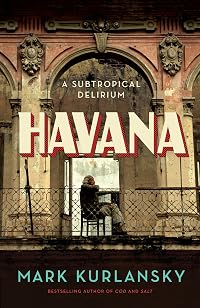
Havana: A Subtropical Delirium
by Mark Kurlansky
On This Page
Description
"Award-winning author Mark Kurlansky presents an insider's view of Havana: the elegant, tattered city he has come to know over more than thirty years. Part cultural history, part travelogue, with recipes, historic engravings, photographs, and Kurlansky's own pen-and-ink drawings throughout, Havana celebrates the city's singular music, literature, baseball, and food; its five centuries of outstanding, neglected architecture; and its extraordinary blend of cultures. Like all great cities, show more Havana has a rich history that informs the vibrant place it is today--from the native Taino to Columbus's landing, from Cuba's status as a U.S. protectorate to Batista's dictatorship and Castro's revolution, from Soviet presence to the welcoming of capitalist tourism. Havana is a place of extremes: a beautifully restored colonial city whose cobblestone streets pass through areas that have not been painted or repaired since the revolution. Kurlansky shows Havana through the eyes of Cuban writers, such as Alejo Carpentier and José Martí, and foreigners, including Graham Greene and Hemingway. He introduces us to Cuban baseball and its highly opinionated fans; the city's music scene, alive with the rhythm of Son; its culinary legacy. Once the only country Americans couldn't visit, Cuba is now opening to us, as is Havana, not only by plane or boat but also through Mark Kurlansky's multilayered and electrifying portrait of the long-elusive city"-- show lessTags
Recommendations











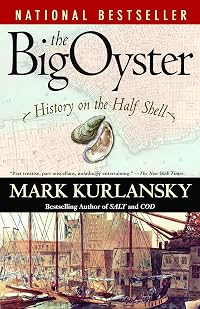
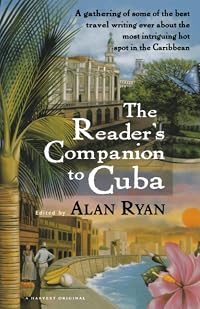
Member Reviews
Почему нет смысла посещать Варадеро и какой ингредиент настоящего мохито можно найти лишь на Кубе? Где гаванки ходят задом наперед и как провалился план ЦРУ по лишению Фиделя бороды? А также каково продолжение у шутки «Каковы три главных успеха Революции: здравоохранение, образование и спорт»? Эта свежая история Гаваны вовсе не попытка первым отметиться на новом перспективном туристическом направлении show more для США. Марк Курлански прекрасно знаком с городом, побывал в нем бессчетное количество раз. Уместные цитаты из знаковых литературных произведений (Х. Марти, Ф.-Г. Лорка, Э. Хемингуэй), легкоусвояемая история и география места, фирменный, полный сарказма юмор гаванцев, лингвистическая эквилибристика — не имея этой книги, покупать билеты на Остров свободы просто нельзя. Для нетерпеливых: в настоящий мохито добавляют мяту yerba buena, растущую только на острове. «Три главных провала: завтрак, обед и ужин». show less
Breezy Reading
"Havana: A Subtropical Delirium" is a light and breezy book. On one hand, the book suffers from a lack of historic details and an excess of inane details. On the other hand, the book can be read in a few sittings and most of what it discusses rings true.
Having spent many years there, the author has a good feel for the city and an obvious love of it. This is perhaps somewhat blinding because there is almost no criticism of the current state of affairs. While Cuba is changing, it is still a country under intellectual embargo. Critics are silenced and jailed. Free thinkers outside of the Communist Party of Cuba and its allies are discouraged. There is hardly any mention of this or the ways in which citizens in the city skirt show more official controls.
Two details that are overplayed appear to be two loves of Kurlansky: food and Hemingway. The descriptions of food, drinks, restaurants, and bars are too much. It's obviously something Kurlansky enjoys and there surely are many hang-outs in Havana, but the inclusion of no fewer than for recipes in this type of book is out of place. In addition, the hammering away at the various bars and clubs of Havana seems overdone considering their heyday has passed and is of interest primarily to tourists. As far as Hemingway goes, there is surely a place for him in Havana, but "A Subtropical Delirium" goes out of its way to present Hemingway as a larger than life figure who dominates the thoughts of Cuban politicians and taxi drivers alike. The focus on food and Hemingway gives the impression that Kurlansky pines for "the good old days" when Havana was a mysterious and seedy tourist destination that he could describe with his extended film noir metaphor.
Kurlansky does a good job offering original Spanish quotes to the many, many literary references he makes. While some of the original Spanish text is missing from the beginning-of-the-chapter quotes, most is there and that adds to the overall flavor book.
Additionally, Kurlanksy offers an enjoyable and easily understandable history of the city, from its attempted foundings to its growth around the bay. It is a straightforward history and the author admits when details are sketchy. There are details about a series of raids on the city, pirates, and the eventual decision to make Havana a hub for commercial activity flowing toward Europe from the region.
The author's descriptions of race relations and status ring very true. He describes a terrible slave-owning society that allows traditional African beliefs to flourish because the owners encourage tribalism as a way to preemptively suppress freedom movements by slaves who might otherwise join together. The racism in colonial society gives way to a more fluid idea of race, which was particularly promoted after the rise of Castro.
As a whole, the book remains light and is a good introduction for casual readers (like me) who want more than a tourist book but don't have the time to study entire theses on the city. show less
"Havana: A Subtropical Delirium" is a light and breezy book. On one hand, the book suffers from a lack of historic details and an excess of inane details. On the other hand, the book can be read in a few sittings and most of what it discusses rings true.
Having spent many years there, the author has a good feel for the city and an obvious love of it. This is perhaps somewhat blinding because there is almost no criticism of the current state of affairs. While Cuba is changing, it is still a country under intellectual embargo. Critics are silenced and jailed. Free thinkers outside of the Communist Party of Cuba and its allies are discouraged. There is hardly any mention of this or the ways in which citizens in the city skirt show more official controls.
Two details that are overplayed appear to be two loves of Kurlansky: food and Hemingway. The descriptions of food, drinks, restaurants, and bars are too much. It's obviously something Kurlansky enjoys and there surely are many hang-outs in Havana, but the inclusion of no fewer than for recipes in this type of book is out of place. In addition, the hammering away at the various bars and clubs of Havana seems overdone considering their heyday has passed and is of interest primarily to tourists. As far as Hemingway goes, there is surely a place for him in Havana, but "A Subtropical Delirium" goes out of its way to present Hemingway as a larger than life figure who dominates the thoughts of Cuban politicians and taxi drivers alike. The focus on food and Hemingway gives the impression that Kurlansky pines for "the good old days" when Havana was a mysterious and seedy tourist destination that he could describe with his extended film noir metaphor.
Kurlansky does a good job offering original Spanish quotes to the many, many literary references he makes. While some of the original Spanish text is missing from the beginning-of-the-chapter quotes, most is there and that adds to the overall flavor book.
Additionally, Kurlanksy offers an enjoyable and easily understandable history of the city, from its attempted foundings to its growth around the bay. It is a straightforward history and the author admits when details are sketchy. There are details about a series of raids on the city, pirates, and the eventual decision to make Havana a hub for commercial activity flowing toward Europe from the region.
The author's descriptions of race relations and status ring very true. He describes a terrible slave-owning society that allows traditional African beliefs to flourish because the owners encourage tribalism as a way to preemptively suppress freedom movements by slaves who might otherwise join together. The racism in colonial society gives way to a more fluid idea of race, which was particularly promoted after the rise of Castro.
As a whole, the book remains light and is a good introduction for casual readers (like me) who want more than a tourist book but don't have the time to study entire theses on the city. show less
I have never been to Havana, the closest I have gotten is San Juan, Puerto Rico which I loved but which the author makes clear is a poor substitution for Havana. This was just enough of a biography of a city that has been remade several times over, though some things always stay the same the city has been through many upheavals. The Spanish, a pirate's paradise, the Americans and the mob, the storms that have ravaged the city, the fires set that have burned it down, but always it rises again.
The food, the culture, slavery, the mix of people, the mulattas, the music, the food, narrow streets, the architecture, and the dirt and grime. Hemingway is revered here, this was the place he made his longest home, drank in the bars, ate in the show more restaurants. The revolution, Castro and the things that changed. Interesting trivia, Hemingway hated sugar and Castro loved ice cream. Havana seems to be a city of its own, own vibes, its own atmosphere, its own smells. Beliefs, all the different beliefs combined, mix and match, Santeria from the African influence, so many blends of cultures here. Quite fascinating.
Loved the writing style but this is in no way a in depth study of the city but just enough for me, learned quite a bit and was entertained by this city I will probably never visit. Could quite literally not take the heat, and of course the sweat that permeates the air, covers the people, I do not find enticing. The city though I find extremely interesting, in thought only of course and I enjoyed the drawing, pictures and recipes that were included. show less
The food, the culture, slavery, the mix of people, the mulattas, the music, the food, narrow streets, the architecture, and the dirt and grime. Hemingway is revered here, this was the place he made his longest home, drank in the bars, ate in the show more restaurants. The revolution, Castro and the things that changed. Interesting trivia, Hemingway hated sugar and Castro loved ice cream. Havana seems to be a city of its own, own vibes, its own atmosphere, its own smells. Beliefs, all the different beliefs combined, mix and match, Santeria from the African influence, so many blends of cultures here. Quite fascinating.
Loved the writing style but this is in no way a in depth study of the city but just enough for me, learned quite a bit and was entertained by this city I will probably never visit. Could quite literally not take the heat, and of course the sweat that permeates the air, covers the people, I do not find enticing. The city though I find extremely interesting, in thought only of course and I enjoyed the drawing, pictures and recipes that were included. show less
Not bad, but exactly what you would expect. A lot of random stories thrown together in an entertaining way. Not entirely sure if I could say I learned much about the culture, city, or whatever, but that is the general tone of these nondescript and familiar books - more sitting down and chatting with a friend as opposed to actually learning. Entertaining enough, and makes one want to visit.
A fascinating history of the city. The author does a fantastic job of telling facts without editorializing. It also helps that he has a lot of experience in the city, and loves it.
It certainly makes the reader want to visit.
It certainly makes the reader want to visit.
(Reprinted from the Chicago Center for Literature and Photography [cclapcenter.com]. I am the original author of this essay, as well as the owner of CCLaP; it is not being reprinted illegally.)
Although I enjoyed Mark Kurlansky's newest nonfiction book Havana, I don't actually have a lot to say about it, simply because there's not much to it in the first place; not exactly a travel guide to this capital of Cuba, not exactly a history, and not exactly a memoir, it's instead a curious mix of them all, what you might call a "biographical sketch of a city" in the spirit of Peter Ackroyd's London. As such, then, it makes for pleasant surface-level reading, a book that has a general theme per chapter but then spits out random factoids within show more each of these chapters, full of interesting trivia (did you know that the Sloppy Joe sandwich was invented in Cuba?), but that never really digs down into a deeper or more meaningful look at this fascinating, complicated city. With the Obamian normalization of relations between the US and Cuba, now has never been a better time to read a light but engaging book like this, one that will give most Americans their first look at this most curious of Caribbean destinations; hopefully it will serve to whet your appetite for more.
Out of 10: 8.5 show less
Although I enjoyed Mark Kurlansky's newest nonfiction book Havana, I don't actually have a lot to say about it, simply because there's not much to it in the first place; not exactly a travel guide to this capital of Cuba, not exactly a history, and not exactly a memoir, it's instead a curious mix of them all, what you might call a "biographical sketch of a city" in the spirit of Peter Ackroyd's London. As such, then, it makes for pleasant surface-level reading, a book that has a general theme per chapter but then spits out random factoids within show more each of these chapters, full of interesting trivia (did you know that the Sloppy Joe sandwich was invented in Cuba?), but that never really digs down into a deeper or more meaningful look at this fascinating, complicated city. With the Obamian normalization of relations between the US and Cuba, now has never been a better time to read a light but engaging book like this, one that will give most Americans their first look at this most curious of Caribbean destinations; hopefully it will serve to whet your appetite for more.
Out of 10: 8.5 show less
This little book is an entertaining travelogue. I'd like to learn more about Cuba, not least because of this remark from the acknowledgements:
"My first thank you goes to the people of Havana who for almost thirty-five years showed me nothing but warmth, humor, and hospitality while my country was trying to starve them."
"My first thank you goes to the people of Havana who for almost thirty-five years showed me nothing but warmth, humor, and hospitality while my country was trying to starve them."
Members
- Recently Added By
Lists

Favorite Caribbean Books
60 works; 28 members
Author Information

48+ Works 21,492 Members
Mark Kurlansky is the author of The Basque History of the World, the New York Times bestseller Cod: A Biography of the Fish that Changed the World (among the New York Public Library's Best Books of the Year in 1998), as well as A Chosen Few: The Resurrection of European Jewry; A Continent of Islands: Searching for the Caribbean Destiny, and show more several acclaimed works of short fiction and journalism about the Caribbean. He spent seven years as the Caribbean correspondent for the Chicago Tribune. He lives in New York City. (Bowker Author Biography) show less
Awards and Honors
Distinctions
Classifications
- Genres
- Travel, Nonfiction, General Nonfiction, History, Biography & Memoir
- DDC/MDS
- 972.91 — History & geography History of North America Mexico, Central America, West Indies, Bermuda West Indies (Antilles) and Bermuda; Caribbean Cuba
- LCC
- F1799 .H35 .K87 — Local History of the United States, Canada and Latin America Latin America. Spanish America Greater Antilles Cuba
- BISAC
Statistics
- Members
- 198
- Popularity
- 165,431
- Reviews
- 9
- Rating
- (3.84)
- Languages
- English, Polish
- Media
- Paper, Ebook
- ISBNs
- 7
- ASINs
- 2