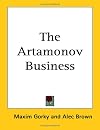
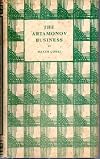
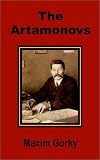
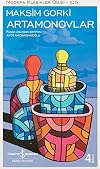
The Artamonov Business
by Maxim Gorky
On This Page
Description
Georg Luk#65533;cs called Maxim Gorky "the greatest writer of our time." Delo Artamonovykh, published in 1925 and translated into English in 1927 as Decadence, is his greatest historical novel. Until now, it has not been widely available to Western readers. Decadence is a family saga, an intricate character study, and a picture of Russia in the years between the serf's emancipation and the Bolshevik Revolution. It chronicles the fortunes of three generations of merchants who, in themselves, show more represent the tensions of the changing social order. In 1863, Ilya Artamonov founds a linen factory by the Oka River. In time the factory prospers and his children, inspired by his passion for labor, make improvements. A grandnephew even adds a library and organizes a football team. But one grandson is lazy and another is a socialist. Already on the scene and biding his time is Tikhon, the new proletarian. The decline, or "decadence," of the Artamonov family, and by extension the Russian middle class, is a result of personality clashes and of social revolution in the wind. Neither a lament for the old order nor a cheer for revolution, Decadence depicts the beginnings of a bourgeois class that gave way to two wars and two revolutions. It describes Russia's capitalist episode, when the developmentof factory labor and the accumulation of wealth transformed a feudal societ into a nation of workers. "Everyone lives for work, but whether men live for anything beyond their work, we can't see." This edition of Decadence includes a foreword by Irwin Weil, professor of Slavic languages at Northwestern University. show lessTags
Recommendations






















Member Reviews
A family saga, Gorky's novel chronicles the fortunes of several generations of families between the liberation of the serfs and the cataclysm of the Great War and the subsequent Bolshevik revolution. The beginnings and growth of a bourgeois class is told by a short-sighted artist whose provides the following description of workers:
"Everyone lives for work, but whether men live for anything beyond their work we can't see." That this short-sightedness would contribute to the success of the Bolsheviks can be seen in the author's long association with Lenin. In spite of this the novel is a good picture of Russia before the coming of the Soviet, as long as you maintain the healthy skepticism of an intelligent reader.
"Everyone lives for work, but whether men live for anything beyond their work we can't see." That this short-sightedness would contribute to the success of the Bolsheviks can be seen in the author's long association with Lenin. In spite of this the novel is a good picture of Russia before the coming of the Soviet, as long as you maintain the healthy skepticism of an intelligent reader.
A story of Russia told through the family saga of the Artamonov covers the time period of Russia industrial revolution to it's conclusion in the Bolshevik Revolution. The Artamonov are the new class of Russian merchants born out of the end of the serfdom declared by Tsar Alexander. Artamonov comes to the sleepy village of Dromov to build a Linen Factory. Ilia Artamonov barges into the town, interrupting life as it was formerly lived by the citizens. The story takes us through to the third generation and as may be the norm, the business deteriorates as we get further from it's origins.
Quotes:
"There are no human beings at all, only workers, except for beggars and the gentry. We all live merely to work; work overshadows everybody." page show more 95.
"he (Peter) saw with astonishment that his son by some miracle had become his match, either by rising to a grown-up in authority, or else by reducing a grown-up to his own level." page 129
Rating 3.57 show less
Quotes:
"There are no human beings at all, only workers, except for beggars and the gentry. We all live merely to work; work overshadows everybody." page show more 95.
"he (Peter) saw with astonishment that his son by some miracle had become his match, either by rising to a grown-up in authority, or else by reducing a grown-up to his own level." page 129
Rating 3.57 show less
After the peasants are freed, Artamanov Sr moves to a new town and starts a linen factory. He brings his wife and sons. The townspeople are not sure they trust him or like him, or that they want a factory. But he quickly marries his oldest son to the daughter of a local widow, and is then part of town life.
As he ages his sons grow, have children, and Sr dies. Then the grandkids become involved in the business and have kids of their own.
This is, of course, all going on in the late 1800s/early 1900s. The Artamonovs, though previously owned themselves, are now merchants and thus not trustworthy. And their lives are somewhat decadent, with lots of food and alcohol, traveling to Moscow and back, and marrying daughters off to other wealthy show more merchants so they leave the town. The factory runs itself, they just take, while the townspeople pour their lives into working for them. Some of the Artamanovs worry about the peasant uprisings and talk, but most just go about their business.
Not a long book, but I would it slow going. show less
As he ages his sons grow, have children, and Sr dies. Then the grandkids become involved in the business and have kids of their own.
This is, of course, all going on in the late 1800s/early 1900s. The Artamonovs, though previously owned themselves, are now merchants and thus not trustworthy. And their lives are somewhat decadent, with lots of food and alcohol, traveling to Moscow and back, and marrying daughters off to other wealthy show more merchants so they leave the town. The factory runs itself, they just take, while the townspeople pour their lives into working for them. Some of the Artamanovs worry about the peasant uprisings and talk, but most just go about their business.
Not a long book, but I would it slow going. show less
Story of a russian familiy that becomes rich and independend by creating a manufactory - and looses all at the beginning of the russian revolution.
May 1, 2018French
Ratings
Members
- Recently Added By
Lists

1,001 BYMRBYD Concensus
723 works; 27 members

1001 Books You Must Read Before You Die
1,448 works; 1,132 members

My TBR
371 works; 3 members
Author Information

923+ Works 8,213 Members
Alexei Maximovich Peshkov, better known as Maxim (Maksim) Gorky, was born on March 28th, 1968. Until the recent collapse of the Soviet state, Gorky was officially viewed as the greatest Russian writer of the twentieth century---an evaluation far above the true measure of his nevertheless considerable talent. Proclaimed the founder of socialist show more realism, he significantly influenced many Soviet writers, as well as others in Europe and in the developing world, and his works were for decades part of the Soviet school curriculum. His formal education was minimal. From the age of 11, he fended for himself with a variety of jobs. Self-taught, he published his first story, "Makar Chudra," in 1892. His first collection, Sketches and Stories (1898), is a romantic celebration of society's strong outcasts---the hobos and the drifters---and helped to popularize such literary protagonists. Foma Gordeyev (1899), Gorky's first novel, depicts generational conflict within the Russian bourgeoisie. A popular public figure on the left, Gorky was often in trouble with the tsarist government. During the 1900s, he was the central figure in the Znanie publishing house, which produced realist prose with a social conscience. Some of his own works were extremely successful. The play The Lower Depths (1902), set in a poorhouse and a strong indictment of social injustice, was not only a staple of Soviet theater but also influential in the United States. Eugene O'Neill's The Iceman Cometh was influenced by it. The propagandistic, extraordinarily influential novel Mother (1906) presents an iconic working-class woman who is transformed into a saint of the Revolution; its optimism in the ultimate triumph of the cause made it a prototype of socialist-realist fiction. During the years prior to 1917, Gorky published a number of autobiographical stories: All Over Russia (1912--18) (also Through Russia) and his memoirs; My Childhood (1913--14), My Apprenticeship (1915--16), and My Universities (1923). This trilogy shows his art at its best and includes some very lively reminiscences of such writers as Tolstoy and Chekhov. Although a Bolshevik party member since 1905, Gorky strongly criticized the new regime after the October Revolution: His collected articles from 1917-18, Untimely Thoughts, remained unpublished in the Soviet Union until recently. A cultural activist, he helped to save the lives of many writers, artists, and scholars during the cold and hungry years of the civil war. In 1921 he left Russia for Italy but returned permanently a decade later, recognized as the grand old man of Soviet literature. He then worked for Stalin's economic policies and presided over the institutionalization of socialist realism. At his death, he left unfinished a major novel of considerable interest, The Life of Klim Samgin, which he had been working on since 1925. (Bowker Author Biography) show less
Some Editions
Awards and Honors
Series
Belongs to Publisher Series
Common Knowledge
- Canonical title
- Decadence; The Artamonov Business
- Original title
- Дело Артамоновых
- Alternate titles
- The Artamonovs
- Original publication date
- 1927-03; 1927
- Dedication
- To Romain Rolland Man and Poet
- First words
- About two years after the emancipation, the parish of the Church of St. Nikola noticed an "outsider" at Mass on Transfiguration Day.
- Last words
- (Click to show. Warning: May contain spoilers.)"I won't have it. Get away."
- Original language*
- Ruso
*Some information comes from Common Knowledge in other languages. Click "Edit" for more information.
Classifications
- Genres
- General Fiction, Fiction and Literature
- DDC/MDS
- 813 — Literature & rhetoric American literature in English American fiction in English
- LCC
- PG3463 .D4 .D49 — Language and Literature Slavic languages and literatures. Baltic languages. Albanian language Slavic. Baltic. Albanian Russian literature Individual authors and works 1870-1917 Gorky
- BISAC
Statistics
- Members
- 297
- Popularity
- 107,685
- Reviews
- 4
- Rating
- (3.57)
- Languages
- 15 — Czech, Danish, Dutch, English, Estonian, Finnish, French, German, Hungarian, Italian, Portuguese, Russian, Spanish, Swedish, Turkish
- Media
- Paper, Ebook
- ISBNs
- 14
- ASINs
- 24