On This Page
Description
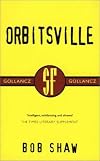
A BSFA Award-winning novel. For centuries the men of Earth had scoured the cosmos for habitable planets, but had found only one. Then Vance Garamond discovered something infinitely better - a Dyson Sphere, the interior of which, surrounding a sun, is larger than five billion earths.Tags
Recommendations






















Member Reviews
At the time of its publication in 1975, this novel by Bob Shaw was hailed as a major work of British science fiction. Fifty years later, and taken as a part of Shaw's overall output of novels, it appears less impressive. Shaw's economical style hardly does justice to the subject matter, the discovery of a Dyson sphere, a megastructure enclosing the planetary orbit of a world that might once have been like our own. Inside, a captive sun shines on a vast surface area with an almost infinite capacity to house populations in a benign, park-like environment.
Against this backdrop, Shaw briefly sketches out a story of human frailty and the excesses of power. Starship captain Vance Garamond allows the son of the ultra-powerful Elizabeth show more Lindstrom, owner of the Starflight Corporation that controls all interstellar flight, to die in an accident. Fearing for not only his own life, but also for that of his own wife and child, Garamond flees Earth; but there is no-where else to go. In years of exploration, only one other habitable planet has been found; and Starflight controls access to that. One other world has shown signs of life; but that world, Sagania, was rendered uninhabitable centuries before by its own inhabitants descending into war.
But archaeological expeditions had thrown up something interesting: records of a star which had apparently disappeared over time, and which Sagania's chroniclers had left tantalising clues that this was not down to natural causes. Garamond flees to this star, and discovers a Dyson sphere, which is in time christened Orbitsville. At a stroke, this solves all Earth's population concerns; but that brings Elizabeth Lindstrom back into the story, and her vengeance can only be postponed, not avoided.
The bulk of this novel is taken up with discussions of the nature of Orbitsville and - after an attempt to sabotage his ship is thwarted by Garamond and his crew - an exploration of a small segment of the interior of the sphere. Garamond and the other characters begin to find the immensity of the sphere changing their way of thinking; if there is so much unending lebensraum, what point is there in striving to do anything like exploring, or researching? As Voltaire's Candide said, all that is necessary to do is to cultivate one's garden; which, after rescuing his wife and son from Lindstrom's clutches, Garamond proceeds to do.
Bob Shaw's style, I have commented in earlier reviews, was probably over-influenced by the length limitations imposed both by the short story format he started writing in, and by length expectations from the publishers of his later novels. Orbitsville occupies little more than 180 pages to set up the plot, discover the sphere, travel to it, enter it and explore it. This is a very short book for a very big object. I was beginning to get the feeling that Shaw had written himself into something of a corner by positing the stultifying effect of a fascinating but ultimately bland setting. His characters find themselves losing the will to strive in the face of such physical immensity; and I began to wonder if Shaw himself found the concept having the same influence on his writing. He wraps the story up in little more than twenty pages, in which time his protagonist returns to the human beachhead, reports his findings to the world, rescues his family and retires from public life.
Shaw hardly does justice to the scale of his invention, though he did return to the setting much later in his career with two sequels. The Dyson sphere itself is made from pure handwavium. Freeman Dyson's thought experiment that gave rise to the concept was never intended as a megastructure; Dyson was only exploring the question of how an advanced civilization could harness the entire energy output of its star, and conceived of a mechanism to achieve that, though he only envisaged something like a constellation of power-harvesting satellites rather than a solid sphere enclosing a sun. Shaw's sphere is impossibly thin - others who have used the concept have implied more substantial engineering - the presence of gravity on its inside surface is never explained, and Shaw makes no attempt to engage in any archaeological exploration of the sphere's origin. Even the aliens his characters encounter have nothing to add to an exploration of the sphere or its origins; indeed, they are generally uncommunicative and incurious. Orbitsville just is.
I recollect finding the novel slightly disappointing when I first read it in 1977, precisely because it didn't do any deeper exploring of the world and its origins. Reading it again now, I still have the same feeling. More, the intervening years have left Shaw's depiction of women behind. Garamond's wife is only in the novel to play the role of wife and mother, put at risk by Elizabeth Lindstrom's lust for revenge. And Lindstrom herself is painted as all the more evil for being a woman who has ruthlessly built and exploited a business empire. It did cross my mind, however, that perhaps this was one of the sf novels eagerly read by certain 'tech bros', who lapped up the description of amoral Elizabeth Lindstrom as an ultra-powerful person for whom laws are mere inconveniences and personal relationships come down to simple matters of transactions without morals.
Is there a plus side? Well, Bob's trademark felicity with prose is on full display. He writes about his starships riding particle winds as though they were sailing ships; and his descriptions of the empty savannas of Orbitsville are deftly drawn. It's a shame that the story (at least in this book) doesn't expand to fill the space available. show less
Against this backdrop, Shaw briefly sketches out a story of human frailty and the excesses of power. Starship captain Vance Garamond allows the son of the ultra-powerful Elizabeth show more Lindstrom, owner of the Starflight Corporation that controls all interstellar flight, to die in an accident. Fearing for not only his own life, but also for that of his own wife and child, Garamond flees Earth; but there is no-where else to go. In years of exploration, only one other habitable planet has been found; and Starflight controls access to that. One other world has shown signs of life; but that world, Sagania, was rendered uninhabitable centuries before by its own inhabitants descending into war.
But archaeological expeditions had thrown up something interesting: records of a star which had apparently disappeared over time, and which Sagania's chroniclers had left tantalising clues that this was not down to natural causes. Garamond flees to this star, and discovers a Dyson sphere, which is in time christened Orbitsville. At a stroke, this solves all Earth's population concerns; but that brings Elizabeth Lindstrom back into the story, and her vengeance can only be postponed, not avoided.
The bulk of this novel is taken up with discussions of the nature of Orbitsville and - after an attempt to sabotage his ship is thwarted by Garamond and his crew - an exploration of a small segment of the interior of the sphere. Garamond and the other characters begin to find the immensity of the sphere changing their way of thinking; if there is so much unending lebensraum, what point is there in striving to do anything like exploring, or researching? As Voltaire's Candide said, all that is necessary to do is to cultivate one's garden; which, after rescuing his wife and son from Lindstrom's clutches, Garamond proceeds to do.
Bob Shaw's style, I have commented in earlier reviews, was probably over-influenced by the length limitations imposed both by the short story format he started writing in, and by length expectations from the publishers of his later novels. Orbitsville occupies little more than 180 pages to set up the plot, discover the sphere, travel to it, enter it and explore it. This is a very short book for a very big object. I was beginning to get the feeling that Shaw had written himself into something of a corner by positing the stultifying effect of a fascinating but ultimately bland setting. His characters find themselves losing the will to strive in the face of such physical immensity; and I began to wonder if Shaw himself found the concept having the same influence on his writing. He wraps the story up in little more than twenty pages, in which time his protagonist returns to the human beachhead, reports his findings to the world, rescues his family and retires from public life.
Shaw hardly does justice to the scale of his invention, though he did return to the setting much later in his career with two sequels. The Dyson sphere itself is made from pure handwavium. Freeman Dyson's thought experiment that gave rise to the concept was never intended as a megastructure; Dyson was only exploring the question of how an advanced civilization could harness the entire energy output of its star, and conceived of a mechanism to achieve that, though he only envisaged something like a constellation of power-harvesting satellites rather than a solid sphere enclosing a sun. Shaw's sphere is impossibly thin - others who have used the concept have implied more substantial engineering - the presence of gravity on its inside surface is never explained, and Shaw makes no attempt to engage in any archaeological exploration of the sphere's origin. Even the aliens his characters encounter have nothing to add to an exploration of the sphere or its origins; indeed, they are generally uncommunicative and incurious. Orbitsville just is.
I recollect finding the novel slightly disappointing when I first read it in 1977, precisely because it didn't do any deeper exploring of the world and its origins. Reading it again now, I still have the same feeling. More, the intervening years have left Shaw's depiction of women behind. Garamond's wife is only in the novel to play the role of wife and mother, put at risk by Elizabeth Lindstrom's lust for revenge. And Lindstrom herself is painted as all the more evil for being a woman who has ruthlessly built and exploited a business empire. It did cross my mind, however, that perhaps this was one of the sf novels eagerly read by certain 'tech bros', who lapped up the description of amoral Elizabeth Lindstrom as an ultra-powerful person for whom laws are mere inconveniences and personal relationships come down to simple matters of transactions without morals.
Is there a plus side? Well, Bob's trademark felicity with prose is on full display. He writes about his starships riding particle winds as though they were sailing ships; and his descriptions of the empty savannas of Orbitsville are deftly drawn. It's a shame that the story (at least in this book) doesn't expand to fill the space available. show less
Shaw's answer to Ringworld that came out a few years earlier. In this case, it's a Dyson Sphere, though I don't think that term appears anywhere in the book. The book is a bit schizophrenic. It begins and ends with a weak pulp thriller plot, female stereotypes included. It starts when our hero gets on the very wrong side of President Elizabeth, the psychopathic head of a company that controls spaceflight and exploration, and has to flee with his wife and son to parts unknown. Quite unconvincingly, a spaceship and its entire large crew is willing to flee with him. Things improve when they discovered the sphere and the world within. Shaw works hard to express how big the sphere is. As in "Really big. You just won't believe how vastly, show more hugely, mind-bogglingly big it is." This section of the novel feels very close to modern space opera a la Hamilton. Then it reverts to the pulp plot to wrap up.
Sort of recommended for the middle section exploring the sphere, if you ignore the misogyny and pulp bookends. show less
Sort of recommended for the middle section exploring the sphere, if you ignore the misogyny and pulp bookends. show less
I'm not sure why but I couldn't seem to put this one down. 240 pages in 12 days is a lot for me (and I read a graphic novel during that time too). It started off fast and ended the same way but the middle 80% wasn't action packed - just interesting. The book is subtle. Mr. Shaw doesn't go gonzo with the aliens and first contact stuff - it's all about (at least on the outside) a man with a mission. At a philosophical level it's more about the Dyson sphere thingy - which worked for me this time (I didn't understand it in Ringworld). It's about proportions that are almost impossible for the human mind to comprehend and how those proportions change the human (and alien) condition.
This is very "classic" sci-fi. Not as dated as some of the show more older stuff I've read but reading it reminded me of first reading the Foundation trilogy. The cigarette ads in my copy also added to the ambiance. show less
This is very "classic" sci-fi. Not as dated as some of the show more older stuff I've read but reading it reminded me of first reading the Foundation trilogy. The cigarette ads in my copy also added to the ambiance. show less
http://nwhyte.livejournal.com/2306834.html
It's rather of its time, which is to say that the evil ruler is all the more evil because she is a woman, and the hero's wife doesn't get to do much more than be his wife (he bravely fends off sexual advances from one of his own crew in a moment of crisis). In fairness, Shaw was good at portraying troubled marriages (always from the male partner's point of view) in his fiction, and this is another case in point. Orbitsville itself is a Dyson sphere, totally enclosing a star at earth-orbit distance, which our hero stumbles upon after fleeing the evil ruler; I felt a bit short-changed in that Shaw concentrates on the human politics of his story and devotes much less time to describing it than show more Niven does Ringworld or Clarke does Rama, and we end up in the climactic section of the book just doing a long aircraft trip across relatively featureless landscape. Perhaps the sequel has more stuff that I would like in it. show less
It's rather of its time, which is to say that the evil ruler is all the more evil because she is a woman, and the hero's wife doesn't get to do much more than be his wife (he bravely fends off sexual advances from one of his own crew in a moment of crisis). In fairness, Shaw was good at portraying troubled marriages (always from the male partner's point of view) in his fiction, and this is another case in point. Orbitsville itself is a Dyson sphere, totally enclosing a star at earth-orbit distance, which our hero stumbles upon after fleeing the evil ruler; I felt a bit short-changed in that Shaw concentrates on the human politics of his story and devotes much less time to describing it than show more Niven does Ringworld or Clarke does Rama, and we end up in the climactic section of the book just doing a long aircraft trip across relatively featureless landscape. Perhaps the sequel has more stuff that I would like in it. show less
A starship captain finds himself in big trouble with a maniacal dictator on Earth, and so flees with his wife and child to what he assumes is the vast emptiness of space. But he and his crew find something - a really, really big something.
The story was interesting enough, but as with most full-on sci-fi, I lost interest in the science-y details of spaceflight and such.
The story was interesting enough, but as with most full-on sci-fi, I lost interest in the science-y details of spaceflight and such.
The story of a Dyson sphere, the man who discovered it, and the woman who wants to kill him for killing her son. Characterization's a bit thin, but the story's interesting.
Shaw sets up a nice conflict which forces the protagonist to go on a do-or-die exploration mission, which of course results in the discovery named in the book title. The artefact is astrophysically plausible and the explanations are well done. The guy's troubles are not over though, and the baddie's vengeance plays itself out in a most satisfying way until the final (happy) ending. Not a demanding book but an enjoyable read, in the space opera/action SF genre.
Members
- Recently Added By
Lists

David Pringle's Science Fiction: The 100 Best Novels
101 works; 9 members

Hugo Award Winners and Nominees
6 works; 1 member
Author Information

118+ Works 6,002 Members
Some Editions
Awards and Honors
Series

Belongs to Publisher Series
Work Relationships
Is contained in
Common Knowledge
- Canonical title*
- Den största världen
- Original title
- Orbitsville
- Original publication date
- 1975-01
- People/Characters
- Vance Garamond; Elizabeth Lindstrom; Harald Lindstrom
- Important places
- Orbitsville
- First words
- The President was called Elizabeth, and it was thought by some that the mere coincidence of name had had a profound influence on her life-style.
- Last words
- (Click to show. Warning: May contain spoilers.)Orbitsville had achieved its purpose.
- Original language
- English
- Canonical DDC/MDS
- 823.08762
*Some information comes from Common Knowledge in other languages. Click "Edit" for more information.
Classifications
Statistics
- Members
- 582
- Popularity
- 50,661
- Reviews
- 8
- Rating
- (3.43)
- Languages
- 8 — Dutch, English, Finnish, French, German, Italian, Lithuanian, Swedish
- Media
- Paper, Ebook
- ISBNs
- 17
- ASINs
- 11