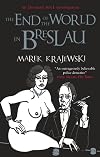
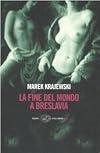
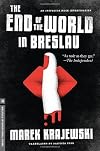
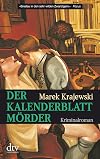
The End of the World in Breslau
by Marek Krajewski
Eberhard Mock - Publication Order (2), Eberhard Mock - Chronological Order (8)
On This Page
Description
"1927, Breslau, Poland: Two elaborate and sadistic murders are discovered within days of each other. The body of an unknown musician, bound and gagged, is found in the walls of a shoemaker's workshop--he's been sealed in alive. Elsewhere in the city, the mutilated body of a locksmith is found. Next to each victim is a torn-out calendar page, with the day of the death marked in blood. Nothing else seems to connect the cases. It falls to Criminal Councilor Eberhard Mock to uncover the link, show more the mystery taking him deep into the Breslau underground, a scene of bars and bordellos so sordid as to be nearly supernatural, and where seedy aristocrats trade in valuable information...and where, it becomes clear, a serial killer lurks. Meanwhile, Mock's own hard-drinking nocturnal habits soon threaten his volatile marriage, and prompt some strange behavior from his young wife...and before long, his team will be investigating not only two of the grisliest murders in the city's history, but Mock's own wife"--From publisher description. show lessTags
Recommendations
























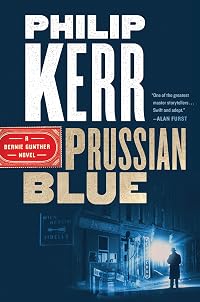

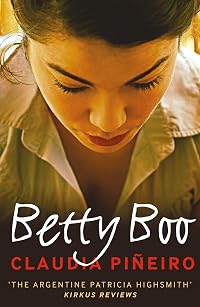

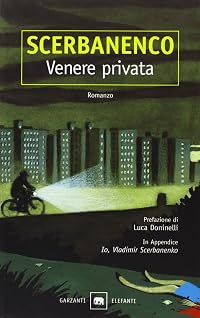
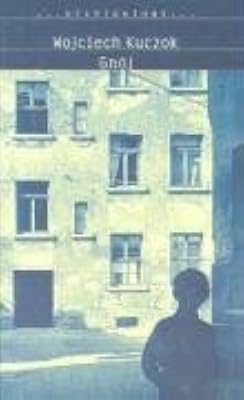

Member Recommendations


Member Reviews
From the very first page, I disliked this book. It is a short book and I read fast, so I did what I usually do: finished it. And came to have some pleasure in realizing that I loved hating it.
The action takes place in 1927 in Breslau, Germany. The city became part of Poland in 1945, after WWII, and its name was changed to Wroclaw, Poland. This story takes place during the build-up to the war but does not feature much, other than common Jew-hating (it was hard to tell if Mock takes part in this or just notices it), that indicates the rising of the National Socialists or the depressed economy of Germany.
Criminal Counsellor Eberhard Mock leads the investigation of several related murders, each marked by a page from a daily calendar. He show more seizes upon the theory that the dates were all-important, and the victims were not. This theory takes him into criminal files dating back many years, and ultimately to ancient books on crime, to discover crimes that are being re-created.
Fictional serial killers are always more organized than real-life serial killers. They tend to have grandiose, if nutty, thinking processes that make a kind of sense. And so it is here. The killer is consistent and sticks to the theme. I found the theory more than a little ridiculous, but of course it belongs to the author so of course it is correct, in its way.
I can live with ridiculous reasoning in fictional serial killers. It is easy enough to suspend disbelief in that area. What I live for are interesting characters and plots that are complex enough to keep me going. I can appreciate and enjoy bizarre characters, even evil ones, if they are interesting enough.
The "bizarre" in this case doesn't meet my criteria. Mock is an alcoholic who beats his wife and ridicules others. He lusts after other women and both he and others tend to see women as sexual objects, period. I think of the humor here as more crude than witty. The writing is intelligent but it does not obscure the lack of compassion.
To be fair, many have found this book worth reading and have enjoyed it. I do hope that the next reader likes it more than I did. show less
The action takes place in 1927 in Breslau, Germany. The city became part of Poland in 1945, after WWII, and its name was changed to Wroclaw, Poland. This story takes place during the build-up to the war but does not feature much, other than common Jew-hating (it was hard to tell if Mock takes part in this or just notices it), that indicates the rising of the National Socialists or the depressed economy of Germany.
Criminal Counsellor Eberhard Mock leads the investigation of several related murders, each marked by a page from a daily calendar. He show more seizes upon the theory that the dates were all-important, and the victims were not. This theory takes him into criminal files dating back many years, and ultimately to ancient books on crime, to discover crimes that are being re-created.
Fictional serial killers are always more organized than real-life serial killers. They tend to have grandiose, if nutty, thinking processes that make a kind of sense. And so it is here. The killer is consistent and sticks to the theme. I found the theory more than a little ridiculous, but of course it belongs to the author so of course it is correct, in its way.
I can live with ridiculous reasoning in fictional serial killers. It is easy enough to suspend disbelief in that area. What I live for are interesting characters and plots that are complex enough to keep me going. I can appreciate and enjoy bizarre characters, even evil ones, if they are interesting enough.
The "bizarre" in this case doesn't meet my criteria. Mock is an alcoholic who beats his wife and ridicules others. He lusts after other women and both he and others tend to see women as sexual objects, period. I think of the humor here as more crude than witty. The writing is intelligent but it does not obscure the lack of compassion.
To be fair, many have found this book worth reading and have enjoyed it. I do hope that the next reader likes it more than I did. show less
The Mock series goes beyond noir into crime-gothic. Europe of old was good for that. Kinky aristocrats. Dinky servants. Hinky women. Creepy crimes.
the short of it: Another excellent book in the Eberhard Mock series -- and I loved it.
the long of it: You can find my thoughts on my rather lengthy review .
the long of it: You can find my thoughts on my rather lengthy review .
Eberhard Mock, antiguo policía de Antivicio y actual vicejefe de la Sección Criminal, se mueve a sus anchas en la corrupta sociedad de la Breslau de entreguerras, chantajeando y abusando de sus poderes por doquier... pero ahora los acontecimientos amenazan con desbordarle.
Su joven mujer, la aristócrata Sophie, pianista, cocainómana, bisexual y simpatizantes del partido Nazi, se entrega a otros hombres para vengarse de los frecuentes desplantes de Mock. que solo vive para sus casos y sus placeres. Por mucho que intenta retenerla, Sophie amenaza con abandonarle justo cuando una ola de crímenes atroces conmueve a la ciudad. Las víctimas, cruelmente asesinadas, no guardan ninguna relación entre sí; únicamente, en cada caso, el show more asesino ha dejado su tarjeta de visita en forma de hoja de calendario.
¿Quién es el hipotético Asesino del Calendario, y qué importancia tienen las fechas en las que actúa? ¿Están implicados los miembros de la extraña secta apocalíptica Sepulchrum Mundi, que ha anunciado que se reproducirán crímenes y cataclismos de otros siglos? Mock tiene los recursos para resolver el caso y atrapar a los culpables, pero al vez no pueda salvarse a sí mismo. show less
Su joven mujer, la aristócrata Sophie, pianista, cocainómana, bisexual y simpatizantes del partido Nazi, se entrega a otros hombres para vengarse de los frecuentes desplantes de Mock. que solo vive para sus casos y sus placeres. Por mucho que intenta retenerla, Sophie amenaza con abandonarle justo cuando una ola de crímenes atroces conmueve a la ciudad. Las víctimas, cruelmente asesinadas, no guardan ninguna relación entre sí; únicamente, en cada caso, el show more asesino ha dejado su tarjeta de visita en forma de hoja de calendario.
¿Quién es el hipotético Asesino del Calendario, y qué importancia tienen las fechas en las que actúa? ¿Están implicados los miembros de la extraña secta apocalíptica Sepulchrum Mundi, que ha anunciado que se reproducirán crímenes y cataclismos de otros siglos? Mock tiene los recursos para resolver el caso y atrapar a los culpables, pero al vez no pueda salvarse a sí mismo. show less
Mar 23, 2023Spanish
Ein Krimi, der im Breslau der 20-er Jahre spielt. Was für eine faszinierende Basis für einen Krimi. Leider ist Kriminalrat die meiste Zeit nur betrunken oder isst. Dass da Einwohner der Stadt auf grausamste niedergemetzelt werden, ist für ihn kaum von Bedeutung. Seine Streitereien mit seiner jungen Ehefrau scheinen ihn viel mehr zu beschäftigen, obwohl er absolut nicht mit ihr umzugehen weiß. Viel zu spät kommt der Kehrpunkt in der Geschichte, aber das rettet auch nichts mehr. Der Täter wird mehr oder weniger beiläufig überführt, während auf einmal noch andere Tragödien ans Tageslicht kommen. Hier wollte jemand ganz eindeutig viel zu viel, und hat dabei nichts vernünftig hinbekommen. Schade.
Jan 10, 2010German
sehr anschauliche Ortsbeschreibungen, ein wenig zu ausführlich wird gegessen und getrunken
Aug 3, 2007German
Dit tweede deel uit de reeks van tot nu toe vijf boeken over Eberhard Mock is voor mij de eerste kennismaking met deze inspecteur, een creatie van de Poolse classicus Marek Krajewski. De romans spelen in de Duitse stad Breslau, dat nu als Wrocław op Pools grondgebied ligt. De romans zijn gesitueerd in de twintiger jaren van de vorige eeuw. De stad wordt bevolkt door Duitsers, Polen, Joden en Russen.
Lees verder op deze pagina van mijn boekenblog.
Lees verder op deze pagina van mijn boekenblog.
Nov 20, 2010Dutch
Members
- Recently Added By
Author Information

34 Works 1,010 Members
Awards and Honors
Awards
Series


Belongs to Publisher Series
Common Knowledge
- Canonical title
- The End of the World in Breslau
- People/Characters
- Eberhard Mock
- First words
- De zwarte taxichauffeur James Mynors zette de knop van de ruitenwissers op een hogere stand.
The black cab-driver, James Mynors, increased the speed of his wipers. - Last words
- (Click to show. Warning: May contain spoilers.)Toen wierp hij de krant tussen de tandraderen van de vuilniswagen en liep langs de betonnen treden naar beneden.
(Click to show. Warning: May contain spoilers.)Then he threw the newspaper into the grinding maw of the dustcart and walked down the concrete stairs.
Classifications
- Genres
- Fiction and Literature, Mystery, Historical Fiction
- DDC/MDS
- 891.8538 — Literature & rhetoric Literatures of other languages East Indo-European and Celtic literatures West and South Slavic languages (Bulgarian, Slovene, Polish, Czech, Slovak, Serbo-Croatian, and Macedonian) Polish Polish fiction 1989–
- LCC
- PG7170 .R26 .K6613 — Language and Literature Slavic languages and literatures. Baltic languages. Albanian language Slavic. Baltic. Albanian Slavic Polish
- BISAC
Statistics
- Members
- 182
- Popularity
- 180,289
- Reviews
- 7
- Rating
- (3.38)
- Languages
- 9 — Danish, Dutch, English, French, German, Italian, Polish, Slovak, Spanish
- Media
- Paper, Audiobook, Ebook
- ISBNs
- 25
- ASINs
- 5