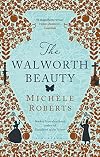
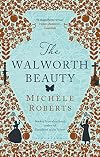
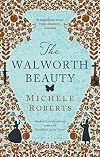
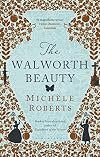
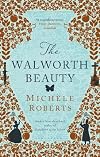
The Walworth Beauty
by Michèle Roberts
On This Page
Description
2011: When Madeleine loses her job as a lecturer, she decides to leave her riverside flat in cobbled Stew Lane, where history never feels far away and move to Apricot Place. Yet here too, in this quiet Walworth cul-de-sac, she senses the past encroaching: a shifting in the atmosphere, a current of unseen life. 1851: Joseph Benson has been employed by Henry Mayhew to help research his articles on the working classes. A family man with mouths to feed, Joseph is tasked with coaxing testimony show more from prostitutes. Roaming the Southwark streets, he is tempted by brothels' promises of pleasure - and as he struggles with his assignment, he seeks answers in Apricot Place, where the enigmatic Mrs Dulcimer runs a boarding house. As these entwined stories unfold, alive with the sensations of London past and present, the two eras brush against each other. show lessTags
Recommendations





















Member Reviews
From the first page, I knew this was going to be one of those reads rich in historical scents and sensations, a story to lose yourself in. ‘The Walworth Beauty’ by Michèle Roberts is set in the London district of Walworth, just south of the River Thames and part of the Borough of Southwark. It tells the story of Joseph Benson in 1851 and Madeleine in 2011, 160 years apart but experiencing so many similar things.
Madeleine loses her job as a lecturer of English literature, as a result she moves to a garden flat in Apricot Place, Walworth. She is delicately attuned to the history of London, walking its streets and seeing Virginia Woolf walking ahead of her, Hilda Doolittle passing her by, and, in a basement kitchen in Lamb’s Conduit show more Street, a mistress instructing her new housemaid. Just how closely Madeleine is connected to the past becomes clearer in the second half of the story as she explores Walworth, researching its local history and meeting her new neighbours.
Joseph and his family live in a rented house in Lamb’s Conduit Street. He works for sociologist Henry Mayhew, researching the working conditions and social backgrounds of prostitutes in Walworth. Joshua is a contradictory character, perhaps a man of his time with contemporary attitudes and assumptions about women. Still mourning his idolised first wife Nathalie, he is outwardly respectable but has money problems. He is a spendthrift and betrays Cara his second wife [and Nathalie’s older sister] by visiting prostitutes, viewing it as a necessity so Cara will not conceive again, rather than unfaithfulness. His research takes him to a house in Apricot Place where he meets landlady Mrs Dulcimer, an exotic brown-skinned woman who Joshua mistakes for a madam but who in fact helps struggling young women to establish themselves with jobs and homes.
The theme of classification runs throughout this novel, the formal type of labelling as in Mayhew’s study and the Dewey Decimal labelling system for libraries, but also the informal way of labelling people, pre-judging, jumping to conclusions. Mayhew classifies prostitutes as criminals and it is with this view that Joseph conducts his first research. In meeting Mrs Dulcimer, however, he learns the true stories of struggle and abandonment in the lives of many of the women he labels so easily as whores. He is an unreliable judge of women’s characters, however, even those closest to him.
We see similar classifications in Madeleine’s story in modern-day Walworth. There are themes of grief, longing for what is out of reach, women’s position in society and men’s attitudes towards women and sexuality. Judgements based on class and sex. The two storylines are connected in places by hints of ghosts or presences, which I found a little unsatisfactory. This is a novel about the different parts of society, some isolated, some overlapping like a Venn diagram, and as true today as in Victorian London.
I enjoyed unpicking the connections between 1851 and 2011, handled so delicately that it would be easy to pass them by. Such as Mrs Dulcimer’s missing earring, surrendered as an identifying token at the Foundling Hospital when she handed in her baby, is seen by Madeleine in a display at the Foundling Museum. There are countless examples like this of mirrored details and parallel experiences, connecting Joseph and Mrs Dulcimer with Madeleine.
‘The Walworth Beauty’ is one of the most enjoyable books I have read this year and is worth re-reading to absorb the beautiful detail written by a novelist entwined with her story and subject.
Read more of my book reviews at http://www.sandradanby.com/book-reviews-a-z/ show less
Madeleine loses her job as a lecturer of English literature, as a result she moves to a garden flat in Apricot Place, Walworth. She is delicately attuned to the history of London, walking its streets and seeing Virginia Woolf walking ahead of her, Hilda Doolittle passing her by, and, in a basement kitchen in Lamb’s Conduit show more Street, a mistress instructing her new housemaid. Just how closely Madeleine is connected to the past becomes clearer in the second half of the story as she explores Walworth, researching its local history and meeting her new neighbours.
Joseph and his family live in a rented house in Lamb’s Conduit Street. He works for sociologist Henry Mayhew, researching the working conditions and social backgrounds of prostitutes in Walworth. Joshua is a contradictory character, perhaps a man of his time with contemporary attitudes and assumptions about women. Still mourning his idolised first wife Nathalie, he is outwardly respectable but has money problems. He is a spendthrift and betrays Cara his second wife [and Nathalie’s older sister] by visiting prostitutes, viewing it as a necessity so Cara will not conceive again, rather than unfaithfulness. His research takes him to a house in Apricot Place where he meets landlady Mrs Dulcimer, an exotic brown-skinned woman who Joshua mistakes for a madam but who in fact helps struggling young women to establish themselves with jobs and homes.
The theme of classification runs throughout this novel, the formal type of labelling as in Mayhew’s study and the Dewey Decimal labelling system for libraries, but also the informal way of labelling people, pre-judging, jumping to conclusions. Mayhew classifies prostitutes as criminals and it is with this view that Joseph conducts his first research. In meeting Mrs Dulcimer, however, he learns the true stories of struggle and abandonment in the lives of many of the women he labels so easily as whores. He is an unreliable judge of women’s characters, however, even those closest to him.
We see similar classifications in Madeleine’s story in modern-day Walworth. There are themes of grief, longing for what is out of reach, women’s position in society and men’s attitudes towards women and sexuality. Judgements based on class and sex. The two storylines are connected in places by hints of ghosts or presences, which I found a little unsatisfactory. This is a novel about the different parts of society, some isolated, some overlapping like a Venn diagram, and as true today as in Victorian London.
I enjoyed unpicking the connections between 1851 and 2011, handled so delicately that it would be easy to pass them by. Such as Mrs Dulcimer’s missing earring, surrendered as an identifying token at the Foundling Hospital when she handed in her baby, is seen by Madeleine in a display at the Foundling Museum. There are countless examples like this of mirrored details and parallel experiences, connecting Joseph and Mrs Dulcimer with Madeleine.
‘The Walworth Beauty’ is one of the most enjoyable books I have read this year and is worth re-reading to absorb the beautiful detail written by a novelist entwined with her story and subject.
Read more of my book reviews at http://www.sandradanby.com/book-reviews-a-z/ show less
This novel read like a love letter to London and I've given it 7/10 mostly for this. I walked its streets, corners and alleys in 1851 and in the 21st century, getting to know Walworth and the city. Michele Robertis has a fantastic sense of the place and conveys that well. The two stories, that intertwine, between Joseph in 1851 and Madeleine in the 21st century weave along in the odd and unexpected way that people's lives go and both characters walked miles around the city, my preferred way of getting around and this gave the novel a step by step flow. While, for me, Madeleine seemed a friendly and warm person, Joseph comes from a different time and while has some sympathetic characteristics is more difficult to like with his lack of show more fidelity and sympathy. A love of cooking and good food peppers the pages in both ages and once Joseph is able to be someone else he becomes more likeable. As well as Apricot Place, objects appear in 1851 and the 21st century, including a turquoise jar and an earring giving readers a sense of how the past touches our lives in a literal sense. I found the ending slightly disappointing as it seemed to be building up to something more. show less
I do love a story with a dual timeline, especially one that includes London and its history. When I first heard about The Walworth Beauty, I was really intrigued. I didn’t know very much about Henry Mayhew and to read about one of his researchers sounded like a great way to learn some history combined in fiction. But what really struck me on reading this book was the strength of Michele Roberts’ prose. It’s dense, poetic and lyrical. It sweeps you up in the London fog and puts you right in the place of some of the action, Apricot Place.
The story in split into two parts, almost modern day London (2011) with Madeleine and in 1851 with Joseph. Madeleine is discontent with her life – she lost her job as a lecturer and now living in show more the heart of London’s City district doesn’t feel quite right. So she moves out to South London to Apricot Place. The people there are different – friendly, exotic and somehow more real life. With more time Madeleine becomes interested in the works of Henry Mayhew and the past comes back to touch her. In 1851, Joseph used to be a police clerk, until dysentery and sickness took him away. Now he’s a researcher for Henry Mayhew, being paid to ask questions of the working class people of London, in particular prostitutes. It’s a tempting place for Joseph and after his coat is taken at one house, he is intrigued by Mrs Dulcimer who hides a lot of secrets…
No matter what time period you’re reading about, the setting is incredibly realistic. It’s clear that Roberts has done her research carefully, right down to the last detail. London is lovingly rendered, both the good and the less desirable. I felt that Joseph’s past was incredibly well rendered and true to the issues of the time. Another thing that struck me is the use of food – Madeleine cooks various dishes and reflects on those eaten by Mayhew’s subjects. Food also plays a role in Joseph’s home life – from the horrible chops to the more desirable street food.
I did find Joseph’s story more interesting than Madeleine’s, possibly because of the setting. It’s rich with detail unfamiliar to me, while I know already what Madeleine’s daily life looks like in London. Hence I didn’t always find her connections to the past convincing. I found myself more comfortable in Joseph’s world. But overall, I thought the prose was the standout of this story – rich and leaving me wanting more.
Thank you to Bloomsbury for the ARC of this book. My review is honest.
http://samstillreading.wordpress.com show less
The story in split into two parts, almost modern day London (2011) with Madeleine and in 1851 with Joseph. Madeleine is discontent with her life – she lost her job as a lecturer and now living in show more the heart of London’s City district doesn’t feel quite right. So she moves out to South London to Apricot Place. The people there are different – friendly, exotic and somehow more real life. With more time Madeleine becomes interested in the works of Henry Mayhew and the past comes back to touch her. In 1851, Joseph used to be a police clerk, until dysentery and sickness took him away. Now he’s a researcher for Henry Mayhew, being paid to ask questions of the working class people of London, in particular prostitutes. It’s a tempting place for Joseph and after his coat is taken at one house, he is intrigued by Mrs Dulcimer who hides a lot of secrets…
No matter what time period you’re reading about, the setting is incredibly realistic. It’s clear that Roberts has done her research carefully, right down to the last detail. London is lovingly rendered, both the good and the less desirable. I felt that Joseph’s past was incredibly well rendered and true to the issues of the time. Another thing that struck me is the use of food – Madeleine cooks various dishes and reflects on those eaten by Mayhew’s subjects. Food also plays a role in Joseph’s home life – from the horrible chops to the more desirable street food.
I did find Joseph’s story more interesting than Madeleine’s, possibly because of the setting. It’s rich with detail unfamiliar to me, while I know already what Madeleine’s daily life looks like in London. Hence I didn’t always find her connections to the past convincing. I found myself more comfortable in Joseph’s world. But overall, I thought the prose was the standout of this story – rich and leaving me wanting more.
Thank you to Bloomsbury for the ARC of this book. My review is honest.
http://samstillreading.wordpress.com show less
This book was an almost-random selection from he library shelves on a day when none of the books on my TBR list was available. I think I was swayed by two things: the "Booker shortlisted author" tag on the cover, and the cover flap summary that revealed the story was partly about a retired academic. In fact, "Booker shortlisted" is a real mixed bag. As a general rule, these days I think the Man Booker committee are out of step with my conservative reading tastes, but as my previous book (Fridlund's History of Wolves, Man Booker shortlist 2017) taught me, sometimes they're spot on. In this case, however, the fact that Michele Roberts was shortlisted at some time in the past cannot in any way be taken as an endorsement for this particular show more work. I can't see that it has anything remarkable to offer. In fact, I took the Nancy Pearl option and returned it to the library shelves after around 100 pages of reading failed to inspire me to go further. It follows a rather well-worn trope of two stories set a long time apart but with a connection between them. This can work well, but here the apparent connection between the stories hadn't really added anything to my enjoyment or interest by the time I called it quits. I think I was really looking for more depth of character than was apparent. There was plenty of evidence of the author's historical research - perhaps even too much - so I didn't doubt the authenticity of the older story's setting and that provided a certain amount of interest. However, as I said, one of the reasons for selecting the book was the story of the retired academic but that story seemed somewhat less convincing and didn't seem to be going anywhere interesting. We didn't really get very deep into the character of this person, and in a way it almost seemed to me that she was there simply to fulfill the connection of the *real* historical story with the current world. All that being said, I didn't read past about 100 pages and maybe it develops substantially in the later pages and I would have ended up liking it much more. show less
1851 and Joseph Benson is working for Mayhew on his study of London's people. Joseph's task is to find out about the lives of the prostitutes in the Walworth area of South London. He finds the task hard as he loses focus, obsessed by his late wife and subject to lust, and he seeks help from the enigmatic Mrs Dulcimer, a landlady. 2011 and Madeleine has just been made redundant from her job, she relocates to a flat in Walworth but finds it hard to adjust. As time goes by the two characters become more intertwined.
At times this book is wonderful, the prose has a hypnotic and poetic quality that slips over the reader. At other times it is just frustrating and too enigmatic to satisfy. The story of Mayhew's work is interesting and this show more aspect of the story runs parallel to 'The Streets' by Anthony Quinn. The sections about Joseph are longer and there is a narrative about loss and betrayal. The parts about Madeleine are less successful and I particularly disliked the strand about Emm, the 'vicar'. Having lived in the area around Walworth Road many years ago I felt nostalgia but the book did not really grip as it should. show less
At times this book is wonderful, the prose has a hypnotic and poetic quality that slips over the reader. At other times it is just frustrating and too enigmatic to satisfy. The story of Mayhew's work is interesting and this show more aspect of the story runs parallel to 'The Streets' by Anthony Quinn. The sections about Joseph are longer and there is a narrative about loss and betrayal. The parts about Madeleine are less successful and I particularly disliked the strand about Emm, the 'vicar'. Having lived in the area around Walworth Road many years ago I felt nostalgia but the book did not really grip as it should. show less
While the book tried to evoke Victorian Southwark, and succeeded to some extent, I had very little sympathy for the protagonist. Most of the characters were sketchy. I had great hopes for learning more about Mayhew, who created the book still referenced today about the poor of London, but he was just used as the boss who fires Joseph. The novel goes back and forth between Victorian and contemporary times, and although there are a few intriguing threads between the two, it is not "An atmospheric ghost story" (according to the Mail on Sunday, quoted on the cover), but just a story.
I admit I didn't love this. I found the lushness of the language an impediment rather than a plus. But I think many people will find it just their thing. I'd have like more ghost, less sensation.
My Bookpage review https://bookpage.com/reviews/21948-michele-roberts-walworth-beauty#.WoWsLU2WwdU
My Bookpage review https://bookpage.com/reviews/21948-michele-roberts-walworth-beauty#.WoWsLU2WwdU
Members
- Recently Added By
Lists

Netgalley Reads
456 works; 3 members

Books Read in 2018
4,360 works; 110 members
Author Information

34+ Works 1,677 Members
Poet and novelist Michele Roberts was born in Hertfordshire, England and graduated from Oxford University. She has written two volumes of poetry (The Mirror of the Mother and Psyche and the Hurricane), a collection of short stories (During Mother's Absence) and several novels (including Daughters of the House, winner of the W. H. Smith Literary show more Award). (Bowker Author Biography) Half English & half French, Michele Roberts divides her time between London & Mayenne, France. She is the author of eleven highly acclaimed novels, including "Fair Exchange" & "Daughters of the House", which won the WH Smith Literary Award & was shortlisted for the Booker Prize. (Publisher Provided) show less
Classifications
Statistics
- Members
- 79
- Popularity
- 399,657
- Reviews
- 8
- Rating
- (3.18)
- Languages
- English, Turkish
- Media
- Paper, Audiobook, Ebook
- ISBNs
- 8
- ASINs
- 1