On This Page
Description
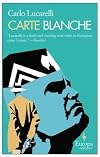
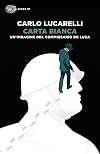
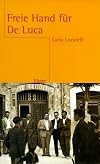
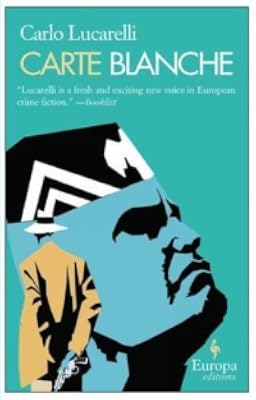
De Luca is a |good cop| living through a dark period in Italian history. This first instalment in the enormously successful De Luca Trilogy is set in the final days of WW2. In addition to being a first-rate thriller, it is a compelling look at a very particular moment in Italian history. Lucarelli's sharp, incisive writing perfectly renders the period and the characters. De Luca, with his shoulder-shrugging, hip lip-biting and his perennial insomnia, is an ordinary man caught in show more extraordinary times; his insouciance is a perfect antidote to the era's fanaticism. show lessTags
Recommendations


Member Reviews
A slim but substantial novel from one of Italy's most popular crime writers (the other being [author:Andrea Camilleri]). Lucarelli, who writes extensively for television, moves the plot along with all the usual cliches of the genre - a tired washed-up detective, a fiery woman who is either a victim or the culprit etc - but manages to save the day by convincing characterisation, and innovation.
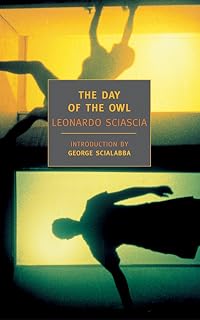
The innovation is in the setting. Just as [author:Leonardo Sciasia] managed to convey the essence of the mafia through a detective novel, in his elegant [book:Day of the Owl], so Lucarelli manages to meditate on perhaps the most troubling period of recent Italian history, when the rump Republic of Salo continued Mussolini's fascism after the show more allied invasion.
Lucarelli's detective, De Luca, represents order, but it's a tainted order that is near to collapse as the allies advance. What sense has it to investigate a crime under such circumstances? That's the question that is posed by Lucarelli. show less
The innovation is in the setting. Just as [author:Leonardo Sciasia] managed to convey the essence of the mafia through a detective novel, in his elegant [book:Day of the Owl], so Lucarelli manages to meditate on perhaps the most troubling period of recent Italian history, when the rump Republic of Salo continued Mussolini's fascism after the show more allied invasion.
Lucarelli's detective, De Luca, represents order, but it's a tainted order that is near to collapse as the allies advance. What sense has it to investigate a crime under such circumstances? That's the question that is posed by Lucarelli. show less
The year is 1945 and Italy is still at the mercy of the fascist regime for a little while longer. Commissario De Luca has just been transferred to the regular police force; there are six different organizations policing the nation and each other, and De Luca figures that his move will mean less politics and less danger. His first case is to figure out who killed a very well connected playboy who was found in his luxurious apartment stabbed and castrated. De Luca is told he has 'carte blanche' to investigate and find the murderer, as long as the person he finds is the one his superiors want him to arrest. Soon he is hopelessly embroiled between opposing power factions pitted against one another, drugs use and trafficking, sex, more dead show more bodies and a very real threat to his life. This is the first in the hardboiled De Luca trilogy, and there's a good chance I'll be finishing this series of short tomes quite soon. show less
First Line: The bomb exploded suddenly, with a ferocious blast, right as the funeral procession was crossing the street.
In the final year of World War II, as Mussolini's Italy is shattering to pieces, Commissario De Luca finds himself in charge of a murder investigation. The body of well-connected Fascist Rehinard Vittorio has been found stabbed to death and castrated-- and since he was also a drug dealer and philanderer, there is no lack of suspects in his death. The powers that be have promised De Luca their full cooperation... as long as De Luca arrests the "right" suspect.
The plot of this slender little volume moves at the speed of light and leaves precious little time for characterization. De Luca himself was the most sharply show more drawn, but even he would have been a bit fuzzy if I hadn't read the preface first.
The character of De Luca is based on an actual person who was a policeman in Italy for forty years-- from World War II to the 1980s. Lucarelli found the man to be fascinating:
" ...after having heard that man recount forty years of his life in the Italian political police, during which with every change of government he found himself having to tail, to spy on, and to arrest those who had previously been his bosses, the question came spontaneously to me: 'Excuse me... who do you vote for?'"
The man who inspired the character of De Luca always asserted that he was a policeman; politics simply weren't in his job description. Personally, I think he had to have had one of the most finely tuned senses of self preservation on record.
Although there is much to like in Carte Blanche, I found the problems to outweigh the pleasures. The brevity of the book does not lend itself to characterization or to a true sense of the time and place in which it occurs. The bare bones plot reminds me of my shopping strategy during the holiday season: get in there, get it, and get out. (It also contained few surprises.) It's likely that the book suffers when read by anyone who is not more fluent in Italian political history. The translation suffered occasionally when slang was involved.
That sounds like quite a bit of complaint for such a little book, and perhaps it is. The reason for it? The character of De Luca, the time period in which the book takes place, and Lucarelli's writing style itself all raised my expectations. After my reading experience with this first book in the trilogy I doubt that I will read the others. Of course... your mileage may vary! show less
In the final year of World War II, as Mussolini's Italy is shattering to pieces, Commissario De Luca finds himself in charge of a murder investigation. The body of well-connected Fascist Rehinard Vittorio has been found stabbed to death and castrated-- and since he was also a drug dealer and philanderer, there is no lack of suspects in his death. The powers that be have promised De Luca their full cooperation... as long as De Luca arrests the "right" suspect.
The plot of this slender little volume moves at the speed of light and leaves precious little time for characterization. De Luca himself was the most sharply show more drawn, but even he would have been a bit fuzzy if I hadn't read the preface first.
The character of De Luca is based on an actual person who was a policeman in Italy for forty years-- from World War II to the 1980s. Lucarelli found the man to be fascinating:
" ...after having heard that man recount forty years of his life in the Italian political police, during which with every change of government he found himself having to tail, to spy on, and to arrest those who had previously been his bosses, the question came spontaneously to me: 'Excuse me... who do you vote for?'"
The man who inspired the character of De Luca always asserted that he was a policeman; politics simply weren't in his job description. Personally, I think he had to have had one of the most finely tuned senses of self preservation on record.
Although there is much to like in Carte Blanche, I found the problems to outweigh the pleasures. The brevity of the book does not lend itself to characterization or to a true sense of the time and place in which it occurs. The bare bones plot reminds me of my shopping strategy during the holiday season: get in there, get it, and get out. (It also contained few surprises.) It's likely that the book suffers when read by anyone who is not more fluent in Italian political history. The translation suffered occasionally when slang was involved.
That sounds like quite a bit of complaint for such a little book, and perhaps it is. The reason for it? The character of De Luca, the time period in which the book takes place, and Lucarelli's writing style itself all raised my expectations. After my reading experience with this first book in the trilogy I doubt that I will read the others. Of course... your mileage may vary! show less
Se ho capito bene questo è stato il romanzo d’esordio di Lucarelli, e allora tanto di cappello perché come opera prima l’ho trovato un libro già abbastanza complesso, anche solo per l’ambientazione, e ben riuscito da vari punti di vista, o almeno a me è piaciuto parecchio.
http://www.naufragio.it/iltempodileggere/21789
http://www.naufragio.it/iltempodileggere/21789
Fast-paced and it would help if you brushed up on Italian political history especially at WWII's end. Absorbing read all the same.
It was interesting to read a mystery by an Italian writer after reading Michael Dibdin series featuring Aurelio Zen. There are affinities but this novel is grimly serious: The protagonist, recently returned to straight police work after a stint in the political police, tries to solve a murder honestly while also trying to avoid death at the hands of, variously, the Gestapo, the partisans and the rump Fascist government.
Abbastanza noioso, poco coinvolgente. L'ambientazione, che dovrebbe essere il punto di forza, rimane in parte anonima e talvolta un po' forzata.
Members
- Recently Added By
Lists

Italian Literature
558 works; 42 members

#MysteryBingo2023Silver(Original)
36 works; 1 member
#MysteryBingo2023Silver(Revised)
36 works; 1 member
#JustTheFacts2023Silver
60 works; 1 member
Author Information

134+ Works 4,018 Members
Some Editions
Series

Belongs to Publisher Series
La memoria [Sellerio] (215)
Work Relationships
Is contained in
Common Knowledge
- Canonical title
- Carte Blanche
- Original title
- Carta bianca
- Original publication date
- 1990
- People/Characters
- Commissario De Luca
- Epigraph
- Officers and agents of the public security forces are entrusted with the safeguard of citizens' welfare and the preservation of public order, the protection of persons and of properties, and, in general, the prevention of cri... (show all)me; they gather evidence of these crimes, and proceed, in accordance with the law, to the identification and arrest of delinquents.
- (Art. 1, Consolidated Act of Public Safety Laws, 1931) - First words
- The bomb exploded suddenly, with a ferocious blast, right as the funeral procession was crossing the street.
- Last words
- (Click to show. Warning: May contain spoilers.)De Luca shook the hand, with a quick nod of the head, then got out and ran to the waiting car, engine running and door open, that, without giving him time to close it, sped off, heading north.
- Disambiguation notice
- Original title: Carta Bianca
Classifications
- Genres
- Fiction and Literature, Mystery
- DDC/MDS
- 853.914 — Literature & rhetoric Italian, Romanian & related literatures Italian fiction 1900- 20th Century 1945-1999
- LCC
- PQ4872 .U255 .C37 — Language and Literature French, Italian, Spanish and Portuguese literatures Italian literature Individual authors, 1961-2000
- BISAC
Statistics
- Members
- 297
- Popularity
- 108,204
- Reviews
- 10
- Rating
- (3.48)
- Languages
- Dutch, English, German, Italian
- Media
- Paper
- ISBNs
- 10