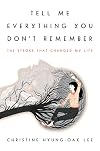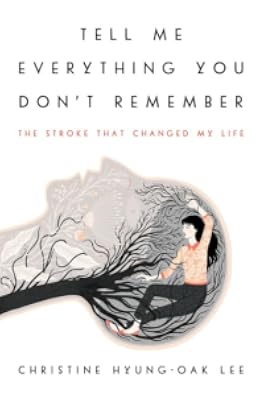
Tell Me Everything You Don't Remember: The Stroke That Changed My Life
by Christine Hyung-Oak Lee
On This Page
Description
Christine Hyung-Oak Lee woke up with a headache on New Years Eve 2006. By that afternoon, she saw the world quite literally upside down. By New Years Day, she was unable to form a coherent sentence. And after hours in the ER, days in the hospital, and multiple questions and tests, she learned that she had had a stroke. For months, Lee outsourced her memories to her notebook. It is from these memories that she has constructed this frank and compelling memoir.Tags
Recommendations



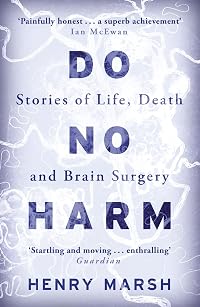

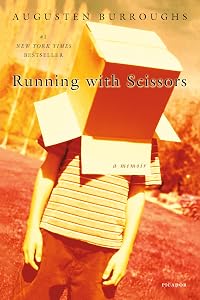
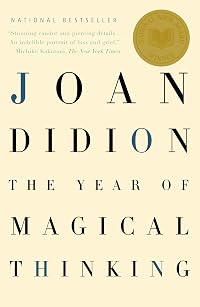
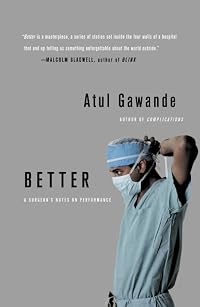






Member Reviews
The author suffered a stroke at age 33, due to an undiagnosed hole in her heart. While not visibly disabling, she spent long months trying to retrain her brain, and compensate for thoughts she couldn't seem to hold onto. She kept a journal of her recovery, its toll on her marriage, and the forced introspection. Parts of the book are disjointed, and I think she was trying to show us how her brain was working/not working during the recovery. This worked for me, but might not for everybody.
This is saved by its beautiful writing -- she truly is a skilled wordsmith. But as a memoir, it doesn't add up. The balance between medical and personal is off, and she doesn't let us in for some pivotal parts of her life. We don't find out until the epilogue, for instance, that she experienced 10 years of infertility (!) that was magically cured by her stroke (?).
I read this book in two spurts, and between them, my life changed immeasurably. Considering the themes of change and identity shifts, it seems as good a strategy as any.
I happened to read this Outside magazine profile of a climber with PTSD the day I wrapped this up. They pair well.
Christine's language reminded me of Hemingway, in the way it was pared-down and stripped to simple syntax.
If you're interested in a first-person perspective of brain change and trauma, you'll like this. However, it is somewhat oddly paced: think Memento narrated by an MFA.
I happened to read this Outside magazine profile of a climber with PTSD the day I wrapped this up. They pair well.
Christine's language reminded me of Hemingway, in the way it was pared-down and stripped to simple syntax.
If you're interested in a first-person perspective of brain change and trauma, you'll like this. However, it is somewhat oddly paced: think Memento narrated by an MFA.
OMG, this is an annoying woman. She doesn't show that she has ever thought about anyone but herself except in the way that she can use their stories to write her own. You know the old joke, "Well enough talk about me, tell me what you think about me?" Ha, ha, but rather grating when there's a whole book full of it. I know anyone living with a devastating life event must think a great deal about herself in order to recover, but I'm pretty sure that recovery can be facilitated by thinking about others, their lives and their feelings at least part of the time. Plus, she was a cutter. I feel about cutters the same way fundamentalists feel about transgender people - it's trendy, self serving and non-authentic. Another example of her show more narcissism.
She does have a great many interesting medical details about strokes, medical treatments, and how parts of the body function; however, before she makes a firm pronouncement about the wonderful ability of the brain to regenerate itself while none of the other organs of the body can, specifically mentioning the liver, she should do a little research about other organs in the body. show less
She does have a great many interesting medical details about strokes, medical treatments, and how parts of the body function; however, before she makes a firm pronouncement about the wonderful ability of the brain to regenerate itself while none of the other organs of the body can, specifically mentioning the liver, she should do a little research about other organs in the body. show less
Repetitive
Biog L4775L 2017
Members
- Recently Added By
Author Information
2 Works 105 Members
Awards and Honors
Awards
Classifications
- Genres
- Biography & Memoir, Nonfiction, General Nonfiction
- DDC/MDS
- 616.81 — Applied science & technology Medicine & health Diseases, Allergies, Skin Conditions Nervous Disorders: Autism, Anorexia, OCD Cerebrovascular diseases, stroke
- LCC
- RC388.5 .L44 — Medicine Internal medicine Internal medicine Neurosciences. Biological psychiatry. Neuropsychiatry Neurology. Diseases of the nervous system
- BISAC
Statistics
- Members
- 104
- Popularity
- 311,819
- Reviews
- 7
- Rating
- (3.48)
- Languages
- English
- Media
- Paper, Audiobook, Ebook
- ISBNs
- 4
- ASINs
- 2