On This Page
Description
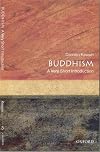
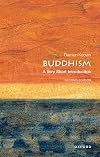
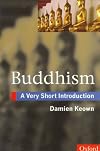
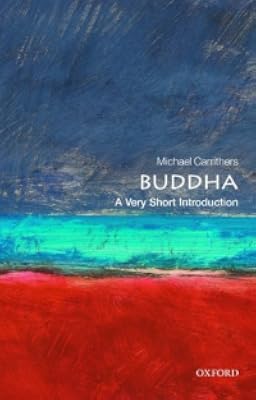
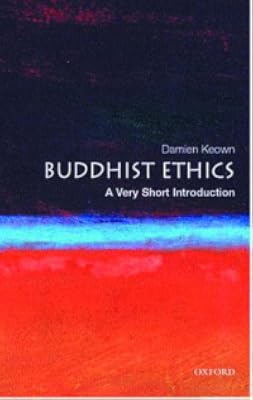
This Very Short Introduction offers listeners a superb overview of the teachings of the Buddha, as well as a succinct guide to the integration of Buddhism into daily life. What are the distinctive features of Buddhism? Who was the Buddha, and what are his teachings? Words such as "karma" and "nirvana" have entered our vocabulary, but what do they mean? Damien Keown provides a lively, informative response to these frequently asked questions about Buddhism. As he sheds light into how Buddhist show more thought developed over the centuries, Keown also highlights how contemporary dilemmas can be faced from a Buddhist perspective. In the second edition Keown provides new perspectives on Buddhist thought, including up-to-date material about the evolution of Buddhism throughout Asia, the material culture of Buddhism and its importance, new teachings on the ethics of war and peace, and changes to ethnicity, class, and gender. show lessTags
Recommendations




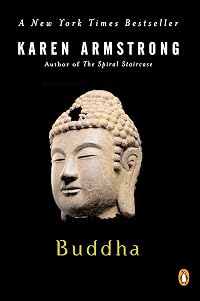
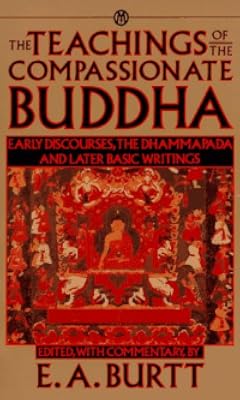

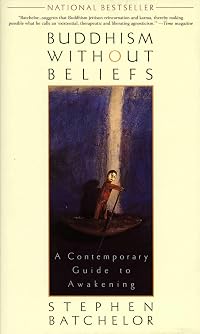

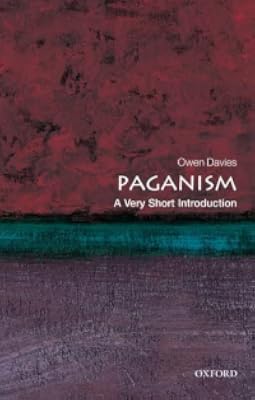


Member Reviews
I’ve not given this one five stars because I necessarily believe a single word that’s in it; my rating is for the writing, which you’d be hard put to improve upon. Also, for a book only 158 pages long, it’s exceptionally thorough—outlining not just the core ideas of Buddhist thought, but everything from the role of women in Buddhism to its relationships with warfare and terrorism.
It covers: the life of the Buddha himself; Buddhist cosmology and psychology; the history and spread of Buddhism around the world; meditation; Buddhist ethics; and Buddhism in the modern world, particularly the West. It includes photos, diagrams, maps and a timeline of major events.
I’ve read a number of these Very Short Intros now, and show more this has been the best of them: the writing is as clear as day, even the more abstruse details explained simply and plainly. Unlike one or two of those others, I reckon for anyone completely new to the subject this one really would make a first-class introduction. show less
It covers: the life of the Buddha himself; Buddhist cosmology and psychology; the history and spread of Buddhism around the world; meditation; Buddhist ethics; and Buddhism in the modern world, particularly the West. It includes photos, diagrams, maps and a timeline of major events.
I’ve read a number of these Very Short Intros now, and show more this has been the best of them: the writing is as clear as day, even the more abstruse details explained simply and plainly. Unlike one or two of those others, I reckon for anyone completely new to the subject this one really would make a first-class introduction. show less
Not very good. Yeah, it was an OK introduction to Buddhism so I don't want to knock it TOO much but it had a lot of problems, in my view. The tone is set when, in his introduction, he mentions Edward Said so he can say "we should be careful looking at Buddhism because orientalism" but then proceeds to say "we don't need to buy into Said's conspiracy theories"! It's not the typical fetishism you see in popular books, but he does tend to idealise Buddhism, covering up its flaws and history - for example, he talks about Buddhism being considered one of the "most ethical" religions, compares Buddhism's "peacefulness" to the crusades and jihad, talks about how Buddhism isn't dogmatic, glosses over issues like women's rights, says Tibet was a show more theocracy but doesn't say anything else past "Tibet occupation bad", etc. He seems to think of Buddhism as somehow a uniquely "good" religion.
I also really disliked his constant use of Pali words. He says a word in English, puts the Pali in brackets, and then uses the Pali to refer to the concept later (although inconsistently). This makes the text tougher to follow and doesn't really feel important for an introduction (Although weirdly when discussing early Buddhist divisions he uses English words only and they don't seem to be conventional terms). Most of the "Buddhism in the West" chapter doesn't really feel important or useful - just listing dates and names. There's not much at all about the actual practise of Buddhism - how people actually experience it - which seems important. Although it talks about Mahayana specifically, he doesn't talk about Theravada except to say that it exists. When talking about practise and theory he says stuff like "Some say x but others say y" without identifying who "some" is or what the majority view is or anything, which is incredibly unhelpful. There are a few things which I found kind of insulting but I think that'd just be me - they're weird humanistic liberal things that seem to ignore material reality.
Ultimately, although it was an introduction and I learnt some things, I felt I got less out of it than reading Wikipedia - it could have been much improved and I was pretty disappointed. Not really worth it. show less
I also really disliked his constant use of Pali words. He says a word in English, puts the Pali in brackets, and then uses the Pali to refer to the concept later (although inconsistently). This makes the text tougher to follow and doesn't really feel important for an introduction (Although weirdly when discussing early Buddhist divisions he uses English words only and they don't seem to be conventional terms). Most of the "Buddhism in the West" chapter doesn't really feel important or useful - just listing dates and names. There's not much at all about the actual practise of Buddhism - how people actually experience it - which seems important. Although it talks about Mahayana specifically, he doesn't talk about Theravada except to say that it exists. When talking about practise and theory he says stuff like "Some say x but others say y" without identifying who "some" is or what the majority view is or anything, which is incredibly unhelpful. There are a few things which I found kind of insulting but I think that'd just be me - they're weird humanistic liberal things that seem to ignore material reality.
Ultimately, although it was an introduction and I learnt some things, I felt I got less out of it than reading Wikipedia - it could have been much improved and I was pretty disappointed. Not really worth it. show less
Good overview.
In places it was a bit preachy and written from a position of religious belief rather than inquisitive scholarship which made some parts a bit weird and uncomfortable to read.
In places it was a bit preachy and written from a position of religious belief rather than inquisitive scholarship which made some parts a bit weird and uncomfortable to read.
As ususal with the 'Short introduction..' series, a workmanlike and readable introduction. I now know as much as I want to about the subject and where to go if I want more.
Decent introduction to Buddhism. Well written and engaging.
Very basic.
Just what it says in the title.
Members
- Recently Added By
Lists

Books About Non-Abrahamic Religions
91 works; 2 members
Author Information

17+ Works 1,391 Members
Damien Keown is Reader in Buddhism, Department of Historical and Cultural Studies, Goldsmiths College, University of London. He is a Fellow of the Royal Asiatic Society and the author of several books on Buddhism
Series

Belongs to Publisher Series
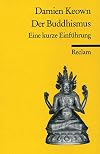
Reclams Universal-Bibliothek (18145)
Common Knowledge
- Canonical title
- Buddhism: A Very Short Introduction
- Original title
- Buddhism: A Very Short Introduction
- Original publication date
- 2013
- Important places
- India; China; Japan
- First words
- The Buddha once told the story of the blind men and the elephant (Udana 69f.).
- Last words
- (Click to show. Warning: May contain spoilers.)If the history of the spread of Buddhism to other cultures teaches any lessons it is that a genuinely new and distinctive form of Buddhism will be born from this encounter.
- Canonical DDC/MDS
- 294.3
Classifications
Statistics
- Members
- 840
- Popularity
- 32,747
- Reviews
- 7
- Rating
- (3.60)
- Languages
- English, German, Italian, Polish
- Media
- Paper, Audiobook, Ebook
- ISBNs
- 20
- ASINs
- 6