On This Page
Description
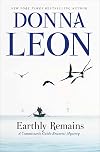
"Donna Leon's bestselling mystery novels have won a multitude of fans for their insider's portrayal of Venice. From family meals to vaporetti rides, the details and rhythms of everyday life are an integral part of this beloved series. But so are the never-ending influx of tourists and the suffocating corruption. Through it all, Leon's Commissario Guido Brunetti, a good man who loves his family and his city, has been an enduring figure, but in Earthly Remains, Brunetti's endurance is tested show more more than ever before. During an interrogation, Brunetti acts rashly, doing something he quickly comes to regret, and in the fallout, he realizes that he needs a break. Granted leave from the Questura, Brunetti's wife Paola ships him off to a villa owned by a wealthy relative on Sant'Erasmo, one of the largest islands in the laguna. There he intends to pass his days rowing, and his nights reading Pliny's Natural History. The recuperative stay goes according to plan until David Casati, the caretaker of the house, goes missing following a sudden storm. Now, Brunetti feels compelled to investigate, to set aside his leave of absence and understand what happened to the man who had become his friend"-- show lessTags
Recommendations









































Member Reviews
Brunetti needs a break. When he acts impulsively on behalf of a colleague, he ends up at the hospital. The doctor prescribes two weeks off, renewable to a third. Paola knows the perfect place--in a family friend's home on an island in the laguna. Brunetti wants to row, and he discovers the caretaker once rowed with his father to win a championship. The caretaker takes him rowing as he sets out to take care of his bees. Much of the novel focuses on Brunetti's break, but when the caretaker doesn't return on a stormy night, concerns set it. Although ruled an accident, Brunetti automatically begins to investigate with the help of his colleagues. While it's light on mystery, it's strong on atmosphere. Ethical concerns, particularly relating show more to nature and the environment, are almost always a part of Leon's novels, and this one focuses more on that than the mystery. Fans of the series will enjoy it. Those seeking a stronger mystery element may be disappointed. I loved it, and David Colacci's narration always makes it better! show less
Earthly remains—a cautionary tale!
A young girl has died in hospital. Antonio Ruggieri, aged Forty-two and a lawyer from an influential Venetian family, who gave the girl the pills, has come to the Questura for an interview. He’s slick, assured and speaks disrespectfully about the girl.
His assistant Pucetti is angered and makes a move he shouldn’t. Staging a heart attack to stop Pucetti brings about other problems that Brunetti hadn’t considered.
Brunetti takes time off and spends it out on the laguna at the end of Sant’Erasmo at a villa of Paola’s Aunt Costanza.
Caretaking the house is Davide Casati, a famous rower who rowed with Brunetti’s father. Casati takes Brunetti rowing and shows him his bees out beyond on the laguna. show more The bees are dying.
Not long after this Casati is found, in his boat dead presumably injured when caught in a storm
Brunetti investigates. Things are not as they seem, but where is the proof.
It seems to me Leon looks at the injustices perpetrated by the powerful and then continued by those who don’t look at the costs with this novel
A girl dies. Why?
Casati dies. Why?
Bees are dying. Why? This last very much defines the story as we look to the past, investigate the now and are fearful for the future!
A very different Brunetti tale. Brunetti is internalising things. He’s worn down and much given to philosophising about his beloved Vienna, the nature of man and consequences.
I found this Guido Brunetti story looks at who the the man is, and in doing so, we learn more bout our favourite Venetian commissario.
A Grove Atlantic ARC via NetGalley. show less
A young girl has died in hospital. Antonio Ruggieri, aged Forty-two and a lawyer from an influential Venetian family, who gave the girl the pills, has come to the Questura for an interview. He’s slick, assured and speaks disrespectfully about the girl.
His assistant Pucetti is angered and makes a move he shouldn’t. Staging a heart attack to stop Pucetti brings about other problems that Brunetti hadn’t considered.
Brunetti takes time off and spends it out on the laguna at the end of Sant’Erasmo at a villa of Paola’s Aunt Costanza.
Caretaking the house is Davide Casati, a famous rower who rowed with Brunetti’s father. Casati takes Brunetti rowing and shows him his bees out beyond on the laguna. show more The bees are dying.
Not long after this Casati is found, in his boat dead presumably injured when caught in a storm
Brunetti investigates. Things are not as they seem, but where is the proof.
It seems to me Leon looks at the injustices perpetrated by the powerful and then continued by those who don’t look at the costs with this novel
A girl dies. Why?
Casati dies. Why?
Bees are dying. Why? This last very much defines the story as we look to the past, investigate the now and are fearful for the future!
A very different Brunetti tale. Brunetti is internalising things. He’s worn down and much given to philosophising about his beloved Vienna, the nature of man and consequences.
I found this Guido Brunetti story looks at who the the man is, and in doing so, we learn more bout our favourite Venetian commissario.
A Grove Atlantic ARC via NetGalley. show less
When an interview with a suspect threatens to get out of hand, Commissario Brunetti takes action to prevent a colleague from making a potentially career-ending mistake. Brunetti finds it difficult to extract himself from the chain of events he set in motion, and it results in a medical leave of absence from the Questura. He decides he wants to spend his days rowing on the laguna. One of Paola’s relatives owns a villa on one of the islands, and he accepts an offer to stay there. The caretaker, Davide Casati, turns out to be an old family friend, and he welcomes Guido’s companionship on the water. As the days pass, Davide opens up about the wildlife, and especially the bees he tends on various islands. He is alarmed when some of the show more bees die en masse, but his explanation is cryptic and unsatisfactory. Davide’s sudden death during a violent storm has Brunetti searching for answers.
After a couple of novels where justice actually prevails, Leon returns to her typical format where truth doesn’t lead to justice. Brunetti is driven by the pursuit of truth, but it seems to be getting harder for him to live with the failures of the justice system. show less
After a couple of novels where justice actually prevails, Leon returns to her typical format where truth doesn’t lead to justice. Brunetti is driven by the pursuit of truth, but it seems to be getting harder for him to live with the failures of the justice system. show less
Commissario Guido Brunetti is compassionate, well-educated, and gentle. When he acts impulsively to protect a fellow officer from making a costly mistake, Brunetti sets in motion a series of events that will have far-reaching consequences. First, he is told to take a two-week leave from his job at the Questura. His wife makes arrangements for him to stay at a villa on the island of Sant'Erasmo. While there, he will have little to do except read and enjoy nature's beauty. The caretaker, Davide Casati, is an old friend of Brunetti's late father; Davide and Guido spend time rowing, swimming, and slowly getting to know one another. Casati is reserved and often despondent, still grief-stricken over the death of his much-younger wife, Franca, show more four years earlier. At least, he has his beehives to tend; he is passionate about beekeeping. However, when Casati notices that some of his bees have begun to die, he decides to run tests to find out what may be killing them.
"Earthly Remains," by Donna Leon, begins slowly but steadily picks up steam, especially in the second half. We enjoy spending leisurely days and nights with Brunetti as he reacquaints himself with his beloved books (he is a big fan of Pliny and other ancient writers), gazing at beautiful sunsets, and engaging in vigorous exercise. When a tragic and deeply shocking event interrupts Brunetti's vacation, he enlists the help of the always accommodating Signorina Elletra (whom he depends upon for her incredible ability to ferret out information) and, along with his fellow detectives, Claudia Griffoni and Inspector Lorenzo Vianello, launches an investigation that will uncover dark and dangerous secrets that have been hidden for decades.
Leon's brings her central characters to life against the backdrop of the sights and sounds of Venice and its surrounding islands. Davide Casati is a tormented man whose past transgressions give him no peace; Brunetti's conscience will not rest until he gets to the bottom of a complex case that he believes it is his duty to solve; and Guido's colleagues, Griffoni and Vianello, help Brunetti immensely by using subtle psychological ploys to get witnesses to speak freely. The author goes far beyond the standard mystery formula when she raises questions about why people harm, not just one another, but our environment, as well. "Earthly Remains" is an excellent vehicle for Guido Brunetti, whose wisdom and tenacity impel him to dig deeply for truths that have long been buried under a mountain of lies. show less
"Earthly Remains," by Donna Leon, begins slowly but steadily picks up steam, especially in the second half. We enjoy spending leisurely days and nights with Brunetti as he reacquaints himself with his beloved books (he is a big fan of Pliny and other ancient writers), gazing at beautiful sunsets, and engaging in vigorous exercise. When a tragic and deeply shocking event interrupts Brunetti's vacation, he enlists the help of the always accommodating Signorina Elletra (whom he depends upon for her incredible ability to ferret out information) and, along with his fellow detectives, Claudia Griffoni and Inspector Lorenzo Vianello, launches an investigation that will uncover dark and dangerous secrets that have been hidden for decades.
Leon's brings her central characters to life against the backdrop of the sights and sounds of Venice and its surrounding islands. Davide Casati is a tormented man whose past transgressions give him no peace; Brunetti's conscience will not rest until he gets to the bottom of a complex case that he believes it is his duty to solve; and Guido's colleagues, Griffoni and Vianello, help Brunetti immensely by using subtle psychological ploys to get witnesses to speak freely. The author goes far beyond the standard mystery formula when she raises questions about why people harm, not just one another, but our environment, as well. "Earthly Remains" is an excellent vehicle for Guido Brunetti, whose wisdom and tenacity impel him to dig deeply for truths that have long been buried under a mountain of lies. show less
Brunetti takes a couple of weeks sick leave to spend on an island in the Venice lagoon. He reunites with an old friend of his father's whose sudden death prompts him to investigate and learn about decades old pollution of the lagoon. Not much mystery but great setting and characters!
I received an electronic copy and thank NetGalley and Grove Atlantic.
I have read only one or two of Donna Leon's Inspector Brunetti novels and after finishing Earthly Remains I wonder why. The writing is exactly as I would expect to hear the dialog spoken. The descriptions take you to the place and time as if you were an invisible participant. The story is challenging and believable.
Without giving up too much, Inspector Brunetti "falls on his sword" to save one of his officers from ruining an interview with a member of one of the city's more illustrious families. This leads to the Inspector taking a brief rest at a villa owned by one of his wife's relatives on an island in the Laguna. This is where the story really begins.
I have read only one or two of Donna Leon's Inspector Brunetti novels and after finishing Earthly Remains I wonder why. The writing is exactly as I would expect to hear the dialog spoken. The descriptions take you to the place and time as if you were an invisible participant. The story is challenging and believable.
Without giving up too much, Inspector Brunetti "falls on his sword" to save one of his officers from ruining an interview with a member of one of the city's more illustrious families. This leads to the Inspector taking a brief rest at a villa owned by one of his wife's relatives on an island in the Laguna. This is where the story really begins.
I can never put down a book by Donna Leon until I've finished it. This is no exception. Commissario Brunetti does something a bit daft to protect a colleague, but it turns out well- he gets sick leave which he uses to vanish to a fairly isolated island in the Venetian lagoon to try to eliminate the huge build up of stress brought on by his job. Rowing turns out to be the answer, rowing with an old friend of his father, who was a proficient oarsman.
His new friend dies in a storm. A horrible accident? Suicide? Murder. The answer lies in one of the themes that Leon often promotes in her books- potential environmental disaster, and political corruption. I can say no more. Just read this book, and find out for yourself.
His new friend dies in a storm. A horrible accident? Suicide? Murder. The answer lies in one of the themes that Leon often promotes in her books- potential environmental disaster, and political corruption. I can say no more. Just read this book, and find out for yourself.
Members
- Recently Added By
Lists

Chronological 2017
30 works; 1 member

Books Read in 2020
4,379 works; 124 members

Books Read in 2021
5,361 works; 114 members
Author Information

61+ Works 46,203 Members
Donna Leon was born on September 29, 1942 in Montclair, New Jersey. She taught English literature in England, Switzerland, Iran, China, Italy and Saudi Arabia. She is the author of a Commissario Guido Brunetti Mystery series. Friends in High Places, a novel from the series, won the Crime Writers Association Macallan Silver Dagger for Fiction in show more 2000. German Television has produced 16 Commissario Brunetti mysteries for broadcast. She was a crime reviewer for the Sunday Times. She has written the libretto for a comic opera and has set up her own opera company, Il Complesso Barocco. Her titles Jewels of Pardise, The Golden Egg, By Its Cover, Falling in Love and The Waters of Eternal Youth made The New York Times Bestseller List. (Bowker Author Biography) show less
Some Editions
Awards and Honors
Awards
Series

Belongs to Publisher Series
Work Relationships
Has the adaptation
Common Knowledge
- Canonical title
- Earthly Remains
- Original title
- Earthly Remains
- Original publication date
- 2017
- People/Characters*
- Guido Brunetti; Davide Casati; Claudia Griffons; Giuseppe Patta; Paola Brunetti; Lorenzo Vianello
- Important places
- Venice, Veneto, Italy; Burano, Venice, Veneto, Italy; Mira, Venice, Veneto, Italy
- Epigraph
- E spenderem col fiume, e in seno accolti
il mar ci avrà pria che risorga il giorno.
We'll go down with the stream, and the sea
Will have us before the day dawns.
- Handel, Ottone... (show all), Act 2, Scene 9 - Dedication
- For Justice Ruth Bader Ginsburg
- First words
- After an exchange of courtesies, the session had gone on for another half-hour, and Brunetti was beginning to feel the strain of it.
- Last words
- (Click to show. Warning: May contain spoilers.)Brunetti opend his eyes and looked at Massimo. 'Good,' he said.
- Publisher's editor*
- Seix Barral
- Original language
- English
*Some information comes from Common Knowledge in other languages. Click "Edit" for more information.
Classifications
Statistics
- Members
- 819
- Popularity
- 33,760
- Reviews
- 38
- Rating
- (3.89)
- Languages
- 9 — Catalan, Dutch, English, Finnish, French, German, Polish, Portuguese, Spanish
- Media
- Paper, Audiobook, Ebook
- ISBNs
- 44
- ASINs
- 15