91 Members (4.50)
On This Page
Description
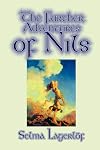
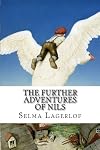
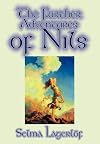
One afternoon Akka from Kebnekaise and her flock alighted on the shore of a forest lake. Spring was backward -- as it always is in the mountain districts. Ice covered all the lake save a narrow strip next the land. The geese at once plunged into the water to bathe and hunt for food. In the morning Nils Holgersson had dropped one of his wooden shoes, so he went down by the elms and birches that grew along the shore, to look for something to bind around his foot. The boy walked quite a show more distance before he found anything that he could use. He glanced about nervously, for he did not fancy being in the forest. "Give me the plains and the lakes " he thought. "There you can see what you are likely to meet. Now, if this were a grove of little birches, it would be well enough, for then the ground would be almost bare; but how people can like these wild, pathless forests is incomprehensible to me. If I owned this land I would chop down every tree."On Selma Lagerlof: "She devoted three years to Nature study and to familiarizing herself with animal and bird life. She has sought out hitherto unpublished folklore and legends of the different provinces. These she has ingeniously woven into her story." (From translator Velma Swanston Howard's introduction.)The background for publication was a commission from the National Teachers Association in 1902 to write a geography reader for the public schools. show lessTags
Recommendations





















Member Reviews
Members
- Recently Added By
Lists

CCE 1000 Good Books List
1,033 works; 12 members
Author Information

525+ Works 7,906 Members
Selma Lagerlöf, winner of the Nobel Prize in 1909, was the first woman to be elected a member of the Swedish Academy. Her first novel, The Story of Gosta Berling (1891), assured her position as Sweden's greatest storyteller. She retold the folk tales of her native province, Varmland, in an original and poetic prose. As a woman writer, Lagerlöf show more gained a reputation as a naive purveyor of native traditions, but she herself compared writing a novel to solving a mathematical problem. Her artistry entails making her stories seem simple, but they are told with great attention to symbolism, psychology, and narrative technique. The Wonderful Adventures of Nils (1906) is a delightful fantasy written to teach children about Swedish geography, but it has found an international audience. Her third novel and masterpiece, Jerusalem (1901--02), the story of farmers from Dalarna who follow their faith to the Holy City, was widely praised for its insights into the lives of peasants searching for a spiritual ideal. During World War II, Lagerlöf helped many German artists and intellectuals escape the Nazis, even donating her gold Nobel Prize medal to a benefit fund to help Finland. She died of a stroke on March 16, 1940. (Bowker Author Biography) show less
Some Editions
Series

Belongs to Publisher Series
Work Relationships
Common Knowledge
- Canonical title
- The Further Adventures of Nils
- Original publication date
- 1911
- People/Characters
- Nils Holgersson
Classifications
- Genres
- Fiction and Literature, Kids, Children's Books, Tween, Fantasy
- DDC/MDS
- 839.737 — Literature & rhetoric German & related literatures Other Germanic literatures Swedish literature Swedish fiction 1900-1999
- LCC
- PZ8 .L136 — Language and Literature Fiction and juvenile belles lettres Fiction and juvenile belles lettres Juvenile belles lettres
- BISAC
Statistics
- Members
- 91
- Popularity
- 351,758
- Rating
- (4.50)
- Languages
- English, Norwegian (Bokmål), Polish, Swedish
- Media
- Paper, Ebook
- ISBNs
- 16
- ASINs
- 9