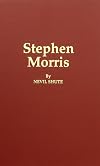
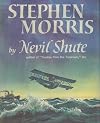
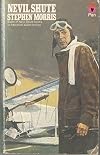
Stephen Morris
by Nevil Shute
On This Page
Description
Stephen Morris has just called off his engagement to the girl of his dreams because he is a penniless graduate with no prospects. He finds a job working as an aircraft mechanic, hoping to make his fortune. In Pilotage, Stephen's young navigator Pete Dennison is struggling with exactly the same problem. These two early novels draw on Nevil Shute's own experiences as a young engineer.Tags
Recommendations













Member Reviews
In my experience, aviation fans (a bit like railfans) tend to read with more zeal than critical acumen, at-least in regards to narrative style and technique. That said, I consider this novel to be not an example of Shute at his best, even though Shute on an off-day, could beat most other modern novelists in cards and spades. My problem with this particular opus is that the characters aren't very interesting, and sometimes the pronoun-references and dialogue left me in doubt as to who was speaking or being spoken-about. Was Shute too big a shot to be edited? Even so, a decent read, if by no means a great one.
Not as well-written as later Shute novels, and very much in a 'men doing valiant things whilst women hover pathetically on the sidelines' vein. Nonetheless, entertaining enough.
This was pretty tedious. I think I know why Shute didn't publish it during his own life. It could have been a decent story, but was very uneven. And, it dragged. Shute is one of my favorite authors, and this book is not up to his standards. As I said, he kept it buried during his lifetime.
So, at the beginning, young Stephen Morris has lost his job in rubber and decides he can't afford to marry Helen Riley. So he breaks off their engagement. Then, since his real passion had been flying—he'd been a pilot in WWI—he hooks up with a small "commercial" flying outfit run by Helen Riley's cousin, Capt. Malcolm Riley, who was a sort of famous flier in the war. Riley and his partner, Stenning, hang out around vacation spots and take people show more on joy rides. It's the early days of aviation, and people find it exciting. It's also the early 1920s, so people still have some extra cash, the depression being some 6 or 8 years in the future, and no one knew it was coming in 1923 when this book came out.
Well, things go along for a while, but business falls off and Riley and Stenning decide to throw in the towel. As a result, poor Morris is out of a job again. But he hooks on with a guy who designs planes. Morris, having earned a degree in Mathematics at Oxford, could help out on the design side of things, although C.G.H Rawdon can't afford to hire him to work in the office. So, they agree that Morris will work for free in the office for a while (which is to say, being an unpaid intern is not a new thing) and also be on hand to do some piloting when the need arises.
Well, things drag on, but I've set the scene, so to speak. Generally, this book is packaged with a second novella, Pilotage. But I was afraid that Pilotage might be similarly deadly, so moved on to something else. Sometime in the new year, I'll give Pilotage a "fly". show less
So, at the beginning, young Stephen Morris has lost his job in rubber and decides he can't afford to marry Helen Riley. So he breaks off their engagement. Then, since his real passion had been flying—he'd been a pilot in WWI—he hooks up with a small "commercial" flying outfit run by Helen Riley's cousin, Capt. Malcolm Riley, who was a sort of famous flier in the war. Riley and his partner, Stenning, hang out around vacation spots and take people show more on joy rides. It's the early days of aviation, and people find it exciting. It's also the early 1920s, so people still have some extra cash, the depression being some 6 or 8 years in the future, and no one knew it was coming in 1923 when this book came out.
Well, things go along for a while, but business falls off and Riley and Stenning decide to throw in the towel. As a result, poor Morris is out of a job again. But he hooks on with a guy who designs planes. Morris, having earned a degree in Mathematics at Oxford, could help out on the design side of things, although C.G.H Rawdon can't afford to hire him to work in the office. So, they agree that Morris will work for free in the office for a while (which is to say, being an unpaid intern is not a new thing) and also be on hand to do some piloting when the need arises.
Well, things drag on, but I've set the scene, so to speak. Generally, this book is packaged with a second novella, Pilotage. But I was afraid that Pilotage might be similarly deadly, so moved on to something else. Sometime in the new year, I'll give Pilotage a "fly". show less
If not his first, certainly a very early one, I think I read somewhere that it was autoboigraphical. Interesting.
Ratings
Members
- Recently Added By
Lists

Favorite Childhood Books
1,646 works; 514 members
Author Information

56+ Works 20,288 Members
Nevil Shute Norway was born in Ealing, London, England, on January, 17 1899. At the age of 11, Norway played truant from his first preparatory school in Hammersmith. After he was discovered, he was sent to the Dragon School, Oxford, and from there to Shrewsbury. He was on holiday in Dublin at the time of the Easter rising of 1916 and acted as an show more ambulance driver, winning a commendation for gallant conduct. He then entered the Royal Military Academy, intending to be commissioned into the Royal Flying Corps, but a bad stammer led to his being failed at his final medical examination and returned to civil life. The last few months of the war were spent on home service as a private in the Suffolk Regiment. In 1919, Norway went to Balliol College, Oxford, where he took a third class honors course in engineering science in 1922. During the vacations he worked, unpaid, as an aeronautical engineer, for the Aircraft Manufacturing Company at Hendon, and then for Geoffrey de Havilland's own firm, which he joined as an employee upon finishing at Oxford. He learned to fly and gained experience as a test observer. During the evenings he diligently wrote novels and short stories unperturbed by rejection slips from publishers. In 1924 Norway took the post of Chief Calculator to the Airship Guarantee Company, to work on the construction of the R100. In 1929 he became Deputy Chief Engineer under Barnes Wallis, and in the following year he flew to and from Canada in the R100. After the end of the airship project, jobs were hard to come by due to the depression so Shute started an aircraft manufacturing company, Airspeed Limited. This company was ultimately successful and built a large number of aircraft during the war. Shute remained joint managing director until 1938. When the business became too routine, he decided to get out of the rut and live by writing. The de Havillands, the first aviation job Shute had ever had, wound up buying Airspeed Ltd. He had by then enjoyed some success as a novelist and had sold the film rights of Lonely Road and Ruined City. At the outbreak of war in 1939, Norway joined the Royal Naval Volunteer Reserve as a Sub-Lieutenant in the Miscellaneous Weapons Department. Rising to Lieutenant Commander, he found experimenting with secret weapons a job after his own heart. But he found that his growing celebrity as a writer caused him to be in the Normandy landings on 6th June 1944, for the Ministry of Information, and to be sent to Burma as a correspondent in 1945. He entered Rangoon with the 15th Corps from Arakan. Soon after demobilisation in 1945 he emigrated to Australia and made his home in Langwarrin, Victoria. His output of novels, which began with Marazan (1926) continued to the end. Shute was one of the leading aeronautical engineers in Britain during the 30's and a fellow of the Royal Aeronautical Society. When he began writing in the 20's, he feared that a reputation as a writer of fiction might harm his engineering career. For this reason he published under his two Christian names, Nevil Shute and engineered under his "real" name, Nevil S. Norway. Nevil Shute Norway died in Melbourne on January, 12 1960. (Bowker Author Biography) show less
Common Knowledge
- Canonical title*
- Flygande start
- Original publication date
- 1961 (written 1923) (written 1923)
- First words
- Three reputations cling closely to the Radcliffe Camera in Oxford.
- Disambiguation notice
- This work should only be Steven Morris. Please do not combine with copies that include Pilotage.
*Some information comes from Common Knowledge in other languages. Click "Edit" for more information.
Classifications
Statistics
- Members
- 182
- Popularity
- 179,537
- Reviews
- 4
- Rating
- (3.62)
- Languages
- English, Swedish
- Media
- Paper, Audiobook, Ebook
- ISBNs
- 15
- ASINs
- 13