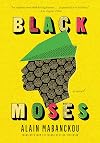
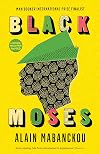
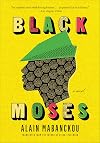
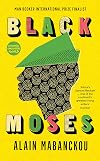
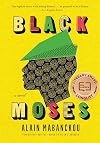
Black Moses
by Alain Mabanckou
On This Page
Description
"A rollicking new novel described as "Oliver Twist in 1970s Africa" (Les Inrockuptibles) by the finalist for the Man International Booker Prize It's not easy being Tokumisa Nzambe po Mose yamoyindo abotami namboka ya Bakoko. There's that long name of his for a start, which means, "Let us thank God, the black Moses is born on the lands of the ancestors." Most people just call him Moses. Then there's the orphanage where he lives, run by a malicious political stooge, Dieudonne Ngoulmoumako, show more and where he's terrorized by two fellow orphans-the twins Songi-Songi and Tala-Tala. But after Moses exacts revenge on the twins by lacing their food with hot pepper, the twins take Moses under their wing, escape the orphanage, and move to the bustling port town of Pointe-Noire, where they form a gang that survives on petty theft. What follows is a funny, moving, larger-than-life tale that chronicles Moses's ultimately tragic journey through the Pointe-Noire underworld and the politically repressive world of Congo-Brazzaville in the 1970s and 80s. Mabanckou's vivid portrayal of Moses's mental collapse echoes the work of Hugo, Dickens, and Brian DePalma's Scarface, confirming Mabanckou's status as one of our great storytellers. Black Moses is a vital new extension of his cycle of Pointe-Noire novels that stand out as one of the grandest, funniest, fictional projects of our time"-- show lessTags
Recommendations











Member Reviews
Rating: 3.75* of five
The Publisher Says: LONGLISTED FOR THE MAN BOOKER INTERNATIONAL PRIZE 2017
It's 1970, and in the People's Republic of Congo a Marxist-Leninist revolution is ushering in a new age. But over at the orphanage on the outskirts of Pointe-Noire where young Moses has grown up, the revolution has only strengthened the reign of terror of Dieudonné Ngoulmoumako, the institution's corrupt director.
So Moses escapes to Pointe-Noire, where he finds a home with a larcenous band of Congolese Merry Men and among the Zairian prostitutes of the Trois-Cents quarter. But the authorities won't leave Moses in peace, and intervene to chase both the Merry Men and the Trois-Cents girls out of town. All this injustice pushes poor Moses over show more the edge. Could he really be the Robin Hood of the Congo? Or is he just losing his marbles?
Black Moses is a larger-than-life comic tale of a young man obsessed with helping the helpless in an unjust world. It is also a vital new extension of Mabanckou's extraordinary, interlinked body of work dedicated to his native Congo, and confirms his status as one of our great storytellers.
I RECEIVED AN ARC FROM THE PUBLISHER. THANK YOU.
My Review: Congolese Oliver Twist-cum-Count of Monte Cristo tale of life's many injustices, prejudices, and petty grudges.
Moses begins his tale in the truly out-Dickensing Dickens orphanage where tribal violence has landed him. Growing weary of life under the ever-more-crushing thumb of Dieudonné Ngoulmoumako (whose first name is the bitterly ironic French for "God's Gift") he makes his escape to the big city of Pointe-Noire (see memoir THE LIGHTS OF POINTE-NOIRE for its first appearance in my mind's orbit). The reasons Moses, who hates his name, runs away is to escape Dieudonné's revolutionary Marxist-Leninist insistence that people are machines to be programmed, not souls to be nurtured; and thus need no kindness or guidance but just rote training. Where better to demonstrate the effectiveness of this than an orphanage?
Shedding his awful life and assuming a new name, "Black Pepper," does not stop Moses' apparent destiny from hounding him. Throughout this short...under two hundred pages...novel (maybe a novella, but a fairly borderline case if so), he is hounded by Dieudonné and his cadres. It cannot be allowed for someone to resist the Revolution! Isn't it funny how very much the high-control cultures of religion and revolution resemble each other? Almost like they're really the same thing, only in different suits.
The major issue in reading about Moses is that he spends at least half the book in Dieudonné's clutches being tormented, then after escaping (with his twin tormentors, having survived their hazing and gained their respect thereby), we get less of his Pointe-Noire exploits than necessary for us to invest in him as a full character before he unravels psychologically (surprise! not) and we get a cursory account of that causal event. His healing journey takes him through folk medicine to Western psychiatry, both getting deeply disrespectful narrative treatment.
Animal harm is done. Be warned.
The parable in all this appears to me to be the Dickensian nature of the revolution against the horrors of colonialism. We follow the hapless chaff that is Moses/Pepper as the forces of Control use their notable supply of zeal to oppress and destroy what resists their efforts finally succeeds. It is short, so perhaps there was too much story for too few pages...? I'll read Author Mabanckou's writing as translated by Helen Stevenson for a lot longer than this took.
A story that resonates in times gone fascist more than when I first read it in 2017. show less
The Publisher Says: LONGLISTED FOR THE MAN BOOKER INTERNATIONAL PRIZE 2017
It's 1970, and in the People's Republic of Congo a Marxist-Leninist revolution is ushering in a new age. But over at the orphanage on the outskirts of Pointe-Noire where young Moses has grown up, the revolution has only strengthened the reign of terror of Dieudonné Ngoulmoumako, the institution's corrupt director.
So Moses escapes to Pointe-Noire, where he finds a home with a larcenous band of Congolese Merry Men and among the Zairian prostitutes of the Trois-Cents quarter. But the authorities won't leave Moses in peace, and intervene to chase both the Merry Men and the Trois-Cents girls out of town. All this injustice pushes poor Moses over show more the edge. Could he really be the Robin Hood of the Congo? Or is he just losing his marbles?
Black Moses is a larger-than-life comic tale of a young man obsessed with helping the helpless in an unjust world. It is also a vital new extension of Mabanckou's extraordinary, interlinked body of work dedicated to his native Congo, and confirms his status as one of our great storytellers.
I RECEIVED AN ARC FROM THE PUBLISHER. THANK YOU.
My Review: Congolese Oliver Twist-cum-Count of Monte Cristo tale of life's many injustices, prejudices, and petty grudges.
It all began when I was a teenager, and came to wonder about the name I' d been given by Papa Moupelo, the priest at the orphanage in Loango: Tokumisa Nzambe po Mose yamoyindo abotami namboka ya Bakoko. A long name, which in Lingala means: "Thanks be to God, the black Moses is born on the earth of our ancestors" as it still inscribed on my birth certificate today.
Moses begins his tale in the truly out-Dickensing Dickens orphanage where tribal violence has landed him. Growing weary of life under the ever-more-crushing thumb of Dieudonné Ngoulmoumako (whose first name is the bitterly ironic French for "God's Gift") he makes his escape to the big city of Pointe-Noire (see memoir THE LIGHTS OF POINTE-NOIRE for its first appearance in my mind's orbit). The reasons Moses, who hates his name, runs away is to escape Dieudonné's revolutionary Marxist-Leninist insistence that people are machines to be programmed, not souls to be nurtured; and thus need no kindness or guidance but just rote training. Where better to demonstrate the effectiveness of this than an orphanage?
Shedding his awful life and assuming a new name, "Black Pepper," does not stop Moses' apparent destiny from hounding him. Throughout this short...under two hundred pages...novel (maybe a novella, but a fairly borderline case if so), he is hounded by Dieudonné and his cadres. It cannot be allowed for someone to resist the Revolution! Isn't it funny how very much the high-control cultures of religion and revolution resemble each other? Almost like they're really the same thing, only in different suits.
The major issue in reading about Moses is that he spends at least half the book in Dieudonné's clutches being tormented, then after escaping (with his twin tormentors, having survived their hazing and gained their respect thereby), we get less of his Pointe-Noire exploits than necessary for us to invest in him as a full character before he unravels psychologically (surprise! not) and we get a cursory account of that causal event. His healing journey takes him through folk medicine to Western psychiatry, both getting deeply disrespectful narrative treatment.
Animal harm is done. Be warned.
The parable in all this appears to me to be the Dickensian nature of the revolution against the horrors of colonialism. We follow the hapless chaff that is Moses/Pepper as the forces of Control use their notable supply of zeal to oppress and destroy what resists their efforts finally succeeds. It is short, so perhaps there was too much story for too few pages...? I'll read Author Mabanckou's writing as translated by Helen Stevenson for a lot longer than this took.
A story that resonates in times gone fascist more than when I first read it in 2017. show less
I love books about places and situations far from my limited world and this did not disappoint in that. Moses was an orphan who was left at an orphanage run by a malicious political goof who terrorizes the orphans. Moses eventually is able to escape to the port town of Pointe-Noire, where he is a member of a gang and befriends a group of prostitutes. Set in the 1970s and 80s in the Congo, this is probably a pretty apt description of the corruption that was infused into the culture. Funny in places, sad in others, one does gain an appreciation for Moses whose life is just one set of bad circumstances after another. Eventually Moses loses his mind.
Some reviews read this as a funny book which it is in places; however, the sad life of Moses show more is not funny. show less
Some reviews read this as a funny book which it is in places; however, the sad life of Moses show more is not funny. show less
This little book took me by surprise – I wasn’t expecting to enjoy it as much as I did. It’s often referred to as the Oliver Twist of the Congo and I can see why. This book follows orphan Moses who leaves the orphanage with a pair of twins to start a life of petty crime in a seaport town. It’s whimsical and sweet but jarring and heartbreaking when you least expect it. Throughout the book, Bonaventure, Moses’ perpetually anxious friend, repeats, “This is serious, Moses! Really serious!” A refrain that is just as much a warning to the reader as it is to the protagonist.
Incredible tale of a boy from an orphanage in Loango who flees to Point-Noire at the age of 13, and experiences a myriad of adventures, trials, and tribulations. Mabanckou weaves an exciting and engaging narrative, full of emotion and some unexpected plot twists, that is sure to leave its mark on the reader. There were a couple of transitions that, for me, could have been a bit smoother, but all-in-all this was a great read.
I've seen comparisons of this book to Oliver Twist, and I get why one might make that comparison, but I'm sorry, Black Moses, you're no Oliver Twist. The book is well-written, and I particularly enjoyed the first half. The plotting isn't terrible (although the second half does fall apart a bit.) However, it suffers from a lack of memorable and interesting characters (and this is where the Oliver Twist comparison really hurts Black Moses, because Dickens has many flaws as a writer but damn if he didn't know how to spin up a memorable character). Black Moses isn't a bad book, but there's nothing here that's going to stick with me, either.
Sad, funny, sweet. About a boy in an orphanage who then escapes, only to end up there again. Circular in a similar way Blue White Red was. One loses oneself only to end up were one began.
So I'm starting 2018 with a book I didn't care for. That doesn't bode well, does it? It's an ARC I've been working on for months, and couldn't seem to force myself through, so I finally decided that I'd had enough, and called it finished at about the 50% mark.
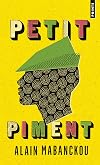
The original title of this book is "Little Pepper," referring to the nickname given to Moses after he gets revenge for his best friend with a dose of very hot pepper. He is a little pepper; sharp, hot, taking no shit. Don't really know why the title was changed, and I don't think it did the book any favors since "Black Moses" sets up very different expectations.
It begins in an orphanage in Pointe-Noir in the Congo on the eve of the country's rebranding as The People's Republic of show more the Congo, and it follows Moses' adventures in this new world. I wish I could say it intrigued me, it didn't. I wish I could say it held my interest, but I'd be lying because I had to read virtually every page at least twice. Maybe this is a failing on my part, but I never connected with the narrative.
When a book makes me mutter "I really don't care." or "I have no idea what I just read." over a period of months (This book should have taken me a couple of hours to read.) I know there's no point in pushing myself. Your mileage may vary. show less
The original title of this book is "Little Pepper," referring to the nickname given to Moses after he gets revenge for his best friend with a dose of very hot pepper. He is a little pepper; sharp, hot, taking no shit. Don't really know why the title was changed, and I don't think it did the book any favors since "Black Moses" sets up very different expectations.
It begins in an orphanage in Pointe-Noir in the Congo on the eve of the country's rebranding as The People's Republic of show more the Congo, and it follows Moses' adventures in this new world. I wish I could say it intrigued me, it didn't. I wish I could say it held my interest, but I'd be lying because I had to read virtually every page at least twice. Maybe this is a failing on my part, but I never connected with the narrative.
When a book makes me mutter "I really don't care." or "I have no idea what I just read." over a period of months (This book should have taken me a couple of hours to read.) I know there's no point in pushing myself. Your mileage may vary. show less
Members
- Recently Added By
Lists

Must-Read Books by Black Authors
114 works; 92 members

Top Five Books of 2017
757 works; 231 members

Maybe This Year? Books to Look Forward To
412 works; 9 members

Kirkus Starred Fiction Reviews of Books Published in 2017
412 works; 7 members

Tour of Africa
54 works; 2 members
Author Information

56+ Works 1,598 Members
Alain Mabanckou was born in Congo-Brazzavile in 1966. He is the author of Broken Glass (Soft Skull 2010), Memoirs of a Porcupine (Soft Skull 2006) and African Psycho (Soft Skull 2007) among others. He currently divides his time between Paris and California, where he teaches French Literature at UCLA. Sara Meli Ansari is a translator and design show more historian. She holds an undergraduate degree in French studies from the University of Michigan and a Masters degree in the history of culture and design from the Bard Graduate Center. She live with her husband in New York City. show less
Some Editions
Awards and Honors
Awards
Series
Belongs to Publisher Series
Common Knowledge
- Canonical title
- Black Moses
- Original title
- Petit piment
- Original publication date
- 2015
- Important places*
- Pointe-Noire, Congo-Brazzaville
- Dedication*
- Opgedragen aan de zwervers van de Côte sauvage die tijdens mijn verblijf in Pointe-Noire enkele grepen hebben gedaan uit hun levensverhaal, en vooral aan 'Prins Peper', die vastbesloten was een fictief personage te worden om... (show all)dat hij er genoeg van had een personage in het ware leven te zijn...
A.M. - First words*
- Het is allemaal begonnen toen ik als tiener nadacht over hoe ik heette.
- Original language
- French
*Some information comes from Common Knowledge in other languages. Click "Edit" for more information.
Classifications
- Genres
- Fiction and Literature, General Fiction
- DDC/MDS
- 843.914 — Literature & rhetoric French Literature French fiction 1900- 20th Century 1945-1999
- LCC
- PQ3989.2 .M217 .P4813 — Language and Literature French, Italian, Spanish and Portuguese literatures French literature Provincial, local, colonial, etc.
- BISAC
Statistics
- Members
- 246
- Popularity
- 132,113
- Reviews
- 11
- Rating
- (3.30)
- Languages
- 5 — Dutch, English, Finnish, French, German
- Media
- Paper, Audiobook, Ebook
- ISBNs
- 16
- ASINs
- 5