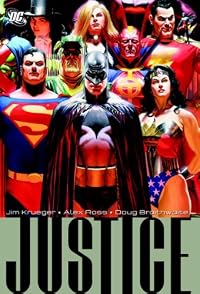
Justice, Vol. 1
by Alex Ross (Author), Doug Braithwaite (Illustrator), Jim Krueger (Author)
Justice (2005-2007) (Collections and Selections — 1-4)
On This Page
Description
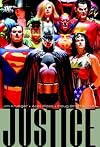
The best-selling 12-issue series illustrated by Alex Ross is now available as a new deluxe edition hardcover! The villains of the Legion of Doom-led by Lex Luthor and Brainiac-band together to save the world after a shared dream that seems to be a vision of the Earth's demise. They are confronted by the Justice League of America, who doubt their motives-and as their true plans unfold, the two teams do battle.Tags
Recommendations
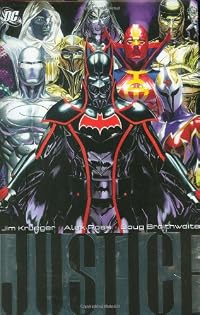



Member Reviews
I'm glad I got this out from the library, because I'd have been pretty annoyed if I'd paid for this utterly uninspiring and unmemorable piece of work.
What is it about DC and Marvel that they simply CANNOT publish a memorable or well-written comic or miniseries unless one of a very small number of writers is part of the project? At this point, if it's not by Alan Moore or Neil Gaiman, my expectations are virtually nil.
I read the whole series - volumes 1, 2, and 3. What was it about? The bad guys (primarily Lex Luthor and Brainiac) get together and screw over the good guys (the usual cast: Batman, Superman, Wonder Woman, and the rest of the Justice League of America).
Look, the art is the usual brightly-colored eye candy. And the show more characters are the same old classic characters who can be magic in the hands of a decent writer, but are leaden and uninteresting in the hands of the usual DC gang of incompetents.
Worst of all, the whole damned thing was confusing. Was it just that the original comic book miniseries assumed that the readers were all desperate fanboys who were reading everything that DC produced, and so left half the plot out of this series because it was all covered elsewhere? I doubt it. All I know is that for much of the novel I didn't know what was going on. And worse, I didn't CARE.
Confusing, poorly written, uninspired. I read it two or three days ago, and the ONLY memory I have from it is Wonder Woman looking like a zombie because she was poisoned and was therefore turning back into earth. I didn't know she was made from earth to begin with - I'm pretty sure that's just something the writers added for this particular series - but from three all three volumes that's the ONLY thing I remember. And it's not really WORTH remembering.
And I have a good memory, mind you!
Sad. Just sad. I don't understand why DC won't or can't get decent writers. Someone should smack them with a clue-by-four. show less
What is it about DC and Marvel that they simply CANNOT publish a memorable or well-written comic or miniseries unless one of a very small number of writers is part of the project? At this point, if it's not by Alan Moore or Neil Gaiman, my expectations are virtually nil.
I read the whole series - volumes 1, 2, and 3. What was it about? The bad guys (primarily Lex Luthor and Brainiac) get together and screw over the good guys (the usual cast: Batman, Superman, Wonder Woman, and the rest of the Justice League of America).
Look, the art is the usual brightly-colored eye candy. And the show more characters are the same old classic characters who can be magic in the hands of a decent writer, but are leaden and uninteresting in the hands of the usual DC gang of incompetents.
Worst of all, the whole damned thing was confusing. Was it just that the original comic book miniseries assumed that the readers were all desperate fanboys who were reading everything that DC produced, and so left half the plot out of this series because it was all covered elsewhere? I doubt it. All I know is that for much of the novel I didn't know what was going on. And worse, I didn't CARE.
Confusing, poorly written, uninspired. I read it two or three days ago, and the ONLY memory I have from it is Wonder Woman looking like a zombie because she was poisoned and was therefore turning back into earth. I didn't know she was made from earth to begin with - I'm pretty sure that's just something the writers added for this particular series - but from three all three volumes that's the ONLY thing I remember. And it's not really WORTH remembering.
And I have a good memory, mind you!
Sad. Just sad. I don't understand why DC won't or can't get decent writers. Someone should smack them with a clue-by-four. show less
I read "Kingdom Come" first and really liked that, so when I found this I decided to check it out. The art style is still great - I love that the women are pretty muscular and how proportionate all the characters look (all the guys are still a bit funny-looking).
Overall, the story was somewhat enjoyable. It fell apart a bit over time. Every issue seemed to be leading up to something and it kind of led to half-second conspiracy explanations that were kind of off-putting and a bit of a let-down. One of the biggest problems was the Joker. I fail to see what relevance his part in the story had and it kept distracting from the plot. I suppose a case could be made for demonstrating how the villains would act if they WEREN'T mind-controlled show more (they'd just screw each other up), but it's kind of a long shot and it just didn't work.
I'm also confused about The Dream. If the characters are all already mind-controlled and their plan is to kill off the JLA and rule the planet, then why do they need The Dream? This seems like a fallback to one of my major issues with "Kingdom Come": the frequent biblical(?) text intermixed with shadowy fortellings of the future that broke up the story. It was irritating. It's kind of like overkill for what I'm sure is the primary story-telling purpose (besides sounding like an epic concept): in KC, it would be to explain to the human witness what MIGHT happen if things go badly so he has a stake in stopping things, and in J, it's part of the mind control to keep the villains in line. Except when they lose the overt mind control, all the villains abandon the cause anyway so... It's kinda stupid? The Dream fails to explain HOW the supers lose their powers or when all of this takes place or who is doing what's happening. It's full of so many unexplainables that I think SOMEONE among all the geniuses of the JLA would figure something out and cry foul.
There were a lot more cameos here that mattered than in KC, which I liked. More screen time was given to actual characters (particularly female characters) than oh... random human males that no one knows, and I liked that. The dismissive nature of Hawkman and Green Arrow was KIND of irritating, though. My favorite character interaction was probably Captain Marvel and Wonder Woman. Their friendship was quite sweet. I don't see Marvel being really smart and thoughtful in a lot of comics (or you know... using his Wisdom of Solomon) and this was a nice change.
I also really liked how they played with Wonder Woman's character. That was interesting and enjoyable. And I love that she refused to stop believing in Rich. Batman also gets some interesting story moments, and I liked how Marvel came to Clark's rescue. It was quite interesting to see Marvel carrying Superman in his arms.
Overall... worth a read if you like JLA comics and "Kingdom Come". If you haven't read KC first, go read it. It's better. show less
Overall, the story was somewhat enjoyable. It fell apart a bit over time. Every issue seemed to be leading up to something and it kind of led to half-second conspiracy explanations that were kind of off-putting and a bit of a let-down. One of the biggest problems was the Joker. I fail to see what relevance his part in the story had and it kept distracting from the plot. I suppose a case could be made for demonstrating how the villains would act if they WEREN'T mind-controlled show more (they'd just screw each other up), but it's kind of a long shot and it just didn't work.
I'm also confused about The Dream. If the characters are all already mind-controlled and their plan is to kill off the JLA and rule the planet, then why do they need The Dream? This seems like a fallback to one of my major issues with "Kingdom Come": the frequent biblical(?) text intermixed with shadowy fortellings of the future that broke up the story. It was irritating. It's kind of like overkill for what I'm sure is the primary story-telling purpose (besides sounding like an epic concept): in KC, it would be to explain to the human witness what MIGHT happen if things go badly so he has a stake in stopping things, and in J, it's part of the mind control to keep the villains in line. Except when they lose the overt mind control, all the villains abandon the cause anyway so... It's kinda stupid? The Dream fails to explain HOW the supers lose their powers or when all of this takes place or who is doing what's happening. It's full of so many unexplainables that I think SOMEONE among all the geniuses of the JLA would figure something out and cry foul.
There were a lot more cameos here that mattered than in KC, which I liked. More screen time was given to actual characters (particularly female characters) than oh... random human males that no one knows, and I liked that. The dismissive nature of Hawkman and Green Arrow was KIND of irritating, though. My favorite character interaction was probably Captain Marvel and Wonder Woman. Their friendship was quite sweet. I don't see Marvel being really smart and thoughtful in a lot of comics (or you know... using his Wisdom of Solomon) and this was a nice change.
I also really liked how they played with Wonder Woman's character. That was interesting and enjoyable. And I love that she refused to stop believing in Rich. Batman also gets some interesting story moments, and I liked how Marvel came to Clark's rescue. It was quite interesting to see Marvel carrying Superman in his arms.
Overall... worth a read if you like JLA comics and "Kingdom Come". If you haven't read KC first, go read it. It's better. show less
Jim Krueger, Alex Ross, and Doug Braithwaite’s Justice volume 1 collects the first four issues of the eponymous series from DC Comics. The story begins with supervillains around the world experiencing a vivid nightmare in which the heroes of the Justice League fail to save the Earth, leading to the end of humanity. Led by Lex Luthor, they gather to take on the Justice League in order to study them while also taking a more active role in preparing humanity for the nightmare they shared. Luthor and the other supervillains believe that the League held humanity back by not allowing it to face challenges on its own. Using Batman’s files, the Injustice League begins targeting the League one by one, with each falling. This is a fantastic show more start to the story, but it's only the first ¼ of the tale. show less
"Justice" doesn't work for me. This is not a story about impending disaster, or some huge threat to Earth that the Justice League must band together to fight. Instead, what happens here is that all of the DC Super-villains get together and work out a master plan to destroy all of the Justice League. Page by page, their plan plays itself out, only to be thwarted with some hand-wavey powers of JLA members.
In other words, what's being attacked here is the JLA itself, not the planet which the JLA must defend. That means that this book has the opportunity to be a more intimate character study than typical comic book fodder, and indeed it almost shapes up like it might be, with a different hero playing narrator in each volume. But none of show more these characters have any insightful moments or arcs, it winds up being a lot of filler in the narration boxes. There are a few nice moments, particularly when Superman is observed by another JLA members as being afraid, and not really believing what he's telling people about how they're going to be safe, but aside from a small handful of moments like this, we never go beyond the surface.
The most interesting part of the story was a conflict between Plastic Man and Elongated Man, who have the same super-powers. Elongated Man is considered a "second-string" JLA member, and he clashes with Plastic Man about who deserves to be in the JLA and who doesn't. These kinds of moments are what make for interesting character drama in comic books, but they are few and far between.
There isn't much to write home about here, it's really a 2-star book, but as always any book illustrated entirely by Alex Ross gets a bonus star from me. I just love the guy's art style, everything he's ever done is gorgeous and it's my favorite comic book style. Great visuals, weak story. show less
In other words, what's being attacked here is the JLA itself, not the planet which the JLA must defend. That means that this book has the opportunity to be a more intimate character study than typical comic book fodder, and indeed it almost shapes up like it might be, with a different hero playing narrator in each volume. But none of show more these characters have any insightful moments or arcs, it winds up being a lot of filler in the narration boxes. There are a few nice moments, particularly when Superman is observed by another JLA members as being afraid, and not really believing what he's telling people about how they're going to be safe, but aside from a small handful of moments like this, we never go beyond the surface.
The most interesting part of the story was a conflict between Plastic Man and Elongated Man, who have the same super-powers. Elongated Man is considered a "second-string" JLA member, and he clashes with Plastic Man about who deserves to be in the JLA and who doesn't. These kinds of moments are what make for interesting character drama in comic books, but they are few and far between.
There isn't much to write home about here, it's really a 2-star book, but as always any book illustrated entirely by Alex Ross gets a bonus star from me. I just love the guy's art style, everything he's ever done is gorgeous and it's my favorite comic book style. Great visuals, weak story. show less
It's hard to review this without being able to read the second half of the story. Alex Ross' art is, as usual, beautiful, and the premise of the story, that all the super-villains have banded together to save the world, is very interesting.
I assume that when this series ends, the status quo will be resumed, and the villains will again be working for the usual selfish or evil motives, but it would be interesting to see the DC Universe try to stick this out, with both villains and heroes trying to work for the betterment of humanity, only with different ideas about the role of super-powered individuals.
But a lot of my opinion is going to depend on where the story goes from here. I'm skeptical about the apparent ease with which the show more villains have managed to dispose of the heroes as well as the decision to send the Riddler to hack into Bruce Wayne's computers (And really, he couldn't figure out that Batman must be Wayne? The idea that Batman would have hacked into the computer just to disguise his own biometrics as Wayne is kind of a stretch.). show less
I assume that when this series ends, the status quo will be resumed, and the villains will again be working for the usual selfish or evil motives, but it would be interesting to see the DC Universe try to stick this out, with both villains and heroes trying to work for the betterment of humanity, only with different ideas about the role of super-powered individuals.
But a lot of my opinion is going to depend on where the story goes from here. I'm skeptical about the apparent ease with which the show more villains have managed to dispose of the heroes as well as the decision to send the Riddler to hack into Bruce Wayne's computers (And really, he couldn't figure out that Batman must be Wayne? The idea that Batman would have hacked into the computer just to disguise his own biometrics as Wayne is kind of a stretch.). show less
I overheard a guy talking about this at the comic book store I frequent. I thought it looked interesting and bought it without knowing much about it.
First of all, it's a painted comic, and the artwork is stunning, if a little unusual. But mostly stunning.
The story itself is an interesting idea - the villains deciding that the superheroes have committed a crime because they never used their powers to really make life better for people, whether by watering the desert or healing the handicapped or whatever. The villains start doing all that while at the same time starting to eradicate the Justice League. I'm very curious to see how this'll turn out.
What I found *extremely* helpful were Batman's notes at the back of the book. I am still show more very easily confused when it comes to the DC Universe, and these notes made some things clearer, at least. show less
First of all, it's a painted comic, and the artwork is stunning, if a little unusual. But mostly stunning.
The story itself is an interesting idea - the villains deciding that the superheroes have committed a crime because they never used their powers to really make life better for people, whether by watering the desert or healing the handicapped or whatever. The villains start doing all that while at the same time starting to eradicate the Justice League. I'm very curious to see how this'll turn out.
What I found *extremely* helpful were Batman's notes at the back of the book. I am still show more very easily confused when it comes to the DC Universe, and these notes made some things clearer, at least. show less
This is the first chapter in a complex and ambitious story involving what looks like most of the DC superheroes and villains. The storyline is multifaceted and confusing; I hope subsequent chapters clear things up. As far as I can tell, the Earth's "villains" have been having nightmares about the end of the world by nuclear holocaust, a tragedy the "heroes" are unable to stop. So they take it upon themselves to save the world; part of the plot involves conquering the heroes and enhancing their own reputations by using their powers and genius to conquer disease and hunger. Braniac is involved in a subplot that isn't clear yet, although I suspect he is the prime mover here. Alex Ross' artwork is powerful and lovely, although it seemed show more "muddied" in some way, and it wasn't until I saw in the credits that he had done his painting over Doug Braithwaite's pencils that it became clear. I wish Ross had soloed, as he normally does. This is a promising book that may turn out to be the beginning of an epic, but the multiple jumbled and apparently unconnected storylines are quite frustrating. If an old hand like me gets confused, what of the younger readers? show less
Members
- Recently Added By
Author Information

Alex Ross was born in 1968. He attended St. Alban's School in Washington, D.C. and graduated from Harvard University in 1990. It was there that he studied under composer Peter Lieberson and was a D.J. on the classical and underground rock departments of the college radio station. He earned a Harvard A.B. in English summa cum laude for a thesis on show more James Joyce. From the years, 1992-1996, Alex Ross was a music critic at the New York Times. He also wrote for the New Republic, Slate, and The London Review of Books. In 1993 he started contributing to The New Yorker and became a staff writer in 1996. In 2007 his released his first book in the U.S. entitled The Rest is Noise: Listening to the Twentieth Century, a cultural history of music since 1900. This book received widespread crritical praise in the U.S. and earned a National Book Critics Circle Award, a spot on New York Times list of the ten best books of 2007, and a finalist citation for the Pulitzer Prize in general non-fiction. His second book - Listen to This- was published in September 2010. Alex Ross has also received a Holtzbrink fellowship at the American Academy in Berlin. (Bowker Author Biography) show less


All Editions
Series

Work Relationships
Contains
Common Knowledge
- Original publication date
- 2005
- People/Characters
- Batman (Bruce Wayne); Superman (Clark Kent | Kal-El); Wonder Woman (Diana); Aquaman (Orin | Arthur Curry); Martian Manhunter (J'onn J'onnz); Green Lantern
- First words
- Who decided we needed to be saved?
- Last words
- (Click to show. Warning: May contain spoilers.)HELP ME!
Classifications
- Genre
- Graphic Novels & Comics
- DDC/MDS
- 741.5973 — Arts & recreation Drawing & decorative arts Drawing Comic books, graphic novels, fotonovelas, cartoons, caricatures, comic strips History, geographic treatment, biography North American United States (General)
- LCC
- PN6728 .J87 .K78 — Language and Literature Literature (General) Literature (General) Collections of general literature Comic books, strips, etc.
- BISAC
Statistics
- Members
- 329
- Popularity
- 96,239
- Reviews
- 12
- Rating
- (3.72)
- Languages
- English
- Media
- Paper, Ebook
- ISBNs
- 7
- ASINs
- 1