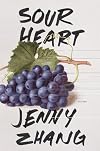
Sour Heart: Stories
by Jenny Zhang
On This Page
Description
"A debut collection of stories that plunge readers into the tender and chaotic hearts of adolescent girls growing up in New York City, from celebrated poet and National Magazine Award nominee Jenny Zhang"-- "Centered on a community of immigrants who have traded their endangered lives as artists in China and Taiwan for the constant struggle of life at the poverty line in 1990s New York City, Zhang's exhilarating collection examines the many ways that family and history can weigh us down and show more also lift us up. From the young woman coming to terms with her grandmother's role in the Cultural Revolution to the daughter struggling to understand where her family ends and she begins, to the girl discovering the power of her body to inspire and destroy, these seven vibrant stories illuminate the complex and messy inner lives of girls struggling to define themselves. Fueled by Zhang's singular voice and sly humor, this collection introduces Zhang as a bright and devastating force in literary fiction"-- show lessTags
Recommendations
Member Reviews
Sour Heart – a book that we all knew was going to be different and exciting, given the advance praise by Lena Dunham and Miranda July. I was itching to get my hands on it and pretty much started reading once I’d bought it. I don’t know what I was expecting in retrospect; perhaps to be blown away by each story? Well, I was but in ways that I wasn’t expecting. Sour Heart is compulsive, greedy reading that will shock and fascinate as you read about the children of Chinese immigrants living on the edge of the poverty line.
This is a short story collection, but the seven stories are interlinked. You will meet characters later on that were in the background of earlier stories and hear if they did manage to rise above poverty. You show more don’t even have to read them in order, but I think it helps. The stories become more graphic as you delve towards the middle with a sense of hope towards the end. One thing you will notice as you start to read is Zhang’s fondness for run on sentences. The opening sentence for ‘We Love You Crispina’ is a good sized paragraph with liberal use of commas. Normally, this would really annoy me as I tend to lose track of all the thoughts contained in the one sentence but Zhang makes it work. It helps that each section of the sentence sort-of links to the previous part and it sounds quite natural in the first person. I found it easy to look over this as I continued reading, but it might be worth checking out the first couple of pages to determine if the book is right for you.
Zhang really gets into the minds of her characters with the flow and conversational style of writing. Her characters certainly keep no secrets from the reader! Most of the narrators are fairly young children (about 10 or 11) and wow, they have the kind of sledging, insulting vocabulary that would put most adults to share! These kids are wild, swearing and sexually exploring where others are playing with Barbies and PlayStations. They are hardened to so much – sharing a room with the rest of their families or multiple families, seeing other kids steal and do drugs and yet they are still outsiders. Each child is hyperaware of their status – they don’t look the same and their parents aren’t the same as other American kids. They watch the American dream on TV but they are already cynical that it won’t be on offer for them. It’s sad, but the stories don’t get hung up on that. Each kid is a fighter, determined to stake out their mark in any dubious way they can. They can’t be sweet, sour is the only way to make it in this country. But they know that their parents love them and the family bond is strong, even when desperation and poverty force separation and cause arguments.
Each story in Sour Heart is super powerful, almost eye watering. Each story is packed to the brim with observations and emotions. It’s brutal in places (‘The Empty the Empty the Empty’) is jaw dropping in the portrayal of bullying a young girl and boy in the name of…sexual exploration? Weird childhood games? I can’t really describe the motivations of these kids, but it was shocking. Yet ‘The Evolution of My Brother’ is poignant and sweet in exploring the changing relationship between a brother and sister. If the intention is to provoke emotion, Sour Heart certainly does so. I liked Zhang’s style and her willingness to take on any subject. Sometimes I felt the exploits of these kids was too much and I just hope that it’s fiction! But I couldn’t stop reading and I would definitely check out what Zhang writes next.
http://samstillreading.wordpress.com show less
This is a short story collection, but the seven stories are interlinked. You will meet characters later on that were in the background of earlier stories and hear if they did manage to rise above poverty. You show more don’t even have to read them in order, but I think it helps. The stories become more graphic as you delve towards the middle with a sense of hope towards the end. One thing you will notice as you start to read is Zhang’s fondness for run on sentences. The opening sentence for ‘We Love You Crispina’ is a good sized paragraph with liberal use of commas. Normally, this would really annoy me as I tend to lose track of all the thoughts contained in the one sentence but Zhang makes it work. It helps that each section of the sentence sort-of links to the previous part and it sounds quite natural in the first person. I found it easy to look over this as I continued reading, but it might be worth checking out the first couple of pages to determine if the book is right for you.
Zhang really gets into the minds of her characters with the flow and conversational style of writing. Her characters certainly keep no secrets from the reader! Most of the narrators are fairly young children (about 10 or 11) and wow, they have the kind of sledging, insulting vocabulary that would put most adults to share! These kids are wild, swearing and sexually exploring where others are playing with Barbies and PlayStations. They are hardened to so much – sharing a room with the rest of their families or multiple families, seeing other kids steal and do drugs and yet they are still outsiders. Each child is hyperaware of their status – they don’t look the same and their parents aren’t the same as other American kids. They watch the American dream on TV but they are already cynical that it won’t be on offer for them. It’s sad, but the stories don’t get hung up on that. Each kid is a fighter, determined to stake out their mark in any dubious way they can. They can’t be sweet, sour is the only way to make it in this country. But they know that their parents love them and the family bond is strong, even when desperation and poverty force separation and cause arguments.
Each story in Sour Heart is super powerful, almost eye watering. Each story is packed to the brim with observations and emotions. It’s brutal in places (‘The Empty the Empty the Empty’) is jaw dropping in the portrayal of bullying a young girl and boy in the name of…sexual exploration? Weird childhood games? I can’t really describe the motivations of these kids, but it was shocking. Yet ‘The Evolution of My Brother’ is poignant and sweet in exploring the changing relationship between a brother and sister. If the intention is to provoke emotion, Sour Heart certainly does so. I liked Zhang’s style and her willingness to take on any subject. Sometimes I felt the exploits of these kids was too much and I just hope that it’s fiction! But I couldn’t stop reading and I would definitely check out what Zhang writes next.
http://samstillreading.wordpress.com show less
At the beginning I think, I'm not sure I'll finish this. The writing is of course a bit sour; mean and explicit and unlikable, which makes reading difficult but is also so interesting in small bits. I really struggled with the first few even while I enjoyed them intellectually.
But actually, what a journey. By the end I think, this is actually beautifully honest and uncomfortable and, dare I say it, sweet. While the stories could mostly all be of one person, they are of one family in a fragmented and cohesive way. And the truth of all the anger and sadness and discomfort and searching make the moments of family and identity that much stronger. Of course, I also like sour fruit.
But actually, what a journey. By the end I think, this is actually beautifully honest and uncomfortable and, dare I say it, sweet. While the stories could mostly all be of one person, they are of one family in a fragmented and cohesive way. And the truth of all the anger and sadness and discomfort and searching make the moments of family and identity that much stronger. Of course, I also like sour fruit.
I loved these stories! The writer really captured the voices of angsty kids and pre-teens, and the private, dark worlds kids can have, along with the loneliness. I liked the subtle ways the stories connected, too. It felt organic since the characters were part of a similar community in New York. I also feel like the book captured family relationships in China in ways I hadn’t seen before but I felt more in this book than in other fiction about Asian Americans I’ve read.
I was excited to pick up Jenny Zhang's short story collection, Sour Heart, after hearing so much hype both about this author and the first book out from Lena Dunham's new imprint. The stories primarily speak to the immigrant experience (China to US) and many of them specifically deal with the added points of view of lower class life and the experiences of children and young people. Reading the first story, I had to do a double take to see whether this was memoir or fiction, the writing is so personal and raw. In that sense, these stories had the feel at times of Bonnie Jo Campbell's Mothers, Tell Your Daughters. Sometimes difficult to read because they do feel so intimate, but so real and necessary, you can't stop reading.
I received an show more advanced copy of this book from the publisher via netgalley in exchange for an honest review. Thanks! show less
I received an show more advanced copy of this book from the publisher via netgalley in exchange for an honest review. Thanks! show less
Difficult. Fed my thinking about my own feelings of disconnectedness and fierce love. At times I was put off by how very raw the text could be; other times the rawness was endearing. Zhang assembles stories about loosely connected immigrant Chinese families to jarring effect. The narrative voices morph into each other, never becoming quite distinct; then again, the narrators' issues, though distinct, interweave to suggest something about the broader Chinese-American experience.
I might have preferred a more smoothed out text. On the other hand, we get a lot of that from writers trying to portray Asian-American families--a lot of polishing and smoothing out of complex, knotty truths--ugly truths, may of them. Whether you read her as on show more the sloppy side or purposely disinterested in orderliness, Zhang pulls no punches.
The defining excerpt comes at the end, describing the conundrum of the American child of a strong immigrant family: "How did we get so lucky? they'd say, clearing away the frantic voices of who I thought I was supposed to be, and though I knew it wouldn't last forever, I stayed between them until I remembered who I was again and no longer felt lonely." show less
I might have preferred a more smoothed out text. On the other hand, we get a lot of that from writers trying to portray Asian-American families--a lot of polishing and smoothing out of complex, knotty truths--ugly truths, may of them. Whether you read her as on show more the sloppy side or purposely disinterested in orderliness, Zhang pulls no punches.
The defining excerpt comes at the end, describing the conundrum of the American child of a strong immigrant family: "How did we get so lucky? they'd say, clearing away the frantic voices of who I thought I was supposed to be, and though I knew it wouldn't last forever, I stayed between them until I remembered who I was again and no longer felt lonely." show less
An intense collection of stories, each one told from the perspective of a young girl living in NYC in the 1990s with parents who had immigrated from Shanghai. The stories demonstrate the manifestations and aftermath of the trauma experienced by the parents in Mao era China and the varying coping mechanisms they utilize. Some parents drink excessively, others work such long hours such that they almost never see their children, while others cannot get enough of their children and are by their sides at all times. One father is physically abusive to his wife while another has an endless string of girlfriends. There is a grandmother who feels the only worthy thing in life is being a mother, so attempts to become the mother to her show more grandchildren, confabulating about the days when she breastfed them. She demands that they love her to an extreme. These are stories that show how the horrors of a generation (the Chinese in 1960’s China) affect future generations of children (American-Chinese growing up in NYC in the 1990s.)
It is about the children of immigrants in a country where English is not their primary language. It is about the interaction of these girls with both their families and the outside world. One girl is made to go back to ESL classes with each move and new school district, even though she has placed out them them repeatedly. There is an intensity to childhood friendships, a pushing and pulling, a competition that feels far more negative than positive. The stories delve into the girls’ exploration of their bodies and developing understanding of sex. It is often vulgar and disturbing. The emotional aspect of keeping up with peers about sex and foul language is a weight on some of these girls. The language the children use, both in conversation with each other and with their parents, is often angry and vulgar. There is desperation and depression felt through these characters. These girls are coming of age, learning about themselves and their bodies, learning about their place in the world. It is all at once confusing, disastrous and exciting for them.
In addition to portraying 1990’s NYC, the author offers glimpses of the year 1966 in China, when schools were out and children ran wild. The children were given the freedom and power to turn on any adult, accuse them of being counterrevolutionary, and proceed to torture and even kill them. One disturbing scene had a teacher tortured while tied to a tree by her students out of revenge for shaming one of the students in school. Anyone could be named counterrevolutionary. Particularly, anyone who wore their hair long and loose, anyone thought to be an intellectual, a member of the bourgeois class… or simply as a personal vendetta.
The writing is marvelous. Jenny Zhang is a masterful storyteller. However, the content is graphic. It is often horrifying, disturbing and seemingly distasteful. There is no sugar coating on these stories. These stories are full of grit, grime and dirt. There is anger, depression, sadness and sometimes joy. For me, Zhang was a unique original voice. I am glad I read these stories, but I caution others who might be sensitive to foul language or graphic subject matter. Sour Heart is the first book to be published with the LENNY imprint, a new imprint, in partnership with Random House, led by Lena Dunham and Jenni Konner.
For discussion questions, please see: http://www.book-chatter.com/?p=1920. show less
It is about the children of immigrants in a country where English is not their primary language. It is about the interaction of these girls with both their families and the outside world. One girl is made to go back to ESL classes with each move and new school district, even though she has placed out them them repeatedly. There is an intensity to childhood friendships, a pushing and pulling, a competition that feels far more negative than positive. The stories delve into the girls’ exploration of their bodies and developing understanding of sex. It is often vulgar and disturbing. The emotional aspect of keeping up with peers about sex and foul language is a weight on some of these girls. The language the children use, both in conversation with each other and with their parents, is often angry and vulgar. There is desperation and depression felt through these characters. These girls are coming of age, learning about themselves and their bodies, learning about their place in the world. It is all at once confusing, disastrous and exciting for them.
In addition to portraying 1990’s NYC, the author offers glimpses of the year 1966 in China, when schools were out and children ran wild. The children were given the freedom and power to turn on any adult, accuse them of being counterrevolutionary, and proceed to torture and even kill them. One disturbing scene had a teacher tortured while tied to a tree by her students out of revenge for shaming one of the students in school. Anyone could be named counterrevolutionary. Particularly, anyone who wore their hair long and loose, anyone thought to be an intellectual, a member of the bourgeois class… or simply as a personal vendetta.
The writing is marvelous. Jenny Zhang is a masterful storyteller. However, the content is graphic. It is often horrifying, disturbing and seemingly distasteful. There is no sugar coating on these stories. These stories are full of grit, grime and dirt. There is anger, depression, sadness and sometimes joy. For me, Zhang was a unique original voice. I am glad I read these stories, but I caution others who might be sensitive to foul language or graphic subject matter. Sour Heart is the first book to be published with the LENNY imprint, a new imprint, in partnership with Random House, led by Lena Dunham and Jenni Konner.
For discussion questions, please see: http://www.book-chatter.com/?p=1920. show less
This was a beautiful collection of barely-interconnected short stories. The first one hits you with a mix of sadness and joy when you see Christina and her parents struggle to make ends meet. The rest of the stories are people tangentially connected with their family, all similar in theme but striking in the differences of how each set of parents and children deal with both their old country and their new home. The end of the collection circles back to Christina, a welcome return. I feel like I could read a whole book about her.
Members
- Recently Added By
Lists

Books Read in 2018
4,360 works; 110 members

Mitski!
25 works; 1 member
Author Information

11+ Works 609 Members
Some Editions
Awards and Honors
Awards
Distinctions
Common Knowledge
- Original publication date
- 2017
- Important places
- China
Classifications
Statistics
- Members
- 420
- Popularity
- 73,001
- Reviews
- 13
- Rating
- (3.53)
- Languages
- English, French
- Media
- Paper, Audiobook, Ebook
- ISBNs
- 13
- ASINs
- 3