On This Page
Description
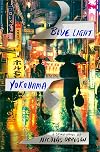
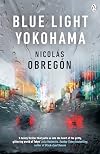
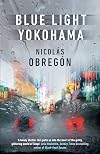
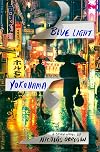
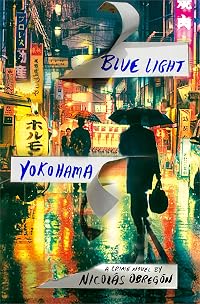
"Newly reinstated to the Homicide Division and transferred to a precinct in Tokyo, Inspector Iwata is facing superiors who don't want him there and is assigned a recalcitrant partner, Noriko Sakai, who'd rather work with anyone else. After the previous detective working the case killed himself, Iwata and Sakai are assigned to investigate the slaughter of an entire family, a brutal murder with no clear motive or killer. At the crime scene, they find puzzling ritualistic details. Black show more smudges. A strange incense smell. And a symbol--a large black sun. Iwata doesn't know what the symbol means but he knows what the killer means by it: I am here. I am not finished. As Iwata investigates, it becomes clear that these murders by the Black Sun Killer are not the first, nor the last attached to that symbol. As he tries to track down the history of black sun symbol, puzzle out the motive for the crime, and connect this to other murders, Iwata finds himself racing another clock--the superiors who are trying to have him removed for good. Haunted by his own past, his inability to sleep, and a song, 'Blue Light Yokohama,' Iwata is at the center of a compelling, brilliantly moody, layered novel sure to be one of the most talked about debuts in 2017. "-- show lessTags
Recommendations





























Member Recommendations
Member Reviews
What an entertaining debut! Told almost exclusively from the perspective of Tokyo Metropolitan Police Department Inspector Kosuke Iwata, it’s a multilayered police procedural involving murder, official corruption, and dangerous secrets.
A brief prologue set in 1996 describes the death of a woman who jumped from a dangling cable car into the sea, despite the efforts of police detective Hideo Akashi to save her. Fifteen years later, Akashi is investigating the quadruple murder of a Korean family. In the midst of his investigation, he commits suicide by jumping off Tokyo’s Rainbow Bridge. No one knows why. This theme of falling pervades the novel and ties together many of its strands, past and present.
The brass at the police department show more asks their newest detective, U.S.-trained (and therefore highly suspect) Iwata to pick up Akashi’s investigation of the family’s murder. Iwata is aided by Assistant Inspector Sakai, transferred from the Missing Persons department to work with him. These two inexperienced homicide detectives are assigned such a complex investigation because the department is short-handed, having lost Akashi, and is focused instead on another of his cases, the mysterious death of high-profile actress. A little racism creeps in, as well; as Iwata’s supervisor explains, “The family were Korean, so not exactly front-page news.”
Iwata and Sakai manage to get along rather well, considering. He is haunted by memories of his childhood in an orphanage, and she is a feisty young woman whose reflexive prickliness provides a lively counterpoint of humor. (I loved her!)
Iwata and Sakai haven’t made much progress in their investigation when the lonely widow of a judge is murdered. Striking details at the crime scene are similar to the Korean family’s case. Though Iwata and Sakai energetically pursue multiple lines of inquiry, they cannot begin to figure out what links these deaths until he starts breaking rules.
The author, who has lived in Japan, not only evocatively describes the physical and social settings of Tokyo, Kyoto, and Hong Kong, he also carefully explores Iwata’s complex interior life and motivations. The atmosphere he creates is dense with possibilities and a bit dreamlike. This is in part because a dozen or so mysteriously poetic lines repeatedly float through the detective’s mind: “The lights of the city are so pretty”; “I walk and walk, swaying, like a small boat in your arms.” You don’t learn the origin of these lines until well along—a song that is the source of the book’s title.
But Obregón is a more subtle writer than that, and the title also echoes other blue lights. A local suicide prevention program uses them, based on the supposition that the color blue is calming. The flashing blue lights of police cars, another recurrent Obregón image, would belie that assumption. Blue Light Yokohama is an immersive police procedural that uses its exotic setting and distinctive characters to great effect. show less
A brief prologue set in 1996 describes the death of a woman who jumped from a dangling cable car into the sea, despite the efforts of police detective Hideo Akashi to save her. Fifteen years later, Akashi is investigating the quadruple murder of a Korean family. In the midst of his investigation, he commits suicide by jumping off Tokyo’s Rainbow Bridge. No one knows why. This theme of falling pervades the novel and ties together many of its strands, past and present.
The brass at the police department show more asks their newest detective, U.S.-trained (and therefore highly suspect) Iwata to pick up Akashi’s investigation of the family’s murder. Iwata is aided by Assistant Inspector Sakai, transferred from the Missing Persons department to work with him. These two inexperienced homicide detectives are assigned such a complex investigation because the department is short-handed, having lost Akashi, and is focused instead on another of his cases, the mysterious death of high-profile actress. A little racism creeps in, as well; as Iwata’s supervisor explains, “The family were Korean, so not exactly front-page news.”
Iwata and Sakai manage to get along rather well, considering. He is haunted by memories of his childhood in an orphanage, and she is a feisty young woman whose reflexive prickliness provides a lively counterpoint of humor. (I loved her!)
Iwata and Sakai haven’t made much progress in their investigation when the lonely widow of a judge is murdered. Striking details at the crime scene are similar to the Korean family’s case. Though Iwata and Sakai energetically pursue multiple lines of inquiry, they cannot begin to figure out what links these deaths until he starts breaking rules.
The author, who has lived in Japan, not only evocatively describes the physical and social settings of Tokyo, Kyoto, and Hong Kong, he also carefully explores Iwata’s complex interior life and motivations. The atmosphere he creates is dense with possibilities and a bit dreamlike. This is in part because a dozen or so mysteriously poetic lines repeatedly float through the detective’s mind: “The lights of the city are so pretty”; “I walk and walk, swaying, like a small boat in your arms.” You don’t learn the origin of these lines until well along—a song that is the source of the book’s title.
But Obregón is a more subtle writer than that, and the title also echoes other blue lights. A local suicide prevention program uses them, based on the supposition that the color blue is calming. The flashing blue lights of police cars, another recurrent Obregón image, would belie that assumption. Blue Light Yokohama is an immersive police procedural that uses its exotic setting and distinctive characters to great effect. show less
So if you’re into police procedurals where you want high speed chases, lots of action and a real fast plot you will not find it in this one. You read this more for the characters and how they’re involved or what they have in common with each other whether through association of one other person, or just being at the wrong place at the wrong time.
I do admit, this is a very lyrical and poetic novel. There’s snippets of song lyrics, and quotes in between the book that can be distracting to the reading experience and may cause some confusion. Also, you go back and forth in Iwata’s memories to show how he became who he was in present day. This part can especially be confusion because you’re not sure where it starts or begins (you show more get the rhythm of it however, once you get further into the novel.) This may be off putting to some readers. I found myself taking breaks in between. There’s a lot of characters to take into account and there’s a lot of putting together the puzzle to get why these characters are involved and how.
I took a liking to Sakai. I loved her fiery attitude (understandably so once you figure out what she’s been through) and in the end you do feel for her. I really liked her character, she puts up a tough front and you know she’s hiding something within. When you find out what she’s been hiding all along it’s sad but makes sense as to explaining her behavior.
The plot itself is slow moving and the setting is bleak and dark. The entire theme of the book is rather dark and gloomy. It does not have a noir feeling to it and I was hoping for something more on the creepy side considering a cult is involved. It’s not much scary or thrilling as it’s more dark and foreboding undertone throughout the entire novel. And it’s not just the police case that has this tone. It’s the characters, and Iwata himself that carries this feeling with him.
Iwata as a character, he’s not that likable or unlikable. There’s not much to him. He’s very stoic and takes quite a beating throughout the book. He can be wry with other characters in the book but when he puts his mind to his police work, he does the job even though he makes the rest of the department angry with him. He’s quite abrasive with his co workers but can be a great partner when need be.
Also, take the time to actually listen to the song “Blue Light Yokohama” the song actually suits the novel. :)
There’s a sequel supposed to come out with Iwata. I’m not sure if I’ll pick it up or not. I don’t mind reading about the characters in depth and length but the plot could have been a lot quicker and less lyrical/poetic. show less
I do admit, this is a very lyrical and poetic novel. There’s snippets of song lyrics, and quotes in between the book that can be distracting to the reading experience and may cause some confusion. Also, you go back and forth in Iwata’s memories to show how he became who he was in present day. This part can especially be confusion because you’re not sure where it starts or begins (you show more get the rhythm of it however, once you get further into the novel.) This may be off putting to some readers. I found myself taking breaks in between. There’s a lot of characters to take into account and there’s a lot of putting together the puzzle to get why these characters are involved and how.
I took a liking to Sakai. I loved her fiery attitude (understandably so once you figure out what she’s been through) and in the end you do feel for her. I really liked her character, she puts up a tough front and you know she’s hiding something within. When you find out what she’s been hiding all along it’s sad but makes sense as to explaining her behavior.
The plot itself is slow moving and the setting is bleak and dark. The entire theme of the book is rather dark and gloomy. It does not have a noir feeling to it and I was hoping for something more on the creepy side considering a cult is involved. It’s not much scary or thrilling as it’s more dark and foreboding undertone throughout the entire novel. And it’s not just the police case that has this tone. It’s the characters, and Iwata himself that carries this feeling with him.
Iwata as a character, he’s not that likable or unlikable. There’s not much to him. He’s very stoic and takes quite a beating throughout the book. He can be wry with other characters in the book but when he puts his mind to his police work, he does the job even though he makes the rest of the department angry with him. He’s quite abrasive with his co workers but can be a great partner when need be.
Also, take the time to actually listen to the song “Blue Light Yokohama” the song actually suits the novel. :)
There’s a sequel supposed to come out with Iwata. I’m not sure if I’ll pick it up or not. I don’t mind reading about the characters in depth and length but the plot could have been a lot quicker and less lyrical/poetic. show less
This is a tough book to work through for about the first 1/3 of the book.
The author is part British part Spanish and books from both of these countries tend to move slower than books from American authors. In this case you have a murder mystery, but the book is also about why the murderer is the way he is and why the police inspector heading the case is the way he is.
Oh and the book takes place in Japan with all Japanese characters both good and bad.
That being said, if you give this book time it really is an amazing story. The writing is both atmospheric and poetic, as well as very Noir-ish.
As the author says in his note at the end
“ I realized that Blue Light Yokohama would be a crime novel only in façade. At it’s heart I wanted show more to write about people in Pain. About people who had lost something”
This title is based on a song by the same name and the lyrics are repeated throughout the book.
This is a book that is a little harder to find, but is definitely worth reading! show less
The author is part British part Spanish and books from both of these countries tend to move slower than books from American authors. In this case you have a murder mystery, but the book is also about why the murderer is the way he is and why the police inspector heading the case is the way he is.
Oh and the book takes place in Japan with all Japanese characters both good and bad.
That being said, if you give this book time it really is an amazing story. The writing is both atmospheric and poetic, as well as very Noir-ish.
As the author says in his note at the end
“ I realized that Blue Light Yokohama would be a crime novel only in façade. At it’s heart I wanted show more to write about people in Pain. About people who had lost something”
This title is based on a song by the same name and the lyrics are repeated throughout the book.
This is a book that is a little harder to find, but is definitely worth reading! show less
A Netgalley book, this crime novel is set in modern Japan. A new cop is appointed to a corrupt Tokyo murder squad after a key detective commits suicide. A strange pattern of murdered has begun, ritualistic, with a sun painted on the wall by the victim. The force is distracted by the death of a celebrity actress instead. Only the new guy seems to have his eyes open...
This was very involved, pulling in corruption, post natal depression, child abandonment, cults and ancient Mayan beliefs. Some of the pieces of police life seemed be taken from the manual of American copshow clichés than Japanese (the detective's boss gives him one last chance, he finds a slightly crazy but wise cop working out of a basement office, his partner waits for show more him outside, leaning against the car...) In places it was also a bit convoluted for me.. show less
This was very involved, pulling in corruption, post natal depression, child abandonment, cults and ancient Mayan beliefs. Some of the pieces of police life seemed be taken from the manual of American copshow clichés than Japanese (the detective's boss gives him one last chance, he finds a slightly crazy but wise cop working out of a basement office, his partner waits for show more him outside, leaning against the car...) In places it was also a bit convoluted for me.. show less
Started reading this via NetGalley and knew I had to get a proper copy before the end of the second chapter. Mr Obregón obviously knows the setting of the novel well and Iwata, the newest member of Tokyo's murder squad, proves to have a complex character as we follow him through his investigation, tracking down a serial killer. The story is interspersed with flashbacks to his orphanage childhood and his collapsed marriage, which adds some depth to the character, yet leaves plenty of room for further revelations.
The story is gripping without being unnecessarily complex or convoluted. The plot draws you in and keeps you to the end. Basing the final action scenes around a real earthquake was, in my opinion, inspired!
A great read, show more thoroughly enjoyed it. Highly recommended. show less
The story is gripping without being unnecessarily complex or convoluted. The plot draws you in and keeps you to the end. Basing the final action scenes around a real earthquake was, in my opinion, inspired!
A great read, show more thoroughly enjoyed it. Highly recommended. show less
BLUE LIGHT YOKOHAMA¬ is Nicolás Obregón’s debut. It is a dark crime novel blessed with an intricate plot and a few complex characters. However, it fails to evoke feelings of a genuine Japan. Instead we get a pretty bland Tokyo and many characters that tend to behave more like Westerners than actual Japanese.
Obregón weaves themes of loneliness, isolation and separation into his plot, with suicide never far from the surface. In an effort to curb the rising prevalence of suicide, Tokyo began placing blue lighting in its subway stations because of its calming effects. Clearly, this was on Obregón’s mind when he chose his title, which derives from popular Japanese love song.
The novel’s protagonist (Tokyo Police Inspector Kosuke show more Iwata) and his rooky female sidekick (Noriko Sakai) are complex and interesting characters who have a good chemistry. She is a brash neophyte with an off kilter sense of humor (very un-Japanese) while he is the seasoned cop who may be a little too troubled for his own good. Both have ghosts in their closets but these seem to have little to do with the actual plot. Iwata’s boss, Senior Inspector Isao Shindo, doubts Iwata’s competence and reveals this prejudice, as well as a touch of racism, by assigning him a cold case involving the murder of a Korean family, while isolating him from the hot case of the moment—the murder of a famous actress.
The murder of the Korean family was particularly brutal, involving the removal of one victim’s heart and a ritualistic black sun drawn on the ceiling. Hideo Akashi was the previous detective working the case and strangely committed suicide before solving it. Obregón treats us to a strange prologue showing Akashi attempting to stop a women’s suicide by jumping from a cable car but lets her fall when he spots a similar black sun tattoo on her wrist. Needless to say, this will be clarified before the novel ends. The plot moves slowly but Obregón manages to maintain suspense by including elements of police corruption, evidence that the crime was one of a series of cult killings, and even weaving in the murder of the actress that the rest of the murder squad is working on.
Obregón’s narrative owes much to the noir and crime genre. Many of these are just clichés. One hopes that Obregón will use them less in future work.
Although the backstories of the two detectives raise some intriguing possibilities for understanding, they are not well incorporated into the plot and mostly just left dangling. Iwata is an insomniac who has nightmares. He seems obsessed by the song “Blue Light Yokohama.” He was abandoned at age 10 and grew up in an orphanage where he developed a strange friendship with a boy names Kei. He spent some time in America and is married to an American (Cleo) who is afflicted with some disease that requires her hospitalization and makes her uncommunicative. Sakai’s oddities are less well explored but include a gritty childhood that involves boxing. These only serve as glimpses into these complex characters. One suspects that Obregón plans to follow-up with a series of novels—another cliché of the detective genre. show less
Obregón weaves themes of loneliness, isolation and separation into his plot, with suicide never far from the surface. In an effort to curb the rising prevalence of suicide, Tokyo began placing blue lighting in its subway stations because of its calming effects. Clearly, this was on Obregón’s mind when he chose his title, which derives from popular Japanese love song.
The novel’s protagonist (Tokyo Police Inspector Kosuke show more Iwata) and his rooky female sidekick (Noriko Sakai) are complex and interesting characters who have a good chemistry. She is a brash neophyte with an off kilter sense of humor (very un-Japanese) while he is the seasoned cop who may be a little too troubled for his own good. Both have ghosts in their closets but these seem to have little to do with the actual plot. Iwata’s boss, Senior Inspector Isao Shindo, doubts Iwata’s competence and reveals this prejudice, as well as a touch of racism, by assigning him a cold case involving the murder of a Korean family, while isolating him from the hot case of the moment—the murder of a famous actress.
The murder of the Korean family was particularly brutal, involving the removal of one victim’s heart and a ritualistic black sun drawn on the ceiling. Hideo Akashi was the previous detective working the case and strangely committed suicide before solving it. Obregón treats us to a strange prologue showing Akashi attempting to stop a women’s suicide by jumping from a cable car but lets her fall when he spots a similar black sun tattoo on her wrist. Needless to say, this will be clarified before the novel ends. The plot moves slowly but Obregón manages to maintain suspense by including elements of police corruption, evidence that the crime was one of a series of cult killings, and even weaving in the murder of the actress that the rest of the murder squad is working on.
Obregón’s narrative owes much to the noir and crime genre. Many of these are just clichés. One hopes that Obregón will use them less in future work.
Although the backstories of the two detectives raise some intriguing possibilities for understanding, they are not well incorporated into the plot and mostly just left dangling. Iwata is an insomniac who has nightmares. He seems obsessed by the song “Blue Light Yokohama.” He was abandoned at age 10 and grew up in an orphanage where he developed a strange friendship with a boy names Kei. He spent some time in America and is married to an American (Cleo) who is afflicted with some disease that requires her hospitalization and makes her uncommunicative. Sakai’s oddities are less well explored but include a gritty childhood that involves boxing. These only serve as glimpses into these complex characters. One suspects that Obregón plans to follow-up with a series of novels—another cliché of the detective genre. show less
DNF @ 40%. This is just not clicking with me. The writing at times, yes, is lovely but the whole thing feels like it was done via thesaurus rather than emotion. I am uninterested and unengaged. Seems like my poor track record of mysteries written by non-Japanese that take place in Japan is maintained.
Members
- Recently Added By
Lists

Noirvember: The Best Noir
113 works; 56 members
Author Information
9+ Works 157 Members
Awards and Honors
Distinctions
Series

Common Knowledge
- Canonical title
- Blue Light Yokohama
Classifications
Statistics
- Members
- 109
- Popularity
- 298,500
- Reviews
- 8
- Rating
- (3.67)
- Languages
- Dutch, English, German, Spanish
- Media
- Paper, Audiobook, Ebook
- ISBNs
- 18
- ASINs
- 4