On This Page
Description
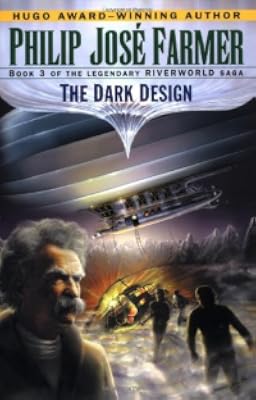
Much has transpired since Earth's denizens found themselves resurrected along the shores of a river 22 million miles long. With the truth of this strange river's creators, the Ethicals, still shrouded in mystery, Sir Richard Francis Burton, Samuel Clemens, King John, and Cyrano de Bergerac face a fantastical voyage of discovery.Tags
Recommendations





















Member Reviews
6th Pearl Ruled (p66)
Rating: 2* of five, all for the Riverworld setting which is tremendously creative and involving
By the end of chapter 12, I was slogging through the prose hating each and every page folio and running head. My eye would catch the author's name on the verso and I'd begin to churn my guts into roiling masses of acid fury; the title on the recto made my rectum clench; and then, as page 66 gave me another bash in the balls with Farmer's name, the next chapter was 13 and, well, I lost the will to live on in Riverworld. It didn't help that this was the last page's last few lines:
So. Much. NO. I hate the "but she *meant* yes" defense, and this sounds to me like the classic set-up for date rape. "I know you better than you know yourself" is infuriating when your long-term partner says it (probably because there's some truth in that case); when some joker off the street does, it's enraging.
It was 1977 when this marvy came out. It isn't in me to revisit that head-space in this way with that dreadful, stodgy prose as my cicerone. show less
Rating: 2* of five, all for the Riverworld setting which is tremendously creative and involving
By the end of chapter 12, I was slogging through the prose hating each and every page folio and running head. My eye would catch the author's name on the verso and I'd begin to churn my guts into roiling masses of acid fury; the title on the recto made my rectum clench; and then, as page 66 gave me another bash in the balls with Farmer's name, the next chapter was 13 and, well, I lost the will to live on in Riverworld. It didn't help that this was the last page's last few lines:
"I see that we are getting close to our homes. I bid you adieu then until tonight. I will set out two torches, which you may see from your window,show more
to announce when our little gathering begins."
"I did not say that I was coming."
"But you had nevertheless accepted," he said. "Is that not true?"
"Yes, but how did you know?"
"It's not telepathy," he said, smiling again. "A certain posture, a certain relaxation of muscles, the dilation of your pupils, an undertone to your voice, undetectable except to the highly trained, told me that you were looking forward to the party."
Jill said nothing. She had not known herself that she was pleased with the invitation. nor was she sure now. Was Piscator conning her?
So. Much. NO. I hate the "but she *meant* yes" defense, and this sounds to me like the classic set-up for date rape. "I know you better than you know yourself" is infuriating when your long-term partner says it (probably because there's some truth in that case); when some joker off the street does, it's enraging.
It was 1977 when this marvy came out. It isn't in me to revisit that head-space in this way with that dreadful, stodgy prose as my cicerone. show less
Philip Jose Farmer's Riverworld series grows tedious.
The Dark Design is book three out of five - and I'll just have to grit my teeth and read the rest anyway, because I don't leave series unfinished. It is a long and tiring novel that is entirely buildup with no climax, nor any promise of a forthcoming climax. It picks up several years after The Fabulous Riverboat left off, with Sam Clemens' nation of Parolando building an enormous airship, in order to mount an expedition towards the mysterious tower at the headwaters of the River. Clemens himself is largely absent from the book, making only a very brief appearance. Richard Francis Burton, the first book's protagonist, is also barely visited.
Instead, Farmer for the first time relies show more upon fictional characters rather than historical figures to tell this story. The first is Jill Gulbirra, a crabby, intolerable feminist. The second is Peter Jairus Frigate, a barely disguised author surrogate whom Farmer uses to spend chapters upon chapters writing self-indulgent monologues and dream sequences which add nothing to the story. Frigate also spends his time building an airship, a part of the story which is quickly glossed over in comparison with the Parolando vessel, as though it was added in as an afterthought. Farmer spends a remarkable amount of time on a character who is not associated with the main storyline, and who accomplishes very little in his own. Christ, if you're going to plant yourself in a narrative, at least make yourself important.
Farmer also introduces a plot twist which had clearly not been thought of in the first and second books, and was shoved in retrospectively. Granted, I've done this myself, but that doesn't mean I have to like it (especially when it removes the most interesting character, Monat, for the rest of the book). Another irritating problem was his constant use of both the metric and imperial system, with nonsensical phrases like this:
"The first mate Tom Rider, also known as Tex, stood about 5.08 centimeters or 2 inches shorter than Frigate's 1.8 meter or 6 feet."
Guess which measurement system the writer prefers, and guess which he is simply converting to with a calculator. Also, who cares how tall people are?
The book clocks in at just over four hundred pages, swollen as it is with meandering philosophical storylines and extensive biographies for nearly every character, now matter how insignificant. I cannot imagine how many pages this was before it was edited. Farmer himself seems to think this is no problem at all, with Frigate at one point reflecting:
"Too bad I hadn't thought of something like this when I was writing science fiction. But the concept of a planet consisting of a many-millions-kilometer-long river along which all of humanity that ever lived had been ressurected (a good part of it, anyway) would have been too big to put in one book. It would have taken at least twelve books to do it anywhere near justice."
Actually, Phil, it's wearing thin after a mere three books, mostly because of your dull writing style and sheer refusal to drag the plot along faster than a sloth carrying a mailbox filled with other sloths, to use an odd and clunky metaphor as you yourself enjoy doing. It's a wonderful concept, and I tip my hat to your imagination, but the execution is one of the biggest fumbles in the history of science fiction. show less
The Dark Design is book three out of five - and I'll just have to grit my teeth and read the rest anyway, because I don't leave series unfinished. It is a long and tiring novel that is entirely buildup with no climax, nor any promise of a forthcoming climax. It picks up several years after The Fabulous Riverboat left off, with Sam Clemens' nation of Parolando building an enormous airship, in order to mount an expedition towards the mysterious tower at the headwaters of the River. Clemens himself is largely absent from the book, making only a very brief appearance. Richard Francis Burton, the first book's protagonist, is also barely visited.
Instead, Farmer for the first time relies show more upon fictional characters rather than historical figures to tell this story. The first is Jill Gulbirra, a crabby, intolerable feminist. The second is Peter Jairus Frigate, a barely disguised author surrogate whom Farmer uses to spend chapters upon chapters writing self-indulgent monologues and dream sequences which add nothing to the story. Frigate also spends his time building an airship, a part of the story which is quickly glossed over in comparison with the Parolando vessel, as though it was added in as an afterthought. Farmer spends a remarkable amount of time on a character who is not associated with the main storyline, and who accomplishes very little in his own. Christ, if you're going to plant yourself in a narrative, at least make yourself important.
Farmer also introduces a plot twist which had clearly not been thought of in the first and second books, and was shoved in retrospectively. Granted, I've done this myself, but that doesn't mean I have to like it (especially when it removes the most interesting character, Monat, for the rest of the book). Another irritating problem was his constant use of both the metric and imperial system, with nonsensical phrases like this:
"The first mate Tom Rider, also known as Tex, stood about 5.08 centimeters or 2 inches shorter than Frigate's 1.8 meter or 6 feet."
Guess which measurement system the writer prefers, and guess which he is simply converting to with a calculator. Also, who cares how tall people are?
The book clocks in at just over four hundred pages, swollen as it is with meandering philosophical storylines and extensive biographies for nearly every character, now matter how insignificant. I cannot imagine how many pages this was before it was edited. Farmer himself seems to think this is no problem at all, with Frigate at one point reflecting:
"Too bad I hadn't thought of something like this when I was writing science fiction. But the concept of a planet consisting of a many-millions-kilometer-long river along which all of humanity that ever lived had been ressurected (a good part of it, anyway) would have been too big to put in one book. It would have taken at least twelve books to do it anywhere near justice."
Actually, Phil, it's wearing thin after a mere three books, mostly because of your dull writing style and sheer refusal to drag the plot along faster than a sloth carrying a mailbox filled with other sloths, to use an odd and clunky metaphor as you yourself enjoy doing. It's a wonderful concept, and I tip my hat to your imagination, but the execution is one of the biggest fumbles in the history of science fiction. show less
A massive, 30-year journey to the planet's North Pole to discover the Ethicals, the beings who resurrected humanity. Richard Burton goes on an upstream voyage. Milton Firebrass constructs a high-tech airship to reach the mysterious polar tower.
Firebrass, Sam Clemens' (Mark Twain) former enemy, leads a mission to build a dirigible, zeppelin, to reach the headwaters faster than riverboats. Jill Gulbirra, a talented Australian pilot, fights for the right to pilot the airship, overcoming significant misogyny in the process.
Burton and his group continue their perilous journey upriver, encountering ancient Egyptians and traversing the mountains, discovering they have been infiltrated by agents of the creators.
Firebrass, Sam Clemens' (Mark Twain) former enemy, leads a mission to build a dirigible, zeppelin, to reach the headwaters faster than riverboats. Jill Gulbirra, a talented Australian pilot, fights for the right to pilot the airship, overcoming significant misogyny in the process.
Burton and his group continue their perilous journey upriver, encountering ancient Egyptians and traversing the mountains, discovering they have been infiltrated by agents of the creators.
This is where I got off the Riverworld express, not because it is a bad novel, but because it isn't nearly as good as the first two in the series, "To Your Scattered Bodies Go" and "The Fabulous Riverboat". In this book, Burton and Clemens are back, still trying to solve the mysteries of the Riverworld. Some changes have also appeared in the way the world works (notably, you now stay dead if you get killed). New historical characters are introduced, as are new forms of transportation. For me, however, the ongoing quest wasn't nearly as interesting as it was before, and the novelty of the Riverworld had worn off.
This surprisingly ended up becoming my favorite of the series. I loved the first book, which prompted me to read on, but the second left me a bit cold, so I my hopes were not high for this one.
I think this installment shows Farmer getting a bit self indulgent with his whole concept at times, which can, understandably be a turn off for some. The detail Farmer provides about all of his characters, and I mean all of them, was really enjoyable for me perhaps because Farmer introduces a number of great characters in this book.
Another unexpected result of reading this book is that I now know way more about dirigibles...
I think this installment shows Farmer getting a bit self indulgent with his whole concept at times, which can, understandably be a turn off for some. The detail Farmer provides about all of his characters, and I mean all of them, was really enjoyable for me perhaps because Farmer introduces a number of great characters in this book.
Another unexpected result of reading this book is that I now know way more about dirigibles...
To me, this series is one of the inspirations for the Matrix, and some of my favorite science fiction. In this book, the inhabitants of Riverworld have recovered some technology, and continue to attempt to get to the end of the river, and discover who is behind what has been done to them. Unlike the Matrix, this seems to be a life after their original life, and no one knows to what purpose. Great stuff.
DNF @ 20%. Just wasn’t as engaging as the prior two. Willing to try again eventually but just wasn’t into it at the time.
Members
- Recently Added By
Lists

Best Science Fiction Novels
816 works; 426 members

Les 100 principaux titres de la science-fiction (1981)
126 works; 3 members

Slipstream or Interstitial Fiction
160 works; 19 members
Author Information

368+ Works 36,182 Members
Philip José Farmer was born in North Terre Haute, Indiana on January 26, 1918. He worked in a steel mill while attending Bradley University at night and writing in his spare time. In 1952, his story The Lovers, in which a human has sex with an alien, was published in a pulp magazine called Startling Stories and won him the Hugo Award in 1953 for show more most promising new author. He quit his job to become a full-time writer, but a string of misfortunes eventually forced him to take jobs as a manual laborer. He worked as a technical writer from 1956 to 1970, but continued writing science fiction. He finally found success in the 1960's with the Riverworld series. He wrote more than 75 books throughout his lifetime including the Dayworld series and the World of Tiers series. He also wrote short stories. He won the Hugo award for best novella in 1968 for Riders of the Purple Wage and for best novel in 1972 for To Your Scattered Bodies Go. In 1988, he was the recipient of the Writers of the Past Award and the Nova for best book for Riverworld. In 2001 he was awarded the Grand Master Award and the World Fantasy Life Achievement Award. He died on February 25, 2009 at the age of 91. (Bowker Author Biography) show less
Some Editions
Awards and Honors
Distinctions
Series


Belongs to Publisher Series
Work Relationships
Common Knowledge
- Canonical title
- The Dark Design
- Original title
- The Dark Design
- Original publication date
- 1977
- People/Characters
- Sir Richard Francis Burton; Samuel Langhorne Clemens; Savinien Cyrano de Bergerac; Jill Gulbirra; John Griffith Chaney; John Lackland
- Epigraph
- And still the Weaver plies his loom, whose warp and woof is wretched Man
Weaving th' unpattern'd dark design, so dark we doubt it owns a plan.
- The Kasidah of Haji Abdu al-Yazdi
'Sentence first - verdict afterwards.'
- Alice in Wonderland - Dedication
- To Sam Long and my godson David, son of Doctor Docter
- First words
- Dreams haunted The Riverworld.
- Last words
- (Click to show. Warning: May contain spoilers.)So be it.
- Original language
- English
Classifications
Statistics
- Members
- 2,151
- Popularity
- 9,533
- Reviews
- 24
- Rating
- (3.40)
- Languages
- 8 — Czech, English, French, German, Italian, Polish, Romanian, Spanish
- Media
- Paper, Audiobook, Ebook
- ISBNs
- 33
- ASINs
- 22