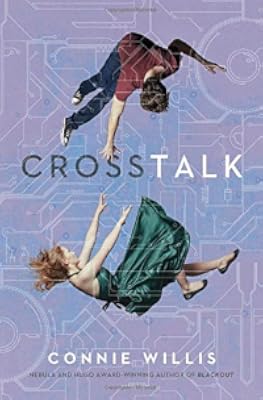
Crosstalk
by Connie Willis
On This Page
Description
Science fiction icon Connie Willis brilliantly mixes a speculative plot, the wit of Nora Ephron, and the comedic flair of P. G. Wodehouse in Crosstalk—a genre-bending novel that pushes social media, smartphone technology, and twenty-four-hour availability to hilarious and chilling extremes as one young woman abruptly finds herself with way more connectivity than she ever desired.NAMED ONE OF THE BEST BOOKS OF THE YEAR BY NPR
In the not-too-distant future, a simple outpatient procedure to show more increase empathy between romantic partners has become all the rage. And Briddey Flannigan is delighted when her boyfriend, Trent, suggests undergoing the operation prior to a marriage proposal—to enjoy better emotional connection and a perfect relationship with complete communication and understanding. But things don’t quite work out as planned, and Briddey finds herself connected to someone else entirely—in a way far beyond what she signed up for.
It is almost more than she can handle—especially when the stress of managing her all-too-eager-to-communicate-at-all-times family is already burdening her brain. But that’s only the beginning. As things go from bad to worse, she begins to see the dark side of too much information, and to realize that love—and communication—are far more complicated than she ever imagined.
Praise for Crosstalk
“A rollicking send-up of obsessive cell phone usage in too-near-future America . . . [Connie] Willis’s canny incorporation of scientific lore, and a riotous cast . . . make for an engaging girl-finally-finds-right-boy story that’s unveiled with tact and humor. Willis juxtaposes glimpses of claimed historical telepaths with important reflections about the ubiquity of cell phones and the menace that unscrupulous developers of technology pose to privacy, morality, and emotional stability.”—Publishers Weekly
“An exhilarating and laugh-inducing read . . . one of those rare books that will keep you up all night long because you can’t bear to put it down.”—Portland Book Review
“A fun technological fairy tale.”—BookPage
“One of the funniest SF novels in years.”—Locus. show less
Tags
Recommendations




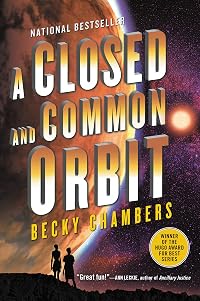

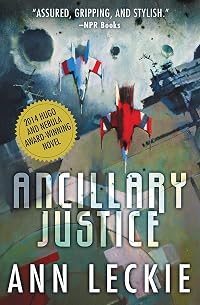
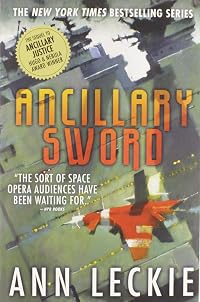
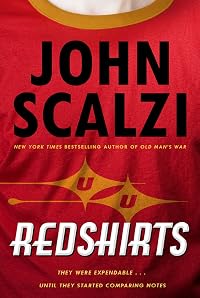






Member Recommendations
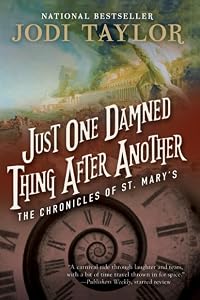
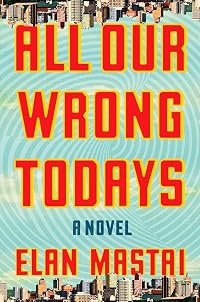
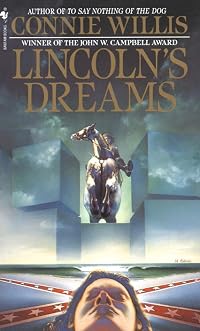
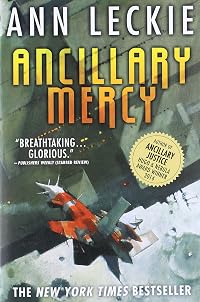
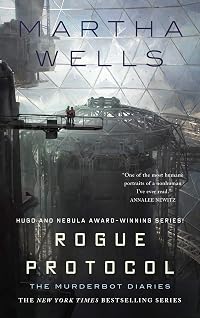
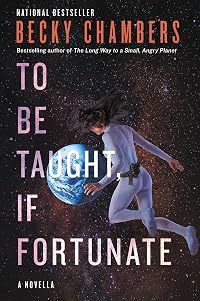
Litrvixen Both feature a procedure that couples can undergo to be able to sense each other’s emotions.
Member Reviews
audio fiction (~18hrs, 45min) an alternate history/reality where couples can choose to have a medical operation (EED) that allows them to sense each other's feelings, but for Briddey and her boyfriend Trent, there turn out to be hilarious unintended consequences (UIC) to deal with in addition to the office gossip and Briddey's disapproving family.
This was super cute, and the telepathy/tech aspects were complex enough to keep it interesting through all 18+ hours (and maybe make me want to read it again--though the sweet romantic bits in Willis' books are generally plenty for me to never tire of). CB turns out to be really sweet, partly because his life has made him extremely empathetic and compassionate for others, even when they don't show more entirely deserve it. show less
This was super cute, and the telepathy/tech aspects were complex enough to keep it interesting through all 18+ hours (and maybe make me want to read it again--though the sweet romantic bits in Willis' books are generally plenty for me to never tire of). CB turns out to be really sweet, partly because his life has made him extremely empathetic and compassionate for others, even when they don't show more entirely deserve it. show less
First, let me say that I received an advanced reader’s copy of Crosstalk from NetGalley in exchange for an honest review.
Briddey works at Commspan, a cell phone company whose major rival is Apple. She has been swept off her feet by Trent, an up-and-coming exec also at Commspan. So swept up, in fact, that she agrees to get an EED with Trent, which will allow them to feel each other’s emotions. Despite being begged by her very involved family and by the office nerd, C.B., not to go forward with the operation, Briddey gets the EED. Almost immediately, Briddey knows something is wrong. Not only can she not “feel” Trent, but she can hear a voice in her head talking to her! Strangely, the voice belongs to C.B., not Trent, and things show more only get more complicated from there.
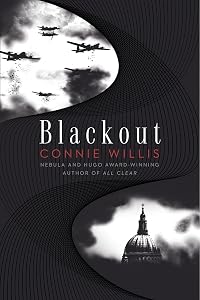
Crosstalk has some familiar elements: like Willis’ earlier book, Bellweather, Crosstalk has a corporate setting and pairs the heroine with the nerdy genius guy. Like Bellweather and like Blackout / All Clear, the characters make historical connections, which is one of the things that I love in a Connie Willis book. For example, when C.B. tries to convince Briddey not to get the EED: "Who knows? That's the thing with unintended consequences. You have no way of knowing what they might be till they happen, and then it's too late. Look at Prohibition. And DDT. They seemed like terrific ideas, and look what ended up happening--Al Capone and a slew of dead robins."
But that seems to be where the familiarity stops. Despite an occasional nod to history, Willis is more concerned with the future in this book than she has been in her previous books. She imagines a world where our addiction to instant communication is out of control and where we willingly pay corporations to encroach on our privacy. Actually, it’s a world not too far removed from our own.
Willis sends Briddey and C.B. on madcap adventures and the reader roots for them all the way. Crosstalk is a funny, thoughtful, nail-biter of a book, exactly what we expect from Connie Willis. show less
Briddey works at Commspan, a cell phone company whose major rival is Apple. She has been swept off her feet by Trent, an up-and-coming exec also at Commspan. So swept up, in fact, that she agrees to get an EED with Trent, which will allow them to feel each other’s emotions. Despite being begged by her very involved family and by the office nerd, C.B., not to go forward with the operation, Briddey gets the EED. Almost immediately, Briddey knows something is wrong. Not only can she not “feel” Trent, but she can hear a voice in her head talking to her! Strangely, the voice belongs to C.B., not Trent, and things show more only get more complicated from there.
Crosstalk has some familiar elements: like Willis’ earlier book, Bellweather, Crosstalk has a corporate setting and pairs the heroine with the nerdy genius guy. Like Bellweather and like Blackout / All Clear, the characters make historical connections, which is one of the things that I love in a Connie Willis book. For example, when C.B. tries to convince Briddey not to get the EED: "Who knows? That's the thing with unintended consequences. You have no way of knowing what they might be till they happen, and then it's too late. Look at Prohibition. And DDT. They seemed like terrific ideas, and look what ended up happening--Al Capone and a slew of dead robins."
But that seems to be where the familiarity stops. Despite an occasional nod to history, Willis is more concerned with the future in this book than she has been in her previous books. She imagines a world where our addiction to instant communication is out of control and where we willingly pay corporations to encroach on our privacy. Actually, it’s a world not too far removed from our own.
Willis sends Briddey and C.B. on madcap adventures and the reader roots for them all the way. Crosstalk is a funny, thoughtful, nail-biter of a book, exactly what we expect from Connie Willis. show less
Briddey and her boyfriend work for a communications business that is one of Apple's competitors, and they're working hard to create a new phone to rival the newest iPhone when it launches. They're going to get an EED, which is brain surgery that's supposed to allow partners to be better in tune to each other's feelings, but trying to keep it out of the office grapevine and her family's network puts Briddey in a tizzy. And then when she gets the surgery something goes wrong and she connects telepathically with someone else.
A long, long time ago when I didn't touch science fiction with a ten foot pole, I asked a librarian friend of mine to recommend science fiction for someone who'd never read science fiction before. She recommended To show more Say Nothing of the Dog, which involves time traveling historians going to Victorian London and getting into all sorts of mischief. I have since read not all of Connie Willis's books but many that I could get my hands on, and definitely every new one as it came out. This has much of the humor with none of the time travel, and if I had to compare it to another of the author's books, I'd say it felt most like Bellwether to me because it's set in a time period that could be just a tad in the future. Briddey and her shenanigans with her nosy family are hilariously over the top, and the story of how she learns to deal with telepathy while trying to keep her boyfriend in the dark (how embarrassed to be connected to someone else!) was a really fun read. show less
A long, long time ago when I didn't touch science fiction with a ten foot pole, I asked a librarian friend of mine to recommend science fiction for someone who'd never read science fiction before. She recommended To show more Say Nothing of the Dog, which involves time traveling historians going to Victorian London and getting into all sorts of mischief. I have since read not all of Connie Willis's books but many that I could get my hands on, and definitely every new one as it came out. This has much of the humor with none of the time travel, and if I had to compare it to another of the author's books, I'd say it felt most like Bellwether to me because it's set in a time period that could be just a tad in the future. Briddey and her shenanigans with her nosy family are hilariously over the top, and the story of how she learns to deal with telepathy while trying to keep her boyfriend in the dark (how embarrassed to be connected to someone else!) was a really fun read. show less
I adored this romantic comedy which is coupled with a focus on the pervasiveness of nonstop social media and information overload.
Connie Willis is an author who often invokes the theme of miscommunications - sentences only half spoken, misunderstood, never conveyed, conveyed too late, or lost in dreams. In this book, she stretches the idea a bit further and explores what happens when there is too much communication - not only the inundation of thoughts on Facebook, twitter, and texting, and their instantaneous transmission, but to the idea of telepathy itself.
Readers may also recognize this premise from Patrick Ness’s "Chaos Walking” series, a dystopia in which living creatures are constantly bombarded with each other's thoughts. show more Willis takes a different approach: while her book may be characterized as a fantasy or perhaps science fiction, it is much closer than Ness's series to “real life.” And it is full of humor even though it has suggestions of the dark repercussions of too much information and lack of privacy. The tragic as well as comedic consequences of communicating too much or too little serves to provide dramatic tension as well as sociological commentary.
Briddey Flannigan and her boyfriend Trent Worth both work at Commspan, a smartphone company that is a rival of Apple. After a whirlwind relationship, Trent has talked Briddey into getting an EED - a minor surgical procedure that “increases your ability to connect emotionally with your partner.”
The results are not what they planned.
Briddey finds herself suddenly connected telepathically not to Trent but to C.B. Schwartz, a reclusive technician at Commspan.
C.B. has actually been working on a phone that reduces one’s connectivity: a “sanctuary phone” that lets you politely block calls you don’t want. He explains to Briddey:
“Commspan promises . . . more communication. But that isn’t what people want. They’ve got way too much already - laptops, smartphones, tablets, social media. They’ve got connectivity coming out their ears. There’s such a thing as being too connected, you know, especially when it comes to relationships. Relationships need less communication, not more.”
He illustrates his point by examples with which everyone can relate:
“If people really wanted to communicate, they’d tell the truth, but they don’t. . . . ‘No, I don’t think that dress makes you look fat.’ ’Of course I want to go.’ ‘Of course’ is a dead giveaway that you’re lying. ‘Of course I didn’t sleep with her.’ ‘Of course I like your family.’ ‘Of course you can trust me.’”
“And you know who people lie to the most? Themselves. They’re absolute masters of self-deception.”
Briddey comes to understand his latter point as well.
And when Briddey begins to hear the voices of other people, she learns something else. She tells C.B. how horrible the thoughts were that she overheard. C.B. replies:
“‘Actually, they were just your average [people] … Vulgar? Vindictive? Spiteful? Scheming? I’m afraid that’s what people sound like in the privacy of their own heads.’ He gave her a wry grin. ‘I told you it’s a cesspool in there. … They can say out loud the nice stuff they think…. Inside their heads is the only place the bad stuff can come out, which tends to make their thoughts disproportionately unpleasant. But also, people are brutish, hateful, greedy mean, manipulative, and cruel.
“But everyone can’t be awful.”
“You haven’t listened to them for as long as I have.”
The ensuing action, as Briddey tries to hide this unintended consequence of the EED, cope with the voices, and cope with Trent, turns into a first-class adventure story and race against time, as with Willis’s best fiction.
Evaluation: There is a reason Connie Willis has garnered so many awards - she has won eleven Hugo Awards and seven Nebula Awards — more major awards than any other writer - and that she has such a rabid fan base. (I include myself in that category; her book Doomsday is on my list of top ten favorite books ever!) Her stories are just a delight.
This book is more social satire than science fiction. It is also a humorous look at modern management and mores, with a fairy tale overlay that includes a fairy godmother, and a prince in disguise. I have yet to be disappointed with Connie Willis! show less
Connie Willis is an author who often invokes the theme of miscommunications - sentences only half spoken, misunderstood, never conveyed, conveyed too late, or lost in dreams. In this book, she stretches the idea a bit further and explores what happens when there is too much communication - not only the inundation of thoughts on Facebook, twitter, and texting, and their instantaneous transmission, but to the idea of telepathy itself.
Readers may also recognize this premise from Patrick Ness’s "Chaos Walking” series, a dystopia in which living creatures are constantly bombarded with each other's thoughts. show more Willis takes a different approach: while her book may be characterized as a fantasy or perhaps science fiction, it is much closer than Ness's series to “real life.” And it is full of humor even though it has suggestions of the dark repercussions of too much information and lack of privacy. The tragic as well as comedic consequences of communicating too much or too little serves to provide dramatic tension as well as sociological commentary.
Briddey Flannigan and her boyfriend Trent Worth both work at Commspan, a smartphone company that is a rival of Apple. After a whirlwind relationship, Trent has talked Briddey into getting an EED - a minor surgical procedure that “increases your ability to connect emotionally with your partner.”
The results are not what they planned.
Briddey finds herself suddenly connected telepathically not to Trent but to C.B. Schwartz, a reclusive technician at Commspan.
C.B. has actually been working on a phone that reduces one’s connectivity: a “sanctuary phone” that lets you politely block calls you don’t want. He explains to Briddey:
“Commspan promises . . . more communication. But that isn’t what people want. They’ve got way too much already - laptops, smartphones, tablets, social media. They’ve got connectivity coming out their ears. There’s such a thing as being too connected, you know, especially when it comes to relationships. Relationships need less communication, not more.”
He illustrates his point by examples with which everyone can relate:
“If people really wanted to communicate, they’d tell the truth, but they don’t. . . . ‘No, I don’t think that dress makes you look fat.’ ’Of course I want to go.’ ‘Of course’ is a dead giveaway that you’re lying. ‘Of course I didn’t sleep with her.’ ‘Of course I like your family.’ ‘Of course you can trust me.’”
“And you know who people lie to the most? Themselves. They’re absolute masters of self-deception.”
Briddey comes to understand his latter point as well.
And when Briddey begins to hear the voices of other people, she learns something else. She tells C.B. how horrible the thoughts were that she overheard. C.B. replies:
“‘Actually, they were just your average [people] … Vulgar? Vindictive? Spiteful? Scheming? I’m afraid that’s what people sound like in the privacy of their own heads.’ He gave her a wry grin. ‘I told you it’s a cesspool in there. … They can say out loud the nice stuff they think…. Inside their heads is the only place the bad stuff can come out, which tends to make their thoughts disproportionately unpleasant. But also, people are brutish, hateful, greedy mean, manipulative, and cruel.
“But everyone can’t be awful.”
“You haven’t listened to them for as long as I have.”
The ensuing action, as Briddey tries to hide this unintended consequence of the EED, cope with the voices, and cope with Trent, turns into a first-class adventure story and race against time, as with Willis’s best fiction.
Evaluation: There is a reason Connie Willis has garnered so many awards - she has won eleven Hugo Awards and seven Nebula Awards — more major awards than any other writer - and that she has such a rabid fan base. (I include myself in that category; her book Doomsday is on my list of top ten favorite books ever!) Her stories are just a delight.
This book is more social satire than science fiction. It is also a humorous look at modern management and mores, with a fairy tale overlay that includes a fairy godmother, and a prince in disguise. I have yet to be disappointed with Connie Willis! show less
You know, I was worried that my being a total fanboy of Connie Willis would have unduly influenced any kind of review I might make for any new novel, but I never should have worried. At all. This is a Great SF Romantic Comedy, with all the best features of [b:To Say Nothing of the Dog|77773|To Say Nothing of the Dog (Oxford Time Travel, #2)|Connie Willis|https://d.gr-assets.com/books/1436397341s/77773.jpg|696], at least with the comedy of errors, the speed and flurry, and the comedy, even if we're not in the realm of time-travel any more.
This one is all about communication, and if you really think that you've got it all figured out by page 100, then think again. And again. And again. Because Connie Willis will grab you by the scruff of show more your neck and throw you into a truly brilliant breakneck pace. It might even nearly overwhelm you with its peril and humor and pathos... and that's only the first few pages. Do I feel pity for Briddy? Do I want to throw away all cell phones forever and tell people to just QUIT the gossip, already? Oh yes.
But is this what the novel is about? Oh lordy... no. It only keeps getting better and better and better, and by the time we're through with Trent and Briddy and C.B.... well, I don't know about you, but I was bawling like a little baby. Connie Willis knows how to weave a really tight tale with so, so many perfect emotional tweaks. The finale had so much build that it literally blew my mind.
In a great way. :)
I savored this novel like crazy. This is real storytelling. What a gem.
And to think that this is *merely* a Romantic Comedy? Good Grief. So why am I still teary? I'm a guy! I'm supposed to be made of sterner stuff! Okay. Enough Squee. :) You get the idea. Connie Willis has done it again. Don't ever believe that I'm just taking this for granted, though. Has anyone started to worship her, yet? I mean, with shrines and all? Um. Why not? :)
I love going all gooey with a good book, but I generally don't go THIS far unless it really, really deserves it. Thanks to Netgalley and the publishers for letting this humble reviewer get a sneak peek at one of his favorite authors of all time. :) So much Joy! :) show less
This one is all about communication, and if you really think that you've got it all figured out by page 100, then think again. And again. And again. Because Connie Willis will grab you by the scruff of show more your neck and throw you into a truly brilliant breakneck pace. It might even nearly overwhelm you with its peril and humor and pathos... and that's only the first few pages. Do I feel pity for Briddy? Do I want to throw away all cell phones forever and tell people to just QUIT the gossip, already? Oh yes.
But is this what the novel is about? Oh lordy... no. It only keeps getting better and better and better, and by the time we're through with Trent and Briddy and C.B.... well, I don't know about you, but I was bawling like a little baby. Connie Willis knows how to weave a really tight tale with so, so many perfect emotional tweaks. The finale had so much build that it literally blew my mind.
In a great way. :)
I savored this novel like crazy. This is real storytelling. What a gem.
And to think that this is *merely* a Romantic Comedy? Good Grief. So why am I still teary? I'm a guy! I'm supposed to be made of sterner stuff! Okay. Enough Squee. :) You get the idea. Connie Willis has done it again. Don't ever believe that I'm just taking this for granted, though. Has anyone started to worship her, yet? I mean, with shrines and all? Um. Why not? :)
I love going all gooey with a good book, but I generally don't go THIS far unless it really, really deserves it. Thanks to Netgalley and the publishers for letting this humble reviewer get a sneak peek at one of his favorite authors of all time. :) So much Joy! :) show less
“There's such a thing as being too connected, you know, especially when it comes to relationships. Relationships need less communication, not more.” — Connie Willis, “Crosstalk”
Part science fiction, part paranormal fantasy, part romantic comedy, Connie Willis's entertaining 2016 novel “Crosstalk” may more than anything be a satire on contemporary culture's desire for connection, preferably through technology rather than by people actually talking to one another. The lines above spoken early in the novel by C.B. Schwartz, one of the main characters, would seem to summarize the author's own view: Communication, like most other things, is best used in moderation.
Briddey Flannigan, like C.B., works for a company in the show more competitive smartphone industry. She and her boyfriend, Trent, have decided to each get an EED, an implant in the brain that supposedly allows lovers to communicate their emotions to one another even at a distance. Almost instantly everyone in the company finds out about their plan, and C.B., a scruffy young man who hides out in the frigid basement, tries to discourage her. She goes ahead with the operation anyway, but instead of being connected to Trent, she finds herself connected to C.B. And it's not just their feelings that are shared, but virtually every thought the two of them have.
You might not think Willis could possibly sustain this farce for 500 pages, as comic novels, like movie comedies, usually work best when relatively short, but somehow she does. The complications keep coming and coming. If some of them are predictable -- you know C.B. and Briddey will fall in love and that Trent is up to no good -- most of them will surprise most readers.
I will close with another C.B. Schwartz quote, my favorite: "If people really wanted to communicate, they'd tell the truth, but they don't." show less
Part science fiction, part paranormal fantasy, part romantic comedy, Connie Willis's entertaining 2016 novel “Crosstalk” may more than anything be a satire on contemporary culture's desire for connection, preferably through technology rather than by people actually talking to one another. The lines above spoken early in the novel by C.B. Schwartz, one of the main characters, would seem to summarize the author's own view: Communication, like most other things, is best used in moderation.
Briddey Flannigan, like C.B., works for a company in the show more competitive smartphone industry. She and her boyfriend, Trent, have decided to each get an EED, an implant in the brain that supposedly allows lovers to communicate their emotions to one another even at a distance. Almost instantly everyone in the company finds out about their plan, and C.B., a scruffy young man who hides out in the frigid basement, tries to discourage her. She goes ahead with the operation anyway, but instead of being connected to Trent, she finds herself connected to C.B. And it's not just their feelings that are shared, but virtually every thought the two of them have.
You might not think Willis could possibly sustain this farce for 500 pages, as comic novels, like movie comedies, usually work best when relatively short, but somehow she does. The complications keep coming and coming. If some of them are predictable -- you know C.B. and Briddey will fall in love and that Trent is up to no good -- most of them will surprise most readers.
I will close with another C.B. Schwartz quote, my favorite: "If people really wanted to communicate, they'd tell the truth, but they don't." show less
In a near-future society, people are looking for ever more efficient ways to communicate and connect with each other. A new experimental procedure, the EED, allows couples to feel each other's emotions and thus (theoretically) strengthen their relationship. Briddey Flannigan is thrilled when her boyfriend Trent asks her to get an EED with him, but her nosy family doesn't like the idea, nor does her reclusive colleague C.B. Nevertheless, Briddey goes ahead with the procedure, only to discover that something has gone terribly wrong -- she's now connected to C.B., not Trent. Moreover, she doesn't just sense his emotions; she seems to be able to read his mind. Now, with C.B.'s help, Briddey must figure out why this connection occurred and show more learn how to break it, before the negative effects of their telepathic connection cause irreversible damage.
I'm huge Connie Willis fan, so I had high expectations for this book, and I'm happy to say I wasn't disappointed! This novel has just as much humor and romance as her other light novels, with an added dash of commentary on the negative aspects of incessant communication. I really enjoyed the little asides about past scientific research into telepathy, as well as the speculation that famous historical figures who heard voices (most notably Joan of Arc) might actually have been telepathic. I do think the plot had a few too many twists and turns at the end; the book's length could have been trimmed somewhat. But I was having such a ball following Briddey and C.B.'s story that I barely noticed at the time! To be fair, the book does have its flaws, which I think the NPR review covers quite well -- I can definitely see the reviewer's point. But I still loved the book, and I would definitely recommend it to Willis fans! Newcomers to her work might want to start with To Say Nothing of the Dog or Doomsday Book (although the latter is much darker) instead. show less
I'm huge Connie Willis fan, so I had high expectations for this book, and I'm happy to say I wasn't disappointed! This novel has just as much humor and romance as her other light novels, with an added dash of commentary on the negative aspects of incessant communication. I really enjoyed the little asides about past scientific research into telepathy, as well as the speculation that famous historical figures who heard voices (most notably Joan of Arc) might actually have been telepathic. I do think the plot had a few too many twists and turns at the end; the book's length could have been trimmed somewhat. But I was having such a ball following Briddey and C.B.'s story that I barely noticed at the time! To be fair, the book does have its flaws, which I think the NPR review covers quite well -- I can definitely see the reviewer's point. But I still loved the book, and I would definitely recommend it to Willis fans! Newcomers to her work might want to start with To Say Nothing of the Dog or Doomsday Book (although the latter is much darker) instead. show less
Members
- Recently Added By
Lists

Favorite Science Fiction by Women Authors
737 works; 196 members

ALA The Reading List
490 works; 28 members

Female Author
1,235 works; 65 members

Top Five Books of 2020
982 works; 348 members

Top Five Books of 2016
795 works; 228 members

KayStJ's to-read list
1,616 works; 11 members

Books Read in 2016
4,666 works; 199 members

Books Read in 2017
4,249 works; 129 members

To Read
617 works; 7 members

Top Five Books of 2017
757 works; 231 members

Our digital age
79 works; 5 members
Books Read in 2018
4,360 works; 110 members

hypatian_kat to-read
429 works; 3 members

2017 Hugo Eligible Novels
145 works; 14 members
Author Information

96+ Works 40,821 Members
Connie Willis lives in Greeley, Colorado, with her family. (Publisher Provided) Connie Willis was born on December 31, 1945. She graduated from Colorado State College in 1967. Her first story, The Secret of Santa Titicaca, was published in Worlds of Fantasy in 1971. After receiving an NEA grant in 1982, she left her teaching job to become a show more full-time writer. Her works include Doomsday Book, Lincoln's Dreams, Bellwether, To Say Nothing of the Dog, Fire Watch, Blackout, and All Clear. She has received 10 Hugo Awards, 11 Locus Poll Awards and 6 Nebula Awards. In 2009, she was inducted into the Science Fiction Hall of Fame. (Bowker Author Biography) show less
Some Editions
Awards and Honors
Awards
Common Knowledge
- Canonical title
- Crosstalk
- Original title
- Crosstalk
- Original publication date
- 2016-09-15
- People/Characters
- Briddey Flannigan; C.B. Schwartz; Trent Worth; Maeve; Aunt Oona; Mary Clare (show all 13); Kathleen; Jill Quincy; Art Sampson; Suki Parker; Trish Mendez; Sean O'Reilly; Dr. Verrick
- Epigraph
- "In Ireland the inevitable never happens
and the unexpected constantly occurs."
John Pentland Mahaffy
"In every crowd are certain persons who seem just like the rest, yet they bear amazing messages."
Antoine de St. Exupery, Night Flight
"Listen up."
Ghost Town - Dedication
- To the inimitable - and irreplaceable - Mary Stewart
- First words
- By the time Briddey pulled into the parking garage at Commspan, there were forty-two text messages on her phone.
- Last words
- (Click to show. Warning: May contain spoilers.)I can't believe you guys didn't tell me about Aunt Oona!
Classifications
Statistics
- Members
- 1,163
- Popularity
- 21,551
- Reviews
- 85
- Rating
- (3.65)
- Languages
- English, French, Portuguese
- Media
- Paper, Audiobook, Ebook
- ISBNs
- 20
- ASINs
- 5