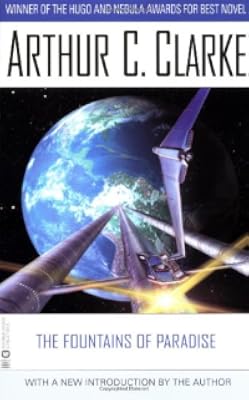
The Fountains of Paradise
by Arthur C. Clarke
On This Page
Description
Renowned structural engineer Dr. Vannevar Morgan seeks to link Earth to the stars-through the construction of a space elevator connecting to an orbiting satellite 22,300 miles from the planet's surface. The elevator would lift interstellar spaceships into orbit without the need of rockets to blast through the Earth's atmosphere-making space travel easier and more cost-effective. Unfortunately, the only appropriate surface base for the elevator is located at the top of a mountain already show more occupied-by an ancient order of Buddhist monks who strongly oppose the project. Morgan must face down their opposition-as well as enormous technical, political, and economic challenges-in order to make the project successful. Winner of the Nebula and Hugo awards, this novel combines believable science based on the knowledge of the time with heart-stopping suspense-sure to delight science fiction readers and fans of Clarke alike. show lessTags
Recommendations

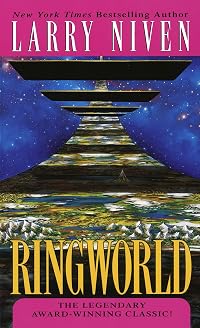
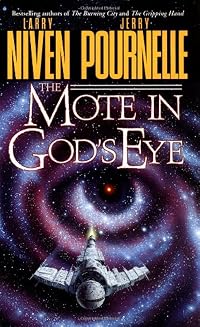

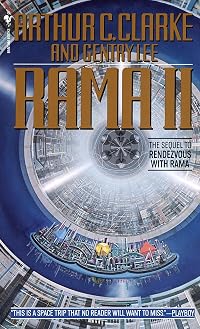
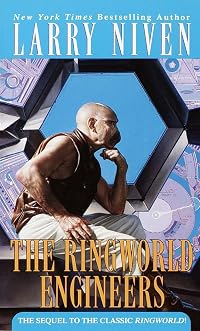
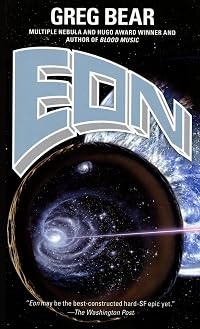


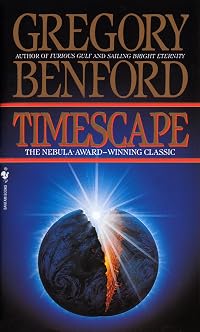
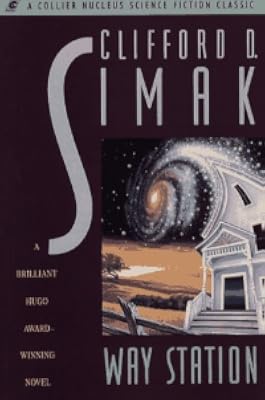
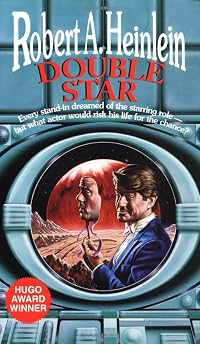
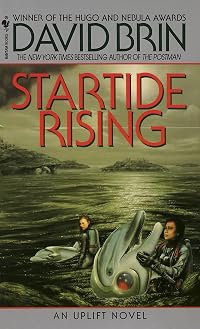
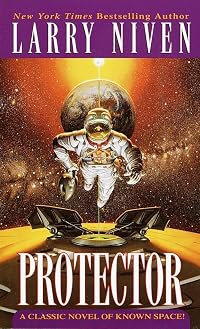







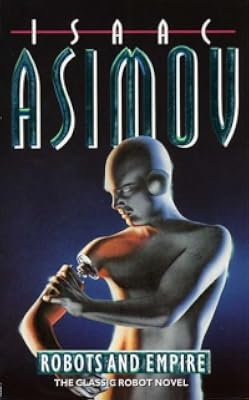


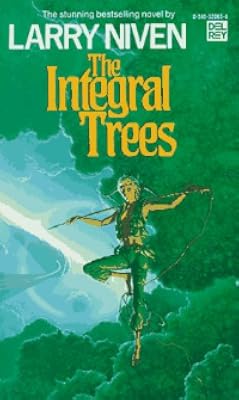
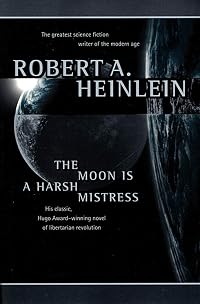
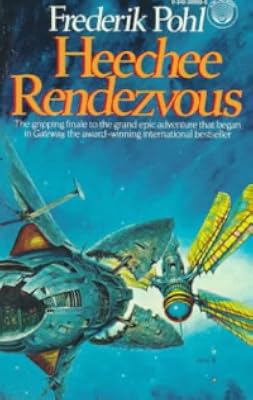

Member Recommendations

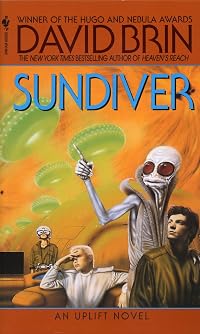
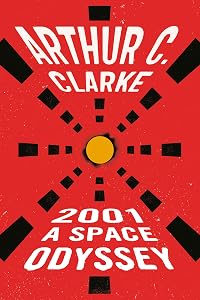
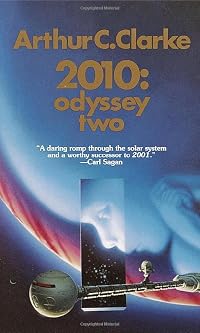
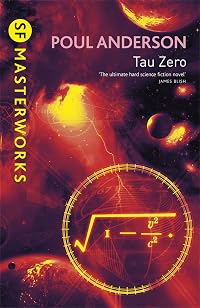
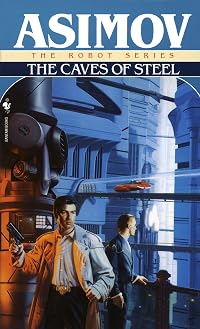
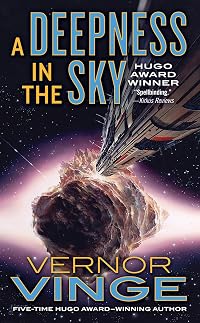
lorax The two classic space elevator novels, written nearly simultaneously. Clarke's is a better book, but they're both good engineering SF, and if you like space elevators you definitely should read them both.
94
Member Reviews
Science-fiction is a big genre, including everything from the trashiest 'rockets n' rayguns' schlock to serious sociological speculation. On that scale, The Fountains of Paradise falls clearly into the mega-engineering sub-genre, where rational yet humanistic men of science build immense engineering projects, and the author walks us through an exploration of their inner workings. In this case, the project is space elevator. The engineering is a little cursory, while harmonic and electrodynamic issues are brought up, it's assumed that a 40000 km unbreakable cable with maglev tracks is just going to work. On the human side, all characters are reasonable and wise and calm under pressure, which can be a little irritating, but they're more show more distinguishable than the alien explorers in Rendezvous at Rama. And somehow, the introductory chapter which skip between ancient Sri Lanka, the 22nd century engineering effort, and the 21st century visit of an intelligent alien probe to the solar system charmingly establish the novel. The Fountains at Paradise is earnestly old school, but sometimes that's just what you need.
****
UPDATED for Hugo Reread
The Fountains of Paradise is a relatively straightforward story of heroic engineering. In the 22nd century, Vannevar Morgan, world's greatest living engineering, wants to follow up his bridge across the Straits of Gibralter with a bridge to the stars, using a new carbon-based superfiber to construct a 40,000 km space elevator. Much of the engineering is surprisingly straightforward. There's some talk of the incredible tensile strength required, the super-conducting maglev track the cars will ride on, harmonic and electrodynamic structural complications, but mostly Morgan is very very smart, and things come together.
The biggest potential conflicts are over funding and siting. The best possible location for the elevator is perpetually owned by a Buddhist monastery, and the fantastical cost could bankrupt even an advanced 22nd century multiplanet economy. These problem are neatly avoided, when a fortuitous storm and an ancient prophecy cause the Buddhists to abandon their monastery without a fight, and Morgan outmaneuvers the petty minds who would unfund his tower for merely pragmatic reasons. Along with the main plot of building the story, Clarke adds the true mythology of Kalidasa, an ancient prince who built gardens of fabulous beauty, and the 21st century encounter with Starglider, an alien robot probe that passes through the Solar System, converses with Earth (disproving the existence of God in the process), and zooming onwards.
The actual drama, and climax of the book, occurs when a science team gets stranded in the upper ionosphere, 20,000 km from the midway station and rescue. The only way to get the team enough oxygen to survive till permanent rescue is to send a 'spider' cable car up far beyond it's design limit. Morgan, as chief designer, volunteers and saves the day, but dies of a concealed cardiac condition on the way down. The final scene is of an Earth being abandoned for a few centuries during an inter-glacial, as posthumanity uses a vastly expanded elevator to take refugee on Venus and Mercury. One of the starglider aliens asks why the elevator is named for Kalidasa, when that king lived thousands of years before it was constructed. Fin, and a nice bibliography about the actual theoretical development of the space elevator.
This book has all the strengths and weaknesses typical of Clarke, but is on the whole much better than Rendezvous with Rama. The setting is orderly to the point of obsession, with global peace and harmony, but the conflicts and ambition of Morgan and his opponents is real enough, if a little muted. The fictional island of Taprobane is based closely on Sri Lanka, which Clarke clearly loved (speaking of which, this book is dedicated to Leslie Ekanayake, Clarke's partner, who died a year prior to publication). The communicative Starglider is a much more relatable alien than either the Ramans or the Monolith from 2001, even if it can be a somewhat annoying author's voice on the subject of rationalism. The biggest weakness is the complete absence of female characters. Thematically, though the ending is about as subtle as a hammer blow, I like the meditation on what we'll be remembered for, and how Morgan never achieves the immortality of name that he sought, even after dying a hero on his tower. show less
****
UPDATED for Hugo Reread
The Fountains of Paradise is a relatively straightforward story of heroic engineering. In the 22nd century, Vannevar Morgan, world's greatest living engineering, wants to follow up his bridge across the Straits of Gibralter with a bridge to the stars, using a new carbon-based superfiber to construct a 40,000 km space elevator. Much of the engineering is surprisingly straightforward. There's some talk of the incredible tensile strength required, the super-conducting maglev track the cars will ride on, harmonic and electrodynamic structural complications, but mostly Morgan is very very smart, and things come together.
The biggest potential conflicts are over funding and siting. The best possible location for the elevator is perpetually owned by a Buddhist monastery, and the fantastical cost could bankrupt even an advanced 22nd century multiplanet economy. These problem are neatly avoided, when a fortuitous storm and an ancient prophecy cause the Buddhists to abandon their monastery without a fight, and Morgan outmaneuvers the petty minds who would unfund his tower for merely pragmatic reasons. Along with the main plot of building the story, Clarke adds the true mythology of Kalidasa, an ancient prince who built gardens of fabulous beauty, and the 21st century encounter with Starglider, an alien robot probe that passes through the Solar System, converses with Earth (disproving the existence of God in the process), and zooming onwards.
The actual drama, and climax of the book, occurs when a science team gets stranded in the upper ionosphere, 20,000 km from the midway station and rescue. The only way to get the team enough oxygen to survive till permanent rescue is to send a 'spider' cable car up far beyond it's design limit. Morgan, as chief designer, volunteers and saves the day, but dies of a concealed cardiac condition on the way down. The final scene is of an Earth being abandoned for a few centuries during an inter-glacial, as posthumanity uses a vastly expanded elevator to take refugee on Venus and Mercury. One of the starglider aliens asks why the elevator is named for Kalidasa, when that king lived thousands of years before it was constructed. Fin, and a nice bibliography about the actual theoretical development of the space elevator.
This book has all the strengths and weaknesses typical of Clarke, but is on the whole much better than Rendezvous with Rama. The setting is orderly to the point of obsession, with global peace and harmony, but the conflicts and ambition of Morgan and his opponents is real enough, if a little muted. The fictional island of Taprobane is based closely on Sri Lanka, which Clarke clearly loved (speaking of which, this book is dedicated to Leslie Ekanayake, Clarke's partner, who died a year prior to publication). The communicative Starglider is a much more relatable alien than either the Ramans or the Monolith from 2001, even if it can be a somewhat annoying author's voice on the subject of rationalism. The biggest weakness is the complete absence of female characters. Thematically, though the ending is about as subtle as a hammer blow, I like the meditation on what we'll be remembered for, and how Morgan never achieves the immortality of name that he sought, even after dying a hero on his tower. show less
I was not actually looking forward to reading this book when I got it. I had just finished The Forever War by Joe Haldeman which I had so been looking forward to, but didn't end up enjoying very much. So when I went to pick out the next book to read, I didn't go with one I particularly was excited to read, but just whatever happened to be the cheapest one on my list. I am glad The Fountains of Paradise ended up being what I purchased. Clarke's tale of two men's ambitions - both fantastical, both in the same revered place, but 2 millennia apart - is exactly what science fiction can really be all about. Clarke set out to give a realistic, but still highly engaging, portrayal of the obstacles and challenges presented to people with bold show more visions, far ahead of their time.
The book is really a contrast between two types of ambitions and ambitious people. On the one hand is Kalidasa, the ancient, cruel king of Taprobane, whose vision was for a paradise on Earth, and a palace in the heavens, just to prove to the Gods that he could. His vision cost many men their lives, including his own father, and severed his relationship to his brother. His greed kept him from sharing his project with anyone, and it went lost and forgotten for centuries after his death.
Compared to him is the book's protagonist, Vannevar Morgan, a brillitant structural engineer, perhaps the greatest of his lifetime. While Kalidasa was motivated by greed and a pursuit of aesthetic perfection not to be shared, Morgan is motivated by being the person to bring humanity to its next stage of evolution. He wants to be the one to accomplish great things, and in a way does make him as egotistical as Kalidasa at times, but his pursuits are ones to be shared with the world, accessible to everyone. His elevator to the stars is not made as fanciful adventure for the rich and influential; it is made to be a economical way for every man, woman, and child to have the ability to be among the stars and colonize worlds far away from current human abilities.
The book deals with all the mountains, both figurative and literal, of obstacles one must overcome in such grand pursuits, and gives the book the feeling that it is real, human. Going up against budgets, bureaucracies, technical challenges, and PR problems are all very real facets of projects, and seeing Morgan overcome them feels like real victory. But even Morgan, with all his brilliance and careful planning, has to rely on a bit of luck and superstition, things he personally does not seem to believe in, in order to reach the end of his goals. “There is something very strange about a universe where a few dead butterflies can balance a billion-ton tower.” show less
The book is really a contrast between two types of ambitions and ambitious people. On the one hand is Kalidasa, the ancient, cruel king of Taprobane, whose vision was for a paradise on Earth, and a palace in the heavens, just to prove to the Gods that he could. His vision cost many men their lives, including his own father, and severed his relationship to his brother. His greed kept him from sharing his project with anyone, and it went lost and forgotten for centuries after his death.
Compared to him is the book's protagonist, Vannevar Morgan, a brillitant structural engineer, perhaps the greatest of his lifetime. While Kalidasa was motivated by greed and a pursuit of aesthetic perfection not to be shared, Morgan is motivated by being the person to bring humanity to its next stage of evolution. He wants to be the one to accomplish great things, and in a way does make him as egotistical as Kalidasa at times, but his pursuits are ones to be shared with the world, accessible to everyone. His elevator to the stars is not made as fanciful adventure for the rich and influential; it is made to be a economical way for every man, woman, and child to have the ability to be among the stars and colonize worlds far away from current human abilities.
The book deals with all the mountains, both figurative and literal, of obstacles one must overcome in such grand pursuits, and gives the book the feeling that it is real, human. Going up against budgets, bureaucracies, technical challenges, and PR problems are all very real facets of projects, and seeing Morgan overcome them feels like real victory. But even Morgan, with all his brilliance and careful planning, has to rely on a bit of luck and superstition, things he personally does not seem to believe in, in order to reach the end of his goals. “There is something very strange about a universe where a few dead butterflies can balance a billion-ton tower.” show less
So what happens when a religious site, used by pilgrims for over 2,000 years, becomes the necessary point on Earth for the base of a space elevator?
Clarke begins this novel with the musings of King Kalidasa, who has built his palace upon the heights of Yakkagala (Demon Rock), one of many high mountains in the island kingdom of Taprobane (modern Sri Lanka). At its foot lies Ranapura (City of Gold, created by Kalidasa's father) and renowned for their inland seas and irrigation channels that keep the city and surrounding farms green. Yet Kalidasa, as so many despots do, decides to do his father one better and introduces a display of fountains at the top of his mountain kingdom. In the late 400's C.E. With pulleys and human servants and . . show more . you get the picture. Also on the face of Yakkagala are frescos of over two hundred women, though only about 20 have survived into the events of this book.
The peak of the sacred mountain, Sri Kanda, is always visible in this book: either from the palace of Yakkagala, or in the mathematical calculations for the space elevator. Due to the Earth's rotation, land masses, and weather patterns, only this one mountain near the equator will do for the placement of the landward base for this structure. The elevator will have as its space end a satellite, and the wires that go between both ports are made of a micro thin substance that can only be created in space's zero-G.
The things that impressed me from a science perspective, as a non-scientist, is an adherence to scientific principals, even in the 22nd century when the modern portion and action of this book takes place: rockets still expend a great deal of fuel when they go into the atmosphere, they still emit sonic booms, and there is no magic formula that makes this reality go away. Likewise, it is part of this plot that humans are living on asteroids and mining them, and any metal that comes from Earth is not going to have properties that will allow them to withstand the pressures of the elevators themselves. Also dealt with are the hundreds of years of space junk that has to be cleaned, along with the realities of overwork on the human body.
Elements that engaged me were the human characteristics of the main characters; even the one female character was a top-notch reporter in her own right who was treated with respect by Paul and Raja (and Clarke); the musings of King Kalidasa about his fate; and the honor shown to a sacred site by the science community.
Dazzling was the description of sunrise at Sri Kanda, including the two-day march by the pilgrims as well as more modern methods of transport at the time of the novel. The idea of waking up to such a magnificent view, every morning, is enough to encourage a contemplative life for the end of my days. And a religious conversion, though all religions lead to the same mountain.
My only beef was the epilogue. Why does Clarke have to consistently destroy the Earth and all its inhabitants?? show less
Clarke begins this novel with the musings of King Kalidasa, who has built his palace upon the heights of Yakkagala (Demon Rock), one of many high mountains in the island kingdom of Taprobane (modern Sri Lanka). At its foot lies Ranapura (City of Gold, created by Kalidasa's father) and renowned for their inland seas and irrigation channels that keep the city and surrounding farms green. Yet Kalidasa, as so many despots do, decides to do his father one better and introduces a display of fountains at the top of his mountain kingdom. In the late 400's C.E. With pulleys and human servants and . . show more . you get the picture. Also on the face of Yakkagala are frescos of over two hundred women, though only about 20 have survived into the events of this book.
The peak of the sacred mountain, Sri Kanda, is always visible in this book: either from the palace of Yakkagala, or in the mathematical calculations for the space elevator. Due to the Earth's rotation, land masses, and weather patterns, only this one mountain near the equator will do for the placement of the landward base for this structure. The elevator will have as its space end a satellite, and the wires that go between both ports are made of a micro thin substance that can only be created in space's zero-G.
The things that impressed me from a science perspective, as a non-scientist, is an adherence to scientific principals, even in the 22nd century when the modern portion and action of this book takes place: rockets still expend a great deal of fuel when they go into the atmosphere, they still emit sonic booms, and there is no magic formula that makes this reality go away. Likewise, it is part of this plot that humans are living on asteroids and mining them, and any metal that comes from Earth is not going to have properties that will allow them to withstand the pressures of the elevators themselves. Also dealt with are the hundreds of years of space junk that has to be cleaned, along with the realities of overwork on the human body.
Elements that engaged me were the human characteristics of the main characters; even the one female character was a top-notch reporter in her own right who was treated with respect by Paul and Raja (and Clarke); the musings of King Kalidasa about his fate; and the honor shown to a sacred site by the science community.
Dazzling was the description of sunrise at Sri Kanda, including the two-day march by the pilgrims as well as more modern methods of transport at the time of the novel. The idea of waking up to such a magnificent view, every morning, is enough to encourage a contemplative life for the end of my days. And a religious conversion, though all religions lead to the same mountain.
My only beef was the epilogue. Why does Clarke have to consistently destroy the Earth and all its inhabitants?? show less
Where I've recently read one or two Hugo-winning novels recently that I may or may not have exactly wished were winners, I have no qualms in announcing that this 1980 winner is a real winner.
It's a true pleasure to read on several levels. While the official "story" sometimes feels a bit tacked on and ethereal, the themes and the characters and the science is all top-shelf goodness.
The themes and feels are well known for fans of A. C. Clarke. He has a serious devotion to space elevators, the reduction in superstition and religion, a truly hopeful outlook on life, and a serious devotion to space elevators.
The characters here are especially awesome. Ram is the eternal can-do man, the scientist-engineer hero that battles technical issues, show more economists, politicians, pop scientists, and sheer bad luck. Sometimes this hero arc is an old cliche in SF, but here, I felt none of it. He was a real joy to follow. Even better was place and history AS character, with ancient mountain palaces, kings, and the weight of time and even the help of religion, leading to the final foundation of this admittedly awesome space elevator. We were able to revel gloriously in setting and history as the novel built up to the crescendo within "The Stairway To Heaven". This is theme and novel structure firmly in control of a master storyteller, and I am giddy even now just thinking about it. :)
But never fear, if you're worried that nothing much happens, because the novel is full of ideas and conflict of an intellectual and engineering perspective. A robot probe sent from an alien race comes and tells us that we're idiots, which should come as no surprise to anyone reading this review, but more importantly, it serves as a very smart impetus for us to get off our asses and solve our problems before we get the "real" introduction to the galactic races. Yay! If only I could wish for such a fortunate event for us!
The novel ends on some pretty cool action, in case you adrenaline junkies were wondering, but this novel is not really one of those novels. It's a smart and gorgeous growth and maturation of a grand Space Elevator and everything that it means for us. As a goal, there are few realistic short-term goals as beautiful or useful.
I loved it, and saw in retrospect that this novel is one of the primary conversations in hard science SF through the years. Kim Stanley Robinson continues and responds to this novel directly in his Mars trilogy. Stephen Baxter gives great nods to it. It's still a dream for us all. Me too.
We really shouldn't forget one of Asimov's old axims... don't put all your eggs in one basket.
Let's get out there, people! show less
It's a true pleasure to read on several levels. While the official "story" sometimes feels a bit tacked on and ethereal, the themes and the characters and the science is all top-shelf goodness.
The themes and feels are well known for fans of A. C. Clarke. He has a serious devotion to space elevators, the reduction in superstition and religion, a truly hopeful outlook on life, and a serious devotion to space elevators.
The characters here are especially awesome. Ram is the eternal can-do man, the scientist-engineer hero that battles technical issues, show more economists, politicians, pop scientists, and sheer bad luck. Sometimes this hero arc is an old cliche in SF, but here, I felt none of it. He was a real joy to follow. Even better was place and history AS character, with ancient mountain palaces, kings, and the weight of time and even the help of religion, leading to the final foundation of this admittedly awesome space elevator. We were able to revel gloriously in setting and history as the novel built up to the crescendo within "The Stairway To Heaven". This is theme and novel structure firmly in control of a master storyteller, and I am giddy even now just thinking about it. :)
But never fear, if you're worried that nothing much happens, because the novel is full of ideas and conflict of an intellectual and engineering perspective. A robot probe sent from an alien race comes and tells us that we're idiots, which should come as no surprise to anyone reading this review, but more importantly, it serves as a very smart impetus for us to get off our asses and solve our problems before we get the "real" introduction to the galactic races. Yay! If only I could wish for such a fortunate event for us!
The novel ends on some pretty cool action, in case you adrenaline junkies were wondering, but this novel is not really one of those novels. It's a smart and gorgeous growth and maturation of a grand Space Elevator and everything that it means for us. As a goal, there are few realistic short-term goals as beautiful or useful.
I loved it, and saw in retrospect that this novel is one of the primary conversations in hard science SF through the years. Kim Stanley Robinson continues and responds to this novel directly in his Mars trilogy. Stephen Baxter gives great nods to it. It's still a dream for us all. Me too.
We really shouldn't forget one of Asimov's old axims... don't put all your eggs in one basket.
Let's get out there, people! show less
"There's a lady who's sure all that glitters is goldHmm... not an entirely appropriate Led Zep reference I suppose but I got to start the review somewhere, and the phrase "Stairway to heaven" does appear in the book, but regrettably not the guitar solo.
And she's buying a stairway to heaven"
It is quite often pleasant to go into a book without knowing anything about it. Not exactly the case with this one, I knew it is about space elevators, it's not exactly an obscure book by an unknown author but beside the two words "space elevator" I have no idea what else to expect. I vaguely remember attempting to read this book in my teens but could not get into it, I found it to be very dry. On this occasion the pages just fly by very show more pleasantly.
This is a "near future hard sf" set in the year 2142, with some early chapters set 2000 years earlier for effect. Basically it is the story of the first implementation of a space elevator, and idea conceived in the 60s but yet to become reality as - among other reasons - the super strong cables required can not be produced at an affordable cost just yet. I love the idea of space elevators, they seem to be much more elegant than noisy rockets. The idea that some kind of satellite keeps the elevator cables taut by its geosynchronous orbit, I can just imagine the cables going up and up into the sky seemingly fixed on nothing because you can not see the satellite it is hooked on. If my inexpert description makes no sense to you, you may want to Google space elevators. Two recent sci-fi books I read feature this mode of interplanetary transportation, Alastair Reynolds' [b:Chasm City|89185|Chasm City|Alastair Reynolds|http://d202m5krfqbpi5.cloudfront.net/books/1309203334s/89185.jpg|2926628] and Kim Stanley Robinson's [b:Red Mars|77507|Red Mars (Mars Trilogy, #1)|Kim Stanley Robinson|http://d202m5krfqbpi5.cloudfront.net/books/1320484020s/77507.jpg|40712]. Both are excellent books, well worth reading. In both books the space elevator is not the focus of the story, it is something in daily use, which makes the idea even more vivid for me.
Clarke is of course a giant of the sf genre, but I suspect he does not get enough credit for his fiction writing skills. While it is true that his prose lacks poetic or literary quality of Iain M. Banks, Jack Vance, Gene Wolfe etc. and that his characters tend to be under developed. However, his writing is clear, accessible and visual. The Fountains of Paradise is written with Clarke's customary attention to details, especially where science is concerned. He examines the idea of the space elevator from all possible angles, technical, political, religious, social etc. He even dreamed up a few plausible contingencies that may occur.His humanity, compassion and optimism is also present in this book. The main protagonist Dr. Vannevar Morgan is another one of Clarke's stock stubborn heroic scientist archetype, we don't really get to know him in depth but he does drive the plot forward effectively without hindering the entertainment value of the book. Nobody really reads Arthur C. Clarke for the characterization.
There is even a bit of what seems like self-referential humour in the book:
“I once saw an old space movie at the Sydney Art Museum that had a shuttle craft of some kind with a circular observation lounge. Just what we need.” “Do you remember its name?” “Oh—let’s think—something like Space Wars 2000. I’m sure you’ll be able to trace it.”
(I think it's a reference to 2001: A Space Odyssey)
My only criticism of The Fountains of Paradise is the alien "Starholmers" who seem to have been shoehorned into the story unnecessarily. Aliens are great for space operas, first contacts or alien invasion stories but in this book they are not the focus of the story, they just make a sort of cameo appearance and somehow subtract from the level of realism of the book. Another minor gripe is a rescue scene late in the book which goes on too long for my taste. The ending is nice and poignant though.
The Fountains of Paradise is a classic and a quick read, definitely a must-read.
(4.5 stars at least). show less
2.5/5
There's a sort of false promise that made me interested in this book in the first place. It's marketed as both SF and historical fiction, where Clarke weaves a lot of his knowledge and passion for Sri Lanka into a fictionalized version where he can also play with a lot of his more familiar themes and tropes. To be fair, there is some of that. The first few chapters of The Fountains of Paradise do mix these two genres in a slow but pleasing way. It's discovered that the best/only site for the first space elevator is located at the summit of a mountain that has been occupied by a monastery for thousands of years. Clarke spends some time juxtaposing the struggles of the present day engineer who is the lead designer of the elevator, show more with the struggles of an ancient king in the area, and his relationship with the same order on the mountain.
In the end though, I'm not really sure if Clarke's intentions are clear. It's as if Clarke himself struggled to fill an entire novel length work with the mixture of historical elements, theology, and science that he initially wanted, and as that structure started to break down he reverted to his tried and true method of describing the creation of a engineering marvel. It's really cut and dry stuff, and I struggling to hold my attention for the duration. I'm probably totally wrong about Clarke's intentions, but I'm certainly not wrong about how the book let me down.
And of course because it's Clarke everything is written with the same intensity and flavor as a bowl of oatmeal. Clarke struggles with creativity, and it's a shame because when he shows some of it (The aliens in Childhood's End or Rama in Rendezvous With Rama) his works are at least a tier higher in quality. show less
There's a sort of false promise that made me interested in this book in the first place. It's marketed as both SF and historical fiction, where Clarke weaves a lot of his knowledge and passion for Sri Lanka into a fictionalized version where he can also play with a lot of his more familiar themes and tropes. To be fair, there is some of that. The first few chapters of The Fountains of Paradise do mix these two genres in a slow but pleasing way. It's discovered that the best/only site for the first space elevator is located at the summit of a mountain that has been occupied by a monastery for thousands of years. Clarke spends some time juxtaposing the struggles of the present day engineer who is the lead designer of the elevator, show more with the struggles of an ancient king in the area, and his relationship with the same order on the mountain.
In the end though, I'm not really sure if Clarke's intentions are clear. It's as if Clarke himself struggled to fill an entire novel length work with the mixture of historical elements, theology, and science that he initially wanted, and as that structure started to break down he reverted to his tried and true method of describing the creation of a engineering marvel. It's really cut and dry stuff, and I struggling to hold my attention for the duration. I'm probably totally wrong about Clarke's intentions, but I'm certainly not wrong about how the book let me down.
And of course because it's Clarke everything is written with the same intensity and flavor as a bowl of oatmeal. Clarke struggles with creativity, and it's a shame because when he shows some of it (The aliens in Childhood's End or Rama in Rendezvous With Rama) his works are at least a tier higher in quality. show less
This was the 1st Clarke novel I'd read after a long hiatus of decades. It's got the usual dominant-male-pursues-impossible-dream type plot. I actually like that sort of thing sometimes - esp if the "impossible dream" is compelling. In this case, it's a giant 'elevator' from a sacred mountain to off-planet. This, of course, brings in philisophical-religious conflict of cultures - w/ ye olde white guy as the aggressor that I suppose most of us are expected to root for. Another in-one-side-of-the-brain-&-out-the-other type of reading experience. In other words, it didn't make much of an impression on me.
Members
- Recently Added By
Lists

Survey of Classic Science Fiction
171 works; 48 members

Hugo Award Winning Novels
63 works; 23 members

SF Masterworks
193 works; 8 members

S.F. Masterworks (Complete)
229 works; 15 members

Hugo Awards - Best Novel
69 works; 10 members

Top Five Books of 2022
736 works; 272 members

The Novels of Arthur C. Clarke
21 works; 2 members

Nebula Award
111 works; 14 members

Isaac Arthur’s Book Recommendations
98 works; 3 members

Books featuring monks and/or nuns
166 works; 33 members

Books Read in 2012
816 works; 34 members

Les 100 principaux titres de la science-fiction (1981)
126 works; 3 members
Author Information

863+ Works 130,388 Members
Arthur C. Clarke was born in Minehead, Somerset, England, on December 16, 1917. During World War II, he served as a radar specialist in the RAF. His first published piece of fiction was Rescue Party and appeared in Astounding Science, May 1946. He graduated from King's College in London with honors in physics and mathematics, and worked in show more scientific research before turning his attention to writing fiction. His first book, Prelude to Space, was published in 1951. He is best known for his book 2001: A Space Odyssey, which was later turned into a highly successful and controversial film under the direction of Stanley Kubrick. His other works include Childhood's End, Rendezvous with Rama, The Garden of Rama, The Snows of Olympus, 2010: A Space Odyssey II, 2062: Odyssey III, and 3001: The Final Odyssey. During his lifetime, he received at least three Hugo Awards and two Nebula Awards. He died of heart failure on March 19, 2008 at the age of 90. (Bowker Author Biography) show less
Some Editions
Awards and Honors
Awards
Notable Lists
Series
Belongs to Publisher Series
Work Relationships
Is contained in
Has as a commentary on the text
Common Knowledge
- Canonical title
- The Fountains of Paradise
- Original title
- The Fountains of Paradise
- Original publication date
- 1979-01
- People/Characters
- Vannevar Morgan
- Important places
- Taprobane
- Epigraph
- “Politics and religion are obsolete; the time has come for science and spirituality”.
Sri Jawaharlal Nehru
To the Ceylon Association for the
Advancement of Science
Colombo, 15 October 1962 - Dedication
- To the still-unfolding memory
of
LESLIE EKANAYAKE
(13 July 1974-4 July 1977)
only perfect friend of a lifetime,
in whom were uniquely combined
Loyalty, Intelligence and Compassion.
When your radiant a... (show all)nd living spirit
vanished from this world
the light went out of many lives.
NIRVANA PRĀPTO BHŪYĀT - First words
- The crown grew heavier with each passing year.
- Last words
- (Click to show. Warning: May contain spoilers.)"Then why," asked the Starholmer, tracing the line from the zenith down to the summit of the mountain, "why do you call that column the Tower of Kalidasa?"
- Publisher's editor*
- Schelwokat, Günter M.
- Original language
- English
- Disambiguation notice
- ISBN 0671572180 is for Fountains of Paradise by Elizabeth Hunter.
*Some information comes from Common Knowledge in other languages. Click "Edit" for more information.
Classifications
Statistics
- Members
- 3,873
- Popularity
- 4,076
- Reviews
- 58
- Rating
- (3.75)
- Languages
- 18 — Catalan, Chinese, Czech, Danish, Dutch, English, Finnish, French, German, Hungarian, Italian, Korean, Polish, Portuguese, Romanian, Russian, Spanish, Turkish
- Media
- Paper, Audiobook, Ebook
- ISBNs
- 71
- UPCs
- 1
- ASINs
- 54