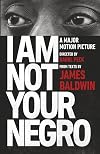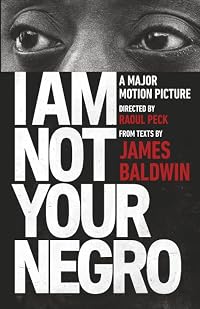
I Am Not Your Negro (film transcript)
by James Baldwin, Raoul Peck (Editor)
On This Page
Description
Transcript of the documentary film, I am not your negro, by Raoul Peck composed of unpublished and published writings, interviews, and letters by James Baldwin on the subject of racism in America.Tags
Recommendations








Member Reviews
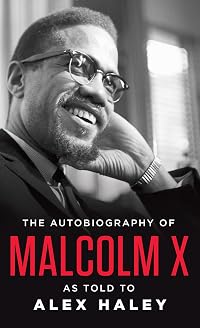
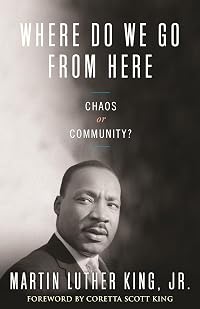
The companion book to the documentary of the same name is based largely on notes from James Baldwin's non-fiction work "Remember This House", which he began writing in 1979 but did not finish before his death in 1987. Baldwin's aim in writing this book was to tell the story of the United States through the lives of three seminal figures in the Civil Rights Movement, all of whom were close friends of his: Medgar Evers, Malcolm X and Martin Luther King, Jr., who were assassinated in 1963, 1965 and 1968, respectively. In this book, Baldwin's excerpted words from "Remember This House" are converted into poetic form, which lends them greater power. Interspersed between these "poems" are portions of past speeches and interviews, photographs show more that accompany the text, and a limited number of current references, most notably the sequence that consists of apologies by Hillary Clinton, Donald Trump, Anthony Weiner, the former US congressman who was forced to step down after sexual misconduct and was further disgraced by additional misbehaviors, Thomas Jackson, the former chief of police of Ferguson, Missouri, and others.
Raoul Peck's compilation does a superb service in bringing James Baldwin's unflinching words to light for those of us who revere him, and to newer audiences who are unfamiliar with him and the searing power of his words. I look forward to seeing the documentary, and to returning to this excellent compilation. show less
Raoul Peck's compilation does a superb service in bringing James Baldwin's unflinching words to light for those of us who revere him, and to newer audiences who are unfamiliar with him and the searing power of his words. I look forward to seeing the documentary, and to returning to this excellent compilation. show less
I heard about the movie, but had no idea there was a companion book to it.
"In his final years, Baldwin had envisioned a book about his three assassinated friends, Medgar Evers, Malcolm X, and Martin Luther King. His deeply personal notes for the project have never been published before. Peck’s film uses them to jump through time, juxtaposing Baldwin’s private words with his public statements, in a blazing examination of the tragic history of race in America."
The writing, essays, the photos that were used are powerful and makes one want to hang your head down and wonder when will we get to that mountaintop where all men and women are seen as equal no matter the color of their skin? We have a US President and conservative based show more Congress that think racism is okay. They think if they are not calling black people, those who worship differently than them a slur that it's okay. It's like watching everything slowly grind to a halt and you want everyone to just wake up. Call a thing the name that it is. It's racism. We have ignored it for too long and we don't seem to care to change.
Baldwin's writing is electrifying. It gets in your blood and in your head and I find myself nodding my head and feeling nothing but sorrow because in 2019 we have not come far enough. To think we are pushing ourselves back to a time in this country where we are once again seen as "other" and "wrong" I don't know what we do to combat it.
I end on this.
I am a black woman, when you tell me you don't see my color or it's unimportant, you are telling me you don't see me, that I am not important. When the default color is white and Christian you ignore what makes up this country of ours. To speak out against what we see is wrong is the American thing to do. show less
"In his final years, Baldwin had envisioned a book about his three assassinated friends, Medgar Evers, Malcolm X, and Martin Luther King. His deeply personal notes for the project have never been published before. Peck’s film uses them to jump through time, juxtaposing Baldwin’s private words with his public statements, in a blazing examination of the tragic history of race in America."
The writing, essays, the photos that were used are powerful and makes one want to hang your head down and wonder when will we get to that mountaintop where all men and women are seen as equal no matter the color of their skin? We have a US President and conservative based show more Congress that think racism is okay. They think if they are not calling black people, those who worship differently than them a slur that it's okay. It's like watching everything slowly grind to a halt and you want everyone to just wake up. Call a thing the name that it is. It's racism. We have ignored it for too long and we don't seem to care to change.
Baldwin's writing is electrifying. It gets in your blood and in your head and I find myself nodding my head and feeling nothing but sorrow because in 2019 we have not come far enough. To think we are pushing ourselves back to a time in this country where we are once again seen as "other" and "wrong" I don't know what we do to combat it.
"JAMES BALDWIN: Well, I don’t think there’s much hope for it, you know, to tell you the truth as long as people are using this peculiar language. It’s not a question of what happens to the Negro here or to the black man here—that’s a very vivid question for me, you know—but the real question is what is going to happen to this country. I have to repeat that."
"Forget the Negro problem. Don’t write any voting acts. We had that—it’s called the fifteenth amendment—during the Civil Rights Bill of 1964. What you have to look at is what is happening in this country, and what is really happening is that brother has murdered brother knowing it was his brother. White men have lynched Negroes knowing them to be their sons. White women have had Negroes burned knowing them to be their lovers. It is not a racial problem. It is a problem of whether or not you’re willing to look at your life and be responsible for it, and then begin to change it. That great Western house I come from is one house, and I am one of the children of that house. Simply, I am the most despised child of that house. And it is because the American people are unable to face the fact that I am flesh of their flesh, bone of their bone, created by them. My blood, my father’s blood, is in that soil."
"JAMES BALDWIN: There is nothing in the evidence offered by the book of the American republic which allows me really to argue with the cat who says to me: “They needed us to pick the cotton and now they don’t need us anymore. Now they don’t need us, they’re going to kill us all off. Just like they did the Indians.” And I can’t say it’s a Christian nation, that your brothers will never do that to you, because the record is too long and too bloody. That’s all we have done. All your buried corpses now begin to speak."
"JAMES BALDWIN: I don’t know what most white people in this country feel. But I can only conclude what they feel from the state of their institutions. I don’t know if white Christians hate Negroes or not, but I know we have a Christian church which is white and a Christian church which is black. I know, as Malcolm X once put it, the most segregated hour in American life is high noon on Sunday. That says a great deal for me about a Christian nation. It means I can’t afford to trust most white Christians, and I certainly cannot trust the Christian church."
I end on this.
I am a black woman, when you tell me you don't see my color or it's unimportant, you are telling me you don't see me, that I am not important. When the default color is white and Christian you ignore what makes up this country of ours. To speak out against what we see is wrong is the American thing to do. show less
I Am Not Your Negro
by James Baldwin, Raoul Peck
I just finished reading a book on Baldwin this month and have been wanting to read this for some time. I read some reviews that suggest to watch the documentary first for the photos so it will make more sense. It did help. Knowing more about his life helped too by reading about him earlier.
I was so sad, full of pain, hopelessness, and rage throughout most of the book. His essays are brilliant. They expose the truth that hangs in the air but no one sees it, no one seems to care.
As each of his friends died, I felt his grief. He loved both King and Malcolm and didn't take sides and said near the end the two were coming closer together. I wondered what that meant. What would have happened if show more they both hadn't been murdered?
Why is the white man so afraid of the black man? I am so ashamed. I am ashamed of our country that calls America free but still holds back minorities and women.
I loved and hated this book. I loved and agreed with Baldwin. (If I were black man at that time I would probably go with Malcolm, but I am atheist so that wouldn't work! Lol) I hated the book because it exposed the sad story that little has changed and I grief for my country and my black country persons. I grieved over the loss of good men by ignorant, racist that let fear and hatred rule. I grieve because this continues today. show less
by James Baldwin, Raoul Peck
I just finished reading a book on Baldwin this month and have been wanting to read this for some time. I read some reviews that suggest to watch the documentary first for the photos so it will make more sense. It did help. Knowing more about his life helped too by reading about him earlier.
I was so sad, full of pain, hopelessness, and rage throughout most of the book. His essays are brilliant. They expose the truth that hangs in the air but no one sees it, no one seems to care.
As each of his friends died, I felt his grief. He loved both King and Malcolm and didn't take sides and said near the end the two were coming closer together. I wondered what that meant. What would have happened if show more they both hadn't been murdered?
Why is the white man so afraid of the black man? I am so ashamed. I am ashamed of our country that calls America free but still holds back minorities and women.
I loved and hated this book. I loved and agreed with Baldwin. (If I were black man at that time I would probably go with Malcolm, but I am atheist so that wouldn't work! Lol) I hated the book because it exposed the sad story that little has changed and I grief for my country and my black country persons. I grieved over the loss of good men by ignorant, racist that let fear and hatred rule. I grieve because this continues today. show less
I first heard of it when I listened to an excellent interview on CBC radio with the filmmaker, Raoul Peck.
Synopsis from the imdb site: "In 1979, James Baldwin wrote a letter to his literary agent describing his next project, "Remember This House." The book was to be a revolutionary, personal account of the lives and assassinations of three of his close friends: Medgar Evers, Malcolm X and Martin Luther King, Jr. At the time of Baldwin's death in 1987, he left behind only 30 completed pages of this manuscript. Filmmaker Raoul Peck envisions the book James Baldwin never finished."
I am really glad to have read this book before seeing the film. Peck writes an introduction, explaining how and why he came to put this film together, and how show more he came to have possession of the 30 pages of notes that were the beginning of that final book Baldwin didn't live to complete. The book is barely 100 pages but it packs so much power into it, as much of Baldwin's works did. And it is startling how timely his words still are today, maybe even more so than one would expect. And that is not a good thing...
"Not everything that is faced can be changed; but nothing can be changed until it is faced." show less
Synopsis from the imdb site: "In 1979, James Baldwin wrote a letter to his literary agent describing his next project, "Remember This House." The book was to be a revolutionary, personal account of the lives and assassinations of three of his close friends: Medgar Evers, Malcolm X and Martin Luther King, Jr. At the time of Baldwin's death in 1987, he left behind only 30 completed pages of this manuscript. Filmmaker Raoul Peck envisions the book James Baldwin never finished."
I am really glad to have read this book before seeing the film. Peck writes an introduction, explaining how and why he came to put this film together, and how show more he came to have possession of the 30 pages of notes that were the beginning of that final book Baldwin didn't live to complete. The book is barely 100 pages but it packs so much power into it, as much of Baldwin's works did. And it is startling how timely his words still are today, maybe even more so than one would expect. And that is not a good thing...
"Not everything that is faced can be changed; but nothing can be changed until it is faced." show less
Interesting introduction to the writing and thought of James Baldwin. But the (necessarily) fragmented presentation puts it at 3 stars. It made me curious to read more of his work.
Some of the lines were powerful but for someone who is not from the US it could easily remain a fleeting impression of something alien and somehow wrong.
There is not enough context in the book itself for a casual reader to really grasp what is going on. You just get this sense that there's something wrong with race relations in the US and it's been wrong for a long time. But maybe that's all the editor really wanted you to know?
Some of the lines were powerful but for someone who is not from the US it could easily remain a fleeting impression of something alien and somehow wrong.
There is not enough context in the book itself for a casual reader to really grasp what is going on. You just get this sense that there's something wrong with race relations in the US and it's been wrong for a long time. But maybe that's all the editor really wanted you to know?
James Baldwin is a master of not only the written word, but the spoken word as well. If you have not seen the documentary first, I believe it may lesser the reading experience, but it does not change the weight of both Baldwin and Peck's words.
'All of the Western nations have been caught in a lie, the lie of their pretended humanism; this means that their history has no moral justification, and that the West has no moral authority. "Vile as I am," states one of the characters in Dostoyevsky's The Idiot, "I don't believe in the wagons that bring bread to humanity. For the wagons that bring bread to humanity...may coldly exclude a considerable part of humanity from enjoying what is brought".
For a very long time, America prospered: this prosperity cost millions of people their lives. Now, not even the people who are the most spectacular recipients of the benefits of this prosperity are able to endure these benefits: they can neither understand them nor do without them. Above show more all, they cannot imagine the price paid by their victims, or subjects, for this way of life, and so they cannot afford to know why the victims are revolting.' show less
For a very long time, America prospered: this prosperity cost millions of people their lives. Now, not even the people who are the most spectacular recipients of the benefits of this prosperity are able to endure these benefits: they can neither understand them nor do without them. Above show more all, they cannot imagine the price paid by their victims, or subjects, for this way of life, and so they cannot afford to know why the victims are revolting.' show less
Members
- Recently Added By
Lists

Silent Scream
20 works; 2 members

Books Read in 2020
4,379 works; 124 members
Author Information

120+ Works 41,816 Members
James Baldwin was born on August 2, 1924, in New York. Baldwin's father was a pastor who subjected his children to poverty, abuse, and religious fanaticism. As a result, many of Baldwin's recurring themes, such as alienation and rejection, are attributable to his upbringing. Living the life of a starving artist, Baldwin went through numerous jobs, show more including dishwasher, office boy, factory worker, and waiter. In 1948, he moved to France, where much work originated. Baldwin published Go Tell It on the Mountain in 1953. A largely autobiographical work, it tells of the religious awakening of a fourteen-year-old. In addition to his childhood experiences, his experiences as a black man and a homosexual provided inspiration for such works as Giovanni's Room, Nobody Knows My Name, and Another Country. Baldwin holds a distinguished place in American history as one of the foremost writers of both black and gay literature. He was an active participant in the Civil Rights movement. Baldwin succumbed to cancer on December 1, 1987. (Bowker Author Biography) show less

All Editions
Series
Belongs to Publisher Series
Work Relationships
Has the adaptation
Common Knowledge
- Canonical title
- I Am Not Your Negro (film transcript) (film transcript)
- Alternate titles
- I Am Not Your Negro: A Companion Edition
- Original publication date
- 2017
- People/Characters
- Medgar Evers; Malcolm X; Martin Luther King, Jr.; Gloria Karefa-Smart
- Important places
- USA; Washington, D.C., USA
- Related movies
- I Am Not Your Negro (2016 | IMDb)
Classifications
- Genres
- Nonfiction, History, Biography & Memoir
- DDC/MDS
- 323.1196 — Society, government, & culture Political science Civil Rights & Liberties/ Human Rights Minority Politics Specific Groups Biography And History African Origin
- LCC
- E185.61 .B196 — History of the United States United States Elements in the population Afro-Americans Status and development since emancipation
- BISAC
Statistics
- Members
- 542
- Popularity
- 55,051
- Reviews
- 10
- Rating
- (4.21)
- Languages
- English, French, Turkish
- Media
- Paper, Audiobook, Ebook
- ISBNs
- 9
- ASINs
- 4