On This Page
Description
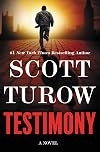
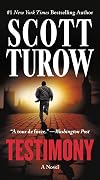
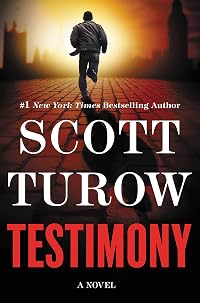
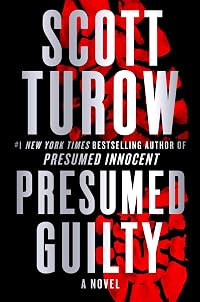
Scott Turow, #1 New York Times bestselling author and "one of the major writers in America" (NPR), returns with a page-turning legal thriller about an American prosecutor's investigation of a refugee camp's mystifying disappearance.At the age of fifty, former prosecutor Bill ten Boom has walked out on everything he thought was important to him: his law career, his wife, Kindle County, even his country. Still, when he is tapped by the International Criminal Court—an organization charged show more with prosecuting crimes against humanity—he feels drawn to what will become the most elusive case of his career. Over ten years ago, in the apocalyptic chaos following the Bosnian war, an entire Roma refugee camp vanished. Now for the first time, a witness has stepped forward: Ferko Rincic claims that armed men marched the camp's Gypsy residents to a cave in the middle of the night—and then with a hand grenade set off an avalanche, burying 400 people alive. Only Ferko survived.
Boom's task is to examine Ferko's claims and determinine who might have massacred the Roma. His investigation takes him from the International Criminal Court's base in Holland to the cities and villages of Bosnia and secret meetings in Washington, DC, as Boom sorts through a host of suspects, ranging from Serb paramilitaries, to organized crime gangs, to the US government itself, while also maneuvering among the alliances and treacheries of those connected to the case: Layton Merriwell, a disgraced US major general desperate to salvage his reputation; Sergeant Major Atilla Doby,a vital cog in American military operations near the camp at the time of the Roma's disappearance; Laza Kajevic, the brutal former leader of the Bosnian Serbs; Esma Czarni, Ferko's alluring barrister; and of course, Ferko himself, on whose testimony the entire case rests-and who may know more than he's telling.
A master of the legal thriller, Scott Turow has returned with his most irresistibly confounding and satisfying novel yet. show less
Tags
Recommendations




Member Reviews
This is the second entry in author Turow's Kindle County series I've read and I certainly plan to read more of them. In this one, former US Attorney Willem ten Boom leaves Kindle County to work for the International Criminal Court located in The Hague on a case that takes him into war-ravaged Bosnia. I don't know enough about the events of the US and NATO interventions there to tell where fact morphed into fiction but this is so well written I had no problem following the plot and keeping track of the large cast of characters. As a legal thriller, it's good but the main character's reflections on love, war, displacement, zealotry, charismatic despots - the list goes on - are what made this an extraordinary read for me. I liked the nod show more to The Hiding Place: The Triumphant True Story of Corrie Ten Boom and wonder if I missed any others.
I received this book for free through Goodreads Giveaways. show less
I received this book for free through Goodreads Giveaways. show less
Bill ten Boom--his friends call him “Boom”—is a middle-aged lawyer with two grown sons. His marriage of twenty-five years is over, and he is ready to tackle new personal and professional challenges. An old law-school buddy convinces Boom to move from Illinois to the Hague, where he will work as a prosecutor for the International Criminal Court. Boom's first task is to interrogate a witness, Ferko Rincic, who alleges that a mass murder took place in Barupra, Bosnia, in 2004. Rincic, a member of the Roma--known in English as "Gypsies," a discredited word with derogatory connotations--claims that he witnessed masked men in uniform herding approximately four hundred Roma to their deaths.
Scott Turow’s “Testimony” had the show more potential to be a provocative and intriguing work of fiction. The author tackles universal and timely themes, including religious persecution, ethnic cleansing, racial prejudice, and the damage that self-serving individuals inflict on others. The characters include Esma, a stunning female barrister who represents Rincic; Layton Merriwell, a former NATO Supreme Allied Commander; Laza Kajevic, a Serbian war criminal who has escaped punishment by going into hiding; and Attila Doby, a smart and resourceful facilitator with close ties to the United States Army. As Boom digs deeper into the details of the case, he suspects that higher ups in the American government are withholding significant information. In addition, Boom and his colleague, a Belgian investigator named Goos, learn that uncovering long-suppressed secrets may be hazardous to one's health.
Why does “Testimony” ultimately fall short? It is far too long and dense. The prose style and dialogue are wooden, and the plot is so unwieldy and convoluted that the story flags by the halfway point. The conclusion, with its endless exposition, is cluttered and confusing. By the time the final page is turned, many readers will feel more weary than gratified. Although Boom is decent and compassionate, a good part of the cast consists of liars, thieves, and thugs whose actions betray their lack of basic decency. The author inserts a romantic subplot that is more silly than sultry. Turow squandered an opportunity to write a meaningful and intriguing work of fiction about the horrors of genocide, the complexities of geopolitics, and the difficulty of accurately reconstructing historical events when there are conflicting versions of the truth. show less
Scott Turow’s “Testimony” had the show more potential to be a provocative and intriguing work of fiction. The author tackles universal and timely themes, including religious persecution, ethnic cleansing, racial prejudice, and the damage that self-serving individuals inflict on others. The characters include Esma, a stunning female barrister who represents Rincic; Layton Merriwell, a former NATO Supreme Allied Commander; Laza Kajevic, a Serbian war criminal who has escaped punishment by going into hiding; and Attila Doby, a smart and resourceful facilitator with close ties to the United States Army. As Boom digs deeper into the details of the case, he suspects that higher ups in the American government are withholding significant information. In addition, Boom and his colleague, a Belgian investigator named Goos, learn that uncovering long-suppressed secrets may be hazardous to one's health.
Why does “Testimony” ultimately fall short? It is far too long and dense. The prose style and dialogue are wooden, and the plot is so unwieldy and convoluted that the story flags by the halfway point. The conclusion, with its endless exposition, is cluttered and confusing. By the time the final page is turned, many readers will feel more weary than gratified. Although Boom is decent and compassionate, a good part of the cast consists of liars, thieves, and thugs whose actions betray their lack of basic decency. The author inserts a romantic subplot that is more silly than sultry. Turow squandered an opportunity to write a meaningful and intriguing work of fiction about the horrors of genocide, the complexities of geopolitics, and the difficulty of accurately reconstructing historical events when there are conflicting versions of the truth. show less
It’s been a while since Turow published a new novel and I’ve missed him.
Initially, Testimony seems as if it is going to be a legal procedural, albeit unique in that it involves the International Criminal Court (ICC) in the Hague. But then it takes a twist and becomes more menacing and turns into a thriller/mystery.
The action takes place not only in the Netherlands, but also the Balkans and the US. and includes a look into the life of the Roma. Turow handles introducing the different countries and cultures well.
He successfully interweaves complex story lines; his personal life and reflections of midlife, familial background secrets, NATO’s involvement in the Balkans, the Roma culture. The story is
plausible and he ties up all show more loose ends.
Although a substantial novel, I read it quickly as it held my attention and I did not want to put it down. It was interesting to learn how the ICC functions and especially the United States’ relationship to it.
Those who have read other Turow novels will find references to some familiar characters from Kindle County. I always enjoy it when an author employs that device. show less
Initially, Testimony seems as if it is going to be a legal procedural, albeit unique in that it involves the International Criminal Court (ICC) in the Hague. But then it takes a twist and becomes more menacing and turns into a thriller/mystery.
The action takes place not only in the Netherlands, but also the Balkans and the US. and includes a look into the life of the Roma. Turow handles introducing the different countries and cultures well.
He successfully interweaves complex story lines; his personal life and reflections of midlife, familial background secrets, NATO’s involvement in the Balkans, the Roma culture. The story is
plausible and he ties up all show more loose ends.
Although a substantial novel, I read it quickly as it held my attention and I did not want to put it down. It was interesting to learn how the ICC functions and especially the United States’ relationship to it.
Those who have read other Turow novels will find references to some familiar characters from Kindle County. I always enjoy it when an author employs that device. show less
I was very pleased to read Scott Turow’s latest book, TESTIMONY.
TESTIMONY consists of a Table of Contents; a Prologue and an Author’s Note. There are 8 Parts with 36 Chapters.
The Prologue is very compelling and our journey to the ICC (International Criminal Court) in The Hague, Netherlands, begins with the testimony of one Ferko Rinic, a Roma from the poor village/refugee camp of Barupra in Bosnia. Ferko tells the story of a massacre of the village when villagers are rounded up and placed in a cave and then the cave is blasted killing all 400 Roma inside.
At 50 years old, with an enviable legal reputation, Bill ten Boom (of Dutch origin) is contacted by an old friend, Roger Clewey, and persuaded to accept a job as a prosecutor at show more the ICC in The Hague. (The ICC is an organization charged with prosecuting crimes against humanity.)
‘Boom’ is at a bit of a crossroads in his life with a recent divorce, two somewhat bitter sons, a recent resignation from his very lucrative law firm and a lingering curiosity about his parents’ departure from the Netherlands in their youth. He is ready for a change and new challenges.
A book of Scott Turow’s feels like an old friend even before I read the first page. I have read his book PRESUMED INNOCENT many times and THE BURDEN OF TRUTH remains one of my all-time favorite reads.
Turow’s books are quiet, reflective and are dominated by character-driven plots. Our characters wrestle with morals, ethics and their changing places in the world. They are masterpieces of character studies.
TESTIMONY does not disappoint. The plot is somewhat complicated and its subject matter is very new to me - the ICC and the Bosnian War. There is a very gripping sense of place and sense of history and a thoughtful social and cultural commentary.
There is international intrigue; scenes of depravity; info on the Dayton Accord in 1995 which ended (mostly) the Bosnian War; puzzling and complicated characters; an insider’s look at the international legal system; the wonderful court investigator, Goos; very thoughtful reflections on life, character and ethics. I liked the line “Evil of that magnitude was like a dead star, sucking all the light out of life.” I liked the inclusion of a quote from W Churchill about democracy, “It’s a terrible idea, except for the alternatives.”
All in all, a very interesting and informative book. I would heartily recommend it. show less
TESTIMONY consists of a Table of Contents; a Prologue and an Author’s Note. There are 8 Parts with 36 Chapters.
The Prologue is very compelling and our journey to the ICC (International Criminal Court) in The Hague, Netherlands, begins with the testimony of one Ferko Rinic, a Roma from the poor village/refugee camp of Barupra in Bosnia. Ferko tells the story of a massacre of the village when villagers are rounded up and placed in a cave and then the cave is blasted killing all 400 Roma inside.
At 50 years old, with an enviable legal reputation, Bill ten Boom (of Dutch origin) is contacted by an old friend, Roger Clewey, and persuaded to accept a job as a prosecutor at show more the ICC in The Hague. (The ICC is an organization charged with prosecuting crimes against humanity.)
‘Boom’ is at a bit of a crossroads in his life with a recent divorce, two somewhat bitter sons, a recent resignation from his very lucrative law firm and a lingering curiosity about his parents’ departure from the Netherlands in their youth. He is ready for a change and new challenges.
A book of Scott Turow’s feels like an old friend even before I read the first page. I have read his book PRESUMED INNOCENT many times and THE BURDEN OF TRUTH remains one of my all-time favorite reads.
Turow’s books are quiet, reflective and are dominated by character-driven plots. Our characters wrestle with morals, ethics and their changing places in the world. They are masterpieces of character studies.
TESTIMONY does not disappoint. The plot is somewhat complicated and its subject matter is very new to me - the ICC and the Bosnian War. There is a very gripping sense of place and sense of history and a thoughtful social and cultural commentary.
There is international intrigue; scenes of depravity; info on the Dayton Accord in 1995 which ended (mostly) the Bosnian War; puzzling and complicated characters; an insider’s look at the international legal system; the wonderful court investigator, Goos; very thoughtful reflections on life, character and ethics. I liked the line “Evil of that magnitude was like a dead star, sucking all the light out of life.” I liked the inclusion of a quote from W Churchill about democracy, “It’s a terrible idea, except for the alternatives.”
All in all, a very interesting and informative book. I would heartily recommend it. show less
I like Scott Turow's writing very much and this book didn't disappoint me -- despite being not my favourite work of his. This is the story of a Kindle County lawyer who moved to The Hague to work for the international court that prosecutes war crimes. His assigned case involves the alleged massacre of 400 Roma people. The plot is complex and layered like all of Mr. Turow's work and he tells a good story.
I found many parts of this book to be very confusing what with all of the factions involved from various countries, and it could have benefited by the cutting of perhaps 150 pages. It might also be nice to read a story once in a while where the hero could keep it in his pants for more than a month or two. Still, I've enjoyed Scott Turow's books in the past, and this one was OK, but certainly not one of his best.
Scott Turow writes intelligently, but I found myself a little bored with this one. The complexity of the number of parties to the legal action - a farrago of actors involved in the Bosnian War, was confusing, and sorting it out wasn’t all that exciting. The ongoing lapse into the protagonist’s sexual exploits was a little overdone, in my opinion, and didn’t seem to me to be all that essential to the plot.
Most of the action takes place in The Hague, where 54-year-old Bill Ten Boom (his family was Dutch, hence the unusual name) has gone to take a position as prosecutor at the International Criminal Court (the ICC). This is the venue where mass atrocities are examined. In Bill’s first case, he is investigating the (fictional) show more alleged 2004 massacre of 400 Roma in Bosnia. Possible perpetrators in the area at the time included Bosnian Serbs, Bosnian Muslims, organized criminals, jihadis, NATO troops, and U.S. contractors brought over by the military.
Complicating Bill’s job is the fact that the U.S., alone among NATO countries, did not sign the treaty establishing the ICC; they did not want to submit to criminal penalties controlled by foreigners for possible war crimes. Moreover, the American Service-Members' Protection Act (ASPA, Title 2 of Pub.L. 107–206, H.R. 4775, 116 Stat. 820, enacted August 2, 2002) actually prohibits American assistance in ICC investigations. (These are non-fictional aspects of the story.)
Other impediments to prosecuting the case include that the alleged event took place eleven years before, “when memories are stale and records are gone,” and pretty much everyone involved had a reason to lie about what may or may not have happened.
Discussion: I thought that the author’s insistence on using his old writing conceit of fictional Kindle County and the fictional Trappers baseball team served no purpose whatsoever except to allow the main character to name-drop a few of the characters from Turow’s previous legal procedurals, which also seemed totally gratuitous.
Also, I felt Turow could have expanded a bit more on the role of contractors in recent military engagements by the U.S. instead of wasting so much narrative space with sex and scenery. The conclusion left me feeling like not all that much had happened.
Evaluation: I give this one a "meh." show less
Most of the action takes place in The Hague, where 54-year-old Bill Ten Boom (his family was Dutch, hence the unusual name) has gone to take a position as prosecutor at the International Criminal Court (the ICC). This is the venue where mass atrocities are examined. In Bill’s first case, he is investigating the (fictional) show more alleged 2004 massacre of 400 Roma in Bosnia. Possible perpetrators in the area at the time included Bosnian Serbs, Bosnian Muslims, organized criminals, jihadis, NATO troops, and U.S. contractors brought over by the military.
Complicating Bill’s job is the fact that the U.S., alone among NATO countries, did not sign the treaty establishing the ICC; they did not want to submit to criminal penalties controlled by foreigners for possible war crimes. Moreover, the American Service-Members' Protection Act (ASPA, Title 2 of Pub.L. 107–206, H.R. 4775, 116 Stat. 820, enacted August 2, 2002) actually prohibits American assistance in ICC investigations. (These are non-fictional aspects of the story.)
Other impediments to prosecuting the case include that the alleged event took place eleven years before, “when memories are stale and records are gone,” and pretty much everyone involved had a reason to lie about what may or may not have happened.
Discussion: I thought that the author’s insistence on using his old writing conceit of fictional Kindle County and the fictional Trappers baseball team served no purpose whatsoever except to allow the main character to name-drop a few of the characters from Turow’s previous legal procedurals, which also seemed totally gratuitous.
Also, I felt Turow could have expanded a bit more on the role of contractors in recent military engagements by the U.S. instead of wasting so much narrative space with sex and scenery. The conclusion left me feeling like not all that much had happened.
Evaluation: I give this one a "meh." show less
Members
- Recently Added By
Author Information

58+ Works 23,774 Members
Scott Turow is a writer and lawyer. He was born in Chicago, Illinois, on April 12, 1949. He received a B.A. from Amherst College in 1970 and an M.A. from Stanford University in 1974. He graduated from Harvard Law School in 1978. He was an Assistant United States Attorney in Chicago and served as a prosecutor in several corruption cases. Turow show more continues to work as an attorney. He has written numerous novels including Presumed Innocent, The Burden of Proof, Pleading Guilty, The Laws of Our Fathers, Personal Injuries, Ordinary Heroes, Limitations, Innocent, and Identical. His non-fiction works include One L about his experience as a law student and Ultimate Punishment about the death penalty. He has won numerous awards including the Heartland Prize in 2003 for Reversible Errors, the Robert F. Kennedy Book Award in 2004 for Ultimate Punishment, and Time Magazine's Best Work of Fiction, 1999 for Personal Injuries. He will give a keynote speech at the National writer's Congress 2015. (Bowker Author Biography) show less
Awards and Honors
Awards
Series

Common Knowledge
- Canonical title
- Testimony
- Original title
- Testimony
- Original publication date
- 2017-05-16
- People/Characters
- Bill ten Boom; Ferko Rincic; Layton Merriwell; Atilla Doby; Laza Kajevic; Esma Czarni
- Important places
- Bosnia; Washington, D.C., USA; Holland
- Dedication
- For Adriane
- First words
- Prologue: “There were men,” said the witness.
Chapter One: At the age of fifty, I had decided to start my life again. - Last words
- (Click to show. Warning: May contain spoilers.)It was Nara.
- Blurbers
- Silva, Daniel; Toobin, Jeffrey
- Original language
- English US
Classifications
Statistics
- Members
- 637
- Popularity
- 45,445
- Reviews
- 27
- Rating
- (3.51)
- Languages
- 5 — Dutch, English, Finnish, Italian, Portuguese (Portugal)
- Media
- Paper, Audiobook, Ebook
- ISBNs
- 30
- ASINs
- 2