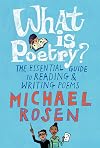
What Is Poetry?: The Essential Guide to Reading and Writing Poems
by Michael Rosen
On This Page
Description
Over many years as a working poet, Michael Rosen has thought a great deal about what poems are, what they can do and the pleasure that comes from writing and reading poetry. In this invaluable handbook, he shares this knowledge and experience in book form for the very first time. Starting with a detailed analysis of a number of classic poems, he offers a real writer's guide to writing and performing poems, as well as a wealth of technical information and tips. He then takes a fascinating show more look at a selection of his own poems and explains how and why he wrote them. Complete with an appendix of poets and useful websites, and beautifully illustrated by award-winning artist Jill Calder, this is the only guide to poetry children and teachers will ever need. show lessTags
Recommendations





Member Reviews
I really enjoyed "What Is Poetry? The Essential Guide to Reading and Writing Poems" by Michael Rosen. I read it in one sitting, though it's apparent that it was not meant to be digested in that manner. I will definitely plan to use this volume with my own children, as they grow to an age to appreciate it.
The format is well thought out. I especially appreciate the first section, "What Is Poetry?," which is divided into a number of sub-sections dedicated to individual poetic devices, with examples from the poetic canon. In a brief and engaging manner, this book covered much of what I remember about poem explication from my high school English studies.
Rosen doesn't stop at analyzing existing poems, however: he moves deftly from ways to show more engage with poets of the past to describing some personal reflections on writing poetry himself. Then come "Ways to Start a Poem" and "Writing Poems," which encourage to reader to experiment with writing poetry for themselves.
The final chapter repeats the question from the title of chapter 1: "What Is Poetry?" but this time blank, lined pages are provided for the reader to process the book's information and postulate new definitions on their own.
This book is very visually engaging-- almost surprisingly so, given that there are no color pictures. The use of different fonts, highlighting, and footnotes throughout the provided examples ensure that anyone approaching the book will be able to understand the material being presented. In addition, clever line drawings support the text, while blank space gives room for contemplation.
Recommended! show less
The format is well thought out. I especially appreciate the first section, "What Is Poetry?," which is divided into a number of sub-sections dedicated to individual poetic devices, with examples from the poetic canon. In a brief and engaging manner, this book covered much of what I remember about poem explication from my high school English studies.
Rosen doesn't stop at analyzing existing poems, however: he moves deftly from ways to show more engage with poets of the past to describing some personal reflections on writing poetry himself. Then come "Ways to Start a Poem" and "Writing Poems," which encourage to reader to experiment with writing poetry for themselves.
The final chapter repeats the question from the title of chapter 1: "What Is Poetry?" but this time blank, lined pages are provided for the reader to process the book's information and postulate new definitions on their own.
This book is very visually engaging-- almost surprisingly so, given that there are no color pictures. The use of different fonts, highlighting, and footnotes throughout the provided examples ensure that anyone approaching the book will be able to understand the material being presented. In addition, clever line drawings support the text, while blank space gives room for contemplation.
Recommended! show less
 This review was written for LibraryThing Early Reviewers.
One of my favorite authors, one of my favorite subjects. Short book as it's for kids, but not superficial.
Right at the beginning intro. he says he's going to start by trying to define poetry, but won't succeed. I buy that. And I really like that he changes the question itself to "what can poetry do?"
One of the things he comes up with is that poems are 'suggestive.' They don't give answers, and they leave a lot for the reader to think on and figure out. And he uses *From a Railroad Carriage* to illustrate that poems can 'give an impression,' which you'll know if you've ever read that piece by Stevenson aloud.
And he uses Lear's Jumblies to propose that nonsense is actually "new sense." I'll have to think on that. A provocative show more idea.
When talking a bit about his writing process, Rosen says that poems "are a midway point between poet and reader... a conversation between" their thoughts.
I like the starter ideas, esp. as there's a bit of scaffolding given beyond just the prompt. I feel inspired; might even have to follow through this time.
Appendix & etc. included.
---
Reread for the Poetry conversations in the Children's Books group. There I said:
Ohmygosh. This may not be the Only guide one ever needs (and an annotated list of further reading makes it clear that it is not the author's intent to claim it as such) but it does break down the Essence or "reading and writing poems" to something many of can enjoy, whether we're 8 or 88. This is my second read. I really need my own copy.
"secret strings: [bring words together with]:" alliteration, assonance, repetition, imagery, opposites...
"Doing all these things with poems--reading and rereading them, asking questions, finding secret strings, and learning them by heart (if you want)--will help you enjoy, get to know, and make sense of them. If you do these things with another person or several people, you will often make discoveries about the poem that are exciting and amazing..."
Note the "if you want." Michael Rosen also wrote "Perhaps. Perhaps not" frequently. No lectures or didacticism or authoritarianism here!
"Poems are a midway point between poets and readers. ... a conversation between two sets of thoughts: the poet's and the reader's."
Further reading for me: *Down Behind the Dustbin,* Michael Rosen's Big Book of Bad Things, *Who Killed Davey Moore* by Bob Dylan. show less
Right at the beginning intro. he says he's going to start by trying to define poetry, but won't succeed. I buy that. And I really like that he changes the question itself to "what can poetry do?"
One of the things he comes up with is that poems are 'suggestive.' They don't give answers, and they leave a lot for the reader to think on and figure out. And he uses *From a Railroad Carriage* to illustrate that poems can 'give an impression,' which you'll know if you've ever read that piece by Stevenson aloud.
And he uses Lear's Jumblies to propose that nonsense is actually "new sense." I'll have to think on that. A provocative show more idea.
When talking a bit about his writing process, Rosen says that poems "are a midway point between poet and reader... a conversation between" their thoughts.
I like the starter ideas, esp. as there's a bit of scaffolding given beyond just the prompt. I feel inspired; might even have to follow through this time.
Appendix & etc. included.
---
Reread for the Poetry conversations in the Children's Books group. There I said:
Ohmygosh. This may not be the Only guide one ever needs (and an annotated list of further reading makes it clear that it is not the author's intent to claim it as such) but it does break down the Essence or "reading and writing poems" to something many of can enjoy, whether we're 8 or 88. This is my second read. I really need my own copy.
"secret strings: [bring words together with]:" alliteration, assonance, repetition, imagery, opposites...
"Doing all these things with poems--reading and rereading them, asking questions, finding secret strings, and learning them by heart (if you want)--will help you enjoy, get to know, and make sense of them. If you do these things with another person or several people, you will often make discoveries about the poem that are exciting and amazing..."
Note the "if you want." Michael Rosen also wrote "Perhaps. Perhaps not" frequently. No lectures or didacticism or authoritarianism here!
"Poems are a midway point between poets and readers. ... a conversation between two sets of thoughts: the poet's and the reader's."
Further reading for me: *Down Behind the Dustbin,* Michael Rosen's Big Book of Bad Things, *Who Killed Davey Moore* by Bob Dylan. show less
This book serves as an introduction to poetry, written for kids. There are sample poems included, to illustrate specific types of poetry. An appendix features suggested websites, poetry books, and other ways to find and read poetry or to attend poetry readings. The author suggests ways in which to write poems and discusses rhyme and rhythm in poetry. As a former middle school teacher, I know my students were very interested in reading, writing, and sharing poems. While I liked the premise of the book and its casual and approachable language, I found dissecting some of the poems to be tedious. I prefer to read poetry for its enjoyment, rather than to constantly try to find deep meanings in the work. This was an Early Reviewers ARC that I show more received in exchange for an honest review. show less
This review was written for LibraryThing Early Reviewers.Michael Rosen's "What is Poetry? The Essential Guide to Reading and Writing Poems" offers a poet's insight into poetry. Besides demystifying poetry and making it approachable, Rosen's goal is to help young readers and writers understand what poetry can do. The book opens with a chapter entitled, "What Is Poetry?" This chapter, which is the longest of the book, uses classic poems from Elizabeth Barrett Browning's "How Do I Love Thee?" to a section from Shakespeare's "The Tempest" to illustrate what poetry can do, such as "Poetry can be personal" or "Poetry can make the unfamiliar seem familiar." The following chapters look at different aspects of poetry, such as Rosen's thoughts as he was writing some of his poems, ways to start and show more write poems, and some technical aspects of poetry.
Overall, Rosen is successful in making poetry approachable and giving aspiring poets ideas for practicing their craft. I particularly enjoyed the chapter on Rosen's thoughts while he was writing his poems as well as the ones on starting and writing poetry. Additionally, saving the technical chapter, which includes poetic terms such as metaphor, simile, and allusion, is a thoughtful choice, since it invites readers and writers to engage with reading and writing poetry before thinking consciously about the technical part of poetry.
The one aspect of the book that I wish were different concerns the selection of classic poems used. Although these poems are well written, I'm not certain that all of them will capture and hold the attention of the intended audience (upper elementary and middle school students). Some, such as "Waltzing Matilda" and "How Doth the Little Crocodile," seem very well suited to the intended age group, and Rosen's own works are, unsurprisingly, perfect for children. However, other choices, most notably "My Last Duchess" and "Ozymandias," seem puzzling to include.
Overall, this book has a lot of merit for children who are interested in poetry and for teachers who are looking for ways to introduce different aspects of poetry to their students. Specifically, the sections on starting and writing poetry are perfect for kids and adults who want to write poetry but aren't certain where to start. show less
Overall, Rosen is successful in making poetry approachable and giving aspiring poets ideas for practicing their craft. I particularly enjoyed the chapter on Rosen's thoughts while he was writing his poems as well as the ones on starting and writing poetry. Additionally, saving the technical chapter, which includes poetic terms such as metaphor, simile, and allusion, is a thoughtful choice, since it invites readers and writers to engage with reading and writing poetry before thinking consciously about the technical part of poetry.
The one aspect of the book that I wish were different concerns the selection of classic poems used. Although these poems are well written, I'm not certain that all of them will capture and hold the attention of the intended audience (upper elementary and middle school students). Some, such as "Waltzing Matilda" and "How Doth the Little Crocodile," seem very well suited to the intended age group, and Rosen's own works are, unsurprisingly, perfect for children. However, other choices, most notably "My Last Duchess" and "Ozymandias," seem puzzling to include.
Overall, this book has a lot of merit for children who are interested in poetry and for teachers who are looking for ways to introduce different aspects of poetry to their students. Specifically, the sections on starting and writing poetry are perfect for kids and adults who want to write poetry but aren't certain where to start. show less
This review was written for LibraryThing Early Reviewers.Michael Rosen has written a lively, engaging introduction to poetry for middle school students. Using examples from his own poems as well as those of writers as diverse as Shakespeare, Hardy, Lear, Lewis Carroll, and Emily Dickinson, Rosen discusses the functions of poetry, the origins of inspiration, and the mechanics of writing poetry. In the appendix he includes a list of internet resources for young readers who want to connect with other young poets or explore performance poetry.
Rosen demonstrates how poets use secret strings of rhythm, imagery, and repetition, to link parts of a poem. He encourages his readers to be poem detectives and assures them that these strings are unique to each reader--there are no right or wrong analyses. show more
I wish we had had this encouraging book as a resource when my 9-year old daughter was struggling with a poetry unit. I will be saving my review copy for my grandchildren. show less
Rosen demonstrates how poets use secret strings of rhythm, imagery, and repetition, to link parts of a poem. He encourages his readers to be poem detectives and assures them that these strings are unique to each reader--there are no right or wrong analyses. show more
I wish we had had this encouraging book as a resource when my 9-year old daughter was struggling with a poetry unit. I will be saving my review copy for my grandchildren. show less
This review was written for LibraryThing Early Reviewers.Well, yes it was informative and encouraging. Also written for young readers and I can imagine myself at much younger age than I am jumping into it full throttle. I still enjoyed it, but with reservations. I found myself thinking about the poetry I enjoyed at that age and remembering such as "The Raven" with it's smooth flow and clever rhyming scheme which created a mood in keeping with the poem's theme. Perfect and just what I...never mind. Maybe I will try to go with Rosen's suggestions, it may not be Poe it may still be satisfying intellectually.
This review was written for LibraryThing Early Reviewers.What is Poetry: The Essential Guide to Reading and Writing Poems is a delightful easy-to-read introduction to reading and writing poems. It would be an excellent book for Middle School age students, and even younger students of an advanced nature of Elementary School age; even as an adult I found it a fun refresher course on various Poetic Terms.
The book itself is divided between matters of interpretation of a poem which take up the first seventy pages of the book and then it moves into the area of performing and writing poems along with analysis of the different ways in which poems are constructed.
Interpretation of poetry is taken from a subjective viewpoint with a focus on how poetry makes us feel, but it also focuses on how poetry show more can make us think as well.
Michael Rosen, the author, does an excellent job of supporting each chapter of his book with a wide variety of poems providing an easy to understand example of the point under discussion.
I’d highly recommend this book as an introduction to poetry that is accessible and fun. show less
The book itself is divided between matters of interpretation of a poem which take up the first seventy pages of the book and then it moves into the area of performing and writing poems along with analysis of the different ways in which poems are constructed.
Interpretation of poetry is taken from a subjective viewpoint with a focus on how poetry makes us feel, but it also focuses on how poetry show more can make us think as well.
Michael Rosen, the author, does an excellent job of supporting each chapter of his book with a wide variety of poems providing an easy to understand example of the point under discussion.
I’d highly recommend this book as an introduction to poetry that is accessible and fun. show less
This review was written for LibraryThing Early Reviewers.Members
- Recently Added By
Lists

Youth: Poetry
124 works; 1 member
Author Information

212+ Works 18,353 Members
Michael Rosen started writing as a teenager, when his mother needed some poems for Radio programs she was making. While at college, he wrote a play which was staged at the Royal Court theatre in London. Rosen's first book was published in 1974, and he is one of Britain's leading children's poets. Michael Rosen launched the National Year of show more Literacy project, which encouraged children to help produce an Anthology to be used during the Literacy Hour in primary schools. Children ages 4-11 were invited to submit poems and illustrations featuring their favorite tree. Rosen also led the final judging sessions to decide which submissions would be included. (Bowker Author Biography) show less
Awards and Honors
Awards
Classifications
- Genres
- Poetry, Fiction and Literature, Children's Books
- DDC/MDS
- 808.1 — Literature & rhetoric Literature, rhetoric & criticism Rhetoric and collections of literary texts from more than two literatures Rhetoric of poetry
- LCC
- PN1111 .R67 — Language and Literature Literature (General) Literature (General) Poetry History and criticism
- BISAC
Statistics
- Members
- 152
- Popularity
- 215,997
- Reviews
- 13
- Rating
- (3.50)
- Languages
- English
- Media
- Paper
- ISBNs
- 4