
On This Page
Description
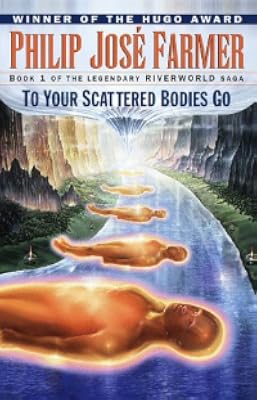
For explorer Richard Francis Burton, Alice Liddell Hargreaves-the inspiration for Alice in Wonderland - and the rest of humanity, death is nothing like they expected. Instead of heaven, hell, or even the black void of nothingness, all of the 36 billion people who ever lived on Earth are simultaneously resurrected on a world that has been transformed into a giant river valley. With hunger and disease eliminated, Burton and the others appear to have everything they need-except an answer to the show more question "Why?" Both swashbuckling adventure and insightful examination into mankind's constant search for answers to the unanswerable, To Your Scattered Bodies Go is voiced by narrator Paul Hecht to emphasize every thrilling moment of discovery. show lessTags
Recommendations
















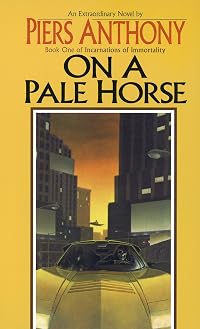
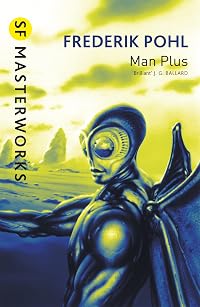
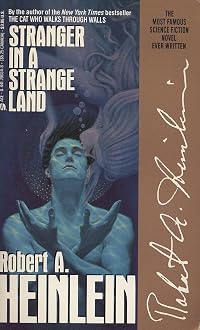
Member Recommendations
by anonymous user
Member Reviews
Como seria efetivamente o quarto mundo, o mundo da justiça, em que um suposto Deus passa a existir e ressuscita a humanidade? A excêntrica ética do Meillassoux de "l'immanence d'outre monde" me fascina e é interessante que eu tenha lido o livro do Philip José Farmer pensando nela. Porque a Igreja da segunda chance articula um imperativo ético bastante próximo - agora que especulamos que só há o humano a culpar, devemos nos esforçar a atingir o patamar ético necessário. É claro que há muitas diferenças. Essa ascensão é para outra vida, ou ainda a morte, para além do Mundo-Rio em que os 36 bilhões de humanos habitam. Porque a maioria deles parece capitular e reproduzir os hábitos ruins históricos de dominação e show more violência. Nesse sentido, o experimento dos Éticos, ao fornecer uma quase imortalidade aos humanos, tem um ar de Ensaio sobre a Cegueira, ou ainda de Senhor das Moscas. E é claro que explicações, mesmo que turvas ou especulativas, sobre o propósito de tudo aquilo, levam a resultados específicos. Nosso protagonista mesmo, Sir Richard Francis Burton, declara recusar-se a melhorar eticamente. Porque o faria?! Tem em seu princípio uma rebeldia sem causa, mas que vai tomando corpo e transformando em projeto, junto a seu expresso-suicídio (the suicide express).
Livro ganhador do prêmio Hugo 1972 por melhor novela. show less
Livro ganhador do prêmio Hugo 1972 por melhor novela. show less
Bit different to how I remembered it from years ago, but still a great piece of writing. I have to applaud Farmer's choice of a relatively minor historical character like Richard Burton as his protagonist, instead of more obvious (and predictable) figure.Burton is thoroughly believable as the he-man adventurer who nevertheless is a perceptive (and radical) thinker. Great and original book - just the concept of a vast world-encircling riverbank peopled by everyone who has ever lived is still one of the most original and fascinating ideas in sf. Dated a bit (2008 must have seemed so far in the future when Farmer wrote it), but still a captivating story.
I wasn't prepared for this. Tons of interesting ideas, though I was bummed the novel ended where it did. I'll definitely continue the series.
Loved the idea of humanity being resurrected after death in a foreign land, and I loved that Richard Burton, the original Most Interesting Man in the World. Also a great candidate for main character, since he was fluent in many languages and knew of many others, and humanity speaks different tongues.
Just... tons of good ideas. What happens when the truly evil people from throughout history are resurrected? What happens to religious viewpoints? And what are the current limitations of the body, and what is the world they live in?
I love that it's a short book full of questions, and so satisfying to show more read as Burton (again, I still can't believe he's the main character) explores everything you're wondering about yourself. show less
Loved the idea of humanity being resurrected after death in a foreign land, and I loved that Richard Burton, the original Most Interesting Man in the World. Also a great candidate for main character, since he was fluent in many languages and knew of many others, and humanity speaks different tongues.
Just... tons of good ideas. What happens when the truly evil people from throughout history are resurrected? What happens to religious viewpoints? And what are the current limitations of the body, and what is the world they live in?
I love that it's a short book full of questions, and so satisfying to show more read as Burton (again, I still can't believe he's the main character) explores everything you're wondering about yourself. show less
A disappointingly functional take on an interesting concept. Retro sci-fi from writers who cut their teeth in pulp magazines often has this feel, and it seems par for the course to be kinder to the pioneers of the genre when their ground-breaking work lacks the flair, grace or robustness of some of their successors. But this can only take you so far, and the straight truth is that Farmer's book, for all its originality, can be a chore to read even at a short 200 pages. The dialogue is functional, the world-building clunky, the characters one-dimensional and the plot inconclusive. The book is in a kind of funk, and it is appropriate that the story begins with its characters waking up naked and hairless – and circumcised, bizarrely – show more in a strange world surrounded by giant mushrooms. Because this book has all the bewildering shabbiness of a bad acid trip. show less
A classic of the genre, the first in Farmer's "Riverworld" series is a wonderful read based on a fascinating premise. All the humans who ever lived, it assumes, wake up after death in a mysterious "Riverworld" on the shores of a massive river, restored to youth and vigor and carrying with the passions that drove their time on earth. Everything they need to survive is available, but one critical thing is missing -- why are they there? A group centered around Sir Richard Burton sets off up the River to find out what's going on. The basic story is gripping, and the encounters between various people from various times are most interesting. Deserves its Hugo. The series did not, in my view, maintain this level, but that doesn't diminish this show more book. show less
Usually, the Hugo Awards are a good recommendation for entertaining literature.
Not in this case. I really don't understand how this book could have been given an award of any kind. Were there NO other sf novels published in 1971?
Farmer uses historical figures as his characters as an excuse to not bother writing any characterization of any kind. Every character in the novel is completely two-dimensional. It's pretty hard to make such an interesting and multi-dimensional character as the historical Richard Burton dull and flat - but Farmer manages it.
Moreover, the book is offensively, insidiously sexist. By which I don't mean that, in the grand tradition of adventure stories, that lusty buxom babes abound! (if only!) Rather, I mean that show more not one female character in the book displays any initiative, independence, or intelligence. Men regard them as property, and women's only instinct seems to be to find a male "protector." The stereotypes of women as "prude," "nag," or "whore" are found in abundance. Women are only an accessory to a man, to be admired physically, used sexually, and then tired of.
Here's one direct quote: "She was the product of her society - like all women, she was what men had made her."
One cannot excuse this attitude in writing as being a product of its time - check out what Ursula LeGuin was publishing in the late 60's and early 70's!
Sexist stereotypes are not the only ones found... they're practically incidental to the ethnic and cultural stereotypes! In a world supposedly populated with people of all cultures, time periods, and places, everything seems to run in a remarkably Eurocentric manner. To regard cigars as a universal luxury item is particularly bemusing.
Still, all this would be excusable, if only the story was fun, exciting and interesting. Not so. For such a short (222p.) novel, the plot was inexcusably meandering and dull. I fell asleep on it last night, and finished it this afternoon out of some sort of sense of obligation.
I think I'll be sending the copy of World of Tiers on my to-read shelf straight to the recycle bin. show less
Not in this case. I really don't understand how this book could have been given an award of any kind. Were there NO other sf novels published in 1971?
Farmer uses historical figures as his characters as an excuse to not bother writing any characterization of any kind. Every character in the novel is completely two-dimensional. It's pretty hard to make such an interesting and multi-dimensional character as the historical Richard Burton dull and flat - but Farmer manages it.
Moreover, the book is offensively, insidiously sexist. By which I don't mean that, in the grand tradition of adventure stories, that lusty buxom babes abound! (if only!) Rather, I mean that show more not one female character in the book displays any initiative, independence, or intelligence. Men regard them as property, and women's only instinct seems to be to find a male "protector." The stereotypes of women as "prude," "nag," or "whore" are found in abundance. Women are only an accessory to a man, to be admired physically, used sexually, and then tired of.
Here's one direct quote: "She was the product of her society - like all women, she was what men had made her."
One cannot excuse this attitude in writing as being a product of its time - check out what Ursula LeGuin was publishing in the late 60's and early 70's!
Sexist stereotypes are not the only ones found... they're practically incidental to the ethnic and cultural stereotypes! In a world supposedly populated with people of all cultures, time periods, and places, everything seems to run in a remarkably Eurocentric manner. To regard cigars as a universal luxury item is particularly bemusing.
Still, all this would be excusable, if only the story was fun, exciting and interesting. Not so. For such a short (222p.) novel, the plot was inexcusably meandering and dull. I fell asleep on it last night, and finished it this afternoon out of some sort of sense of obligation.
I think I'll be sending the copy of World of Tiers on my to-read shelf straight to the recycle bin. show less
To Your Scattered Bodies Go is a book with a fantastical premise brought down by, well, everything but the premise. Humanity, all 37 billion of us, plus some prehumans and alien visitors, is resurrected along an immense river alley, hemmed in by Himalayan mountains. Magitech grailstones provide three square meals a day, along with tobacco, whiskey, and marijuana, as ten thousand years of human history try to make sense of what's happening to them. Our viewpoint character is Richard Francis Burton, Victorian explorer, spy, and diplomat par excellence.
Unfortunately, that's where things go awry. I only know what on Burton's wikipedia page, but he seems like a fascinating character. Unfortunately, his internal voice is as middle-American as show more it can get. He's a hyper-compentent linguist, leader, and warrior, but there's no sense of the man who infiltrated Mecca in disguise when it was death for a westerner, or who wrote the first frank discussions of homosexuality in the Victorian period. The Robinson Crusoe survival story has little tension, since starvation is avoided through grailstones and death involves resurrection somewhere else along the valley. The maximum allowable technology tops out at the neolithic, with social structure also reaching the warrior-king phrase and stopping. There's little to be said about the recreation of culture in this new place.
Burton encounters Hermann Goring again and again, but the appearance of this villain is another missed opportunity to think about the nature of personality and evil. Is Hermann Goring evil because he's a senior Nazi, or did he become a Nazi because of his personality problems? What does it mean to get a second chance in this place.
There are hints of something bigger here, in the new church that arises among the resurrectees that seems to be the only novel cultural development, and Burton's encounters with the Mysterious Stranger, a representative of the powers that constructed the Riverworld as a moral test for humanity, but as with so much else, the novel backs away from the ambitious to leave us with Farmer doing little more than historical fanfiction, bashing together historical personages like action figures. show less
Unfortunately, that's where things go awry. I only know what on Burton's wikipedia page, but he seems like a fascinating character. Unfortunately, his internal voice is as middle-American as show more it can get. He's a hyper-compentent linguist, leader, and warrior, but there's no sense of the man who infiltrated Mecca in disguise when it was death for a westerner, or who wrote the first frank discussions of homosexuality in the Victorian period. The Robinson Crusoe survival story has little tension, since starvation is avoided through grailstones and death involves resurrection somewhere else along the valley. The maximum allowable technology tops out at the neolithic, with social structure also reaching the warrior-king phrase and stopping. There's little to be said about the recreation of culture in this new place.
Burton encounters Hermann Goring again and again, but the appearance of this villain is another missed opportunity to think about the nature of personality and evil. Is Hermann Goring evil because he's a senior Nazi, or did he become a Nazi because of his personality problems? What does it mean to get a second chance in this place.
There are hints of something bigger here, in the new church that arises among the resurrectees that seems to be the only novel cultural development, and Burton's encounters with the Mysterious Stranger, a representative of the powers that constructed the Riverworld as a moral test for humanity, but as with so much else, the novel backs away from the ambitious to leave us with Farmer doing little more than historical fanfiction, bashing together historical personages like action figures. show less
Members
- Recently Added By
Published Reviews
ThingScore 50
Some of Farmer's infelicities can be excused on the grounds that he's gone for a deliberately pulpy style. He's more concerned with cranking out a story at a furious pace than dwelling on technical and psychological details. His portrayal of Hermann Göring, for instance, is cartoonish at best, but that doesn't matter because we all know what Göring was like and anyway, look – he's naked show more and tripping his nuts off and murdering everyone!
More unforgivable is the bad prose, particularly the mounds of information dumping: "Burton looked closely at the man. Could he actually be the legendary king of ancient Rome? Of Rome when it was a small village threatened by other Italic tribes, the Sabines, the Aequi and Volsci? Who in turn were being pressed by the Umbrians, themselves pushed by the powerful Etruscans?" show less
More unforgivable is the bad prose, particularly the mounds of information dumping: "Burton looked closely at the man. Could he actually be the legendary king of ancient Rome? Of Rome when it was a small village threatened by other Italic tribes, the Sabines, the Aequi and Volsci? Who in turn were being pressed by the Umbrians, themselves pushed by the powerful Etruscans?" show less
added by SnootyBaronet
Lists

Best Science Fiction Novels
816 works; 430 members

Hugo Award Winning Novels
63 works; 23 members

Hugo Awards - Best Novel
69 works; 10 members

501 Must-Read Books
529 works; 72 members
Survey of Classic Science Fiction
171 works; 48 members

S.F. Masterworks (Complete)
229 works; 15 members

Stories About Other Worlds
145 works; 13 members

Stories of Immortality and Reincarnation
17 works; 5 members

Speculative Fiction to Read
706 works; 32 members

New Authors to Read
21 works; 3 members

Speculative Fiction: The Classics
36 works; 5 members
Les 100 principaux titres de la science-fiction (1981)
126 works; 3 members

Books Read in 2023
5,547 works; 145 members

Books With the Most Memorable Titles
478 works; 158 members

Books Read in 2011
684 works; 19 members

Blue Pyramid 1,276 Best Books of All Time
1,248 works; 32 members

recalling favorites...
105 works; 2 members

KayStJ's to-read list
1,616 works; 11 members

real people in fiction circumstances
74 works; 10 members

Read These Too
458 works; 9 members

Historical Figures in Fiction
51 works; 5 members

Slipstream or Interstitial Fiction
160 works; 19 members
Author Information

366+ Works 36,046 Members
Philip José Farmer was born in North Terre Haute, Indiana on January 26, 1918. He worked in a steel mill while attending Bradley University at night and writing in his spare time. In 1952, his story The Lovers, in which a human has sex with an alien, was published in a pulp magazine called Startling Stories and won him the Hugo Award in 1953 for show more most promising new author. He quit his job to become a full-time writer, but a string of misfortunes eventually forced him to take jobs as a manual laborer. He worked as a technical writer from 1956 to 1970, but continued writing science fiction. He finally found success in the 1960's with the Riverworld series. He wrote more than 75 books throughout his lifetime including the Dayworld series and the World of Tiers series. He also wrote short stories. He won the Hugo award for best novella in 1968 for Riders of the Purple Wage and for best novel in 1972 for To Your Scattered Bodies Go. In 1988, he was the recipient of the Writers of the Past Award and the Nova for best book for Riverworld. In 2001 he was awarded the Grand Master Award and the World Fantasy Life Achievement Award. He died on February 25, 2009 at the age of 91. (Bowker Author Biography) show less
Some Editions
Awards and Honors
Awards
Distinctions
Notable Lists
Series


Belongs to Publisher Series
Work Relationships
Is contained in
Has the adaptation
Common Knowledge
- Canonical title
- To Your Scattered Bodies Go
- Original title
- To Your Scattered Bodies Go
- Original publication date
- 1971
- People/Characters
- Sir Richard Francis Burton; Alice Hargreaves; Peter Frigate; Monat Grrautut
- Important places
- Riverworld
- Related movies
- Riverworld (2003 | IMDb); Riverworld (2010 | IMDb)
- First words
- His wife had held him in her arms as if she could keep death away from him.
- Last words
- (Click to show. Warning: May contain spoilers.)"I'm going to build a boat and sail up The River All the way! Want to come along?"
- Original language
- English
- Canonical DDC/MDS
- 813.54
- Canonical LCC
- PS3556.A72
Classifications
Statistics
- Members
- 4,020
- Popularity
- 3,871
- Reviews
- 79
- Rating
- (3.73)
- Languages
- 14 — Czech, Danish, Dutch, English, Finnish, French, German, Italian, Lithuanian, Polish, Portuguese, Romanian, Spanish, Swedish
- Media
- Paper, Audiobook, Ebook
- ISBNs
- 55
- ASINs
- 32