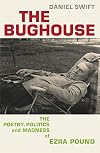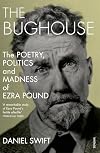
The Bughouse: The Poetry, Politics, and Madness of Ezra Pound
by Daniel Swift
On This Page
Description
"In 1945, the American poet Ezra Pound was due to stand trial for treason for his broadcasts in Fascist Italy during the Second World War. Before the trial could take place, however, he was pronounced insane. Escaping a possible death sentence, he was sent to St. Elizabeths Hospital near Washington, D.C., where he was held for more than a decade. At the hospital, Pound was at his most infamous, and most contradictory. He was a genius and a traitor, a great poet and a madman. He was also an show more irresistible figure and, in his cell on Chestnut Ward and on the elegant hospital grounds, he was visited by the major poets and writers of his time. T. S. Eliot, Elizabeth Bishop, Robert Lowell, John Berryman, Charles Olson, and Frederick Seidel all went to sit with him. They listened to him speak and wrote of what they had seen. This was perhaps the world's most unorthodox literary salon: convened by a fascist, held in a lunatic asylum, with chocolate brownies and mayonnaise sandwiches served for tea. Pound continues to divide all who read and think of him. At the hospital, the doctors who studied him and the poets who learned from him each had a different understanding of this wild and most difficult man. Tracing Pound through the eyes of his visitors, Daniel Swift's The Bughouse tells a story of politics, madness, and modern art in the twentieth century." -- Publisher's description. show lessTags
Recommendations
























Member Reviews
As with studies of Hegel's Phenomenology of Spirit, I am willing to follow any brave soul into the thickets of the famously difficult Cantosor the brackish writer behind them. The compounded (excuse the pun) difficulty with Pound, however, versus the perverted German nationalism posthumously ascribed to Hegel, is twofold: "...Pound's difficulty lies not only in the challenge of how to read his poetry, but also in how to reconcile it with his life's contradictions." And his contradictions are many, as Daniel Swift shows. Like Richard Wagner[1], Joseph Conrad[2], and perhaps more closely Knut Hamsun, one encounters a bifurcation of mind upon contact with a deplorable artist's great work. Yet, like the troubled Hollywood star, there is show more something that draws us into their lives, something that fascinates us and invites us to form an opinion however well or ill informed.
The question that looms over this literary giant—whom Swift asserts was "the most difficult man of the twentieth century"—and beckons for our opinions, is whether or not he was insane. Swift makes it clear that he intends to lay all the evidence before us as before a jury, offering no opinion of his own. Was Pound suffering from mental instability when he took to the radio microphone in Italy and spouted statements that would put him under suspicion of treason? Or did he get away with having the federal government provide the very solitude and freedom needed to produce his poetry? Or was it all a performance, a man with an uncanny ability to don and doff personae at will? It is an important question that extends far beyond the particular case of Pound. As Swift has it:
It may be tempting to dismiss Swift's book as another attempt to capitalize on a contentious subject, but the strength of a book which offers no final statement on the big Poundian questions is in its acuity of scholarship. The structure of the book reminds me of another of Farrar, Straus and Giroux's recent publications, American Philosophy: A Love Story by John Kaag. Both authors are college professors who bring their travels and research into the text as they navigate through endless pages of books, letters, sign-in sheets, policies, transcripts, and so on in quest of answers. Both have a keen eye for seemingly superfluous details (such as the weather on the day Pound arrived at St Elizabeth's) and a knack for prose that balances engagement and erudition. It is clear that Swift is a respectable academic who has done what Norman Davies did with Europe: A History: synthesized a mountain of data into a concise format for the masses (of course, without the heft of Davies's wrist-numbing tome).
Some reviewers have taken umbrage with what they describe as constant repetition, but while there are a few moments when a glaring redundancy mars the reading, it is too seldom to ruin the entire effort. Where Swift deserves mercy from us is in his role as psychoanalytic literary critic. Without retreading Freudian or Lacanian psychoanalysis handbooks, Swift uses not only the texts but the relationships between Charles Olson, William Carlos Williams, Robert Lowell, et al., and hospital staff like Kavka/Cafferty (Pound gave everyone a nickname), to derive critical ruminations on Pound in relation to space, place, clothing, dialogue with and rewriting history, inventing personae, and, of course, views on madness.
Still, the reader must question why reading another book on Pound, however expertly assembled, is worth the effort. The answer lies in the subject. As Swift says, "Ezra Pound was the most difficult man of the twentieth century" and "...as much as Freud or Einstein, Ezra Pound invented the modern age." If, as literary critic Harold Bloom has it, Shakespeare is the center of the western canon[3], Pound likewise is the center of the twentieth-century American poetry canon. We continue to read and think about figures of this stature in order to understand who we are through the people who have shaped our society. The true reader looks away from the reflecting pool and seeks to understand who they are not.
Ezra Pound shaped American culture (and beyond) from within the walls of a psychiatric ward. From Olson to Williams to Eliot to Lowell, there developed a sort of poet's pilgrimage to visit and learn from Pound (what Swift amusingly calls Ezuversity). An examination of these visitors' own work exposes the human-all-too-human subject behind much of the best poetry of the epoch. In addition, neophyte disciples and hopeful youth came, listened, observed, and left as poets. Even today, a result of Pound's long reach forward in history, there exists an Italian political movement called CasaPound, which founds its creed upon the Cantos. Part biography, part literary criticism, part travelogue, Daniel Swift's The Bughouse is the result of an extraordinary effort.
Footnotes
[1] Cf. M. Owen Lee's slim volume Wagner: The Terrible Man and His Truthful Art.
[2] Cf. Chinua Achebe's essay on Conrad's racism in the Massachusetts Review.
[3] Bloom, Harold. The Western Canon: The Books and School of the Ages. Riverhead Books, 1995. show less
The question that looms over this literary giant—whom Swift asserts was "the most difficult man of the twentieth century"—and beckons for our opinions, is whether or not he was insane. Swift makes it clear that he intends to lay all the evidence before us as before a jury, offering no opinion of his own. Was Pound suffering from mental instability when he took to the radio microphone in Italy and spouted statements that would put him under suspicion of treason? Or did he get away with having the federal government provide the very solitude and freedom needed to produce his poetry? Or was it all a performance, a man with an uncanny ability to don and doff personae at will? It is an important question that extends far beyond the particular case of Pound. As Swift has it:
Here was the knot: to sympathize with Pound one has to accept that he is insane, and yet to take his advice one must assume that he has real and sane things to say. To assume that he is sane is equally to assume that he is a coward and a cheat, and therefore surely not a source of good advice on how to live or how to write.
It may be tempting to dismiss Swift's book as another attempt to capitalize on a contentious subject, but the strength of a book which offers no final statement on the big Poundian questions is in its acuity of scholarship. The structure of the book reminds me of another of Farrar, Straus and Giroux's recent publications, American Philosophy: A Love Story by John Kaag. Both authors are college professors who bring their travels and research into the text as they navigate through endless pages of books, letters, sign-in sheets, policies, transcripts, and so on in quest of answers. Both have a keen eye for seemingly superfluous details (such as the weather on the day Pound arrived at St Elizabeth's) and a knack for prose that balances engagement and erudition. It is clear that Swift is a respectable academic who has done what Norman Davies did with Europe: A History: synthesized a mountain of data into a concise format for the masses (of course, without the heft of Davies's wrist-numbing tome).
Some reviewers have taken umbrage with what they describe as constant repetition, but while there are a few moments when a glaring redundancy mars the reading, it is too seldom to ruin the entire effort. Where Swift deserves mercy from us is in his role as psychoanalytic literary critic. Without retreading Freudian or Lacanian psychoanalysis handbooks, Swift uses not only the texts but the relationships between Charles Olson, William Carlos Williams, Robert Lowell, et al., and hospital staff like Kavka/Cafferty (Pound gave everyone a nickname), to derive critical ruminations on Pound in relation to space, place, clothing, dialogue with and rewriting history, inventing personae, and, of course, views on madness.
Still, the reader must question why reading another book on Pound, however expertly assembled, is worth the effort. The answer lies in the subject. As Swift says, "Ezra Pound was the most difficult man of the twentieth century" and "...as much as Freud or Einstein, Ezra Pound invented the modern age." If, as literary critic Harold Bloom has it, Shakespeare is the center of the western canon[3], Pound likewise is the center of the twentieth-century American poetry canon. We continue to read and think about figures of this stature in order to understand who we are through the people who have shaped our society. The true reader looks away from the reflecting pool and seeks to understand who they are not.
Ezra Pound shaped American culture (and beyond) from within the walls of a psychiatric ward. From Olson to Williams to Eliot to Lowell, there developed a sort of poet's pilgrimage to visit and learn from Pound (what Swift amusingly calls Ezuversity). An examination of these visitors' own work exposes the human-all-too-human subject behind much of the best poetry of the epoch. In addition, neophyte disciples and hopeful youth came, listened, observed, and left as poets. Even today, a result of Pound's long reach forward in history, there exists an Italian political movement called CasaPound, which founds its creed upon the Cantos. Part biography, part literary criticism, part travelogue, Daniel Swift's The Bughouse is the result of an extraordinary effort.
Footnotes
[1] Cf. M. Owen Lee's slim volume Wagner: The Terrible Man and His Truthful Art.
[2] Cf. Chinua Achebe's essay on Conrad's racism in the Massachusetts Review.
[3] Bloom, Harold. The Western Canon: The Books and School of the Ages. Riverhead Books, 1995. show less
I originally balked at reading this book, considering myself a poetry neophyte. However back in the late '90s and early 2000s, the New York City Subway ran a program where they featured and posted poems, art and other literary and artistic gems in subway cars. It was there that I read a poem by Ezra Pound, on an R142/R142A subway car that so moved me personally that it has remained with me until today. When I saw this book at my local public library I gave it try and I am very glad I did.
While the book for me at times was a little difficult to read with it's in-depth analysis of Pound's poetry, it enlightened me to his incredibly fascinating and troubled life. t also opened my mind to the wonderfully rich, deep, profound, and troubled show more world of poetry and poets. I have gained not only a great knowledge of Pound that I never had before, it also opened a window in to the essence of twentieth century poetry. I highly recommend this book! show less
While the book for me at times was a little difficult to read with it's in-depth analysis of Pound's poetry, it enlightened me to his incredibly fascinating and troubled life. t also opened my mind to the wonderfully rich, deep, profound, and troubled show more world of poetry and poets. I have gained not only a great knowledge of Pound that I never had before, it also opened a window in to the essence of twentieth century poetry. I highly recommend this book! show less
Ratings
Members
- Recently Added By
Author Information

7+ Works 251 Members
Common Knowledge
- People/Characters
- Ezra Pound
- Dedication
- For Jessie
- First words
- The Roman road runs north past Livorno, past fields of sunflowers dazed by the sun and mountains in the haze.
- Last words
- (Click to show. Warning: May contain spoilers.)It suggests, simply, what we all must do: which is to make our peace, as best we can, with this most difficult man.
Classifications
- Genres
- Literature Studies and Criticism, Fiction and Literature, Biography & Memoir
- DDC/MDS
- 811.52 — Literature & rhetoric American literature in English American poetry in English 20th Century 1900-1945
- LCC
- PS3531 .O82 .Z853 — Language and Literature American literature American literature Individual authors 1900-1960
- BISAC
Statistics
- Members
- 75
- Popularity
- 404,254
- Reviews
- 2
- Rating
- (3.89)
- Languages
- English
- Media
- Paper, Audiobook, Ebook
- ISBNs
- 7
- ASINs
- 1