On This Page
Description
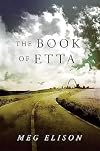
Etta comes from Nowhere, a village of survivors of the great plague that wiped away the world that was. In the world that is, women are scarce and childbearing is dangerousyet desperately necessary for humankinds future. Mothers and midwives are sacred, but Etta has a different calling. As a scavenger. Loyal to the village but living on her own terms, Etta roams the desolate territory beyond: salvaging useful relics of the ruined past and braving the threat of brutal slave traders, who are show more seeking women and girls to sell and subjugate. show lessTags
Recommendations












Member Reviews
This very much feels like the sexual exploitation version of The Road -- not quite as bleak, more hopeful in the end (I think?), both less and more horrifying on any given page, depending on how you feel about rape/genital mutilation/sexual slavery vs cannibalism.
On the whole, I liked both the character of Etta/Eddy and her personal inner journey over time. I found the world all too believable. I thought the different way settlements dealt with the lack of women to be fascinating.
I'm troubled by the ending on so many levels -- that the actual safety/savior is presented as a religious community, that E has to bend, in the end, to her biological fate in this world -- these things are deeply messed up. Perhaps that's the message? People show more are complicated, things are horrible, keep going (but why?).
I'm not sure I'll return to this universe, but it was a powerful read. show less
On the whole, I liked both the character of Etta/Eddy and her personal inner journey over time. I found the world all too believable. I thought the different way settlements dealt with the lack of women to be fascinating.
I'm troubled by the ending on so many levels -- that the actual safety/savior is presented as a religious community, that E has to bend, in the end, to her biological fate in this world -- these things are deeply messed up. Perhaps that's the message? People show more are complicated, things are horrible, keep going (but why?).
I'm not sure I'll return to this universe, but it was a powerful read. show less
Second in the Road to Nowhere series, I’ve been waiting for this with a lot of anticipation after the thrill and heartbreak of Elison’s debut novel, The Book of the Unnamed Midwife. Elison did not disappoint.
This is as gripping, and horrible as the first novel, though different. In Unnamed Midwife the story split between dystopian near-future and far-future. Book of Etta is set 100 years after, and mostly details the story of Etta/Eddy, a scavenger from Nowhere who struggles to survive while also saving as many women and girls as they can.
I say they because Eddy/Etta is seen as a woman in Nowhere, a man whilst on scavenging raids, and fluidly switches between the two as needed for survival. Eddy is definitely resentful of the show more strictures imposed by Nowhere’s society and finds no real relief in any other place they encounter.
I think Eddy/Etta is supposed to be a Transman, but I don’t know enough about the subtleties to know it. I must admit they (to me) came across as gender-questioning for the most part, though there is a definite dislike of being forced into a “woman’s role” threaded throughout the story. I couldn’t unpick how much of that was due to being either a (straight) trans man or a lesbian gender queer person who was gang-raped at an early age and thus found the very concept of being a woman to be threatening and triggering.
Transwomen are represented too. Flora, a lesbian woman Eddy joins up with, seems to truly be what she is. But the novel leaves open the idea that there are trans women in the dystopian society because they have no other choice, having been used as catamites by the predominantly male rape gangs that raid the countryside and infest fortresses.
I liked it enough to devour in one sitting. Not as much as the prequel, but enough to absolutely be looking forward to reading more. I assume based on the ending that the next novel will be a continuation of Eddy’s story and not skip another century. show less
This is as gripping, and horrible as the first novel, though different. In Unnamed Midwife the story split between dystopian near-future and far-future. Book of Etta is set 100 years after, and mostly details the story of Etta/Eddy, a scavenger from Nowhere who struggles to survive while also saving as many women and girls as they can.
I say they because Eddy/Etta is seen as a woman in Nowhere, a man whilst on scavenging raids, and fluidly switches between the two as needed for survival. Eddy is definitely resentful of the show more strictures imposed by Nowhere’s society and finds no real relief in any other place they encounter.
I think Eddy/Etta is supposed to be a Transman, but I don’t know enough about the subtleties to know it. I must admit they (to me) came across as gender-questioning for the most part, though there is a definite dislike of being forced into a “woman’s role” threaded throughout the story. I couldn’t unpick how much of that was due to being either a (straight) trans man or a lesbian gender queer person who was gang-raped at an early age and thus found the very concept of being a woman to be threatening and triggering.
Transwomen are represented too. Flora, a lesbian woman Eddy joins up with, seems to truly be what she is. But the novel leaves open the idea that there are trans women in the dystopian society because they have no other choice, having been used as catamites by the predominantly male rape gangs that raid the countryside and infest fortresses.
I liked it enough to devour in one sitting. Not as much as the prequel, but enough to absolutely be looking forward to reading more. I assume based on the ending that the next novel will be a continuation of Eddy’s story and not skip another century. show less
In this sequel to the wonderful "Book of the Unnamed Midwife", a century has passed since a virus killed most women. Those who survived and later got pregnant usually died. The Unnamed Midwife did what she could to spread birth control, disguising herself as a man most of the time to avoid captivity and rape, the typical fate of unprotected women. In Nowhere, a fort in the Midwest where the Midwife finally settled, women are now divided into Mothers and Midwives. Those who choose and survive pregnancy are revered, but all women are highly valued. Most residents of Nowhere live in hives: collections of men who form a family with one woman. Women and men all take part in decision-making and work, and the town council always has a majority show more of women.
Etta, the "living daughter" of one of the elder women, has chosen to be a raider, someone who travels from the town in search for old-world items which can be used for trade. Etta also has a secondary goal: the rescue of abused girls and women and the death of their captors. Etta seems to be in her early 20s. On the road she disguises herself Eddy, having shaved her head and learned male body-language. But it's obvious Etta has experienced a profound trauma in her raiding, and it's not too hard to figure out what that entailed. Her Eddy identity is slowly edging out Etta's, and her fury over what's happened to her alienates her from her mother and the other women with whom she's close. Eventually she determines to leave Nowhere and try to find San Francisco, the Midwife's original hometown. Her journey brings her into contact with a variety of towns which have solved the woman shortage in quite diverse ways, some reverential, some cruel and hopeless.
Etta is a complex and difficult character. She's not particularly likable, but it's a very difficult world in which she works. It's hard to tell if she's truly having a sexual identity crisis or is so damaged by what's happened to her that she's almost a split personality. Either way, the author's portrait of the future continues in this entry to be profound, sometimes appalling, and always surprising. I sincerely hope there will be another sequel. show less
Etta, the "living daughter" of one of the elder women, has chosen to be a raider, someone who travels from the town in search for old-world items which can be used for trade. Etta also has a secondary goal: the rescue of abused girls and women and the death of their captors. Etta seems to be in her early 20s. On the road she disguises herself Eddy, having shaved her head and learned male body-language. But it's obvious Etta has experienced a profound trauma in her raiding, and it's not too hard to figure out what that entailed. Her Eddy identity is slowly edging out Etta's, and her fury over what's happened to her alienates her from her mother and the other women with whom she's close. Eventually she determines to leave Nowhere and try to find San Francisco, the Midwife's original hometown. Her journey brings her into contact with a variety of towns which have solved the woman shortage in quite diverse ways, some reverential, some cruel and hopeless.
Etta is a complex and difficult character. She's not particularly likable, but it's a very difficult world in which she works. It's hard to tell if she's truly having a sexual identity crisis or is so damaged by what's happened to her that she's almost a split personality. Either way, the author's portrait of the future continues in this entry to be profound, sometimes appalling, and always surprising. I sincerely hope there will be another sequel. show less
This is a more complicated and more difficult read than The Book of the Unnamed Midwife. Its prevailing themes are how to build a functional community and how to construct an identity in this post-apocalyptic context. The themes are so well integrated into the overall adventure plot that I didn't catch on until after I'd finished the novel.
These themes, and their intersection with gender identity and sexual orientation, carry the novel into troubled waters. I would caution trans readers especially - there is a good bit in the book about working out trans identity in a violent world without the benefit of historical information, narrative, or even language to help construct an identity. This ends up with a lot of transphobic behavior by show more the characters, although the book implicitly condemns transphobia.
(The spoilery paragraph below doesn't go into more detail about that, but covers my feelings about the book's ending.)
I was relieved to see that this book is the second in a trilogy, because nothing feels resolved at the end. I have so many questions, both in terms of the plot and identity questions the book poses. What's the deal with Alma's seeming mystical powers? Will Flora and Etta/Eddy end up together? How will Etta/Eddy resolve their identity issues - not just around gender, but also around violence and how to forge a life in a broken world?
This book troubled me, as I think it was intended to. I didn't enjoy it as much as I enjoyed The Unnamed Midwife, but I think it's a better book. show less
These themes, and their intersection with gender identity and sexual orientation, carry the novel into troubled waters. I would caution trans readers especially - there is a good bit in the book about working out trans identity in a violent world without the benefit of historical information, narrative, or even language to help construct an identity. This ends up with a lot of transphobic behavior by show more the characters, although the book implicitly condemns transphobia.
(The spoilery paragraph below doesn't go into more detail about that, but covers my feelings about the book's ending.)
This book troubled me, as I think it was intended to. I didn't enjoy it as much as I enjoyed The Unnamed Midwife, but I think it's a better book. show less
I didn't think The Book of the Unnamed Midwife needed a sequel, but I'd argue this isn't one: set 100 years later, it explores a world still failing to find equilibrium in the wake of a pandemic that has all but wiped out womankind. Mankind, sadly, has responded in the worst possible ways.
Isolated communities have adopted different social models for survival; Etta is from matriarchal Nowhere, but rejects the traditional roles of Mother or Midwife to journey beyond its walls as trader and scavenger. Etta comes face to face with brutality and must confront both gender and sexual identity as it becomes clear that Nowhere's fragile peace is under threat from an empire-building tyrant.
Expect introspection and commentary on reproductive show more rights, identity and intersectional feminism - packaged up in a taut, nail-biting narrative.
Full review
I received a free copy from the publisher in exchange for an honest review show less
Isolated communities have adopted different social models for survival; Etta is from matriarchal Nowhere, but rejects the traditional roles of Mother or Midwife to journey beyond its walls as trader and scavenger. Etta comes face to face with brutality and must confront both gender and sexual identity as it becomes clear that Nowhere's fragile peace is under threat from an empire-building tyrant.
Expect introspection and commentary on reproductive show more rights, identity and intersectional feminism - packaged up in a taut, nail-biting narrative.
Full review
I received a free copy from the publisher in exchange for an honest review show less
"Maybe you just show up one day and everyone thinks you’re part of a story that’s already happening and what you really think doesn’t matter. Maybe that’s what happened to the Unnamed. I wonder if she ever thought we’d be reading about her, years later, trying to be like her. Did she even want that?"
The Book of Etta is the second book in Meg Elison’s The Road to Nowhere series. It picks up about 100 years after the Unnamed Midwife arrived in Nowhere. In Nowhere, a woman is expected to be either a Mother or a Midwife and have a Hive of men to help repopulate humanity after a mysterious plague wiped out most of the population. However, Etta doesn’t want any of that; she is different. Instead, she is a raider – going out show more beyond the city to scavenge for old-world items of value as well as rescuing girls and women from the slave traders. When she comes across Estiel and a man who calls himself the Lion, she will be tested in new ways as she vows to save the women he has stolen.
There is a lot to unpack from this book, and so many interesting concepts – for example: gender norms, gender fluidity, racism, slavery, morality, and how different societies develop differently whilst in isolation from each other, etc. – but unfortunately, I couldn’t get over how much I disliked Etta/Eddy’s character. They were self-centered and stubborn with a rigid set of morality that was very black and white. Etta/Eddy saw the world in black and white – they were good, and slavers were bad; she was Etta at home, but he was Eddy on the road; Etta could become Eddy out of necessity, but anyone else’s gender fluidity was inexcusable; women were safe, and men were not. I know there was a reason their character was that way as they were suffering from a traumatic event in their past, and I appreciate what the author did with their character, but I was never able to muster much sympathy for them and so I couldn’t really get into the book as much as I would have liked.
However, I will mention that Flora was one of my favorite characters, and I can’t wait to follow her and learn more about her in the next book in the The Road to Nowhere series - The Book of Flora .
Thank you to NetGalley and 47North for a copy of this eBook in exchange for an honest review. show less
The Book of Etta is the second book in Meg Elison’s The Road to Nowhere series. It picks up about 100 years after the Unnamed Midwife arrived in Nowhere. In Nowhere, a woman is expected to be either a Mother or a Midwife and have a Hive of men to help repopulate humanity after a mysterious plague wiped out most of the population. However, Etta doesn’t want any of that; she is different. Instead, she is a raider – going out show more beyond the city to scavenge for old-world items of value as well as rescuing girls and women from the slave traders. When she comes across Estiel and a man who calls himself the Lion, she will be tested in new ways as she vows to save the women he has stolen.
There is a lot to unpack from this book, and so many interesting concepts – for example: gender norms, gender fluidity, racism, slavery, morality, and how different societies develop differently whilst in isolation from each other, etc. – but unfortunately, I couldn’t get over how much I disliked Etta/Eddy’s character. They were self-centered and stubborn with a rigid set of morality that was very black and white. Etta/Eddy saw the world in black and white – they were good, and slavers were bad; she was Etta at home, but he was Eddy on the road; Etta could become Eddy out of necessity, but anyone else’s gender fluidity was inexcusable; women were safe, and men were not. I know there was a reason their character was that way as they were suffering from a traumatic event in their past, and I appreciate what the author did with their character, but I was never able to muster much sympathy for them and so I couldn’t really get into the book as much as I would have liked.
However, I will mention that Flora was one of my favorite characters, and I can’t wait to follow her and learn more about her in the next book in the The Road to Nowhere series - The Book of Flora .
Thank you to NetGalley and 47North for a copy of this eBook in exchange for an honest review. show less
The Book of Etta by Meg Elison is the second book in the post-apocalyptic series that started with The Book of the Unnamed Midwife. You have to read the first book in the series before The Book of Etta. About a hundred years have passed since the time of the unnamed midwife when a plague wiped out nearly everyone, but especially women and children. Childbirth is still dangerous.
Etta/Eddy comes from Nowhere, the village of survivors (located in the present day Ozarks/Odarks) that reveres the unnamed midwife. Etta wants to be a scavenger, not a midwife or a mother, the only two recognized positions for women in her village. She goes out on forays disguised as Eddy where she looks for useful items and rescues any women/girls being sold by show more slavers she might meet on the road. After one foray into Estiel (St. Louis) where the powerful leader called the Lion is located, she now tries to avoid the city. His followers raid nearby communities, demand tributes, loyalty and especially women and girls to all be taken for the Lion.
There are small communities that are becoming established now and each of them deal with the gender inequality differently. Women in Nowhere have hives, where one woman has a group of men. The Lion keeps a harem of women and rules by fear and power, but there are also catamites (castrated boys) for his men's use. (Girls are being cut too, so genital mutilation is an occurrence now.) There are several other settlements introduced here that have their societies set up differently.
The big, overriding theme in The Book of Etta is the question/complication of gender identity, inequality, and the firm roles in place for various communities. Etta identifies as Eddy and is transgender but is not allowed to be Eddy in Nowhere, where women are either midwives or mothers with a hive, while other communities have different rules in place for their men and women. Each different community Eddy visits is like a different, weird societal cult where there are specific roles assigned based on gender. Eddy doesn't have a place.
I was eager and excited to read the second book in the planned trilogy because I loved The Book of the Unnamed Midwife so much. The writing is still very good. I wasn't as captivated by this second installment, however. It could be the second-book-in-a-series syndrome since it is obviously a bridge to the final installment. Although it is still brutal and gritty, the focus and anxiety over gender questions among several characters is almost overwrought, taking up more pages of anxiety than would seem necessary in this changed world. It will be interesting to see where Elison is taking this series.
Disclosure: My review copy was courtesy of 47North.
https://www.goodreads.com/review/show/1917554615
http://www.shetreadssoftly.com/2017/02/the-book-of-etta.html show less
Etta/Eddy comes from Nowhere, the village of survivors (located in the present day Ozarks/Odarks) that reveres the unnamed midwife. Etta wants to be a scavenger, not a midwife or a mother, the only two recognized positions for women in her village. She goes out on forays disguised as Eddy where she looks for useful items and rescues any women/girls being sold by show more slavers she might meet on the road. After one foray into Estiel (St. Louis) where the powerful leader called the Lion is located, she now tries to avoid the city. His followers raid nearby communities, demand tributes, loyalty and especially women and girls to all be taken for the Lion.
There are small communities that are becoming established now and each of them deal with the gender inequality differently. Women in Nowhere have hives, where one woman has a group of men. The Lion keeps a harem of women and rules by fear and power, but there are also catamites (castrated boys) for his men's use. (Girls are being cut too, so genital mutilation is an occurrence now.) There are several other settlements introduced here that have their societies set up differently.
The big, overriding theme in The Book of Etta is the question/complication of gender identity, inequality, and the firm roles in place for various communities. Etta identifies as Eddy and is transgender but is not allowed to be Eddy in Nowhere, where women are either midwives or mothers with a hive, while other communities have different rules in place for their men and women. Each different community Eddy visits is like a different, weird societal cult where there are specific roles assigned based on gender. Eddy doesn't have a place.
I was eager and excited to read the second book in the planned trilogy because I loved The Book of the Unnamed Midwife so much. The writing is still very good. I wasn't as captivated by this second installment, however. It could be the second-book-in-a-series syndrome since it is obviously a bridge to the final installment. Although it is still brutal and gritty, the focus and anxiety over gender questions among several characters is almost overwrought, taking up more pages of anxiety than would seem necessary in this changed world. It will be interesting to see where Elison is taking this series.
Disclosure: My review copy was courtesy of 47North.
https://www.goodreads.com/review/show/1917554615
http://www.shetreadssoftly.com/2017/02/the-book-of-etta.html show less
Members
- Recently Added By
Lists

2018 Hugo Eligible Novels
170 works; 16 members

2017 Science Fiction and Fantasy I'm Looking Forward To
46 works; 6 members

Books Read in 2017
4,248 works; 130 members
Author Information

15+ Works 1,652 Members
Awards and Honors
Awards
Series

Common Knowledge
- Canonical title
- The Book of Etta
- Original publication date
- 2017
Classifications
Statistics
- Members
- 266
- Popularity
- 120,993
- Reviews
- 22
- Rating
- (3.74)
- Languages
- English, Polish
- Media
- Paper, Audiobook, Ebook
- ISBNs
- 8
- ASINs
- 2