On This Page
Description
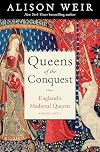
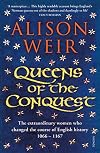
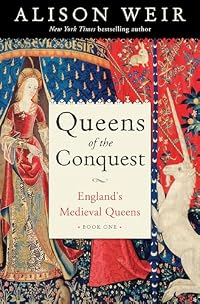
In the first volume of this epic new series, Alison Weir strips away centuries of romantic mythology and prejudice to reveal the lives of England's queens in the century after the Norman Conquest. Beginning with Matilda of Flanders, who supported William the Conqueror in 1066, to the turbulent life of the Empress Maud, who claimed to be queen of England in her own right and fought a bitter war to that end, the five Norman queens emerge as hugely influential figures and fascinating characters.Tags
Recommendations










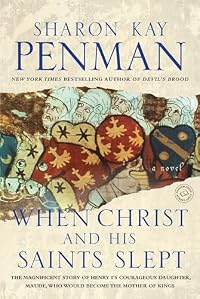
Member Reviews
This is a valiant attempt to do something different in history, but it slightly fails in the execution. She lays this out as the first in a series of books focussing on the women who were crowned after the Norman conquest. This book being the first, taking in the first 3 kings to take a Queen, William I, Henry I and Stephen. Slightly confusingly they all married women called Matilda. And the first 2 Matildas go really well. There's a certain amount of information to call on, charters, chronicles, court rolls and the like, all of which can tell you where the Queen was at certain points, when she was acting with her husband and when on his behalf elsewhere.
It gets more confused with Henry I's second wife. Her life does not neatly align show more with her husband's being in her teens when she married him, he being in his 50s. Her life overlaps that of the next Queen Matilda, wife to Stephen, and her story sort of peters out. The reign of Stephen is greatly complicated by the civil war that broke out between him and the daughter of Henry I, the Empress Maud. In this section, the author feels obliged to include both Maud and Matilda, and it becomes a lot less easy to feel them as individuals. The chapters don;t concentrate quite so highly on the ladies, more the moves that are made in and around them. The book becomes a lot more coherrent in the final passages, when Maud has outlived both Stephen and Matilda and is acting as advisor to Henry II.
It is interesting how much clearer the lives of the first two queens were, when there was only one protagonist to deal with, Matilda (3) remains, to me, more of a mystery and is overshadowed or shown in contrast to Maud, such that she becomes less real somehow.
So excellent idea, and well executed for the most part. She writes readable history, without it feeling to have tooo many current values superimposed. There are a couple of weighty appendices, with letters and descriptions of the main chroniclers of the period, which was of general interest. I also found it interesting to know that in this period the nobility were taught to read, but not write, and they signed their mark, not their names. show less
It gets more confused with Henry I's second wife. Her life does not neatly align show more with her husband's being in her teens when she married him, he being in his 50s. Her life overlaps that of the next Queen Matilda, wife to Stephen, and her story sort of peters out. The reign of Stephen is greatly complicated by the civil war that broke out between him and the daughter of Henry I, the Empress Maud. In this section, the author feels obliged to include both Maud and Matilda, and it becomes a lot less easy to feel them as individuals. The chapters don;t concentrate quite so highly on the ladies, more the moves that are made in and around them. The book becomes a lot more coherrent in the final passages, when Maud has outlived both Stephen and Matilda and is acting as advisor to Henry II.
It is interesting how much clearer the lives of the first two queens were, when there was only one protagonist to deal with, Matilda (3) remains, to me, more of a mystery and is overshadowed or shown in contrast to Maud, such that she becomes less real somehow.
So excellent idea, and well executed for the most part. She writes readable history, without it feeling to have tooo many current values superimposed. There are a couple of weighty appendices, with letters and descriptions of the main chroniclers of the period, which was of general interest. I also found it interesting to know that in this period the nobility were taught to read, but not write, and they signed their mark, not their names. show less
Although I am an avid History reader, I always approach any Non-Fiction History books with caution, since we all know that no Historian (either professional or amateur) can be wholly objective, especially when it comes to biographies. Now, I can't claim to be much familiar with Alison Weir's work, but she comes highly recommended by trusted Goodreads friends and since the extraordinary queens in English History have always been a favourite subject of mine, I chose "Queens of the Conquest" eagerly. I wasn't disappointed. I found the book to be thoroughly researched and a satisfying read with only a few weak parts.
The book narrates the lives of the queens of England after the Norman conquest in 1066 but doesn't include Emma of Normandy show more and Eleanor of Aquitaine (who is mentioned in the periphery, nonetheless) along with Isabella of France since Weir has written separate biographies of the two illustrious monarchs. So, our focus is on Matilda of Flanders of the Bayeux Tapestry fame, Matilda of Scotland, Adeliza of Louvain, Matilda of Boulogne, and my personal favourite, the Empress Maud.
Weir stresses the fact that sources of information coming from monastic chronicles are difficult to be trusted. Think of the raiding Vikings and the horned helmets which was a fairy-tale way for the monks to refer to the Norsemen as the personification of the Devil. And it is to be expected that the views of the Church authorities about a woman in a position of full power were not favourable, to put it mildly. It is evident in her writing that Weir tries to create a balanced view of each queen by presenting the positive and the negative opinions of the time. She includes letters, chronicles and testimonials to paint a portrait of each woman that will be as rounded and objective as possible. In my opinion, she succeeds to the fullest and creates a vivid biography by providing background information about the era, the daily life, the castles, the clothes, the customs and beliefs.
"And so it lasted till the land was all undone and darkened with such deeds; and men said openly that Christ and His Saints slept"
The narration of the war between Maud and Stephen and the time of his reign which was called "The Anarchy" is the most fascinating moment of the book, in my opinion. Maud has always been one of my favourite queens along with Isabella of France and Eleanor of Aquitaine. I like the rebel queens who refused to be defined by their husbands and bend the knee. Maud is also one of the reason I love Follett's "The Pillars of the Earth" so much. Part 4 is a beauty. There we have the first years of Henry's reign in the shadow of his mother, Maud, and his wife, Eleanor.It is an era that most history buffs are very familiar with, an era that brought about so many changes not only in England but in the whole European continent. Another incident that attracted my attention was the complex, turbulent relationship between Matilda of Flanders and William the Conqueror. If the historical anecdotes are indeed accurate, then Matilda was an extremely courageous woman to put up with such a husband. Not that there were many means that women could use to defend themselves at the time, whether they were queens or peasants.
The only weak part of the book, in my opinion, was the heavy inclusion of correspondence. Certainly, it helps us understand and realize that these historical figures that contributed in shaping Europe were people with fears, hopes, passions and incredible responsibilities on their shoulders. However, the Appendixes include the letters in their entirety. It became progressively tiresome to stop the narration in order to present quotes from the same letter again and again. Another thing that diminished my enjoyment was the plethora of syntactical and grammatical mistakes in my ARC. I hope and - believe that they will be corrected in the published book, because they are almost childish at parts and yes, I am a serious case of Grammar Nazi, I admit.
Whether you are a connoisseur of the times of the Norman conquest and the monarchs that sealed England's future forever or whether you wish to become familiar with the lives of five of the most fascinating women to ever grace this continent in an era full of changes, fights and progress and all at the same time, this book will definitely satisfy your craving.
Many thanks to Random House UK, Vintage Publishing and NetGalley for the ARC in exchange of an honest review. show less
The book narrates the lives of the queens of England after the Norman conquest in 1066 but doesn't include Emma of Normandy show more and Eleanor of Aquitaine (who is mentioned in the periphery, nonetheless) along with Isabella of France since Weir has written separate biographies of the two illustrious monarchs. So, our focus is on Matilda of Flanders of the Bayeux Tapestry fame, Matilda of Scotland, Adeliza of Louvain, Matilda of Boulogne, and my personal favourite, the Empress Maud.
Weir stresses the fact that sources of information coming from monastic chronicles are difficult to be trusted. Think of the raiding Vikings and the horned helmets which was a fairy-tale way for the monks to refer to the Norsemen as the personification of the Devil. And it is to be expected that the views of the Church authorities about a woman in a position of full power were not favourable, to put it mildly. It is evident in her writing that Weir tries to create a balanced view of each queen by presenting the positive and the negative opinions of the time. She includes letters, chronicles and testimonials to paint a portrait of each woman that will be as rounded and objective as possible. In my opinion, she succeeds to the fullest and creates a vivid biography by providing background information about the era, the daily life, the castles, the clothes, the customs and beliefs.
"And so it lasted till the land was all undone and darkened with such deeds; and men said openly that Christ and His Saints slept"
The narration of the war between Maud and Stephen and the time of his reign which was called "The Anarchy" is the most fascinating moment of the book, in my opinion. Maud has always been one of my favourite queens along with Isabella of France and Eleanor of Aquitaine. I like the rebel queens who refused to be defined by their husbands and bend the knee. Maud is also one of the reason I love Follett's "The Pillars of the Earth" so much. Part 4 is a beauty. There we have the first years of Henry's reign in the shadow of his mother, Maud, and his wife, Eleanor.It is an era that most history buffs are very familiar with, an era that brought about so many changes not only in England but in the whole European continent. Another incident that attracted my attention was the complex, turbulent relationship between Matilda of Flanders and William the Conqueror. If the historical anecdotes are indeed accurate, then Matilda was an extremely courageous woman to put up with such a husband. Not that there were many means that women could use to defend themselves at the time, whether they were queens or peasants.
The only weak part of the book, in my opinion, was the heavy inclusion of correspondence. Certainly, it helps us understand and realize that these historical figures that contributed in shaping Europe were people with fears, hopes, passions and incredible responsibilities on their shoulders. However, the Appendixes include the letters in their entirety. It became progressively tiresome to stop the narration in order to present quotes from the same letter again and again. Another thing that diminished my enjoyment was the plethora of syntactical and grammatical mistakes in my ARC. I hope and - believe that they will be corrected in the published book, because they are almost childish at parts and yes, I am a serious case of Grammar Nazi, I admit.
Whether you are a connoisseur of the times of the Norman conquest and the monarchs that sealed England's future forever or whether you wish to become familiar with the lives of five of the most fascinating women to ever grace this continent in an era full of changes, fights and progress and all at the same time, this book will definitely satisfy your craving.
Many thanks to Random House UK, Vintage Publishing and NetGalley for the ARC in exchange of an honest review. show less
Although I am an avid History reader, I always approach any Non-Fiction History books with caution, since we all know that no Historian (either professional or amateur) can be wholly objective, especially when it comes to biographies. Now, I can't claim to be much familiar with Alison Weir's work, but she comes highly recommended by trusted Goodreads friends and since the extraordinary queens in English History have always been a favourite subject of mine, I chose "Queens of the Conquest" eagerly. I wasn't disappointed. I found the book to be thoroughly researched and a satisfying read with only a few weak parts.
The book narrates the lives of the queens of England after the Norman conquest in 1066 but doesn't include Emma of Normandy show more and Eleanor of Aquitaine (who is mentioned in the periphery, nonetheless) along with Isabella of France since Weir has written separate biographies of the two illustrious monarchs. So, our focus is on Matilda of Flanders of the Bayeux Tapestry fame, Matilda of Scotland, Adeliza of Louvain, Matilda of Boulogne, and my personal favourite, the Empress Maud.
Weir stresses the fact that sources of information coming from monastic chronicles are difficult to be trusted. Think of the raiding Vikings and the horned helmets which was a fairy-tale way for the monks to refer to the Norsemen as the personification of the Devil. And it is to be expected that the views of the Church authorities about a woman in a position of full power were not favourable, to put it mildly. It is evident in her writing that Weir tries to create a balanced view of each queen by presenting the positive and the negative opinions of the time. She includes letters, chronicles and testimonials to paint a portrait of each woman that will be as rounded and objective as possible. In my opinion, she succeeds to the fullest and creates a vivid biography by providing background information about the era, the daily life, the castles, the clothes, the customs and beliefs.
"And so it lasted till the land was all undone and darkened with such deeds; and men said openly that Christ and His Saints slept"
The narration of the war between Maud and Stephen and the time of his reign which was called "The Anarchy" is the most fascinating moment of the book, in my opinion. Maud has always been one of my favourite queens along with Isabella of France and Eleanor of Aquitaine. I like the rebel queens who refused to be defined by their husbands and bend the knee. Maud is also one of the reason I love Follett's "The Pillars of the Earth" so much. Part 4 is a beauty. There we have the first years of Henry's reign in the shadow of his mother, Maud, and his wife, Eleanor.It is an era that most history buffs are very familiar with, an era that brought about so many changes not only in England but in the whole European continent. Another incident that attracted my attention was the complex, turbulent relationship between Matilda of Flanders and William the Conqueror. If the historical anecdotes are indeed accurate, then Matilda was an extremely courageous woman to put up with such a husband. Not that there were many means that women could use to defend themselves at the time, whether they were queens or peasants.
The only weak part of the book, in my opinion, was the heavy inclusion of correspondence. Certainly, it helps us understand and realize that these historical figures that contributed in shaping Europe were people with fears, hopes, passions and incredible responsibilities on their shoulders. However, the Appendixes include the letters in their entirety. It became progressively tiresome to stop the narration in order to present quotes from the same letter again and again. Another thing that diminished my enjoyment was the plethora of syntactical and grammatical mistakes in my ARC. I hope and - believe that they will be corrected in the published book, because they are almost childish at parts and yes, I am a serious case of Grammar Nazi, I admit.
Whether you are a connoisseur of the times of the Norman conquest and the monarchs that sealed England's future forever or whether you wish to become familiar with the lives of five of the most fascinating women to ever grace this continent in an era full of changes, fights and progress and all at the same time, this book will definitely satisfy your craving.
Many thanks to Random House UK, Vintage Publishing and NetGalley for the ARC in exchange of an honest review. show less
The book narrates the lives of the queens of England after the Norman conquest in 1066 but doesn't include Emma of Normandy show more and Eleanor of Aquitaine (who is mentioned in the periphery, nonetheless) along with Isabella of France since Weir has written separate biographies of the two illustrious monarchs. So, our focus is on Matilda of Flanders of the Bayeux Tapestry fame, Matilda of Scotland, Adeliza of Louvain, Matilda of Boulogne, and my personal favourite, the Empress Maud.
Weir stresses the fact that sources of information coming from monastic chronicles are difficult to be trusted. Think of the raiding Vikings and the horned helmets which was a fairy-tale way for the monks to refer to the Norsemen as the personification of the Devil. And it is to be expected that the views of the Church authorities about a woman in a position of full power were not favourable, to put it mildly. It is evident in her writing that Weir tries to create a balanced view of each queen by presenting the positive and the negative opinions of the time. She includes letters, chronicles and testimonials to paint a portrait of each woman that will be as rounded and objective as possible. In my opinion, she succeeds to the fullest and creates a vivid biography by providing background information about the era, the daily life, the castles, the clothes, the customs and beliefs.
"And so it lasted till the land was all undone and darkened with such deeds; and men said openly that Christ and His Saints slept"
The narration of the war between Maud and Stephen and the time of his reign which was called "The Anarchy" is the most fascinating moment of the book, in my opinion. Maud has always been one of my favourite queens along with Isabella of France and Eleanor of Aquitaine. I like the rebel queens who refused to be defined by their husbands and bend the knee. Maud is also one of the reason I love Follett's "The Pillars of the Earth" so much. Part 4 is a beauty. There we have the first years of Henry's reign in the shadow of his mother, Maud, and his wife, Eleanor.It is an era that most history buffs are very familiar with, an era that brought about so many changes not only in England but in the whole European continent. Another incident that attracted my attention was the complex, turbulent relationship between Matilda of Flanders and William the Conqueror. If the historical anecdotes are indeed accurate, then Matilda was an extremely courageous woman to put up with such a husband. Not that there were many means that women could use to defend themselves at the time, whether they were queens or peasants.
The only weak part of the book, in my opinion, was the heavy inclusion of correspondence. Certainly, it helps us understand and realize that these historical figures that contributed in shaping Europe were people with fears, hopes, passions and incredible responsibilities on their shoulders. However, the Appendixes include the letters in their entirety. It became progressively tiresome to stop the narration in order to present quotes from the same letter again and again. Another thing that diminished my enjoyment was the plethora of syntactical and grammatical mistakes in my ARC. I hope and - believe that they will be corrected in the published book, because they are almost childish at parts and yes, I am a serious case of Grammar Nazi, I admit.
Whether you are a connoisseur of the times of the Norman conquest and the monarchs that sealed England's future forever or whether you wish to become familiar with the lives of five of the most fascinating women to ever grace this continent in an era full of changes, fights and progress and all at the same time, this book will definitely satisfy your craving.
Many thanks to Random House UK, Vintage Publishing and NetGalley for the ARC in exchange of an honest review. show less
When the Normans invaded England in 1066 they brought many traditions with them but also started several. William was aided by his wife, Matilda of Flanders, and in recognition of this he created her his Queen Consort. Queens Consort were not rulers in their own right but were able to be regents and wielded the power that came from their wealth. The marriage of William and Matilda was tempestuous and the relationships of the first few successors were equally complex.
In this book Weir tries to treat these medieval queens are persons in their own right and to a certain extent succeeds. It is not her fault, women only appear tangentially in the records and often the sources are biased or out of date. Where this book is particularly show more successful is in the consideration of the conflict between Empress Maud and her cousin King Stephen. In fact it was not Stephen that was the power, it was his wife Matilda of Boulogne and in considering the first English civil war in light of the two powerful female personalities a whole different light is placed on one episode in history. As ever Weir is an engaging writer and her books are meticulously researched making this a pleasure to read. show less
In this book Weir tries to treat these medieval queens are persons in their own right and to a certain extent succeeds. It is not her fault, women only appear tangentially in the records and often the sources are biased or out of date. Where this book is particularly show more successful is in the consideration of the conflict between Empress Maud and her cousin King Stephen. In fact it was not Stephen that was the power, it was his wife Matilda of Boulogne and in considering the first English civil war in light of the two powerful female personalities a whole different light is placed on one episode in history. As ever Weir is an engaging writer and her books are meticulously researched making this a pleasure to read. show less
Every once in a while I indulge my love for medieval queens and Alison Weir, and she delivers, as usual. This time I went for the audiobook, which made me get through it faster, but also made it less comprehensible. I think I have to get the paper copy just to be able to make heads or tails of the family trees.
This is a tale of four English medieval queens, starting from the wife of William The Conqueror, Matilda. To make things rather confusing, all four are named Matilda, although the last is referred to as The Empress Maud - Maud being a variant of Matilda. The period is roughly 1050 to 1170-ish, which is very sparsely documented, and very little of buildings and art survives, thus Weir often relies on educated guesses, or other show more sources describing customs of the period.
Nevertheless, exactly because we know so little about this period is what makes her effort compelling. My favorite parts of the book were descriptions of contemporay life - how a castle has been decorated (mostly with rich tapestries), the furnishings, what they ate, how they dressed, etc. The story parts are pieced together mostly of contemporary charters, which the queens have witnessed, thus leaving a trail of where they have been. There are also some chronicles and a few letters. The most detailed account is that of the Empress Maud, who has been embroiled in a civil war with King Stephen, both claiming the English throne. Maud emerges an early strong female character who acted with a male strength of character, in her own name, which was unheard of at time. Unfortunately she also lacked diplomatic skills and alienated her English subjects, thus making a bad name for “women’s rule” for centuries.
I have enjoyed listening to this, although there are definitely some tedious parts with litanies of names that are difficult to distinguish. Recommended for Alison Weir fans and medieval history buffs. show less
This is a tale of four English medieval queens, starting from the wife of William The Conqueror, Matilda. To make things rather confusing, all four are named Matilda, although the last is referred to as The Empress Maud - Maud being a variant of Matilda. The period is roughly 1050 to 1170-ish, which is very sparsely documented, and very little of buildings and art survives, thus Weir often relies on educated guesses, or other show more sources describing customs of the period.
Nevertheless, exactly because we know so little about this period is what makes her effort compelling. My favorite parts of the book were descriptions of contemporay life - how a castle has been decorated (mostly with rich tapestries), the furnishings, what they ate, how they dressed, etc. The story parts are pieced together mostly of contemporary charters, which the queens have witnessed, thus leaving a trail of where they have been. There are also some chronicles and a few letters. The most detailed account is that of the Empress Maud, who has been embroiled in a civil war with King Stephen, both claiming the English throne. Maud emerges an early strong female character who acted with a male strength of character, in her own name, which was unheard of at time. Unfortunately she also lacked diplomatic skills and alienated her English subjects, thus making a bad name for “women’s rule” for centuries.
I have enjoyed listening to this, although there are definitely some tedious parts with litanies of names that are difficult to distinguish. Recommended for Alison Weir fans and medieval history buffs. show less
I tried so hard to enjoy this book, and sometimes I succeeded. It's clearly deeply researched, and I appreciate very much how Weir intersperses the biographical information with background information about what life might have been like in the time -- sometimes this is setting, sometimes the theme is the economy or the church. It's a really great juxtaposition, and I think had the book been shorter, I might have really gotten into it -- The first two Matildas were really interesting to read about, but you know, inevitably, that you will come to Maud and Steven and it's just too depressing for words. Also, to be perfectly honest, I found Weir's understanding of domestic life and clothing to be lacking -- while the research and history show more that follows each Queen's governance is exhaustively thorough (charter by charter throughout their lives), the sections which dealt with what a medieval hall might have been like seem ripped from some dusty Victorian tome, the costuming work seems to be limited to looking at effigies and later reimagining (which takes you only so far) and there is a significant amount of newer work and hands-on research that paints a vastly different picture. I came to this wanting something other than what it was, so I find it commendable and also just not really what I hoped for. show less
"Saga of England's medieval Queens is vivid and stirring, packed with tragedy, high drama, and even comedy. It is a chronicle of love, passion, high intrigue, murder, war, treason, betrayal and sorrow, peopled by a cast of heroines, villains, amazons, stateswomen, adulteresses and lovers."
Weir claims her aim in writing this tome was to strip away the "romantic mythology and legends" - and yet each chapter has its own flowery title. She also claims that it is "not an academic history but a narrative of the times" - and yes it is.
What I actually found was an attempt at updating Agnes Strickland's "Lives of the Queens of England" (pub 1840s) - and there is nothing wrong in that (I have also read Strickland's works), and as more information show more comes to hand, research quite naturally is updated. Having said that, sometimes when one reads a new work, one has a sense of deja vu.
This tome encompasses the women of the early Norman period: Matilda of Flanders, Matilda of Scotland, Adeliza of Louvain, Matilda of Boulogne and Empress Maud - all fascinating women in their own right. Some chapters are longer than others - sometimes, with information is just not there for the author to really delve into the character of these women. There follows the usual sources, letters, bibliography at the end/
Look - an entry level book for the beginner, but nothing new for the purist looking for something with a bit more guts to it. show less
Weir claims her aim in writing this tome was to strip away the "romantic mythology and legends" - and yet each chapter has its own flowery title. She also claims that it is "not an academic history but a narrative of the times" - and yes it is.
What I actually found was an attempt at updating Agnes Strickland's "Lives of the Queens of England" (pub 1840s) - and there is nothing wrong in that (I have also read Strickland's works), and as more information show more comes to hand, research quite naturally is updated. Having said that, sometimes when one reads a new work, one has a sense of deja vu.
This tome encompasses the women of the early Norman period: Matilda of Flanders, Matilda of Scotland, Adeliza of Louvain, Matilda of Boulogne and Empress Maud - all fascinating women in their own right. Some chapters are longer than others - sometimes, with information is just not there for the author to really delve into the character of these women. There follows the usual sources, letters, bibliography at the end/
Look - an entry level book for the beginner, but nothing new for the purist looking for something with a bit more guts to it. show less
Members
- Recently Added By
Lists

History: England, Ireland, Scotland, Wales
94 works; 2 members

al.vick-series
381 works; 2 members

TBR of Books I Don't Own
132 works; 1 member
Author Information

75+ Works 37,471 Members
Alison Weir was born in London, England on July 8, 1951. She received training to be a teacher with a concentration in history from the North Western Polytechnic. Before becoming a full-time writer, she worked as a civil servant and ran her own school for children with learning difficulties from 1991 to 1997. Her first book, Britain's Royal show more Families, was published in 1989. Her other books include The Six Wives of Henry VIII; Children of England; Eleanor of Aquitaine; Henry VIII: King and Court; Mary, Queen of Scots; and Isabella. Her first novel, Innocent Traitor, was published in 2006. Her other novels include The Lady Elizabeth, The Lady in the Tower: The Fall of Anne Boleyn, The Captive Queen, A Dangerous Inheritance, and Katherine of Aragon, the True Queen. (Bowker Author Biography) show less
Some Editions
Series

Common Knowledge
- Canonical title
- Queens of the Conquest
- Original publication date
- 2017-09
- People/Characters
- Matilda of Flanders, Queen Consort of England; Matilda of Scotland, Queen Consort of England; Adeliza of Louvain; Matilda of Boulogne, Queen Consort of England; Empress Maud; William I, King of England (show all 10); Henry I, King of England; Stephen, King of England; Geoffrey Plantagenet; Robert of Caen, Earl of Gloucester
- Important places
- Duchy of Normandy; England, UK
Classifications
Statistics
- Members
- 561
- Popularity
- 52,472
- Reviews
- 15
- Rating
- (3.75)
- Languages
- English, Korean, Russian
- Media
- Paper, Audiobook, Ebook
- ISBNs
- 17
- ASINs
- 4