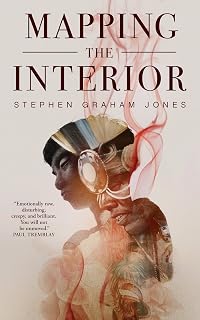
Mapping the Interior
by Stephen Graham Jones
On This Page
Description
Walking through his own house at night, a fifteen-year-old thinks he sees another person stepping through a doorway. Instead of the people who could be there, his mother or his brother, the figure reminds him of his long-gone father, who died mysteriously before his family left the reservation. When he follows it he discovers his house is bigger and deeper than he knew. The house is the kind of wrong place where you can lose yourself and find things you'd rather not have. Over the course of show more a few nights, the boy tries to map out his house in an effort that puts his little brother in the worst danger, and puts him in the position to save them ... at terrible cost. show lessTags
Recommendations
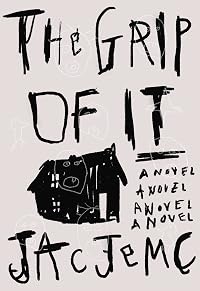
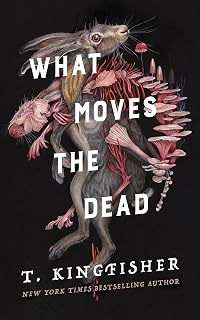
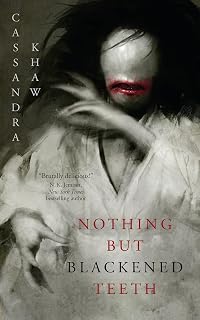
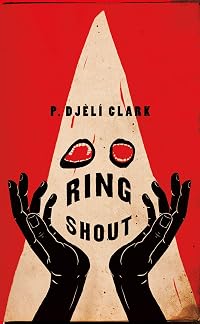



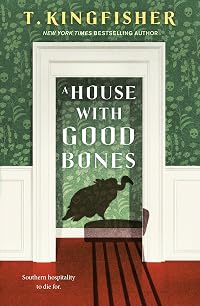
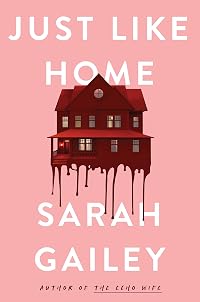
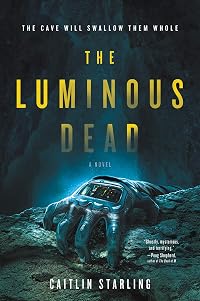
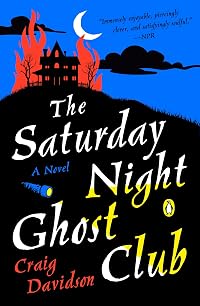

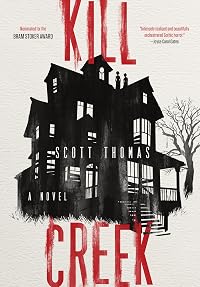
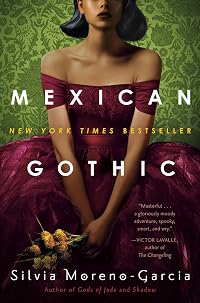
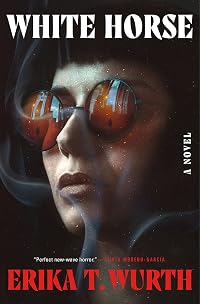
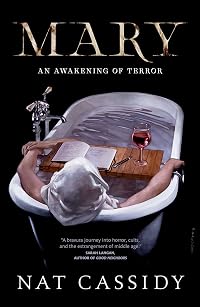
Member Recommendations

Member Reviews
**Review – *Mapping the Interior* by Stephen Graham Jones**
I’m landing at a 4 out of 5 for this novella, though interestingly, it’s the kind of story that lingers more as a feeling than as a series of clear plot points. I remember liking it, and sitting with it again, I think I understand why.
At its core, this isn’t just a ghost story. It’s a story about inheritance—what gets passed down whether you want it or not. Jones uses the supernatural element not as spectacle, but as a framework to explore identity, especially what it means to grow up Indigenous and male in a world that already has expectations for you.
The father figure—absent, not dead—is crucial. His presence is felt more as a gravitational pull than a show more character. The haunting, then, reads less like an external threat and more like something internalized. The boy isn’t just encountering something outside himself; he’s confronting what he might become. That gives the story an inevitability that feels unsettling in a quiet, creeping way.
This is where the novella connects strongly to Jones’s broader work, especially *Mongrels*. There’s the same question underneath both: can you change who you are, or are you always moving toward something already set in motion? In *Mapping the Interior*, that question is stripped down and made more intimate.
What worked best for me was the sense of atmosphere and psychological pressure. The house, the darkness, the layering of memory and fear—it all builds a kind of enclosed space where the character has to face himself. It’s not loud horror. It’s slow, inward, and uneasy.
If I have a hesitation, it’s that the story is so focused on theme and mood that it can feel a bit slight in terms of narrative momentum. It’s less about what happens and more about what it means. That works, but it also makes it a story that doesn’t always leave behind clear anchors in memory.
Still, the ideas are strong, and the emotional core holds. It’s a novella that rewards thinking about it afterward, even if the details blur.
Overall, this is a thoughtful, quiet piece of horror that uses its supernatural elements to explore identity, inheritance, and the difficulty of escaping what shapes you. show less
I’m landing at a 4 out of 5 for this novella, though interestingly, it’s the kind of story that lingers more as a feeling than as a series of clear plot points. I remember liking it, and sitting with it again, I think I understand why.
At its core, this isn’t just a ghost story. It’s a story about inheritance—what gets passed down whether you want it or not. Jones uses the supernatural element not as spectacle, but as a framework to explore identity, especially what it means to grow up Indigenous and male in a world that already has expectations for you.
The father figure—absent, not dead—is crucial. His presence is felt more as a gravitational pull than a show more character. The haunting, then, reads less like an external threat and more like something internalized. The boy isn’t just encountering something outside himself; he’s confronting what he might become. That gives the story an inevitability that feels unsettling in a quiet, creeping way.
This is where the novella connects strongly to Jones’s broader work, especially *Mongrels*. There’s the same question underneath both: can you change who you are, or are you always moving toward something already set in motion? In *Mapping the Interior*, that question is stripped down and made more intimate.
What worked best for me was the sense of atmosphere and psychological pressure. The house, the darkness, the layering of memory and fear—it all builds a kind of enclosed space where the character has to face himself. It’s not loud horror. It’s slow, inward, and uneasy.
If I have a hesitation, it’s that the story is so focused on theme and mood that it can feel a bit slight in terms of narrative momentum. It’s less about what happens and more about what it means. That works, but it also makes it a story that doesn’t always leave behind clear anchors in memory.
Still, the ideas are strong, and the emotional core holds. It’s a novella that rewards thinking about it afterward, even if the details blur.
Overall, this is a thoughtful, quiet piece of horror that uses its supernatural elements to explore identity, inheritance, and the difficulty of escaping what shapes you. show less
The pain is very real in this book. It twists reality very quickly making the reader, who thinks they know what is going on, reevaluate everything that has gone before.
The ups and downs in this story were huge. I really did not expect that ending. My preconceived notions are showing through on this one. Sigh, I am disappointed in myself on that account.
The dark cyclical nature of the story tells a horrible truth about the culture that has been forced upon Native Americans. A disruption of their own culture that has not been able to grow and change as others have around them. It is also a sad reflection of how the loss of a father figure reverberates through generations.
He does all this so well in so few pages.
Even though I gave the show more book 4 stars I am not sure how I feel about the book. It was very unsettling. One that I am sure I will recommend to others because of that.
Whether you like this book or not you will remember it and discuss it. show less
The ups and downs in this story were huge. I really did not expect that ending. My preconceived notions are showing through on this one. Sigh, I am disappointed in myself on that account.
The dark cyclical nature of the story tells a horrible truth about the culture that has been forced upon Native Americans. A disruption of their own culture that has not been able to grow and change as others have around them. It is also a sad reflection of how the loss of a father figure reverberates through generations.
He does all this so well in so few pages.
Even though I gave the show more book 4 stars I am not sure how I feel about the book. It was very unsettling. One that I am sure I will recommend to others because of that.
Whether you like this book or not you will remember it and discuss it. show less
My third book by [[Stephen Graham Jones]], and he continues to impress. Basically, a modern day ghost story, but set in and around the Rez. Jones' ability to translate communicate universal narratives set in a place often overlooked is rare. Junior's father, a brutal and mercurial figure in life, returns to haunt Junior. Desperate to connect, Junior does his best to interact with the ghost until he realizes the specter is feeding on his little brother, a fairly plan if disturbing metaphor. As with Jones' others, the book is raw disturbing - a sort of Denis Johnson meets Poe on a dark corner of the Rez. I'll keep coming back for everything this guy writes.
Highly recommended!
5 bones!!!!!
Highly recommended!
5 bones!!!!!
Very, very high quality coming of age story, in my opinion. And one that is perfect for people of the age it is written about, due to the length.
I love Stephen Graham Jones. I love everything about his style, the genre he has been defining recently, and the culture he has captured. I read his work My Heart is A Chainsaw in college for a class, and have recently been interested in getting back into his stuff.
This one hits for a few reasons.
I love stories of young children acting like young children. His level of maturity is not absurdly unbelievable. He has had to grow up faster due to the death of his dad, but is still a child. He is realistic. Because, what twelve year old child wouldn't be terrified if dogs attacked him? That scene show more got me as the best in the book, and it could have easily turned into some crazy standing up to the evil dogs thing, but it didn't.
I also love the duality of his opinion of his father. He sees him admirably in the beginning, with an ere of sadness at not only his death, but the sad life he lived. As we move through, and come to understand what the ghost of his father is doing to his brother, he doesn't have some yearning for the past he never got. Instead, he has a hatred for the thing that is killing his brother.
The ending is good and bad for me. The idea of mapping out the house comes back, which I love. But the dream state where he watches the death of his father from an adults POV is odd, and I had some trouble following it.
Great book, and at only 96 pages, a fantastic one-afternoon read for me.
The Only Good Indians and Don't Fear the Reaper have been amazoned, and are in the TBR. show less
I love Stephen Graham Jones. I love everything about his style, the genre he has been defining recently, and the culture he has captured. I read his work My Heart is A Chainsaw in college for a class, and have recently been interested in getting back into his stuff.
This one hits for a few reasons.
I love stories of young children acting like young children. His level of maturity is not absurdly unbelievable. He has had to grow up faster due to the death of his dad, but is still a child. He is realistic. Because, what twelve year old child wouldn't be terrified if dogs attacked him? That scene show more got me as the best in the book, and it could have easily turned into some crazy standing up to the evil dogs thing, but it didn't.
I also love the duality of his opinion of his father. He sees him admirably in the beginning, with an ere of sadness at not only his death, but the sad life he lived. As we move through, and come to understand what the ghost of his father is doing to his brother, he doesn't have some yearning for the past he never got. Instead, he has a hatred for the thing that is killing his brother.
The ending is good and bad for me. The idea of mapping out the house comes back, which I love. But the dream state where he watches the death of his father from an adults POV is odd, and I had some trouble following it.
Great book, and at only 96 pages, a fantastic one-afternoon read for me.
The Only Good Indians and Don't Fear the Reaper have been amazoned, and are in the TBR. show less
What an unsettling story. This novella walks the edge between waking and dreaming, with enough in reality to make the horror feel disturbingly close. It’s eerie and gory, built on disorientation and dread. The line between what happens and what feels like it happens is blurred. The ambiguity works, the horror lingers. I wasn’t fully glued to the page, but the atmosphere was thick and compelling enough to keep me reading. There’s a lot packed into this short read: grief, memory, haunting, and legacy. It’s a dreamlike narrative that made me uncertain and uneasy. It did its job, I finished it feeling unsettled and confused, which might just be the point.
Thanks to NetGalley and Tor Nightfire for access to this re-release.
Thanks to NetGalley and Tor Nightfire for access to this re-release.
Objectively, I knew this was an amazing novella. It was super compelling, never felt like it was rushing, and truly shocked me a few times. The language and pacing was perfect. I was completely immersed in the story, and I never felt like it was too short or long.
But.
Horror is really not my thing, and whoa boy did this novella make me realize that. I knew it was brilliant. I just could not really like it. It was horrifying, and horrible. And the ending was so awfully horrific to contemplate that I was left reeling and shocked.
Horror fans would love this one, I think. Unfortunately, it wasn't for me.
But.
Horror is really not my thing, and whoa boy did this novella make me realize that. I knew it was brilliant. I just could not really like it. It was horrifying, and horrible. And the ending was so awfully horrific to contemplate that I was left reeling and shocked.
Horror fans would love this one, I think. Unfortunately, it wasn't for me.
One night, a young Native American boy sees his dead father in their house, in full dance regalia. As the boy keeps watch for his father over subsequent nights, he comes to realize that his father's spirit is not benevolent. This was a beautifully written novella, almost like a long prose poem, that combines fantastic imagery with subtle but chilling horror. The ending genuinely shocked me.
Members
- Recently Added By
Lists

Lithub: The 50 Best Contemporary Novels Under 200 Pages
50 works; 4 members

Diverse Horror
262 works; 6 members

Novels featuring Fathers
56 works; 7 members

mstrust's scary list
34 works; 1 member

Books Read in 2017
4,249 works; 130 members

2018 Hugo Eligible Novellas
33 works; 9 members

Bram Stoker Award
238 works; 5 members

Best of Native American Literature
11 works; 2 members
Author Information

103+ Works 15,141 Members
Stephen Graham Jones is the acclaimed author of All the Beautiful Sinners, The Bird Is Gone: A Manifesto, The Fast Red Road - A Plainsong, and is an Associate Professor of English at Texas Tech University.
Awards and Honors
Awards
Common Knowledge
- Original publication date
- 2017-06-20
- People/Characters
- Junior; Dino; Mom; Dad
- Dedication
- For Kelly O'Connor: thank you
- First words
- I was twelve the first time I saw my dead father cross from the kitchen doorway to the hall that led back to the utility room.
It was 2:49 in the morning, as near as I could reconstruct.
I was standing alongside the dus... (show all)ty curtain pulled across the front window of the living room. I wasn't standing there on purpose. I was only in my underwear. No lights were on. - Last words
- (Click to show. Warning: May contain spoilers.)For him, for Collin, I'll walk in and pull the door shut behind me, never come back out.
- Blurbers
- Tremblay, Paul; Kadrey, Richard
- Original language
- English
- Canonical DDC/MDS
- 813.54
- Canonical LCC
- PS3560.O5395
Classifications
Statistics
- Members
- 899
- Popularity
- 29,991
- Reviews
- 39
- Rating
- (3.75)
- Languages
- English, Polish, Turkish
- Media
- Paper, Audiobook, Ebook
- ISBNs
- 7
- ASINs
- 3