
The Ebony Tower
by John Fowles
On This Page
Description
The Ebony Tower, comprising a novella, three stories, and a translation of a medieval French tale, echoes themes from John Fowles's internationally celebrated novels as it probes the fitful relations between love and hate, pleasure and pain, fantasy and reality.Tags
Recommendations























Member Reviews
This is a collection of four inventive stories, one of which is a translation of a madieval French ballad called "Eliduc", and one kind-of misfire built around its own little fairytale. Fowles indulges in light versions of his typical existentialist poststructuralism,unsettling the text for ultimately moral rather thanartisic reasons, but if you're sympathetic to his project like I am it works. And certainly it entertains, and touches the heart. Perhaps in my current straits I was expecting too much from a series of stories in which noble but hapless protagonists leave their lives, which range from mostly worthless to beautiful and fulfilling, to enter enchanted realms, in one case scary and unpleasantly social-realist (although I'm show more really beginning to appreciate that dash of cold water in retrospect, in a book where literally every other character uses "one" so liberally, not only to mean "myself or someone of my social milieu", as in "Well of course one has friends with places abroad", but also simply to mean "me, explicitly", like "one does have two daughters as well." Fowles is the one with the cred in this case, of course, but till now I've only encountered the latter usage as parody in Gail Simone comics).
In the other stories, though, the worlds entered are enchanting and sexy, and the struggle between two kinds of joy and figuring out which is ephemeral, and how ephemeral, is a perennially good study for the human male. But Fowles just . . . I don't know, creeps it up with all this "gigantic (enervated) melancholies and gigantic (troglodytic) mirths of the middle-class English iconoclast" stuff. Sub-DH Lawrence, painfully, awkwardly unrepressed and gropily sexual, no doubt coming across as erotic tiger sharks in their milieu of foxhunty reserve, where the number one rule is "repress not express" - but to the reader in 2009, or even 1980 you'd expect, the endlessly, idiotically available female bits ("o' nice") in the service of overcoming male samurai repression is just so weirdly cryptoporny . . . like, David is driving up to the secluded country house, and you're all "okay, where are the exotic, free and brown, but still properly English girls, and when are they going to come out and get naked and be made faint by his potency?" And then when he arrives they're already naked.
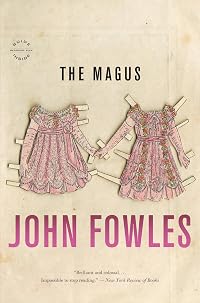
I mean, this stuff was probably needed in the mid-'60s when The Magus was published, and certainly you can't fault Fowles for getting caught up in the spirit of the times. But it has not aged well, and if Mantissa was the author in self-parody and well aware of his past and rep, this appears to be self-parody unintentional and unaware. And it makes you think that the Summer-of-Love era could never have been as good as you (I) always want to imagine it was - that all that sex could not have been all that freeing if it was practiced on these unequal terms. And then you think of your students the other day, giggling away at the rape imagery in "Goblin Market" (which gets almost "take it, bitch" at times, and is an amazing work, thank you Mrs. Rossetti), and you think, Wow, maybe it's just in the nature of gender relations that free love can never be equal and love between equals can never be free. show less
In the other stories, though, the worlds entered are enchanting and sexy, and the struggle between two kinds of joy and figuring out which is ephemeral, and how ephemeral, is a perennially good study for the human male. But Fowles just . . . I don't know, creeps it up with all this "gigantic (enervated) melancholies and gigantic (troglodytic) mirths of the middle-class English iconoclast" stuff. Sub-DH Lawrence, painfully, awkwardly unrepressed and gropily sexual, no doubt coming across as erotic tiger sharks in their milieu of foxhunty reserve, where the number one rule is "repress not express" - but to the reader in 2009, or even 1980 you'd expect, the endlessly, idiotically available female bits ("o' nice") in the service of overcoming male samurai repression is just so weirdly cryptoporny . . . like, David is driving up to the secluded country house, and you're all "okay, where are the exotic, free and brown, but still properly English girls, and when are they going to come out and get naked and be made faint by his potency?" And then when he arrives they're already naked.
I mean, this stuff was probably needed in the mid-'60s when The Magus was published, and certainly you can't fault Fowles for getting caught up in the spirit of the times. But it has not aged well, and if Mantissa was the author in self-parody and well aware of his past and rep, this appears to be self-parody unintentional and unaware. And it makes you think that the Summer-of-Love era could never have been as good as you (I) always want to imagine it was - that all that sex could not have been all that freeing if it was practiced on these unequal terms. And then you think of your students the other day, giggling away at the rape imagery in "Goblin Market" (which gets almost "take it, bitch" at times, and is an amazing work, thank you Mrs. Rossetti), and you think, Wow, maybe it's just in the nature of gender relations that free love can never be equal and love between equals can never be free. show less
I really enjoyed this collection of short stories and a novella, each bearing a meta-literary element or theme; the writer's mythology of writing makes an appearance.
The Ebony Tower
Henry Breasley is an elderly painter whose secluded retirement is invaded by the narrater David, commissioned to write a biographical study. The writer at work sees that Breasley shares his home with two young English girls, both former art students, one of them reading The Magus. David is left in no doubt about his host's views on modern abstract art and both puzzled and scintillated by the old man's relationship with the girls, especially when he himself is attracted to Diana.
Eliduc
A translation of a Breton lai by Marie de France with explanatory show more footnotes. Fowles the writer explores an ancient genre from the inside. In finding lust away from home, it mirrors David's plight in the title piece.
Poor Koko
An elderly writer has borrowed a country cottage from friends in London. On the first night of his stay, the house is burgled, but the burglar exactly a needlessly cruel price that hurts the writer as a writer.
The Enigma
John Fielding, British Member of Parliament, disappears without trace. Was foul play involved, or did he fake his own disappearance? The police officer in charge finds the most intriguing theories from a woman that suggests an analogy of a universe where a writer is constructing the plot he is attempting to unravel. This puts the officer in Kafka-esque existential despair.
The Cloud
A picnic in the south of France for an English family is a psychological diorama for deeper, troubled undercurrents. Mythologies and the idea of imperfect symbols and thus communication is brought forward. The technique of jaded adults conjuring fairy tales for children recalls to me "A Perfect Day for Bananafish". show less
The Ebony Tower
Henry Breasley is an elderly painter whose secluded retirement is invaded by the narrater David, commissioned to write a biographical study. The writer at work sees that Breasley shares his home with two young English girls, both former art students, one of them reading The Magus. David is left in no doubt about his host's views on modern abstract art and both puzzled and scintillated by the old man's relationship with the girls, especially when he himself is attracted to Diana.
Eliduc
A translation of a Breton lai by Marie de France with explanatory show more footnotes. Fowles the writer explores an ancient genre from the inside. In finding lust away from home, it mirrors David's plight in the title piece.
Poor Koko
An elderly writer has borrowed a country cottage from friends in London. On the first night of his stay, the house is burgled, but the burglar exactly a needlessly cruel price that hurts the writer as a writer.
The Enigma
John Fielding, British Member of Parliament, disappears without trace. Was foul play involved, or did he fake his own disappearance? The police officer in charge finds the most intriguing theories from a woman that suggests an analogy of a universe where a writer is constructing the plot he is attempting to unravel. This puts the officer in Kafka-esque existential despair.
The Cloud
A picnic in the south of France for an English family is a psychological diorama for deeper, troubled undercurrents. Mythologies and the idea of imperfect symbols and thus communication is brought forward. The technique of jaded adults conjuring fairy tales for children recalls to me "A Perfect Day for Bananafish". show less
It seems some writers are better at writing novels, while some excel at writing short stories. John Fowles seems to belong to the former category. I think The ebony tower is his only book of short stories, together just 300 pages. These stories are apparently interconnected, but not to the extent that they form a novel. I didn't enjoy reading these stories very much as they seem to esoteric. Like some of his aother work, particularly A maggot and Mantissa these stories have a strong streak of the 1960s - 70s flower power and hippie culture, especially the title story " The ebony tower" with its apparent focus on free sex and unconventional relationships. The other stories did not interest me.
Fowles writes very elegant prose. His descriptions are beautiful. How sad that his stories don't go anywhere.
Excellent. All of the stories are good. The title novella is wonderful.
The final story, The Cloud, is dripping with atmosphere, a short story that drips like Keats' To Autumn. But it is so nuanced (obscure?) in some of its telling that I am not sure that I fully understand what has transpired. It deserves another slow reading.
The final story, The Cloud, is dripping with atmosphere, a short story that drips like Keats' To Autumn. But it is so nuanced (obscure?) in some of its telling that I am not sure that I fully understand what has transpired. It deserves another slow reading.
This is a collection of short stories. The use of language is fantastic! The stories are not related and cover a range of themes, from socio-political divides between old & young generations, the meaning of art, the controversy between abstract v. representational art, honor, love, and more. In each story, Fowles verbally paints exquisite settings, tells enigmatic tales which stimulate the reader's intellect and emotions. Five stories, five fabulous literary gems!
1952 The Ebony Tower, by John Fowles (read 2 Nov 1985) This is a collection of five short stories. The first, and title story, is obnoxious, so filled with scatological and vulgar language, interspersed with much technical language on painting, I nearly quit reading it. It tells of a young painter who goes to visit an old painter who lives in France with two young English women. I hated it, even though the "I" (the young painter) remains technically not an adulterer, and the ending wasn't too bad, though arty and up in the air. The story "Eliduc" is a rendering of a supposed medieval story, which had no interest for me. The third story, "Poor Koko" is an exceptionally well-written story of a guy who is the victim of a burglary-robbery: show more though the criminal is not the kind of criminal I ever see. The fourth story, The Enigma, tells of the disappearance of a proper Tory member of parliament in 1973--fictional, but very well done. The disappearance is of course never solved--in modern fiction such as Fowles writes the ends are never tied up as they were in the juvenile fiction I so loved when I was a kid. The fifth story, The Cloud, is superbly written and tells of a bizarre picnic by English picnickers in central France--three kids, five adults--and I presume involves suicide of a widowed young woman--but that is not clear either. Fowles can certainly write, but I wish he'd put his talent to better use. show less
Members
- Recently Added By
Lists

20th Century Literature
1,161 works; 55 members

School Made Us Read It
380 works; 196 members
Author Information

62+ Works 26,141 Members
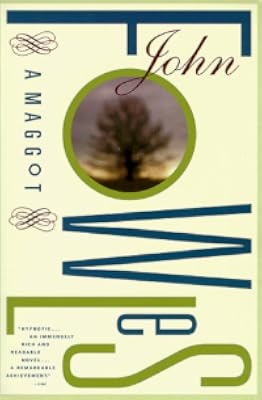
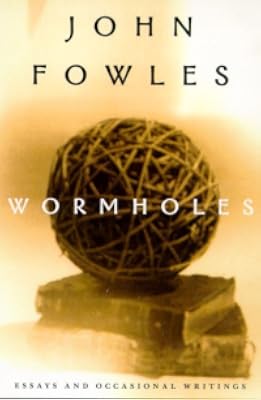
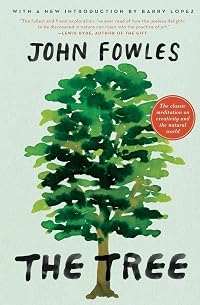
John Fowles was born in Essex, England, in 1926. He attended the University of Edinburgh for a short time, left to serve in the Royal Marines, and then returned to school at Oxford University, where he received a B.A. in French in 1950. Fowles taught English in France and Greece, as well as at St. Godric's College in London. Although the main show more theme in all Fowles's fiction is freedom, there are few other similarities in his books. He has deliberately chosen to explore a different style or genre for each novel: The Collector, his first novel, is an intellectual thriller; The Magus is an adolescent learning novel, tracing the emotional development of the central character; Daniel Martin tries, in the modernist style, to depict psychological reality; Mantissa is a comedic allegory that takes place entirely inside the narrator's head; Maggot combines mystery, science fiction, and history; and The Ebony Tower is a collection of short stories. Fowles explored yet another genre, historical fiction, with his best-known novel, The French Lieutenant's Woman, which received the W. H. Smith Literary Award in 1970 and was made into a movie, starring Meryl Streep and Jeremy Irons, in 1981. An intriguing feature of this novel is that it has three different endings. Fowles's nonfiction includes Aristos: A Self Portrait in Ideas; Poems; and Wormholes: Essays and Other Occasional Writings. In addition, he has written the text for several books of photographs, including The Tree, for which Fowles received the Christopher Award in 1982. He died on November 5, 2005 at the age of 79. (Bowker Author Biography) show less
Some Editions
Awards and Honors
Distinctions
Notable Lists
Series
Belongs to Publisher Series
Work Relationships
Common Knowledge
- Canonical title
- The Ebony Tower
- Original title
- The ebony tower
- Original publication date
- 1974
- Important places*
- Bretagne, Frankrijk
- Related movies
- Great Performances: The Ebony Tower (1984 | IMDb)
- First words
- David arrived at Coëtminais the afternoon after the one he had landed at Cherbourg and driven down to Avranches, where he had spent the intervening Tuesday night.
- Quotations*
- ...Et pour forez longues et lees
Par leus estranges et sauvages
Et passa mainz felons passages
Et maint peril et maint destroit
Tant qu'il vint au santier tot droit...
[Chrétien de Troyes, Yvain] - Last words
- (Click to show. Warning: May contain spoilers.)The princess calls, but there is no one, now, to hear her.
- Original language*
- Engels
- Disambiguation notice*
- Dutch: Verhalenbundel (1976). A.u.b. niet combineren met de gelijknamige novelle (1985).
Dutch: Novelle (1985). A.u.b. niet combineren met de verhalenbundel met dezelfde titel.
*Some information comes from Common Knowledge in other languages. Click "Edit" for more information.
Classifications
Statistics
- Members
- 1,345
- Popularity
- 17,838
- Reviews
- 11
- Rating
- (3.47)
- Languages
- 18 — Danish, Dutch, English, Estonian, Finnish, French, German, Italian, Japanese, Lithuanian, Norwegian (Bokmål), Polish, Romanian, Russian, Croatian, Spanish, Swedish, Turkish
- Media
- Paper, Audiobook, Ebook
- ISBNs
- 50
- ASINs
- 26