The Land of Green Ginger
by Winifred Holtby
On This Page
Description
Joanna Burton was born in South Africa but sent by her missionary father to be raised in Yorkshire. There she dreams of the far-off lands she will visit and adventures to come. At eighteen, tall and flaxen-haired, she meets Teddy Leigh, a young man on his way to the trenches of the First World War. Joanna has been in love before - with Sir Walter Raleigh, with the Scarlet Pimpernel, with Coriolanus - but this is different. Teddy tells her he's been given the world to wear as a golden ball. show more Joanna believes him and marries him, but the fabled shores recede into the distance when, after the war, Teddy returns in ill health. The magic land turns out to be the harsh reality of motherhood and life on a Yorkshire farm. Yet still she dares to dream. show lessTags
Recommendations











Member Reviews
Published first in 1928 and republished by Virago and others more recently, Winifred Holtby offers the rushing, leaping, uneven tale of a young woman, Joanna, who enters marriage to a man, Teddy Leigh, whom she hardly knows who then goes as a soldier to fight in WW1. He returns shattered. Even though they have spent scant time together, she has had two children, one from each encounter (honeymoon, and a gunnery course). In another time and life, it would have been a good strong marriage as they do love each other and are well-suited, but this is not to be. The Leighs are advised to use his pension to set up on a farm as it will not be possible for him to enter the clergy as he had wished. Although Joanna is a tall, strong, essentially show more capable and cheerful woman with a dreamy nature, and it takes her the course of the novel to wake up to the realities of her situation, its dreadfulness. Neither of them are suited to the farming life, especially her husband, who is simply not strong enough and not engaged by the life. There is so much to admire in the writing - capturing the essence of a life that is spinning out of control, while the person in the center of the turmoil, caught in the details of daily life, has no idea of the larger picture. Joanna's optimism is offset by her husband's frantic misery at his helplessness, his seeking for solace from religion (ultimately a weak part of the book, unconvincing) and the anger of their lodger, Paul Szermai a bitter young Hungarian aristocrat who has lost everything in the war and alternately loathes and is attracted to Joanna. The deeper theme of the book is exploration of just what a woman's role and responsibilities are to children, husband, family life - where the expectations lead to assumptions internalized and unconscious, where public opinion can be relentless and judgmental, harsher against women than men. This is where the strongest writing emerges. Here is her husband, Teddy ".... he had always regarded Joanna as a devoted mother, cherishing a thought common to many men that mothers possessed a standard of values unknown to husbands and spinsters which made the presence of their children essential to their happiness, even if it involved continual work and supervision. He was just a trifle shocked at Joanna's manifest delight in the prospect of a period of less work instead of more maternity." At another point Joanna realizes that much of her sense of loneliness arises out of her constant need to edit her thoughts, to please others, not herself. This is repeated a couple of times during the story in slightly different ways: "When a woman married, was she always having to consider people ever after?" "Is nobody ever really able to say what they think?" A secondary theme is about differences of temperament, how some live in their imaginations and others feel most alive when out and about doing things - Joanna is the former and her husband, the latter, so being ill is disastrous for him. Ultimately, the realities overwhelm Joanna, and her fantasies are stripped away. "Who spoke of motherhood as joyous?" she wonders as her daughter, suffering from pleurisy undergoes a harrowing operation. "She saw eternity in an unending stream of birth and of begetting; she saw humanity at odds with life and captive to it..... " Finally Joanna comes to a resolution, but with that resolution and acceptance quite suddenly, she can see what she should do, and mature and confident she moves towards a new life. ***1/2
It may well deserve four stars, but there was something choppy about it..... nonetheless it's a very good book. show less
It may well deserve four stars, but there was something choppy about it..... nonetheless it's a very good book. show less
Joanna Burton was born in South Africa but raised in Yorkshire, and as a young woman had dreams of traveling around the world. But then she fell in love with Teddy Leigh, and married in haste because of the war. When Teddy returned, she realized how little she knew of him and came to understand the life that awaited her. Teddy was in poor health, and unable to follow his early dream to become a minister. The couple had a small farm but were not successful farmers. They could barely provide for themselves and their two daughters.
When a group of eastern European laborers establish a camp on the outskirts of their village, Joanna and Teddy befriend one of their leaders, Paul Szermai. They offer him lodging in their home as a way to bring show more in extra income. Paul's presence is welcome at first, but then causes a rift between Joanna and Teddy. Joanna tries to meet the needs of Teddy, her daughters, and Paul, as well as keep up with the farm and household chores, but it all proves a bit much. She imagines correspondence with old school friends, who have long since stopped sending letters:
She used at first to write long letters to her friends, Agnes Darlington and Rachel Harris. But as the chickens increased and the prosperity of the farm decreased, she had less and less time somehow to answer letters. Therefore the letters which she never answered dwindled and dwindled. She seemed utterly removed from the world she had known before her marriage. (p. 38)
Winifred Holtby paints a portrait of Yorkshire village life, with a rich cast of characters from all classes. She shows the stark economic divide between the upper and lower classes, sometimes by describing them directly and sometimes through witty descriptions of a scene:
The passengers on the crowded tender living Tilbury dock buttoned their coats tightly against the keen October air. Third- and first-class passengers, huddled together, regarded each other with the suspicion that precedes the separation of sheep from goats by the unequivocal barrier of a steel railing.
Holtby also depicts most of the villagers as small-minded and cruel. Rumors about Joanna and Paul abound, especially after Teddy insists they attend a dance together when he is not well enough to go. And even though there is a scene, Joanna still doesn't quite grasp how she is perceived by others. When Joanna is finally forced to face the reality of her situation she says to herself, "Bidgood had been right. It was not the truth but people's idea of the truth which made it possible for one to live in society."
Circumstances force Joanna into a dramatic decision, but one left me hopeful that she would one day realize the dreams of her youth. show less
When a group of eastern European laborers establish a camp on the outskirts of their village, Joanna and Teddy befriend one of their leaders, Paul Szermai. They offer him lodging in their home as a way to bring show more in extra income. Paul's presence is welcome at first, but then causes a rift between Joanna and Teddy. Joanna tries to meet the needs of Teddy, her daughters, and Paul, as well as keep up with the farm and household chores, but it all proves a bit much. She imagines correspondence with old school friends, who have long since stopped sending letters:
She used at first to write long letters to her friends, Agnes Darlington and Rachel Harris. But as the chickens increased and the prosperity of the farm decreased, she had less and less time somehow to answer letters. Therefore the letters which she never answered dwindled and dwindled. She seemed utterly removed from the world she had known before her marriage. (p. 38)
Winifred Holtby paints a portrait of Yorkshire village life, with a rich cast of characters from all classes. She shows the stark economic divide between the upper and lower classes, sometimes by describing them directly and sometimes through witty descriptions of a scene:
The passengers on the crowded tender living Tilbury dock buttoned their coats tightly against the keen October air. Third- and first-class passengers, huddled together, regarded each other with the suspicion that precedes the separation of sheep from goats by the unequivocal barrier of a steel railing.
Holtby also depicts most of the villagers as small-minded and cruel. Rumors about Joanna and Paul abound, especially after Teddy insists they attend a dance together when he is not well enough to go. And even though there is a scene, Joanna still doesn't quite grasp how she is perceived by others. When Joanna is finally forced to face the reality of her situation she says to herself, "Bidgood had been right. It was not the truth but people's idea of the truth which made it possible for one to live in society."
Circumstances force Joanna into a dramatic decision, but one left me hopeful that she would one day realize the dreams of her youth. show less
Born in Africa to English parents, Joanna grows up back in England. During WWI, she meets Teddy, a young man with tuberculosis (although she doesn’t know it at the time). They settle down on a farm in Yorkshire with their two daughters. A group of Eastern European workers move into town, including a young interpreter from Hungary who Joanna befriends. Their friendship is the start of her troubles with Teddy, and eventually leads to tragedy.
This is a very powerful, strongly emotional novel (without going overboard). Despite the fact that Teddy is an invalid, it’s nearly impossible for the reader to like or sympathize with him; he constantly feels sorry for himself. Joanna is high-spirited, and this is also what causes a rift between show more the two of them. Joanna doesn’t fit in with her English neighbors, so it’s only natural that she develops a friendship with Paul, another outsider. I love how Winifred Holtby is able to communicate all of this without explicitly saying it out loud. What I like about Holtby’s novels is that they’re free of histrionics. But the emotion is there, right under the surface. The ending of this book is supposed to be happy and uplifting, but it left me feeling a bit sad, too. show less
This is a very powerful, strongly emotional novel (without going overboard). Despite the fact that Teddy is an invalid, it’s nearly impossible for the reader to like or sympathize with him; he constantly feels sorry for himself. Joanna is high-spirited, and this is also what causes a rift between show more the two of them. Joanna doesn’t fit in with her English neighbors, so it’s only natural that she develops a friendship with Paul, another outsider. I love how Winifred Holtby is able to communicate all of this without explicitly saying it out loud. What I like about Holtby’s novels is that they’re free of histrionics. But the emotion is there, right under the surface. The ending of this book is supposed to be happy and uplifting, but it left me feeling a bit sad, too. show less
I have loved Winifred Holtby’s novels and stories – and so I have saved the one novel I had of hers to read for about three years. On reflection that may have been a mistake – don’t misunderstand me – I did like The Land of Green Ginger – there is plenty to admire in it – but it isn’t her best work –and I perhaps had built it up rather in my mind saving it like I did.
Winifred Holtby’s most famous novel – and undoubtedly her best was of course South Riding, a novel I shall re-read one day, it is brilliant. South Riding was the novel Holtby poured her all into when she knew she didn’t have long to live, that intensity of purpose pours off the pages of that novel. If you only ever read one Holtby novel, make sure it show more is South Riding. The Land of Green Ginger was written earlier in 1927, and to me it certainly reads like a slightly less mature work. What wonders we might have had from her had she not died so tragically young in 1935 – we shall never know.
land of green gingerI was particularly delighted to discover that The Land of Gree Ginger is a real place – a tiny street in the old town area of Kingston upon Hull.
Joanna Burton was born in South Africa, though following her mother’s death she is sent to England, Yorkshire to be raised by a couple of spinster aunts. Here, Joanna lives very much in her head – dreaming of far of places, and the adventures she would have if she were to visit them. One day just before Christmas when Joanna is eight, she walks through the streets of Kingsport with her aunts looking for Commercial Lane; they come upon The Land of Green Ginger, a dark, narrow little street, one turn before the one they seek. Joanna is captivated by the name.
“To be offered such gifts of fortune, to seek Commercial Lane and to find – the day before Christmas Eve and by lamplight too – The Land of Green Ginger, dark, narrow, mysterious road to Heaven, to Fairy Land, to anywhere, anywhere, even to South Africa, which was the goal of all men’s longing, the place where Father lived in a rondavel, the place…
Her aunts were moving away. Relentlessly, majestically, with skirts well lifted from the muddy road, and firm boots laced against the slithery grease of the pavement, they moved forward.”
At school she meets two girls of a likeminded adventurous spirit, Agnes and Rachel. Together they dream of the places they will go, the things they will see. However life seldom goes exactly as we think it will, and while the suffragette cause turns Rachel’s head – Joanna has her eighteen year old head turned by a handsome young man who tells her he has been given the world to wear as a golden ball. Teddy Leigh plays right into Joanna’s romantic imagination. The First World War has started however, and despite Teddy’s medical history of TB he is passed fit- and heads off to the trenches. During the years of WW1 Joanna becomes a mother to Patricia and Pamela and despite the realities of motherhood during wartime, still Joanna dreams.
When Teddy returns from the war – his lungs are further damaged, and despite having once wanted the life of a clergyman – he settles for life as a farmer – a role no one really believes he is fit for. The romance in Teddy that had won Joanna’s heart has been killed by the war, and the necessity of living on a farm. Joanna’s reality is a harsh one, a sick husband, two young children a farm to run, still Joanna’s imaginative mind can see fun and adventure in all things. Times are hard, money is scare and Joanna fears her eldest daughter may have inherited Teddy’s consumptive lungs. She is an unconventional housewife, effervescent and optimistic – I couldn’t help but love Joanna.
“It was no good. The time would come when all that Joanna wanted to do was to sail away, either alone or with a real friend, whose feelings she did not have to consider at all. She wanted to open her port-hole one morning and see against the sky the faint outline of an island, iridescent as a bubble on the grey water. She wanted to lean out above tossing blue-green waves and catch the end of a string thrown to her by dark, smiling men, and haul up from baskets bananas pulled that morning on the green island. She wanted to climb terraces, frothing over with purple bougainvillea and splashed with scarlet hibiscus, and scented with magnolia.”
Teddy and Joanna struggle to fit themselves into their local society – geographically a little removed from the village – they also fall somewhere between the gentry and the working people of the village.
The local gentry – with whom Joanna and Teddy enjoy a glorious evening, decide to use their influence to help the couple who they can see are struggling. Nearby is a camp of refugees – Czechs, Hungarians, Romanians who have caused some disquiet already among the locals – but when Sir Wentworth Marshall suggests that the camp’s Hungarian interpreter goes to the Leigh farm as a paying guest – Joanna jumps at the chance – after all his rent will be invaluable. Joanna and her daughters had already caught a glimpse of Paul Szermai – who Joanna privately calls Tam Lin – once more weaving fairy tales around the everyday. Paul Szermai – embittered, Cambridge educated like Teddy – is another man damaged by war – he comes to spend greater amounts of time with Joanna – and tells her his story of the war years – stories filled with rebels, revolution and his one lost love that haunts him.
“Their language was an old wild language. They had known incredible loves and dark adventures and the twisted streets of alien cities. They had known the green breaking waves of the sea, and the green aisles of the silent forests. They had known war and death and fierce, cruel elation.”
As Teddy’s health worsens – Joanna sends her little girls to her aunts so she can concentrate on her husband and the farm. It’s inevitable in the situation that misunderstandings arise, and gossip in the village turns spiteful.
This novel is about the realities of life set against the dreams, dreamt by men damaged by war and the women who care for them. There are many small tragedies in this novel which make it more poignant than I am used to in Holtby. Holtby however will not allow Joanna’s spirit and zest for life to be wasted – and so the reader is left – very thankfully – with the impression that the end of this story is really just the beginning of another one. show less
Winifred Holtby’s most famous novel – and undoubtedly her best was of course South Riding, a novel I shall re-read one day, it is brilliant. South Riding was the novel Holtby poured her all into when she knew she didn’t have long to live, that intensity of purpose pours off the pages of that novel. If you only ever read one Holtby novel, make sure it show more is South Riding. The Land of Green Ginger was written earlier in 1927, and to me it certainly reads like a slightly less mature work. What wonders we might have had from her had she not died so tragically young in 1935 – we shall never know.
land of green gingerI was particularly delighted to discover that The Land of Gree Ginger is a real place – a tiny street in the old town area of Kingston upon Hull.
Joanna Burton was born in South Africa, though following her mother’s death she is sent to England, Yorkshire to be raised by a couple of spinster aunts. Here, Joanna lives very much in her head – dreaming of far of places, and the adventures she would have if she were to visit them. One day just before Christmas when Joanna is eight, she walks through the streets of Kingsport with her aunts looking for Commercial Lane; they come upon The Land of Green Ginger, a dark, narrow little street, one turn before the one they seek. Joanna is captivated by the name.
“To be offered such gifts of fortune, to seek Commercial Lane and to find – the day before Christmas Eve and by lamplight too – The Land of Green Ginger, dark, narrow, mysterious road to Heaven, to Fairy Land, to anywhere, anywhere, even to South Africa, which was the goal of all men’s longing, the place where Father lived in a rondavel, the place…
Her aunts were moving away. Relentlessly, majestically, with skirts well lifted from the muddy road, and firm boots laced against the slithery grease of the pavement, they moved forward.”
At school she meets two girls of a likeminded adventurous spirit, Agnes and Rachel. Together they dream of the places they will go, the things they will see. However life seldom goes exactly as we think it will, and while the suffragette cause turns Rachel’s head – Joanna has her eighteen year old head turned by a handsome young man who tells her he has been given the world to wear as a golden ball. Teddy Leigh plays right into Joanna’s romantic imagination. The First World War has started however, and despite Teddy’s medical history of TB he is passed fit- and heads off to the trenches. During the years of WW1 Joanna becomes a mother to Patricia and Pamela and despite the realities of motherhood during wartime, still Joanna dreams.
When Teddy returns from the war – his lungs are further damaged, and despite having once wanted the life of a clergyman – he settles for life as a farmer – a role no one really believes he is fit for. The romance in Teddy that had won Joanna’s heart has been killed by the war, and the necessity of living on a farm. Joanna’s reality is a harsh one, a sick husband, two young children a farm to run, still Joanna’s imaginative mind can see fun and adventure in all things. Times are hard, money is scare and Joanna fears her eldest daughter may have inherited Teddy’s consumptive lungs. She is an unconventional housewife, effervescent and optimistic – I couldn’t help but love Joanna.
“It was no good. The time would come when all that Joanna wanted to do was to sail away, either alone or with a real friend, whose feelings she did not have to consider at all. She wanted to open her port-hole one morning and see against the sky the faint outline of an island, iridescent as a bubble on the grey water. She wanted to lean out above tossing blue-green waves and catch the end of a string thrown to her by dark, smiling men, and haul up from baskets bananas pulled that morning on the green island. She wanted to climb terraces, frothing over with purple bougainvillea and splashed with scarlet hibiscus, and scented with magnolia.”
Teddy and Joanna struggle to fit themselves into their local society – geographically a little removed from the village – they also fall somewhere between the gentry and the working people of the village.
The local gentry – with whom Joanna and Teddy enjoy a glorious evening, decide to use their influence to help the couple who they can see are struggling. Nearby is a camp of refugees – Czechs, Hungarians, Romanians who have caused some disquiet already among the locals – but when Sir Wentworth Marshall suggests that the camp’s Hungarian interpreter goes to the Leigh farm as a paying guest – Joanna jumps at the chance – after all his rent will be invaluable. Joanna and her daughters had already caught a glimpse of Paul Szermai – who Joanna privately calls Tam Lin – once more weaving fairy tales around the everyday. Paul Szermai – embittered, Cambridge educated like Teddy – is another man damaged by war – he comes to spend greater amounts of time with Joanna – and tells her his story of the war years – stories filled with rebels, revolution and his one lost love that haunts him.
“Their language was an old wild language. They had known incredible loves and dark adventures and the twisted streets of alien cities. They had known the green breaking waves of the sea, and the green aisles of the silent forests. They had known war and death and fierce, cruel elation.”
As Teddy’s health worsens – Joanna sends her little girls to her aunts so she can concentrate on her husband and the farm. It’s inevitable in the situation that misunderstandings arise, and gossip in the village turns spiteful.
This novel is about the realities of life set against the dreams, dreamt by men damaged by war and the women who care for them. There are many small tragedies in this novel which make it more poignant than I am used to in Holtby. Holtby however will not allow Joanna’s spirit and zest for life to be wasted – and so the reader is left – very thankfully – with the impression that the end of this story is really just the beginning of another one. show less
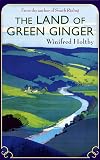
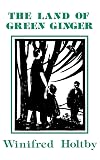
I love Winifred Holtby’s writing, and I love the covers of the new Virago editions of her work so much that I pounced on a bargain copy of The Land of Green Ginger, even though I already owned the original green VMC edition.
My feelings about this book were a little mixed though – much more positive than negative, but definitely mixed.
I really loved the heroine, and she carried me through the story.
Joanna was born in South Africa, the daughter of Edith, who had dreamed of romance and adventure, and who had married a missionary. But when her mother died she was sent home, to be raised in Yorkshire, by her three spinster aunts. They cared for her, they did their very best for her, but they didn’t understand the romance, the spirit of show more adventure, and the sheer joie de vivre that made their niece so very special.
Her friends shared her dreams, and their futures seemed so very full of promise.
But Joanna’s dreams of romance derailed her. She met a young man – Teddy – the man of her dreams, who had as much romance in his soul as her. They were quick to marry, before he had to had to go away to war. He survived, he came home again: but the war killed the romance his soul.
Teddy was consumptive – he hadn’t told his wife that – and the war destroyed his health too. he needed to live in the country, in the fresh air, and so the young couple took up farming.
It was a hard life, it wasn’t a life that suited them, and they had a terrible run of bad luck. Joanna struggled with practical difficulties, social expectations, financial difficulties, and of course all of that took its toll on the couple’s marriage. Taking in a dispossessed Hungarian as a paying guest seemed to be a wonderful idea, but Joanna’s head was still full of romance and dreams, and she didn’t see what her neighbours saw. A woman with a sick husband moving in another man …
Winifred Holtby brought the world that Joanna lived in to life wonderfully well. I saw that Joanna and Teddy were isolated, caught between the gentry and the working classes, and seen as outsiders, newcomers by their neighbours. I saw how small-minded villagers could be, and I saw how Joanna’s high principles were so dreadfully misunderstood.
I admired Joanna’s spirit, her willingness to do everything she could for her family. I understood her frustration with her husband, with their situation. And I loved that she held on to her hope for the future. But the best thing of all was that she was a real, fallible, three-dimensional human being, so very vividly painted.
I also appreciated that Winifred Holtby said so much about so many big things – the consequences of war, the problems of society and the class system, the problems facing women, wives and mothers – through this story. And that she said them with such passion.
I was less taken with the men in Joanna’s life – both husband and paying guest were completely wrapped up in their own problems. I understood, but it disappointed me, and I think it unbalanced the story.
That lack of balance was a problem. Sometimes I saw the shifts between storytelling, character development and points being made, and that made the book feel rather unpolished. It was heartfelt, it was heart-rending, but I couldn’t help feeling that it might have been more. That was maddening when so much was done so well.
But I could never give up on Joanna, and I was so pleased that her ending had roots way back in the story; and that it wasn’t really an ending at all, but a suggestion of future possibilities.
It left me wondering if Winifred Holtby had plans for the Burton clan – Joanna in this book and Sarah in ‘South Riding’ shared a surname – and what more stories of Burton women she might have written, if only she had not died so very young. show less
My feelings about this book were a little mixed though – much more positive than negative, but definitely mixed.
I really loved the heroine, and she carried me through the story.
Joanna was born in South Africa, the daughter of Edith, who had dreamed of romance and adventure, and who had married a missionary. But when her mother died she was sent home, to be raised in Yorkshire, by her three spinster aunts. They cared for her, they did their very best for her, but they didn’t understand the romance, the spirit of show more adventure, and the sheer joie de vivre that made their niece so very special.
Her friends shared her dreams, and their futures seemed so very full of promise.
But Joanna’s dreams of romance derailed her. She met a young man – Teddy – the man of her dreams, who had as much romance in his soul as her. They were quick to marry, before he had to had to go away to war. He survived, he came home again: but the war killed the romance his soul.
Teddy was consumptive – he hadn’t told his wife that – and the war destroyed his health too. he needed to live in the country, in the fresh air, and so the young couple took up farming.
It was a hard life, it wasn’t a life that suited them, and they had a terrible run of bad luck. Joanna struggled with practical difficulties, social expectations, financial difficulties, and of course all of that took its toll on the couple’s marriage. Taking in a dispossessed Hungarian as a paying guest seemed to be a wonderful idea, but Joanna’s head was still full of romance and dreams, and she didn’t see what her neighbours saw. A woman with a sick husband moving in another man …
Winifred Holtby brought the world that Joanna lived in to life wonderfully well. I saw that Joanna and Teddy were isolated, caught between the gentry and the working classes, and seen as outsiders, newcomers by their neighbours. I saw how small-minded villagers could be, and I saw how Joanna’s high principles were so dreadfully misunderstood.
I admired Joanna’s spirit, her willingness to do everything she could for her family. I understood her frustration with her husband, with their situation. And I loved that she held on to her hope for the future. But the best thing of all was that she was a real, fallible, three-dimensional human being, so very vividly painted.
I also appreciated that Winifred Holtby said so much about so many big things – the consequences of war, the problems of society and the class system, the problems facing women, wives and mothers – through this story. And that she said them with such passion.
I was less taken with the men in Joanna’s life – both husband and paying guest were completely wrapped up in their own problems. I understood, but it disappointed me, and I think it unbalanced the story.
That lack of balance was a problem. Sometimes I saw the shifts between storytelling, character development and points being made, and that made the book feel rather unpolished. It was heartfelt, it was heart-rending, but I couldn’t help feeling that it might have been more. That was maddening when so much was done so well.
But I could never give up on Joanna, and I was so pleased that her ending had roots way back in the story; and that it wasn’t really an ending at all, but a suggestion of future possibilities.
It left me wondering if Winifred Holtby had plans for the Burton clan – Joanna in this book and Sarah in ‘South Riding’ shared a surname – and what more stories of Burton women she might have written, if only she had not died so very young. show less
(16 Sept 2011 – from Ali)
LIke South Riding, this is rooted in the landscapes of Yorkshire, but in this case the characters escape – or yearn to escape – to more exotic climes, symbolised by the odd street name in the town – The Land of Green Ginger. After a little casual anti-Semitism, we follow Joanna, child of a missionary but shipped back to her aunts to be raised, falling for the first man who seems able to match her whimsy, trapping herself unwittingly into a life of hard grind and harder to keep reputations. Neither belonging to the gentry or the village, the failing gentleman farmers are associated with the other outsiders, the Northern European foresters brought in after WWI, to whose fate they must bear witness. Will show more Joanna ever encounter the islands of her dreams? This powerfully feminist work outlines brutally the choices available to those women not brave enough to strike out on their own, and the fate of those who try for domesticity.
This was the new, “pretty” reissue done by Virago, and doesn’t have the customary introduction or afterword, which I did miss. show less
LIke South Riding, this is rooted in the landscapes of Yorkshire, but in this case the characters escape – or yearn to escape – to more exotic climes, symbolised by the odd street name in the town – The Land of Green Ginger. After a little casual anti-Semitism, we follow Joanna, child of a missionary but shipped back to her aunts to be raised, falling for the first man who seems able to match her whimsy, trapping herself unwittingly into a life of hard grind and harder to keep reputations. Neither belonging to the gentry or the village, the failing gentleman farmers are associated with the other outsiders, the Northern European foresters brought in after WWI, to whose fate they must bear witness. Will show more Joanna ever encounter the islands of her dreams? This powerfully feminist work outlines brutally the choices available to those women not brave enough to strike out on their own, and the fate of those who try for domesticity.
This was the new, “pretty” reissue done by Virago, and doesn’t have the customary introduction or afterword, which I did miss. show less
Briefly, this is the story of a woman’s struggle to find fulfilment. As a child Joanna Burton is entranced when she passes a street called The Land of Green Ginger, which beckons her to Heaven, Fairy Land, or South Africa, where she was born and her father still lives.
Highly imaginative, she draws her knowledge of life from books and dreams of travelling the world to see strange, exotic places. Instead, during WWI she marries consumptive Teddy Leigh who conceals his illness from her. She only discovers the true state of his health when he is invalided out of the army suffering the effects of TB and being gassed.
Unable to resume his studies to be a clergyman (an outdoor life was recommended for tuberculosis at the time) he buys an show more isolated, run-down farm in Yorkshire. But he has no money, and neither he nor Joanna have any knowledge, experience or aptitude for farming.
His failing health makes him querulous, selfish and demanding, and Joanna struggles to make ends meet as she tries to care for him and run the farm. Eventually, to protect their two daughters from infection, she sends them to her aunts. She develops a reputation for oddness – she is viewed as a bad mother, a bad housekeeper and a bad farmer, and her behaviour is even more peculiar, for she never says or does what you expect. She’s an unsettling sort of person.
Things get worse when local landowner Sir Wentworth Marshall employs a group of Finns to establish a forestry project. Villagers resent the foreigners, and tensions build. But the real trouble comes when the interpreter, Hungarian Paul Szermai, lodges with Joanna and Teddy. The friendship between Joanna and Tzermai is misunderstood. Even Teddy suspects them of having an affair, and the story moves inexorably towards what should be a final tragic conclusion.
I won’t reveal what happens, but Joanna rises above the tragedy, and sets off with her children to pursue her dream. Issues like employment problems and the peace movement, which inform much of Holtby’s work, are there in the background, but are never intrusive – it’s the human relationships which are important. I’m not sure enjoy is the right word to describe this book – it’s a compelling read, which I would recommend. show less
Highly imaginative, she draws her knowledge of life from books and dreams of travelling the world to see strange, exotic places. Instead, during WWI she marries consumptive Teddy Leigh who conceals his illness from her. She only discovers the true state of his health when he is invalided out of the army suffering the effects of TB and being gassed.
Unable to resume his studies to be a clergyman (an outdoor life was recommended for tuberculosis at the time) he buys an show more isolated, run-down farm in Yorkshire. But he has no money, and neither he nor Joanna have any knowledge, experience or aptitude for farming.
His failing health makes him querulous, selfish and demanding, and Joanna struggles to make ends meet as she tries to care for him and run the farm. Eventually, to protect their two daughters from infection, she sends them to her aunts. She develops a reputation for oddness – she is viewed as a bad mother, a bad housekeeper and a bad farmer, and her behaviour is even more peculiar, for she never says or does what you expect. She’s an unsettling sort of person.
Things get worse when local landowner Sir Wentworth Marshall employs a group of Finns to establish a forestry project. Villagers resent the foreigners, and tensions build. But the real trouble comes when the interpreter, Hungarian Paul Szermai, lodges with Joanna and Teddy. The friendship between Joanna and Tzermai is misunderstood. Even Teddy suspects them of having an affair, and the story moves inexorably towards what should be a final tragic conclusion.
I won’t reveal what happens, but Joanna rises above the tragedy, and sets off with her children to pursue her dream. Issues like employment problems and the peace movement, which inform much of Holtby’s work, are there in the background, but are never intrusive – it’s the human relationships which are important. I’m not sure enjoy is the right word to describe this book – it’s a compelling read, which I would recommend. show less
Members
- Recently Added By
Lists

Favourite Virago Modern Classics
183 works; 38 members

Books I Own But Haven't Read
144 works; 2 members
Author Information

24+ Works 2,391 Members
Some Editions
Series
Belongs to Publisher Series
Virago Modern Classics (114)
Work Relationships
Common Knowledge
- Canonical title
- The Land of Green Ginger
- Original title
- The Land of Green Ginger
- Original publication date
- 1927
- Epigraph
- I know of no other Christianity and of no other Gospel than the liberty both of body and of mind to exercise the Divine Arts of Imagination - Imagination, the real and eternal world of which this Vegetable Universe is but a f... (show all)aint shadow.
William Blake Jerusalem
...Whilst my soul like quiet palmer
Travelleth towards the land of Heaven.
Over the silver mountains
Where spring the nectar fountains,
There will I kiss the bowl of bliss
And drink mine everlasting fill
... (show all)Upon every milken hill.
My soul will be adry before,
But after, it will thirst no more.
Sir Walter Raleigh, Manoa
The names of the streets too, are better chosen, though there are still some such curious survivials as the 'Land of Green Ginger', one of the principal thouroughfares, most probably so called from it shaving been a place for... (show all) the manufacture or sale of green ginger, a conserve of ginger and lemon juice, temp. Henry VIII.
Sir Albert Kaye Rollit, K.B., LL.D., D.C.L., D.LITT.
(Handbook to Hull and the East Riding of Yorkshire) - Dedication
- To a philosopher in Peshawar who said that he wanted something to read.
- First words
- When the Reverend Ambrose Entwhistle had been for six months in his grave, his widow besought an Eternal Father in Heaven to substitute His Providence for that of a mortal father upon earth, and to assist Nature and Society i... (show all)n the provision of husbands for her girls.
- Last words
- (Click to show. Warning: May contain spoilers.)Her hand met Pamela's under the shelter of her cloak.
Classifications
Statistics
- Members
- 235
- Popularity
- 138,578
- Reviews
- 8
- Rating
- (3.35)
- Languages
- English
- Media
- Paper, Audiobook, Ebook
- ISBNs
- 9
- ASINs
- 8