

A Far Cry from Kensington
by Muriel Spark
On This Page
Description
Set on the crazier fringes of 1950s literary London, A Far Cry from Kensington is a delight, hilariously portraying love, fraud, death, evil, and transformation. Mrs. Hawkins, the majestic narrator of A Far Cry from Kensington, takes us well in hand and leads us back to her threadbare years in postwar London. There, as a fat and much admired young war widow, she spent her days working for a mad, near-bankrupt publisher ("of very good books") and her nights dispensing advice at her small show more South Kensington rooming house. At work and at home Mrs. Hawkins soon uncovered evil: shady literary doings and a deadly enemy; anonymous letters, blackmail, and suicide. With aplomb, however, Mrs. Hawkins confidently set about putting things to order, little imagining the mayhem that would ensue. Now decades older, thin, successful, and delighted with life in Italy-quite a far cry from Kensington-Mrs. Hawkins looks back to all those dark doings and recounts how her own life changed forever. She still, however, loves to give advice: "It's easy to get thin. You eat and drink the same as always, only half…I offer this advice without fee; it is included in the price of this book." A Far Cry from Kensington has been hailed as "outstanding" (Observer), "wickedly and adroitly executed" (New York Times), and "a comedy that holds a tragedy as an eggcup holds an egg" (Philadelphia Inquirer). show lessTags
Recommendations
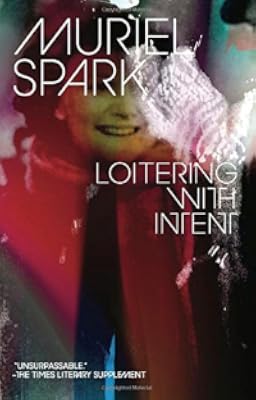
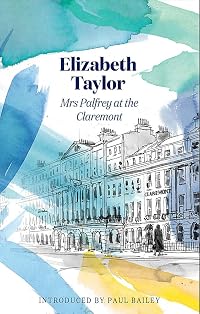

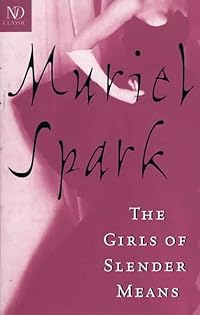



















Member Recommendations

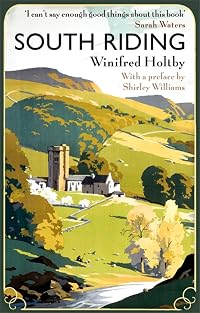
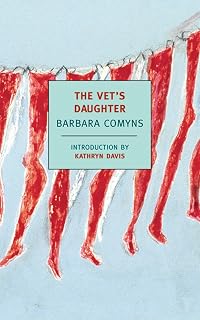
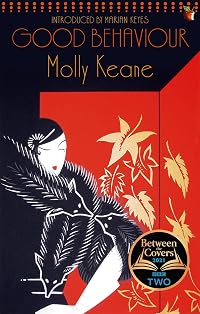
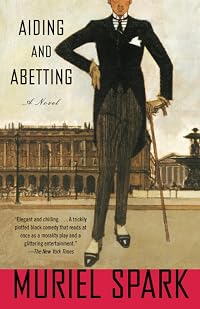
KayCliff Both novels feature publishers in fiction.
Member Reviews
"A Far Cry from Kensington" has a lot to recommend it: a cleverly constructed plot, an amusing, well-drawn cast of characters, sharp details about life in the grey British nineteen fifties and, a likable protagonist's slow progress toward an independent adulthood and a career in the publishing industry -- which Spark describes as bracingly chaotic and continually floundering -- and enough British eccentricity to satisfy any BBC America viewer. It's light stuff and a short read, but even if it's not an "important" novel, it's enjoyable to spend time with an author of Muriel Spark's caliber as she indulges in her literary whims. I also wonder if "A Far Cry" isn't a sort of sly response to the gaggle of self-help books that packed the show more shelves at about the time it was released. The book's main character lost weight specifically to outgrow what she saw as a too-motherly persona, but she's still full of commonsense advice drawn from her own observations. You could do much worse than to learn about life and other people from Muriel Spark and Mrs. Hawkins. show less
Mrs Hawkins is capable and caring. She must be because everyone keeps confiding in her. She is also strongly opinionated. She is full of straightforward advice as she looks back thirty years to her life when she lived in a rooming house in South Kensington with a host of characters only slightly less eccentric than those at her job in a publishing house. Nancy - because, yes, Mrs Hawkins actually does have a first name - is clear-eyed and honest. She can spot a louse amongst writers almost as easily as her housemate, Kate, a nurse, can spot an actual louse. Nancy was almost instantly on her guard with the very slimy Hector Bartlett though his subsequent actions go beyond even her worst suspicions. Calling him out for what he is is worth show more losing two jobs. It’s only a shame everyone else can’t be as perspicacious as she is.
Muriel Spark is in fine form here poking fun at the world of publishing in London in the 1950s — a world she knew well. But it is also a closely observed milieu full of young war widows, chancers, women of talent, and worried refugees. There are class divisions but the only division that matters, at least to people like Nancy, is between those who are capable and those who are not.
Very easy to recommend. show less
Muriel Spark is in fine form here poking fun at the world of publishing in London in the 1950s — a world she knew well. But it is also a closely observed milieu full of young war widows, chancers, women of talent, and worried refugees. There are class divisions but the only division that matters, at least to people like Nancy, is between those who are capable and those who are not.
Very easy to recommend. show less
As usual, Muriel Spark takes an apparently rather ordinary situation — in this case early 1950s West London bedsit-land — and puts a decidedly odd twist on it. A trivial remark is absurdly turned into the cause of a feud on an epic scale, rumbling along with a kind of ambiguous inevitability that almost feels like a Henry James plot, bizarrely at odds with the light, domestic tone of the narrative. Strange, wonderful, and completely original.
I continue to find Muriel Spark's work very good for morale. Her female characters take an admirably indefatigable approach to their lives, which I aspire to emulate. 'A Far Cry from Kensington' is narrated by Mrs Hawkins, who looks back on her life in a boarding house in Kensington during the early 1950s. She recounts several jobs in the publishing industry and her interactions with a certain Hector Barlett, her nemesis. I gather he is based on a man who plagued Spark in actual reality; there is certainly something unpleasantly convincing about him. He lurks at the fringes of the story, wreaking indirect havoc and occasionally popping up to be cruel to a dog or some other unpleasantness. The plot conveys both the serious, even deadly, show more harm that a horrible man with a grudge can cause, while also showing how a woman can transcend him to live her life as she wishes. Mrs Hawkins is a capable person who sometimes resents the fact that others rely upon her, something that many of us can slightly relate to:
There is also witty and astute commentary on class, credulity, and the literary profession to be found here. Not to mention this nugget of wisdom on job hunting:
I also loved this suggestion for improving concentration:
Reading 'A Far Cry from Kensington' brought home to me another reason why I love reading Muriel Spark: she is relentlessly unromantic, which I find marvellously refreshing. In this novella there is an incidental romance, but Mrs Hawkins does not allow it to interfere with her tale of employment upheaval, drama with her fellow boarders, and the odious Hector's skullduggery. I didn't find this the funniest of Spark's works, although it undoubtedly amuses. The greatest strength is instead character insight and pithy advice. I feel better able to deal with my most tiresome colleague in the coming week after reading it. show less
My advice to any woman who earns the reputation of being capable, is to not demonstrate her ability too much. You give advice; you say, do this, do that, I think I've got you a job, don't worry, leave it to me. All that, and in the end you feel spooky, empty, haunted. And if you then want to wriggle out of so much responsibility, the people around you are outraged. You have stepped out of your role. It makes them furious.
There is also witty and astute commentary on class, credulity, and the literary profession to be found here. Not to mention this nugget of wisdom on job hunting:
When you are looking for a job the best thing to do is to tell everyone, high and humble, and keep reminding them to please look out for you. This advice is not guaranteed to find you a job, but it is remarkable how suitable jobs can be found through the most unlikely people... [...] It is surprising how many people subconsciously believe in destiny. The word goes around, and in a relaxed moment a businessman will listen with interest to the barman or doorman. Hearing of the very person he is looking for, he might well think that luck has come his way, and arrange to see the applicant the next day. There is involved that fine feeling and boast, "I just happened to be looking for an accountant, and do you know I got a first-class fellow through the barman at the Goat." People love coincidence, destiny, a lucky chance. It is worth telling everyone that you want a job. In any case, while you are looking for a job you are always in the dark.
I also loved this suggestion for improving concentration:
"Can't concentrate [enough to write a book]."
"For concentration," I said, "you need a cat. Do you happen to have a cat?"
"Cat? No. Two dogs. Quite enough."
So I passed him some very good advice, that if you want to concentrate deeply on some problem, especially some piece of writing or paper-work, you should acquire a cat. Alone with the cat in the room where you work, I explained, the cat will invariable get up on your desk and settle placidly under the desk-lamp. The light from the lamp, I explained, gives a cat great satisfaction. The cat will settle down and be serene, with a serenity that passes all understanding. And the tranquillity of the cat will gradually come to affect you, sitting there at your desk, so that all the excitable qualities that impede your concentration compose themselves and give your mind back the self-command it has lost. You need not watch the cat all the time. Its presence along is enough. The effect of a cat on your concentration is remarkable, very mysterious.
Reading 'A Far Cry from Kensington' brought home to me another reason why I love reading Muriel Spark: she is relentlessly unromantic, which I find marvellously refreshing. In this novella there is an incidental romance, but Mrs Hawkins does not allow it to interfere with her tale of employment upheaval, drama with her fellow boarders, and the odious Hector's skullduggery. I didn't find this the funniest of Spark's works, although it undoubtedly amuses. The greatest strength is instead character insight and pithy advice. I feel better able to deal with my most tiresome colleague in the coming week after reading it. show less
Spark perfectly captures the atmosphere of 1950s London and the publishing business in this story. It's a comedy of a sort, yet combined with tragedy in a clever way. The text is conversational, as if Mrs Hawkins, an editor with a publishing house, is telling her story personally. The style keeps the reader involved in the matter and in each of the characters from the Kensington rooming house where she lives. The story mostly revolves around a hack author who becomes a thorn in the flesh of Mrs Hawkins who dubs him a pisseur de copie, to his face no less, thus unleashing a series of events that no one anticipated. Spark tied up the plot very nicely, leaving no loose ends - well maybe one, but that one is up to the reader to decide. show more Highly recommended. show less
Set just after the war in South Kensington, London, "A Far Cry from Kensington" tells the story of the occupants of Milly Sanders' rooming house through the eyes of Mrs. Hawkins, a large woman who seems to invite confidences from others. We follow Mrs. Agnes Hawkins, who prefers to be called Nancy as the story progresses, through her various jobs in publishing houses, where she meets the shadowy villain of the story, one Hector Bartlett. Nancy Hawkins is a delightful lead character: intelligent, direct, principled, with a refreshing acerbity. It is the latter trait which unwittingly sets a whole train of events in motion.
Hector's perfidy forms the subtle underpinning of the story, so I can't say too much without letting important cats show more out of bags. I will say, however, that this is one of the most skillfully told stories of a malignant personality and its effects that I've ever read. On the surface, all is light and every-day seeming, with people going about their lives, their jobs and relationships ignorant of the seriously ill personality moving in their midst. Muriel Spark captures perfectly the innocence of all but the perpetrator, revealing the latter's defective character slowly and carefully, piece by subtle piece. That she can be funny while doing it is a wonderful feat of writing. This isn't a psychological thriller which leaves you clutching the arms of your chair in terror but a witty and understated book which comes at you sideways and leaves you wide-eyed at its writer's skill with where she leaves you at the end.
I will never again hear the expression "pisseur de copie" without thinking of this book. This phrase is the backbone of the story and the ramifications of its meaning go far beyond its original intent when uttered by Mrs. Hawkins. If you like a story which reveals its characters with an understated style, using a precise touch rather than a heavy-handed approach, you'll enjoy this book. If you like reading about serious matters wrapped in the gentle gauze of humour, I highly recommend "A Far Cry from Kensington". show less
Hector's perfidy forms the subtle underpinning of the story, so I can't say too much without letting important cats show more out of bags. I will say, however, that this is one of the most skillfully told stories of a malignant personality and its effects that I've ever read. On the surface, all is light and every-day seeming, with people going about their lives, their jobs and relationships ignorant of the seriously ill personality moving in their midst. Muriel Spark captures perfectly the innocence of all but the perpetrator, revealing the latter's defective character slowly and carefully, piece by subtle piece. That she can be funny while doing it is a wonderful feat of writing. This isn't a psychological thriller which leaves you clutching the arms of your chair in terror but a witty and understated book which comes at you sideways and leaves you wide-eyed at its writer's skill with where she leaves you at the end.
I will never again hear the expression "pisseur de copie" without thinking of this book. This phrase is the backbone of the story and the ramifications of its meaning go far beyond its original intent when uttered by Mrs. Hawkins. If you like a story which reveals its characters with an understated style, using a precise touch rather than a heavy-handed approach, you'll enjoy this book. If you like reading about serious matters wrapped in the gentle gauze of humour, I highly recommend "A Far Cry from Kensington". show less
Don't be deceived by its light, droll humour, the novel is actually a subtle study of relationships between housemates, lovers, enemies and workmates - categories which overlaps more often than you'd think -, with liberal doses of Life Lessons dispensed by the matronly narrator. You know a book would be good when it starts off all Proust-esque with reflections on sleeping. The overall tone and plot reminds me of Tey's Miss Pym Disposes with its small community of characters creating intrigue for the connoisseur of human follies, the protagonist. It is written exactly as Mrs Hawkins advised, like a personal letter to a dear friend. My favourite aspect of the book is its predominantly female cast, they are independent and capable, and if show more they're coupled, it's mostly as an afterthought but it does not define them. The development of the driving mystery did not feel organic, but as a vehicle for Hawkins' antagonism towards Hector and no-nonsense interactions with others, it was a small flaw to forgive. Recommended for fans of somewhat-quirky character studies with a hint of murderous evil. show less
Members
- Recently Added By
Published Reviews
ThingScore 100
''A Far Cry From Kensington,'' her 18th novel, is the perfect vehicle for her to win over Philistines like me. At the risk of being drummed out of the Book Reviewers Union, I feel the best way to convey the pleasure this novel gives is to compare it to a wonderful old Alec Guinness movie, something along the lines of ''The Lavender Hill Mob.'' True, it follows the rules of art right down the show more line and illuminates the human condition, etc. But it also meets a trickier challenge, that of being superb entertainment show less
added by davidcla
Lists

The Guardian's 1000 Novels Everyone Must Read
1,005 works; 550 members

Best Books Set in London
157 works; 42 members

Recommend the 20 best books you've read in the last five years
2,168 works; 606 members

Female Author
1,235 works; 67 members

Best Workplace Fiction
47 works; 18 members

Best of Scottish Literature
35 works; 6 members

Literature About Women and Girls
394 works; 39 members

A Good Read (Radio 4)
127 works; 1 member

Five star books
1,755 works; 108 members

A Novel Cure
742 works; 23 members
Best books set in London
26 works; 1 member

Books Read in 2018
4,360 works; 110 members

Books Read in 2024
4,623 works; 126 members

2025 Christmas Gifts
70 works; 19 members

el
1,139 works; 1 member
Author Information

101+ Works 22,714 Members
Muriel Spark has been called "our most chillingly comic writer since Evelyn Waugh" by the London Spectator, and the New Yorker praised her novel Memento Mori ri (1959) as "flawless." Her fiction is marked by its remarkable diversity, wit, and craftsmanship. "She happens to be, by some rare concatenation of grace and talent, an artist, a show more serious---and most accomplished---writer, a moralist engaged with the human predicament, wildly entertaining, and a joy to read" (SRSR). She became widely known in the United States when the New Yorker devoted almost an entire issue to The Prime of Miss Jean Brodie (1961). Set in Edinburgh in the 1930s, this is the story of a schoolteacher, her unorthodox approach to life, and its effect on her select group of adolescent girls. Though their idol turns out to have feet of clay, she leaves an indelible mark on their lives. The Girls of Slender Means (1963), also warmly praised, is a sardonic look at the vivacity of youth and the anxieties of young womanhood. Reviewing The Mandelbaum Gate (1965) for the New Republic, Honor Tracy wrote: "There is an abundance here of invention, humor, poetry, wit, perception, that all but takes the breath away. . . . The story, in fact, is pure adventure, with the suspense as artfully maintained as anywhere by Graham Greene, but this is only one ingredient. There are memorable descriptions of the Holy Land, fascinating insights into the jumble of intrigue and piety surrounding the Holy Places, and penetrating studies of Arabs. . . . In each of [Spark's] novels heretofore one of her qualities has tended to predominate over the others. Here for the first time they are all impressively marshaled side by side, resulting in her best work so far." The daughter of an Englishwoman and a Scottish-Jewish father, Spark was born and educated in Edinburgh. After her marriage in 1938, she lived for some years in Central Africa, a period rarely reflected in her work. During World War II, she returned to Britain, where she worked in the Political Intelligence Department of the Foreign Office after the breakup of her marriage. She has been a magazine editor and written poetry and literary criticism. Spark has lived in London's Camberwell section, the setting of The Ballad of Peckham Rye (1960), but now makes her home in New York. Her novels reflect her conversion to Roman Catholicism. (Bowker Author Biography) Writer Muriel Spark was born in Edinburgh on February 1, 1918. In 1934-1935 she took a course in commercial correspondence and précis writing at Heriot-Watt College. After her marriage in 1937, she lived for some years in Central Africa. During World War II, she returned to Britain, where she worked in the Political Intelligence Department of the Foreign Office after the breakup of her marriage. After the war, she began her literary career. She became General Secretary of the Poetry Society, worked as an editor and wrote studies of Mary Shelley, John Masefield and the Brontë sisters. Her first book of poetry, The Fanfarlo and Other Verse, was published in 1952 and her first novel, The Comforters, was published in 1957. She wrote over twenty books including The Prime of Miss Jean Brodie and The Finishing School. She won numerous awards and honors including the 1965 James Tait Black Memorial Prize for The Mandelbaum Gate, the 1992 U. S. Ingersoll Foundation T. S. Eliot Award, the 1997 David Cohen British Literature Prize for Lifetime Achievement, and in 1993 she became Dame Commander of the Order of the British Empire in recognition of her services to literature. The Scottish Arts Council created the Muriel Spark International Fellowship in 2004. She died on April 13, 2006. (Bowker Author Biography) show less
Some Editions
Awards and Honors
Series
Belongs to Publisher Series
Work Relationships
Common Knowledge
- Canonical title
- A Far Cry from Kensington
- Original title
- A Far Cry from Kensington
- Original publication date
- 1988
- People/Characters
- Mrs. Hawkins; Hector Bartlett; Milly; Wanda Podolak; Basil Carlin; Eva Carlin (show all 10); Kate Parker; Abigail; Emma Loy; William Todd
- Important places
- Kensington, London, England, UK; London, England, UK
- First words
- So great was the noise during the day that I used to lie awake at night listening to the silence.
What do we do with our lives? (Introduction) - Quotations
- Insomnia is not bad in itself. You can lie awake at night and think; the quality of insomnia depends entirely on what you decide to think of. Can you decide to think? -- Yes, you can.
- Last words
- (Click to show. Warning: May contain spoilers.)It was a far cry from Kensington, a far cry.
(Click to show. Warning: May contain spoilers.)It all adds up to something huge - a sprightly philosophical rejection of twentieth-century angst, with all the carefree carefulness, all that far-reaching economy, all the merciless, sharp mercy, that characterize the art of Spark. (Introduction) - Blurbers
- Smith, Ali
- Original language
- English
Classifications
Statistics
- Members
- 1,423
- Popularity
- 16,538
- Reviews
- 61
- Rating
- (3.86)
- Languages
- 9 — Danish, English, French, German, Icelandic, Italian, Romanian, Spanish, Portuguese (Portugal)
- Media
- Paper, Audiobook, Ebook
- ISBNs
- 42
- ASINs
- 16