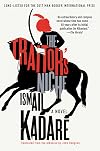
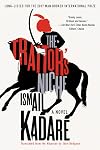
The Traitor's Niche
by Ismaïl Kadaré
On This Page
Description
"At the heart of the Ottoman Empire, in the main square of Constantinople, a niche is carved into ancient stone. Here, the sultan displays the severed heads of his adversaries. People flock to see the latest head and gossip about the state of the empire: the province of Albania is demanding independence again, and the niche awaits a new trophy... Tundj Hata, the imperial courier, is charged with transporting heads to the capital--a task he relishes and performs with fervor. As he travels show more through obscure and impoverished territories, he makes money from illicit side-shows, offering villagers the spectacle of death. The head of the rebellious Albanian governor would fetch a very high price indeed. The Traitor's Niche is a surreal tale of tyranny and rebellion, in a land where armies carry scarecrows, state officials ban entire languages, and the act of forgetting is more complicated than remembering." -- show lessTags
Recommendations



















Member Reviews
The ancient imperial capital in the heart of the most powerful Empire had a famous square. High above this square was a niche sited in the wall. The niche did not display religious icons, or sculptures, or coats of arms. It was reserved for the heads of traitors, those who had displeased the Sultan. It was not hard to imagine why this location had been chosen.
Perhaps nowhere else could the eyes of passersby so easily grasp the interdependency between the imposing solidity of the ancient square and the human heads that had dared to show it disrespect. It was clear at once that the niche had been sited in the wall to convey the impression that the head’s lifeless eyes surveilled every corner of the square. In this way, even the show more feeblest and least imaginative passerby could visualize, at least for a moment, his own head displayed at the unnatural height.
The heads were not just abandoned to the elements, however. Each morning and afternoon Abdulla would climb a ladder and inspect the current head. He would report on its condition to the doctor, who was guided by the Regulations for the Care of Heads.
Times were changing. “Independence” was an idea heard in the wind. There was always at least one of the empire’s twenty-nine countries making trouble. Right now it was the one out on the very edges of empire: Albania. Lessons must be taught. Ali Pasha lost his head.
So begins an allegorical treatment of minority repression under autocratic regimes. How do you erase a national identity? The technique was well researched, finely tuned, and proven. The answer was in the Central Archive in a five stage secret doctrine:
Meanwhile factions live in fear. Who will survive and who will be the next head to be transported to the capital? When will it happen? Even the lowly Abdulla back in the capital, the representative of Everyman, had dreams and fears. Kadare manages all this with humour, poking fun both at the “head” being the central administration and its functionaries, and the people themselves.
This novel was completed in 1976. It was published in Albania in 1978, but was almost immediately withdrawn by the authorities. A French copyright was issued in 1984. It took just over forty years for it to be translated into English, years during which Albania was once again part of a larger dominant body. However, it’s well worth the wait. show less
Perhaps nowhere else could the eyes of passersby so easily grasp the interdependency between the imposing solidity of the ancient square and the human heads that had dared to show it disrespect. It was clear at once that the niche had been sited in the wall to convey the impression that the head’s lifeless eyes surveilled every corner of the square. In this way, even the show more feeblest and least imaginative passerby could visualize, at least for a moment, his own head displayed at the unnatural height.
The heads were not just abandoned to the elements, however. Each morning and afternoon Abdulla would climb a ladder and inspect the current head. He would report on its condition to the doctor, who was guided by the Regulations for the Care of Heads.
Times were changing. “Independence” was an idea heard in the wind. There was always at least one of the empire’s twenty-nine countries making trouble. Right now it was the one out on the very edges of empire: Albania. Lessons must be taught. Ali Pasha lost his head.
So begins an allegorical treatment of minority repression under autocratic regimes. How do you erase a national identity? The technique was well researched, finely tuned, and proven. The answer was in the Central Archive in a five stage secret doctrine:
first, the physical crushing of rebellion; second, the extirpation of any idea of rebellion; third, the destruction of culture, art, and tradition; fourth, the eradication or impoverishment of the language; and fifth, the extinction or enfeeblement of the national memory.
Meanwhile factions live in fear. Who will survive and who will be the next head to be transported to the capital? When will it happen? Even the lowly Abdulla back in the capital, the representative of Everyman, had dreams and fears. Kadare manages all this with humour, poking fun both at the “head” being the central administration and its functionaries, and the people themselves.
This novel was completed in 1976. It was published in Albania in 1978, but was almost immediately withdrawn by the authorities. A French copyright was issued in 1984. It took just over forty years for it to be translated into English, years during which Albania was once again part of a larger dominant body. However, it’s well worth the wait. show less
In the niche of a square in Constantinople is displayed an ever-changing series of decapitated heads. Observed by the crowds- a kind of chorus as they discuss current eventss - guarded by a young constable; ministered to by the doctor charged with its preservation; and transported by the Royal Courier, covering huge distances to bring the various heads home...
Kadare's story concerns Albanian Ali Pasha, a rebel leader, dismissive of his Turkish overlords and due for removal...and the two ill-fated Turks sent in two separate missions to bring him down. He describes a fictional, comic- yet entirely believable state strategy of returning a renegade nation back to compliance...
My second read by Kadare; sobering yet quite brilliant.
Kadare's story concerns Albanian Ali Pasha, a rebel leader, dismissive of his Turkish overlords and due for removal...and the two ill-fated Turks sent in two separate missions to bring him down. He describes a fictional, comic- yet entirely believable state strategy of returning a renegade nation back to compliance...
My second read by Kadare; sobering yet quite brilliant.
Another brilliant novel from Albaniann author, Ismail Kadare! In this satire of tyranny, the reader glimpses the absurdities of tyranny via a darkly witty and profound story about perpetual decapitations performed to quell rebellion in the Ottoman Empire, specifically Albania. The reader encounters Abdulla, who guards the Traitor's Niche where the heads are displayed, as well as the Caw Caw, a Directorate charged with the eradication of non-Turkish languages. I laughed out loud, shook my head, and was disturbed at the dark truths underlying this tale. Fabulous read!
The Traitors Niche was first published in Albania in 1984 and my English translation in 2018. This is a novel with many lost heads to be placed in a special niche in the main square of Constantinople, Ottoman Empire, and without heroes. It is a story of the hundreds of years subjugation of Albania to the Ottomans. In today's terminology something close to genocide was deliberately practiced. We are given an unblinking picture of the use of power from the lowest to the highest. One is left with the thought that one can not think about Albania or that part of Eastern Europe without its attending history with the Ottomans.
Quotes: (pages 6-7) “Sometimes, when dusk was near and the moon cast its light prematurely on the square, he even show more thought that human beings, himself included, were only a pollutant that spoiled the splendor and harmony of the imperial square. He could not wait for the square to empty entirely so that, although his official working hours were over, he could observe everything in the calm, icy moonlight. Sometimes the light fell at a certain angle on the niche and for an instant the illuminated head would assume a derisive or disdainful expression. The head now free of human limbs, seemingly useless appendages, appeared slightly worthier of taking its place among the ancient symbols and emblems of the square. At these moments, Abdulla would be seized by a thrilling paroxysm of self-destruction, an obscure subconscious desire to throw of the ungainly tangle of his limbs and become only a head.”
(page 53) “This meant that the Albanian lands would soon come to an end.
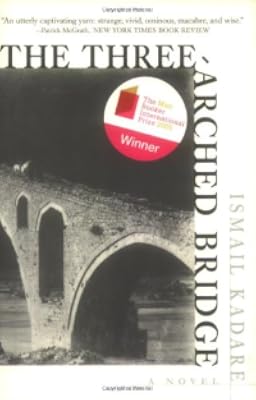
The carriage wheels struck the paving on the hump of the bridge, and Tundj Hata trembled, shaken less by the sudden shock to the carriage than by the thought of passing over this cursed structure. This bridge was ancient, almost five hundred years old, and there was a legend about it that made your flesh creep, like all Balkan tales. It was said that they had immured a person in one of the three arches.”
(pages 121-122) “The Fourth Directorate, he muttered to himself. He had despised it for so many years and made fun of it, while quietly it had continued its work. For years, it had been aware of his silent rebellion against the Sublime Porte. He had slipped out of the sovereign's hands like crumbling soil...He had held talks with the British and with Bonaparte without informing his Padishah at all. He had invited or expelled consuls at whim, and had turned up at great battles with his own army or not, as it suited him. All these facts were well known and discussed openly in high circles, but still the sultan had turned a blind eye. He's scared of crossing me, Ali Pasha used to boast.”
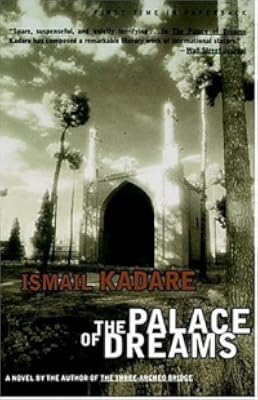
(page 199) “At that hour of dusk the square was still full. The rumor was that a courier of the Tabir Saray had brought an important dream from the dusty margins of Anatolia. 'What was the dream about, and what did it mean?' asked voices scattered throughout the square. Nobody could say. They knew only that the lights in the Palace of Dreams had burned until dawn. Someone said they would carry the dream to the sovereign tomorrow. Apparently Albania's fate depended on it.” show less
Quotes: (pages 6-7) “Sometimes, when dusk was near and the moon cast its light prematurely on the square, he even show more thought that human beings, himself included, were only a pollutant that spoiled the splendor and harmony of the imperial square. He could not wait for the square to empty entirely so that, although his official working hours were over, he could observe everything in the calm, icy moonlight. Sometimes the light fell at a certain angle on the niche and for an instant the illuminated head would assume a derisive or disdainful expression. The head now free of human limbs, seemingly useless appendages, appeared slightly worthier of taking its place among the ancient symbols and emblems of the square. At these moments, Abdulla would be seized by a thrilling paroxysm of self-destruction, an obscure subconscious desire to throw of the ungainly tangle of his limbs and become only a head.”
(page 53) “This meant that the Albanian lands would soon come to an end.
The carriage wheels struck the paving on the hump of the bridge, and Tundj Hata trembled, shaken less by the sudden shock to the carriage than by the thought of passing over this cursed structure. This bridge was ancient, almost five hundred years old, and there was a legend about it that made your flesh creep, like all Balkan tales. It was said that they had immured a person in one of the three arches.”
(pages 121-122) “The Fourth Directorate, he muttered to himself. He had despised it for so many years and made fun of it, while quietly it had continued its work. For years, it had been aware of his silent rebellion against the Sublime Porte. He had slipped out of the sovereign's hands like crumbling soil...He had held talks with the British and with Bonaparte without informing his Padishah at all. He had invited or expelled consuls at whim, and had turned up at great battles with his own army or not, as it suited him. All these facts were well known and discussed openly in high circles, but still the sultan had turned a blind eye. He's scared of crossing me, Ali Pasha used to boast.”
(page 199) “At that hour of dusk the square was still full. The rumor was that a courier of the Tabir Saray had brought an important dream from the dusty margins of Anatolia. 'What was the dream about, and what did it mean?' asked voices scattered throughout the square. Nobody could say. They knew only that the lights in the Palace of Dreams had burned until dawn. Someone said they would carry the dream to the sovereign tomorrow. Apparently Albania's fate depended on it.” show less
Fascinating, mesmerizing surreal novel that held my interest every page. The author has returned to the main theme of most of his oeuvre: struggles of his native Albania against an oppressive power. This time the novel is set in the post-Napoleonic years and those of Greece for her independence--1820s. In this case the novel is an allegory with the Ottoman Empire representing the brutal Albanian dictatorship of Enver Hoxha. It is the story of several men and their fates: Abdulla, the Keeper of the Heads--Dulla was a nickname of Enver Hoxha--; the three Pashas who have run afoul of the government in some way and have been beheaded: Ali, by rebelling; Bugrahan, by losing battles to Ali; Hurshid, who wins the war, but becomes too popular show more for his own good; and Hata, the courier who delivers each head to the sultan after exhibiting it to villagers along the way. The author describes "Caw-Caw", the complete obliteration of an entire people's culture, customs, and language and of "Psst-Psst", the secret police investigating rumors. All in all, a chilling indictment of tyranny. 4.5/5.
Highly recommended and just as current today as when it was first written, in 1984.
Highly recommended and just as current today as when it was first written, in 1984. show less
Highly recommended and just as current today as when it was first written, in 1984.
Highly recommended and just as current today as when it was first written, in 1984. show less
Did Not Finish. I just couldn't get into it, it's a slow-build. Very much in the character's heads than plot based. I wasn't feeling a pull from any of the characters to complete their journey. It was very eloquently written, and for a translation that can be a difficult feat.
This was another of the literary fiction books to read with Wikipedia open in the background. I know little of Albania, and even less of it as an Ottoman province. Kadare carefully doesn't fill the space between Constantinople and Albania. Although set in the 1820s, the closest evocation for me is a feeling of Roman Britain; the uncultured, rebellious provinces entertained with a bodiless head and the sophisticated centre beauruacratically despairing of the management problems.
The head without a body works throughout as the metaphor for Albanian Pasha. Without the body to rise up, he's doomed to sit beheaded in the corner of a Constantinoplitan square.
Kadare was a fun read, and it sounds like he often riffs on Albania and show more Albanianness, so I'll hunt out some of his more famous works. God bless the ibrary again for floating up something a mile away from the Wishlist. show less
The head without a body works throughout as the metaphor for Albanian Pasha. Without the body to rise up, he's doomed to sit beheaded in the corner of a Constantinoplitan square.
Kadare was a fun read, and it sounds like he often riffs on Albania and show more Albanianness, so I'll hunt out some of his more famous works. God bless the ibrary again for floating up something a mile away from the Wishlist. show less
Members
- Recently Added By
Author Information

180+ Works 7,868 Members
Ismail Kadare is the most prominent of contemporary Albanian writers. He has written poetry, short stories, literary criticism, and seven novels. His works have been translated and published in more than two dozen countries. An internationally known figure, he has visited and lectured in many countries. He was also a representative to Albania's show more People's Assembly. In 1990 Kadare left Albania for Paris where he became openly dissident. (Bowker Author Biography) show less
Some Editions
Awards and Honors
Common Knowledge
- Canonical title
- The Traitor's Niche
- Original title
- Pashallëqet e mëdha
- Alternate titles*
- De nis der schande : roman
- Original publication date
- 1978 (Albanees) (Albanees); 1991 (Nederlands) (Nederlands)
- People/Characters*
- Ali Pasja; Hursjid Pasja
- Important places*
- Istanboel, Turkije; Albanië
- First words
- The unblinking eyes met the stares of the passers-by and tourists who poured into the square from all directions.
- Last words
- (Click to show. Warning: May contain spoilers.)A very difficuly idea, a kind of convocation of eagles with blood-stained feathers, that falls from the air, swooping through the storms, I don't know how to put it, oh Allah.
- Original language
- Albanian
*Some information comes from Common Knowledge in other languages. Click "Edit" for more information.
Classifications
- Genres
- Fiction and Literature, General Fiction, Historical Fiction
- DDC/MDS
- 891.9913 — Literature & rhetoric Literatures of other languages East Indo-European and Celtic literatures Baltic and other Indo-European languages Other Indo-European languages Albanian Albanian fiction
- LCC
- PG9621 .K3 .K3413 — Language and Literature Slavic languages and literatures. Baltic languages. Albanian language Slavic. Baltic. Albanian Albanian
- BISAC
Statistics
- Members
- 177
- Popularity
- 185,392
- Reviews
- 11
- Rating
- (3.76)
- Languages
- 9 — Danish, Dutch, English, French, German, Greek, Portuguese, Spanish, Swedish
- Media
- Paper, Ebook
- ISBNs
- 22
- ASINs
- 3