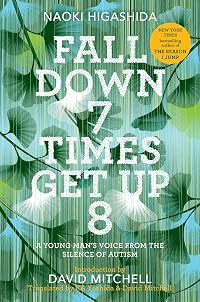
Fall Down 7 Times Get Up 8: A Young Man's Voice from the Silence of Autism
by Naoki Higashida
On This Page
Description
From the author of the bestselling The Reason I Jump, an extraordinary self-portrait of a young adult with autism“Essential reading for parents and teachers of those with autism who remain nonverbal.”—Temple Grandin
Naoki Higashida was only thirteen when he wrote The Reason I Jump, a revelatory account of autism from the inside by a nonverbal Japanese child, which became an international success. Now, in Fall Down 7 Times Get Up 8, he shares his thoughts and experiences as a young man show more living each day with severe autism. In short, powerful chapters, Higashida explores school memories, family relationships, the exhilaration of travel, and the difficulties of speech. He also allows readers to experience profound moments we take for granted, like the thought-steps necessary for him to register that it’s raining outside. Acutely aware of how strange his behavior can appear to others, he aims throughout to foster a better understanding of autism and to encourage society to see people with disabilities as people, not as problems.
With an introduction by the bestselling novelist David Mitchell, Fall Down 7 Times Get Up 8 also includes a dreamlike short story Higashida wrote especially for the U.S. edition. Both moving and of practical use, this book opens a window into the mind of an inspiring young man who meets every challenge with tenacity and good humor. However often he falls down, he always gets back up.
Praise for Fall Down 7 Times Get Up 8
“[Naoki Higashida’s] success as a writer now transcends his diagnosis. . . . His relative isolation—with words as his primary connection to the outside world—has allowed him to fully develop the powers of observation that are necessary for good writing, and he has developed rich, deep perspectives on ideas that many take for granted. . . . The diversity of Higashida’s writing, in both subject and style, fits together like a jigsaw puzzle of life put in place with humor and thoughtfulness.”—The Japan Times
“Profound insights about what the struggle of living with autism is really like . . . Once again, the invitation to step inside Higashida’s mind is irresistible.”—London Evening Standard
“Naoki Higashida’s lyrical and heartfelt account of his condition is a gift to anyone involved with the same challenges. . . . Higashida shows a delicate regard for the difficulties his condition creates . . . and is adept at explaining his experiences in language that makes sense to neurotypicals.”—The Guardian. show less
Tags
Recommendations
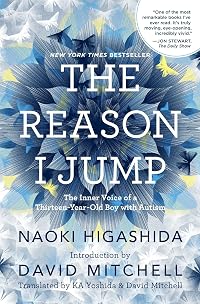



























Member Reviews
Of my six standing reasons to read a book, three applied to Higashida's 7/8: an informed account of something I know little about; an empathetic window into life as lived by people different than me; a glimpse of a new (to me) way of experiencing the world. If Higashida's text fulfilled even just one of these, I would understand the world --and my place in it-- a little better.
7/8 delivered on all three and rekindles my interest in Higashida's earlier book.
A question arose part-way through: how do non-verbal people gain mastery over words without the practise of speaking? I have no doubt they do attain mastery: this book is itself ample proof. What I don't have is insight into that path (and presumably it has myriad forms). Is reading show more the key path, or merely one among many? (How does one learn to read without first speaking: undoubtedly it happens; what is it like?) I further assume there must be some practise in place of speech: listening, certainly; reading; writing or using the alphabet board. All of this uncovered my own assumptions, perhaps speaking is less important than I thought. I wonder how much reading Higashida does, and how he learned it.
Reminiscent somehow of Jules Renard's essays in On Nature: the compactness of Higashida's observations? How he evokes an idea so economically? Sentimental without being saccharine.
//
There are included a few line drawings: two of vases (accompanying the "Mothers Day" essay), one of a gate (in "The Gate"). Each section page has floral watermarks. Higashida's? show less
7/8 delivered on all three and rekindles my interest in Higashida's earlier book.
A question arose part-way through: how do non-verbal people gain mastery over words without the practise of speaking? I have no doubt they do attain mastery: this book is itself ample proof. What I don't have is insight into that path (and presumably it has myriad forms). Is reading show more the key path, or merely one among many? (How does one learn to read without first speaking: undoubtedly it happens; what is it like?) I further assume there must be some practise in place of speech: listening, certainly; reading; writing or using the alphabet board. All of this uncovered my own assumptions, perhaps speaking is less important than I thought. I wonder how much reading Higashida does, and how he learned it.
Reminiscent somehow of Jules Renard's essays in On Nature: the compactness of Higashida's observations? How he evokes an idea so economically? Sentimental without being saccharine.
//
There are included a few line drawings: two of vases (accompanying the "Mothers Day" essay), one of a gate (in "The Gate"). Each section page has floral watermarks. Higashida's? show less
 This review was written for LibraryThing Early Reviewers.
This book, like its predecessor, offers a unique view into the mind of a young man with autism. His wry observations and interesting anecdotes show us that much of what we think we understand about those diagnosed with ASD is very limited and stereotypical. I loved this insight into a world that is the same as mine but from a very different perspective. As someone who lives with a child with ASD, this was a fascinating read.
This review was written for LibraryThing Early Reviewers.As an autistic person myself, I was very interested in reading “Fall Down 7 times, Get Up 8”. I have read multiple books on autism, but this is one of the very best I’ve read. Most books on autism seem to be written by neurotypicals attempting to explain autistics. While I have found some of those books helpful, there are also very many times when I will read their explanation for why we autistics do something and then I will become very upset. I will feel agitated and upset by the insufficient and often demeaning explanation. Neurotypicals often mean well, but you can’t expect someone to always be able to figure out why another’s brain works a certain way, when their own brain is wired in a radically different fashion. show more Neurotypicals - humans. Autistics - humans. But with completely different brains that function in completely different ways.
This book was extremely freeing to me to read. Here is a young man who is basically nonverbal and would probably be termed “low-functioning” by many people. And yet as you read what he writes, you can see the person locked away inside his wordlessness. As humans created in the image of God, we each have worth and dignity; we are intrinsically valuable. But people fear what they do not understand. Autism has been largely misunderstood for a long time. And as such, people have feared it and tried to fix it. But Naoki’s book reveals the hardships and beauties of being autistic. He discusses his “behaviors” and tells us what is at the bottom of them, revealing that at the very bottom lie the same hopes, fears, and passions that all humans have: fears of rejection, searching for beauty and joy, a desire show love to your loved ones.
Naoki’s book brought a lot of relief for me. Reading about someone else who deals with the things that I do gave me the freedom to talk about my struggles more with my loved ones, to explain why I do certain things. There were so many things in the book I related to: how he bites himself when highly stressed, the constant frustration when I want to express deep love to my family, the difficulty to perform simple thought processes, the extreme fear when people are upset with me, the wanting to punish myself when I make mistakes.
ASD is a spectrum. Each person is unique. There were ways in which I am like Naoki Higashida, other ways in which I am radically different. But most of all, Naoki’s book is a book about a person - a person intentionally designed by God, a person with value and worth. I would recommend “Fall Down 7 Times, Get Up 8”. I would recommend that people read it and remember that each person you meet is just that, a person. Maybe their brain works differently, maybe they have a different skin color, maybe they speak a different language. But at the root of it, they’re a human created by God in His image, with all the same needs and desires that all humans have.
[Review on Goodreads - https://www.goodreads.com/review/show/2763783439 ] show less
This book was extremely freeing to me to read. Here is a young man who is basically nonverbal and would probably be termed “low-functioning” by many people. And yet as you read what he writes, you can see the person locked away inside his wordlessness. As humans created in the image of God, we each have worth and dignity; we are intrinsically valuable. But people fear what they do not understand. Autism has been largely misunderstood for a long time. And as such, people have feared it and tried to fix it. But Naoki’s book reveals the hardships and beauties of being autistic. He discusses his “behaviors” and tells us what is at the bottom of them, revealing that at the very bottom lie the same hopes, fears, and passions that all humans have: fears of rejection, searching for beauty and joy, a desire show love to your loved ones.
Naoki’s book brought a lot of relief for me. Reading about someone else who deals with the things that I do gave me the freedom to talk about my struggles more with my loved ones, to explain why I do certain things. There were so many things in the book I related to: how he bites himself when highly stressed, the constant frustration when I want to express deep love to my family, the difficulty to perform simple thought processes, the extreme fear when people are upset with me, the wanting to punish myself when I make mistakes.
ASD is a spectrum. Each person is unique. There were ways in which I am like Naoki Higashida, other ways in which I am radically different. But most of all, Naoki’s book is a book about a person - a person intentionally designed by God, a person with value and worth. I would recommend “Fall Down 7 Times, Get Up 8”. I would recommend that people read it and remember that each person you meet is just that, a person. Maybe their brain works differently, maybe they have a different skin color, maybe they speak a different language. But at the root of it, they’re a human created by God in His image, with all the same needs and desires that all humans have.
[Review on Goodreads - https://www.goodreads.com/review/show/2763783439 ] show less
This review was written for LibraryThing Early Reviewers.Previously, I have read The Reason Why I Jump by Naoki Higasida. I just looked back at my review of that book and everything that I said in that review is valid for this book too. I read this book because of my brother who has severe autism. I think that having learned a special keyboard when younger has enabled the author to be able to communicate his thoughts and feelings with his family and others. I wish that I could some way to get through to my brother that there are others like him. As far as I know he is not aware that there are other severely autistic people besides him. The author describes his loneliness that he had no way of communicating in the chapter on Wordlessness. Growing up with my brother, I have felt his agony of show more not be able to communicate.
This book is loaded with insights on what is life is like as a non-neurotypical person. Some I have figured out for myself so it is good to have the author say that they are true. He has helped me understand my brother so much more. What I really want is a simple picture book for my brother that tells him that he is not alone in this world.
I highly recommend this book for all who have relatives or friends of people with severe autism.
I received this Advance Reading Copy by making a selection from Amazon Vine books but that in no way influenced my thoughts or feelings in this review. I also posted this review only on sites meant for reading not for selling. show less
This book is loaded with insights on what is life is like as a non-neurotypical person. Some I have figured out for myself so it is good to have the author say that they are true. He has helped me understand my brother so much more. What I really want is a simple picture book for my brother that tells him that he is not alone in this world.
I highly recommend this book for all who have relatives or friends of people with severe autism.
I received this Advance Reading Copy by making a selection from Amazon Vine books but that in no way influenced my thoughts or feelings in this review. I also posted this review only on sites meant for reading not for selling. show less
For the neurotypical reader this book is a great opportunity to think about your perspective on how one thinks and acts. Most people learn by listening or observing, but that is not possible for all. Higashida has severe nonverbal autism; this is his second English translated book following "The Reason I Jump". He illuminates the steps he takes toward behaving as a neurotypical person. One example I particularly enjoyed contrasts the thoughts he has in response to the sound of rain and his mother's actions. The majority can accomplish things one way, others must find an alternative method, all benefit from perseverance. What's important is how we address our uniqueness.
This review was written for LibraryThing Early Reviewers.This book is a sort of sequel to The Reason I Jump, written when the author was a young teen. At the time of the writing of this book, he has become a young man, even more thoughtful and accomplished as a writer than he was as at 13. His first book was remarkable; I found this one even more so.
This is because, in addition to being a fine writer, Higashida also has severe, non-verbal autism. He writes using a keyboard. In the past, he wrote with assistance but he now writes independently.
Higashida writes movingly of his struggles as a non-verbal man with autism, often trapped by his "fixations", sometimes having embarrassing melt-downs, working slowly to master tasks that neurotypicals (people without autism) master easily, often at a show more young age. He gets discouraged but at the same time he is able to celebrate his progress.
In fact, although this book is full of the frustrations and limitations Higashida experiences because of his autism, it is far from depressing. Over and over again, he reiterates the need to remain optimistic, to enjoy life despite its limitations. He recognizes that everyone has struggles and experiences their own pain and is determined not to be overwhelmed by his own.
There is much that I learned as a teacher of students with autism, although Higashida is careful to emphasize that he is sharing his own experience and does not speak (in his own way) for others with autism. Nevertheless, the view he offers from the inside is enlightening and powerful. He speaks of the importance of family, of belonging, of experiencing the larger world no matter how overwhelming that may sometimes be. Above all, he writes of the need for acceptance and the opportunity to take a place in the larger society, to feel of value, to contribute in some way, however, small to the world around them.
I learned much about appreciating life and, as the title indicates, to keep persevering, "getting up" however many times a person feels knocked down by life, defeated by its challenges.
The writer David Mitchell, author of Cloud Atlas, among many other fine works, as well as the father of a son with autism, contributes a valuable introduction, describing Higashida's efforts to be taken seriously by those challenging his ability to write such a fine book as well as sharing his own struggles as a parent of a child with special needs and the ways this book was helpful to him.
Altogether a fascinating, well-written work that provides both insight into a disorder that can seem mysterious to outsiders as well as sharing much that has come from his struggles that can be of value not only to those dealing in some way with this condition but also to the rest of us, with our own challenges and struggles. I found it inspirational without trying to be so and just an engaging and interesting read. show less
This is because, in addition to being a fine writer, Higashida also has severe, non-verbal autism. He writes using a keyboard. In the past, he wrote with assistance but he now writes independently.
Higashida writes movingly of his struggles as a non-verbal man with autism, often trapped by his "fixations", sometimes having embarrassing melt-downs, working slowly to master tasks that neurotypicals (people without autism) master easily, often at a show more young age. He gets discouraged but at the same time he is able to celebrate his progress.
In fact, although this book is full of the frustrations and limitations Higashida experiences because of his autism, it is far from depressing. Over and over again, he reiterates the need to remain optimistic, to enjoy life despite its limitations. He recognizes that everyone has struggles and experiences their own pain and is determined not to be overwhelmed by his own.
There is much that I learned as a teacher of students with autism, although Higashida is careful to emphasize that he is sharing his own experience and does not speak (in his own way) for others with autism. Nevertheless, the view he offers from the inside is enlightening and powerful. He speaks of the importance of family, of belonging, of experiencing the larger world no matter how overwhelming that may sometimes be. Above all, he writes of the need for acceptance and the opportunity to take a place in the larger society, to feel of value, to contribute in some way, however, small to the world around them.
I learned much about appreciating life and, as the title indicates, to keep persevering, "getting up" however many times a person feels knocked down by life, defeated by its challenges.
The writer David Mitchell, author of Cloud Atlas, among many other fine works, as well as the father of a son with autism, contributes a valuable introduction, describing Higashida's efforts to be taken seriously by those challenging his ability to write such a fine book as well as sharing his own struggles as a parent of a child with special needs and the ways this book was helpful to him.
Altogether a fascinating, well-written work that provides both insight into a disorder that can seem mysterious to outsiders as well as sharing much that has come from his struggles that can be of value not only to those dealing in some way with this condition but also to the rest of us, with our own challenges and struggles. I found it inspirational without trying to be so and just an engaging and interesting read. show less
This review was written for LibraryThing Early Reviewers.Naoki Higashida ‘s Fall Down 7 times Get Up 8 is a collection of several essays, poems, interviews and even a short story he has written. The essays are personal and his attempt to explain his journey and experience with autism for outsiders. For someone who is deeply autistic to the point he is unable to speak, I found his works and words to be enlightening, inspiring and beautifully written. It is clear that autism is not an intellectual disability as has been always assumed, but rather it is a sensory-processing and communicative impairment condition. Everyone regardless of whether or not they have a personal connection to autism in some shape or form should read this book. It will change the way we perceive the condition and those show more affected by it. show less
This review was written for LibraryThing Early Reviewers.Members
- Recently Added By
Lists

Books by AAC Users
12 works; 1 member
Author Information

4 Works 2,468 Members
Naoki Higashida was born in 1992 and was diagnosed with autism at the age of five. He graduated from high school in 2011. He is an advocate, motivational speaker, and the author of The Reason I Jump. (Bowker Author Biography)
Some Editions
Awards and Honors
Distinctions
The Guardian Book of the Day (2017-07-16)
Common Knowledge
- Original publication date
- 2017-06-11
- First words
- INTRODUCTION
Naoki Higashida is an amiable and thoughtful young man now in his early twenties who lives with his family in Chiba, a prefecture adjacent to Tokyo.
There are children who cannot say, 'thanks for everything, Mum'. - Quotations
- To live a life where I feel blessed to have autism: that will be my goal from now on.
- Last words
- (Click to show. Warning: May contain spoilers.)That day, one red carnation in a room at home did all my soaking for me.
- Blurbers
- Moore, Charlotte; Connolly, Ray; Preston, John; Solomon, Andrew; Cook, Janine; Berkmann, Marcus
- Original language
- idiolect
Classifications
- Genres
- Nonfiction, Biography & Memoir, General Nonfiction
- DDC/MDS
- 616.85 — Applied science & technology Medicine & health Diseases, Allergies, Skin Conditions Nervous Disorders: Autism, Anorexia, OCD Miscellaneous
- LCC
- RC553 .A88 .H52 — Medicine Internal medicine Internal medicine Neurosciences. Biological psychiatry. Neuropsychiatry Psychiatry Psychopathology
- BISAC
Statistics
- Members
- 201
- Popularity
- 161,562
- Reviews
- 20
- Rating
- (3.92)
- Languages
- English, German, Korean
- Media
- Paper, Audiobook, Ebook
- ISBNs
- 16
- ASINs
- 2