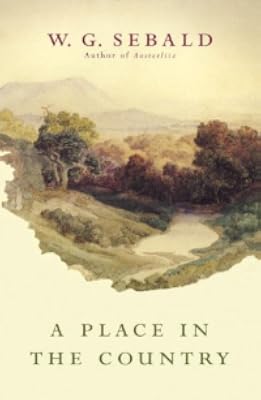
A Place in the Country
by W. G. Sebald 
On This Page
Description
W. G. Sebald's meditation on the six artists and writers who shaped his creative mind--and the last of this great writer's major works to be translated into English.Tags
Recommendations






Member Reviews
The mistake we always make as listeners is to imagine that these miracles of composition, language and music are drawing directly upon their natural heritage, whereas in fact they are the most artificial thing about it.
Measured and strange. I felt an unexpected peace when reading these essays. There was a shadowed forbearance at play---if only within myself. The careful apprehension in each essay is a point of contemplation, despite the assurances from the author that these are "glosses" from alleged "margins". Aside from the looks at Rousseau and Walser Sebald walks in some strange territory, though with signature estrangement.
There's parenthetical charm in books of authors on other authors, I was exclaiming my joy in such when in the show more essay on Walser, Sebald notes the similarity of Walser with the Gogol studied by Nabokov. He stole my thunder, I screeched with a bootless cry. I am actually barefoot, its hot as hell outside. show less
Measured and strange. I felt an unexpected peace when reading these essays. There was a shadowed forbearance at play---if only within myself. The careful apprehension in each essay is a point of contemplation, despite the assurances from the author that these are "glosses" from alleged "margins". Aside from the looks at Rousseau and Walser Sebald walks in some strange territory, though with signature estrangement.
There's parenthetical charm in books of authors on other authors, I was exclaiming my joy in such when in the show more essay on Walser, Sebald notes the similarity of Walser with the Gogol studied by Nabokov. He stole my thunder, I screeched with a bootless cry. I am actually barefoot, its hot as hell outside. show less
A Place in the country is a collection of essays that breathe the atmosphere of nostalia and Heimatsverlangen, a longing for one's nation. For a long time, this type of sentiment was all but taboo for German authors. Sebald describes how, as a young man he travelled to England to work there for three years, packing his most dearest authors. What binds all these authors together is their connection to the ancestral homeland, which is also Sebald's. However, this homeland connection seems more spiritual than actual, as sebald was born in Bavaria, while the authors brought together in his selection originate from the area of Southwestern Germany and Switzerland. It is less a home land, and more like a home region, the Allgäu, which show more includes the southernmost parts of Baden-Württemberg and Bavaria, in the border region with Switzerland and Austria, including the Black Forest. This is Sebald intellectual Heimat, as he studied at the University of Freiburg and later lived in St. Gallen for a year.
A Place in the country is a collection of essays about Johann Peter Hebel, Jean-Jacques Rousseau, Eduard Mörike, Gottfried Keller and Robert Walser, with an additional essay about the artist Jan Peter Tripp. Most of these authors are considered marginal, for once, because Hebel wrote in a German dialect which is very hard to understand, and Mörike is considered a minor German author. In almost all essays, Sebald pays more attention to the authors' troubled lives than to their literary production, and in the case of Rousseau Sebald seeks proximity to the author through the experience of the land, the small island and the monastery where Rousseau lived, a place Sebald often visited.
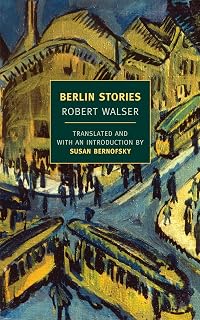
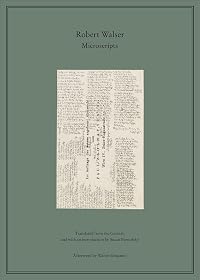
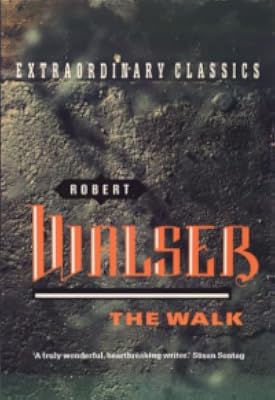
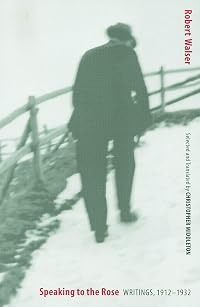
Another feature that binds these authors is that they were all outsiders, particularly in the case of Keller and Walser pathologically. They were introverted people who shied away from contact, which in the case of Walser even found expression in the form of a nearly impossible to deciphre micro script.
Most of the essays are easy to read, as they focus more on biographical detail than on literary features. However, at the beginning of several of the essays, there are cryptic references to historical figures. Thus, the essay about Mörike begins with a reference to Napoleon, "and his precursor, thre trailblazer with the red Phrygian cap" (p. 69). In some of the essays the author uses unnecessary difficult terminology, for instance hinting at "Hebel's particular fondness for the paratactic conjunctions" (p.17). There are several long quotations in "Alemannic" dialect from Hebel and Sebald often uses french quotations or references. For a German author, it would be more logical to use the German place names than the French, but in many places Sebald apparently prefers "Lac de Bienne over "Bieler See. Although they are small details, they lend the essays a somewhat artificial type of erudition, which seems characteristic of Sebald's writing style. In the English edition of A Place in the country most of these difficulties have been smoothed by the translator / editor Jo Catling who has also provided and excellent introduction, translator's notes, and bibliography. The translation is excellent, with dialect passages quoted in full plus translation in brackets, but where needed, essential terminology is retained in German, and explained in notes.
It was the aim of the author to create "a beautiful book", and this aesthetic sense has been retained in the English edition. The text is richly illustrated, containing several large full-colour plates of contemporaries of the authors. The cloth edition of Hamish Hamilton (Penguin Books) is a gorgeous volume, and the beauty of the book greatly enhances the pleasure of reading it. show less
A Place in the country is a collection of essays about Johann Peter Hebel, Jean-Jacques Rousseau, Eduard Mörike, Gottfried Keller and Robert Walser, with an additional essay about the artist Jan Peter Tripp. Most of these authors are considered marginal, for once, because Hebel wrote in a German dialect which is very hard to understand, and Mörike is considered a minor German author. In almost all essays, Sebald pays more attention to the authors' troubled lives than to their literary production, and in the case of Rousseau Sebald seeks proximity to the author through the experience of the land, the small island and the monastery where Rousseau lived, a place Sebald often visited.
Another feature that binds these authors is that they were all outsiders, particularly in the case of Keller and Walser pathologically. They were introverted people who shied away from contact, which in the case of Walser even found expression in the form of a nearly impossible to deciphre micro script.
Most of the essays are easy to read, as they focus more on biographical detail than on literary features. However, at the beginning of several of the essays, there are cryptic references to historical figures. Thus, the essay about Mörike begins with a reference to Napoleon, "and his precursor, thre trailblazer with the red Phrygian cap" (p. 69). In some of the essays the author uses unnecessary difficult terminology, for instance hinting at "Hebel's particular fondness for the paratactic conjunctions" (p.17). There are several long quotations in "Alemannic" dialect from Hebel and Sebald often uses french quotations or references. For a German author, it would be more logical to use the German place names than the French, but in many places Sebald apparently prefers "Lac de Bienne over "Bieler See. Although they are small details, they lend the essays a somewhat artificial type of erudition, which seems characteristic of Sebald's writing style. In the English edition of A Place in the country most of these difficulties have been smoothed by the translator / editor Jo Catling who has also provided and excellent introduction, translator's notes, and bibliography. The translation is excellent, with dialect passages quoted in full plus translation in brackets, but where needed, essential terminology is retained in German, and explained in notes.
It was the aim of the author to create "a beautiful book", and this aesthetic sense has been retained in the English edition. The text is richly illustrated, containing several large full-colour plates of contemporaries of the authors. The cloth edition of Hamish Hamilton (Penguin Books) is a gorgeous volume, and the beauty of the book greatly enhances the pleasure of reading it. show less
less impressive than Austerlitz and the rings of Saturn, but the portrait of Robert Walser is one of the most beautiful things I've ever read. I was completely overwhelmed.
My favorite parts of A PLACE IN THE COUNTRY revolve around W.G. Sebald's questions about understanding meaning and the universe,
as well as Rousseau's use of cards, echoed in Roscoe Mitchell's composition "Cards."
Memorable quotes include: "the brink of the abyss" (Hello, January 6th) and "the pathological aspect of thought."
Erudite and inspiring, yes; also reverberates with a depressing focus on death...
a connecting theme, aside from - and with the exception of J.J. Rousseau - rescue from the oblivion
of old and not popular writers - is madness and to honor the beauty that inspired him.
Jean Jacques Rousseau - philosopher and author banished to refuge on Ile Saint Pierre
Johann Peter Hebel - writer of nature and Cosmological Almanac - show more speaks of "madness of war"
Gottfried Keller - Swiss critic of Germany
Edward Morike - poor, sick, and depressed poet
Robert Walser - mysterious author in asylum writes constantly of emotions - "night-bird shyness"
Jan Peter Tripps - hyper-realistic painter, also in asylum show less
as well as Rousseau's use of cards, echoed in Roscoe Mitchell's composition "Cards."
Memorable quotes include: "the brink of the abyss" (Hello, January 6th) and "the pathological aspect of thought."
Erudite and inspiring, yes; also reverberates with a depressing focus on death...
a connecting theme, aside from - and with the exception of J.J. Rousseau - rescue from the oblivion
of old and not popular writers - is madness and to honor the beauty that inspired him.
Jean Jacques Rousseau - philosopher and author banished to refuge on Ile Saint Pierre
Johann Peter Hebel - writer of nature and Cosmological Almanac - show more speaks of "madness of war"
Gottfried Keller - Swiss critic of Germany
Edward Morike - poor, sick, and depressed poet
Robert Walser - mysterious author in asylum writes constantly of emotions - "night-bird shyness"
Jan Peter Tripps - hyper-realistic painter, also in asylum show less
Su alcuni saggi metterei 5 stelle (anzi, su quasi tutti, giusto quello di Hebel è poco fruibile, per me, perche' non conosco l'autore). Di Sebald ammiro l'amichevolezza dell'eloquio, la profondita' del sentire, l'attenzione al dettaglio. In questa raccolta di saggi ho scoperto Tripp e mi sono commosso di Walser, stupito di Rousseau e incuriosito di Keller. Per un libercolo da 200 pagine non c'e' male.
A Place in the Country is a window into the brilliant mind of W. G. Sebald
'The greatest writer of our time' Peter Carey
When W. G. Sebald travelled to Manchester in 1966, he packed in his bags certain literary favourites which would remain central to him throughout the rest of his life and during the years when he was settled in England. In A Place in the Country, he reflects on six of the figures who shaped him as a person and as a writer, from Jean-Jacques Rousseau to Jan Peter Tripp.
Fusing biography and essay, and finding, as ever, inspiration in place - as when he journeys to the Ile St. Pierre, the tiny, lonely Swiss island where Jean-Jacques Rousseau found solace and inspiration - Sebald lovingly brings his subjects to life in his show more distinctive, inimitable voice.
'A fascinating volume that confirms Sebald as one of Europe's most mysterious and best-loved literary imaginations' Evening Standard
'Sebald was in possession of the uncanny ability to make his own intellectual obsessions, immediately, compulsively his reader's' Observer
'Irresistible . . . an intimate anatomy of the pathos, absurdity and perverse splendour of trying to find patterns in the chaos of the world' Independent
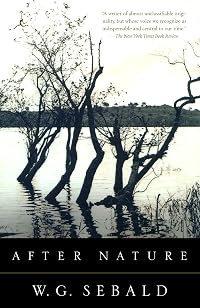
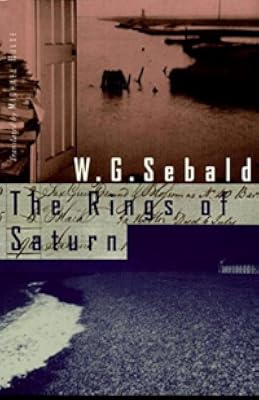
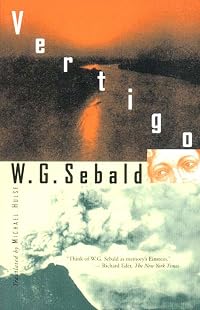
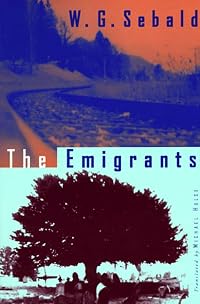
W . G. Sebald was born in Wertach im Allgäu, Germany, in 1944 and died in December 2001. He studied German language and literature in Freiburg, Switzerland and Manchester. In 1996 he took up a position as an assistant lecturer at the University of Manchester and settled permanently in England in 1970. He was Professor of European Literature at the University of East Anglia and is the author of The Emigrants, The Rings of Saturn, Vertigo, Austerlitz, After Nature, On the Natural History of Destruction, Campo Santo, Unrecounted and a selection of poetry, Across the Land and the Water.
Jo Catling taught German for a number of years alongside W. G. Sebald at the University of East Anglia, where she is currently a senior lecturer in the School of Literature, Drama and Creative Writing. show less
'The greatest writer of our time' Peter Carey
When W. G. Sebald travelled to Manchester in 1966, he packed in his bags certain literary favourites which would remain central to him throughout the rest of his life and during the years when he was settled in England. In A Place in the Country, he reflects on six of the figures who shaped him as a person and as a writer, from Jean-Jacques Rousseau to Jan Peter Tripp.
Fusing biography and essay, and finding, as ever, inspiration in place - as when he journeys to the Ile St. Pierre, the tiny, lonely Swiss island where Jean-Jacques Rousseau found solace and inspiration - Sebald lovingly brings his subjects to life in his show more distinctive, inimitable voice.
'A fascinating volume that confirms Sebald as one of Europe's most mysterious and best-loved literary imaginations' Evening Standard
'Sebald was in possession of the uncanny ability to make his own intellectual obsessions, immediately, compulsively his reader's' Observer
'Irresistible . . . an intimate anatomy of the pathos, absurdity and perverse splendour of trying to find patterns in the chaos of the world' Independent
W . G. Sebald was born in Wertach im Allgäu, Germany, in 1944 and died in December 2001. He studied German language and literature in Freiburg, Switzerland and Manchester. In 1996 he took up a position as an assistant lecturer at the University of Manchester and settled permanently in England in 1970. He was Professor of European Literature at the University of East Anglia and is the author of The Emigrants, The Rings of Saturn, Vertigo, Austerlitz, After Nature, On the Natural History of Destruction, Campo Santo, Unrecounted and a selection of poetry, Across the Land and the Water.
Jo Catling taught German for a number of years alongside W. G. Sebald at the University of East Anglia, where she is currently a senior lecturer in the School of Literature, Drama and Creative Writing. show less
An enjoyable enough read but nothing earth-shattering. A lovely piece on Swiss author Robert Walser, though.
Members
- Recently Added By
Published Reviews
ThingScore 75
Ausblicke von Schönheit und Intensität
added by Indy133
Lists

German Literature
518 works; 55 members
Author Information

32+ Works 16,959 Members
He studied German language and literature in Freiburg, Switzerland and Manchester. He has taught at the University of East Anglia in Norwich, England since 1970. He became a professor of European literature in 1987. From 1989 to 1994 was the first director of the British Centre for Literary Translation. He was born in Wertach in Allgau, Germany in show more 1944. (Bowker Author Biography) show less
W. G. Sebald has a Legacy Library. Legacy libraries are the personal libraries of famous readers, entered by LibraryThing members from the Legacy Libraries group.
Some Editions
Series
Belongs to Publisher Series
Common Knowledge
- Canonical title*
- Logies in een landhuis
- Original title
- Logis in einem Landhaus
- Alternate titles*
- Logies in een landhuis : schrijversportretten
- Original publication date
- 1998
- People/Characters
- Johann Peter Hebel; Rousseau, Jean-Jacques, 1712-1778; Eduard Mörike; Gottfried Keller; Robert Walser; Jan Peter Tripp
- First words
- Sono passati più di trent'anni ormai, da quando ho scoperto gli scrittori protagonisti dei saggi raccolti in questo volume.
- Last words
- (Click to show. Warning: May contain spoilers.)E tuttavia proprio da questo occhio un po' adombrato noi ci sentiamo messi a nudo.
- Original language
- Tedesco
*Some information comes from Common Knowledge in other languages. Click "Edit" for more information.
Classifications
- Genres
- Nonfiction, Literature Studies and Criticism, Biography & Memoir
- DDC/MDS
- 700.92 — Arts & recreation Arts Arts & Recreation Historical, geographic, persons treatment of the arts Biography
- LCC
- PT155 .S4313 — Language and Literature German, Dutch and Scandinavian literatures German literature History of German literature
- BISAC
Statistics
- Members
- 418
- Popularity
- 73,945
- Reviews
- 12
- Rating
- (3.92)
- Languages
- 10 — Dutch, English, Finnish, French, German, Italian, Japanese, Portuguese, Swedish, Turkish
- Media
- Paper, Ebook
- ISBNs
- 16
- ASINs
- 5