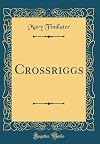
Crossriggs
by Mary Findlater, Jane Findlater
On This Page
Description
Excerpt from Crossriggs Young Van Cassilis, and Old Hopeful, as we called Alexandra's father, with his venerable white head, his beaming, benevolent eye, his hopes for the world, and his. About the Publisher Forgotten Books publishes hundreds of thousands of rare and classic books. Find more at www.forgottenbooks.com This book is a reproduction of an important historical work. Forgotten Books uses state-of-the-art technology to digitally reconstruct the work, preserving the original format show more whilst repairing imperfections present in the aged copy. In rare cases, an imperfection in the original, such as a blemish or missing page, may be replicated in our edition. We do, however, repair the vast majority of imperfections successfully; any imperfections that remain are intentionally left to preserve the state of such historical works. show lessTags
Recommendations











Member Reviews
Crossriggs is set in a small village not far from late Victorian Edinburgh, where Alex Hope, her elderly and quixotic father, widowed sister, and five young nieces and nephews, struggle on the very lower fringes of gentility. Much of the novel centres on Alex's attempt to earn enough to keep her family going, and the small dramas created both by Alex's sometimes unheedingly sharp tongue and by the fact that three men have feelings for her, yet for various reasons she cannot (let herself) return those feelings.
I can see why the book was a bestseller when it was first published, but I can also see why it's been out of print for decades. The structure and pacing are baggy and uneven, there are tonal wobbles (perhaps the result of it being show more a co-written novel), and as Crossriggs progresses the constant moralising combines with an injection of melodrama in a way I just didn't vibe with.There's a minor Villainess character who appears to have been transplanted from another kind of book. She doesn't convince, and there's a way the Findlaters have of describing her physicality and that of other people in the book as revelatory of character that felt akin to phrenology. It's a novel that's of its time and doesn't transcend it.
I respect that the Findlaters chose to buck expectations in a couple of ways. First, by creating a lead character with whom we are clearly supposed to empathize, who is independent and intelligent and sometimes charming, but whom the narrative also acknowledges (though perhaps not always fully) is someone who can be bitter, resentful, snobbish, and passive-aggressive. Second, byhaving Alex remain unmarried, as much by preference as by circumstance, and choosing to head off on a life of world travel and discovery instead. Even today, that kind of ending to this kind of middlebrow novel is unusual—I have to imagine a lot more so in 1908. And relatedly, I'm sure this was considered a progressive book back in the day because Alex's eldest niece ends the novel engaged to a Jewish man, with the evident approval of both her family and of the narrative. However, let's just say that the Findlaters still have some, uh, attitudes about Jewish people that are pretty othering, and Alex and her sister are relieved to find out in the end that the man is only half-Jewish. Oof.
If you're curious about what an older, poorer Emma Woodhouse-esque character would look like inside a Gaskell novel, give this a try, but otherwise I'm lukewarm on it. show less
I can see why the book was a bestseller when it was first published, but I can also see why it's been out of print for decades. The structure and pacing are baggy and uneven, there are tonal wobbles (perhaps the result of it being show more a co-written novel), and as Crossriggs progresses the constant moralising combines with an injection of melodrama in a way I just didn't vibe with.
I respect that the Findlaters chose to buck expectations in a couple of ways. First, by creating a lead character with whom we are clearly supposed to empathize, who is independent and intelligent and sometimes charming, but whom the narrative also acknowledges (though perhaps not always fully) is someone who can be bitter, resentful, snobbish, and passive-aggressive. Second, by
If you're curious about what an older, poorer Emma Woodhouse-esque character would look like inside a Gaskell novel, give this a try, but otherwise I'm lukewarm on it. show less
Alexandra Hope is a 30-ish unmarried woman living with her father in the village of Crossriggs, near Edinburgh. When her older sister Matilda is widowed, she and her 5 children return to Crossriggs to live at home. The two sisters are close, but couldn't be more different. Matilda is a bit of a doormat, and rarely expresses her own thoughts. In fact, Matilda generally agreed with everyone about everything, even if she happened to hold another opinion... (p. 35). Alex is strong and independent, and has rejected proposals rather than using marriage to achieve financial security. Recognizing that the new arrivals will stretch the family's ability to make ends meet, she finds employment in daily "read aloud" sessions with a Admiral show more Cassilis, an elderly, wealthy blind man.
Supporting the two sisters are a strong cast of village locals, many of whom are quite amusing. For example, Alex and Matilda's father is a vegetarian, which from the tone of the novel, must have been quite unusual in Victorian England. And Mr. Hope (known to many as "Old Hopeless") takes it a step further by declaring himself a "fruitarian" and living off garden apples past their prime. He engages in humorous attempts to educate house guests by subjecting them to his favorite foods. And then there is Miss Bessie Reid, a spinster of a certain age:
Miss Bessie Reid -- good woman! -- was skilled in all the little arts that make home hideous. There was a specimen of her handiwork at every turn -- a painted tambourine here, a stark water-colour there, whilst miniature animals in crockery seemed to crawl on every ledge. ... Taste, I suppose, is only a constant delicate expression of opinion, and Miss Bessie's opinions -- poor dear! -- must have been singularly confused. (p. 141)
On her first visit to the Admiral, Alex meets his grandson Van, who is new to Crossriggs. Van is several years younger than Alex, but he is immediately attracted to her. She is oblivious to his attentions, first because of the age difference, and second because Alex herself has strong affections for Robert Maitland. Maitland is a long-standing family friend and the attraction is mutual. He is, however, married. Both Maitland and Alex take great pains to conceal their affections, even from each other. And yet Alex is both sufficiently devoted and independent to rebuff Van's advances. As the family's fortunes ebb and flow, Alex finds additional opportunities to earn income through public readings, and teaching in town. Being the breadwinner for such a large family begins to take its toll. And even as Alex shows clear signs of stress and fatigue, the annoyingly helpless Matilda just "tut tuts" and lectures Alex, while doing absolutely nothing to help provide for the family.
On the surface, this novel appears to be focused on Alex's love interests: will she and Maitland find a way to get together? Will she choose Van? But by the end of this book, it's clear the Findlater sisters were exploring much more important points. What is more important: money, or loving relationships? Why do women feel they have to marry in order to be safe and secure? Can a woman have a career? Why is it so difficult for a woman to live independently in society? And even though women have made incredible strides since the publication of Crossriggs in 1908, we still don't have good answers to those questions. show less
Supporting the two sisters are a strong cast of village locals, many of whom are quite amusing. For example, Alex and Matilda's father is a vegetarian, which from the tone of the novel, must have been quite unusual in Victorian England. And Mr. Hope (known to many as "Old Hopeless") takes it a step further by declaring himself a "fruitarian" and living off garden apples past their prime. He engages in humorous attempts to educate house guests by subjecting them to his favorite foods. And then there is Miss Bessie Reid, a spinster of a certain age:
Miss Bessie Reid -- good woman! -- was skilled in all the little arts that make home hideous. There was a specimen of her handiwork at every turn -- a painted tambourine here, a stark water-colour there, whilst miniature animals in crockery seemed to crawl on every ledge. ... Taste, I suppose, is only a constant delicate expression of opinion, and Miss Bessie's opinions -- poor dear! -- must have been singularly confused. (p. 141)
On her first visit to the Admiral, Alex meets his grandson Van, who is new to Crossriggs. Van is several years younger than Alex, but he is immediately attracted to her. She is oblivious to his attentions, first because of the age difference, and second because Alex herself has strong affections for Robert Maitland. Maitland is a long-standing family friend and the attraction is mutual. He is, however, married. Both Maitland and Alex take great pains to conceal their affections, even from each other. And yet Alex is both sufficiently devoted and independent to rebuff Van's advances. As the family's fortunes ebb and flow, Alex finds additional opportunities to earn income through public readings, and teaching in town. Being the breadwinner for such a large family begins to take its toll. And even as Alex shows clear signs of stress and fatigue, the annoyingly helpless Matilda just "tut tuts" and lectures Alex, while doing absolutely nothing to help provide for the family.
On the surface, this novel appears to be focused on Alex's love interests: will she and Maitland find a way to get together? Will she choose Van? But by the end of this book, it's clear the Findlater sisters were exploring much more important points. What is more important: money, or loving relationships? Why do women feel they have to marry in order to be safe and secure? Can a woman have a career? Why is it so difficult for a woman to live independently in society? And even though women have made incredible strides since the publication of Crossriggs in 1908, we still don't have good answers to those questions. show less
I often roam my favorite book blogs to see what others are reading and recommending. (Just what I need, more to read, but nonetheless, I roam away.)
Both Eden Rock and Heavenali praised a somewhat obscure Scottish novel called Crossriggs.
My library didn't have a copy, so I turned to our inter library system. My little book had to travel almost 700 miles from the library at University of California, Long Beach -- which cost me nothing. (Most every library has an inter-library loan arrangement for its patrons, and may I just say bravo to our public libraries throughout the country, both big and small.) The loan did come with some stringent rules -- I could only renew it once, and late fees racked up at $1 per day. So with that pressure, show more and after taking a moment to admire the beautiful illustration on the cover --"Lady in Grey" by Daniel MacNee, I opened this book and fell in.
The novel opens with introductions to the principal characters in the small Scottish village of Crossriggs, then the first chapter enticingly sets up the plot:
These, then, were the principal characters in our little world of Crossriggs - a world that jogged along very quietly as a rule, and where "nothing ever happened", as the children say. Then quite suddenly, two things happened. Matilda Chalmers husband died in Canada, and we hear that she was coming home with all her children to live at Orchard House. That was the first event. The next was that the Admiral's good-for-nothing son died abroad, and young Van Cassilis, his grandson and heir, came to Foxe Hall. Then and there happenings began.
Crossriggs was written in 1908 by by two sisters who together produced novels, poetry, short stories and non-fiction. At the beginning of their writing career, the sisters were so impoverished, their first works were scribbled and submitted on discarded sheets of grocer's paper.
This is an old fashioned read, reminiscent of Jane Austen but without all the characters. (I always have trouble keeping Austen's multitude of characters straight.) Because Crossriggs takes place in a small village, the characters are limited in number and more manageable for the reader.
Alexandra Hope, our main character, practically sparkles off the pages -- full of happiness, love and with ambitions and ideas passed down from her vegetarian, head-in-the-clouds, idealist father...called Old Hopeful. Alex is described as rather plain, but brimming with dreams, imagination and mostly energy. A male admirer in the village describes her best:
“‘Alex,’ he said, ‘you have a genius for living! You just know how to do it . . . You’re alive, and most of us, with our prudence and foresight and realisation of our duties, are as dead as stones!'”
When Alex's widowed sister Matilda comes home with her five children, the household is not only strained for space, but also for money. Alex adores her sister and children, and happily takes on running the now overflowing household and more than her fair share of caring for Matilda's children. Alex acquires two jobs to bring in the necessary funds to feed and care the now expanded family. Unlike Alex, Matilda is beautiful but meek, lacking the bravery of her sister. She seemed to be always sewing something (thus the beautiful cover).
Their increased family size and the strain upon the household finances does not trouble Alex's father , Old Hopeful -- he leaves the worrying to Alex:
The ordinary limitations of poverty were nothing to a man of Old Hopeful's temperament; "A handful with quietness! A dinner of herbs where love is! Who would want more? ...What I spent I had: what I save I lost: What I gave I have."
Old Hopeful is a loving father, and while Alex finds him frustrating, her love for him shines through:
Futile, Quixotic, absurd and unsuccessful, as she knew her father to be, she recognized that he had the right of the argument of life.
The reader can sense the authors took great pains to get everything just right - the characters, the village settings, the weather, the change of seasons -- all lovingly crafted. Many of the observations are pure delight:
But the house that had once been the Manse remained much the same always -- no bow-windows or iron railings there. A tall man (and the Maitlands were all tall men) had to stoop his head to enter the low doorway - an open door it had always been to rich and poor alike. The square hall was half-dark and paved with black and white flags; the sitting rooms, low-roofed and sunny, wore always the same air of happy frugality with their sun burnt hangings and simple, straight-legged furniture. There was no attempt at decoration for decoration's sake, only an effect which was the outcome of austere refinement in the midst of plenty.
And this description of the beloved Miss Bessie's eccentric wardrobe:
Miss Bessie's taste was not coherent, and as time went on, this want of sequence increased. It seemed as if she could not adhere to a scheme even in braid and buttons, for her bodice would be trimmed with one kind of lace, and her wrists (those bony wrists with their plaintive jingle of bangles) with cascades of another pattern. In her headgear especially she was addicted to a little of everything - a bow of velvet, a silk ribbon, an ostrich tip, a buckle, a wing from some other fowl, and always, always, a glitter of beads.
Crossriggs is definitely a period piece and, like Trollope or Dickens, ones reading must slow to a careful pace. The sisters Findlater are excessive in their use of quotation marks. This can get confusing, as not only are conversations in quotes, but the characters thoughts are also in quotes. I found myself thinking "wait a minute did she actually say that?" "Oh no, she was just thinking it..." See how I use the quotations - confusing. Also, there's a great many exclamation points, which again, is part and parcel of the period.
But this slow reading pace will reward the reader with some priceless observations and tidbits.
...the faint jangle of the door-bell (the Hopes' door-bell sounded as if it had lost its voice from talking too much).
and this
"Things are so different when looked at from the outside! Of course they are, that is whey we make most of our mistakes in life."
For me, the best part of Crossriggs was Alex, I really liked her spirit and found myself cheering her at every insurmountable turn. Towards the end, a great trip is planned...and Alex remains Alex as with this rebuttal about needing a new dress:
"Pooh!, Alex cried. Clothes! Why Matilda, there's the world - the great round, interesting world to see!"
And who could not relate to her ability to escape into books:
...Alex sat by the fire, snatching half an hour of reading before the children all came tumbling in again. Her thoughts were very far away, for she had the happy power of forgetting the outer world altogether when she read anything that interested her.
The plot takes some twists - some expected and unexpected (there's an accidental death that shook me for hours), but it's the village life, the characters and the observations that truly shine in this book.
Crossriggs may not be for everyone, but I adored it. It's a slow, quiet read and spurred by my inter-library loan deadline, I stuck with it and am very happy to have made the effort. It was sad to send this copy of Crossriggs back home to Long Beach. I'm going to find my own copy to add to my library. show less
Both Eden Rock and Heavenali praised a somewhat obscure Scottish novel called Crossriggs.
My library didn't have a copy, so I turned to our inter library system. My little book had to travel almost 700 miles from the library at University of California, Long Beach -- which cost me nothing. (Most every library has an inter-library loan arrangement for its patrons, and may I just say bravo to our public libraries throughout the country, both big and small.) The loan did come with some stringent rules -- I could only renew it once, and late fees racked up at $1 per day. So with that pressure, show more and after taking a moment to admire the beautiful illustration on the cover --"Lady in Grey" by Daniel MacNee, I opened this book and fell in.
The novel opens with introductions to the principal characters in the small Scottish village of Crossriggs, then the first chapter enticingly sets up the plot:
These, then, were the principal characters in our little world of Crossriggs - a world that jogged along very quietly as a rule, and where "nothing ever happened", as the children say. Then quite suddenly, two things happened. Matilda Chalmers husband died in Canada, and we hear that she was coming home with all her children to live at Orchard House. That was the first event. The next was that the Admiral's good-for-nothing son died abroad, and young Van Cassilis, his grandson and heir, came to Foxe Hall. Then and there happenings began.
Crossriggs was written in 1908 by by two sisters who together produced novels, poetry, short stories and non-fiction. At the beginning of their writing career, the sisters were so impoverished, their first works were scribbled and submitted on discarded sheets of grocer's paper.
This is an old fashioned read, reminiscent of Jane Austen but without all the characters. (I always have trouble keeping Austen's multitude of characters straight.) Because Crossriggs takes place in a small village, the characters are limited in number and more manageable for the reader.
Alexandra Hope, our main character, practically sparkles off the pages -- full of happiness, love and with ambitions and ideas passed down from her vegetarian, head-in-the-clouds, idealist father...called Old Hopeful. Alex is described as rather plain, but brimming with dreams, imagination and mostly energy. A male admirer in the village describes her best:
“‘Alex,’ he said, ‘you have a genius for living! You just know how to do it . . . You’re alive, and most of us, with our prudence and foresight and realisation of our duties, are as dead as stones!'”
When Alex's widowed sister Matilda comes home with her five children, the household is not only strained for space, but also for money. Alex adores her sister and children, and happily takes on running the now overflowing household and more than her fair share of caring for Matilda's children. Alex acquires two jobs to bring in the necessary funds to feed and care the now expanded family. Unlike Alex, Matilda is beautiful but meek, lacking the bravery of her sister. She seemed to be always sewing something (thus the beautiful cover).
Their increased family size and the strain upon the household finances does not trouble Alex's father , Old Hopeful -- he leaves the worrying to Alex:
The ordinary limitations of poverty were nothing to a man of Old Hopeful's temperament; "A handful with quietness! A dinner of herbs where love is! Who would want more? ...What I spent I had: what I save I lost: What I gave I have."
Old Hopeful is a loving father, and while Alex finds him frustrating, her love for him shines through:
Futile, Quixotic, absurd and unsuccessful, as she knew her father to be, she recognized that he had the right of the argument of life.
The reader can sense the authors took great pains to get everything just right - the characters, the village settings, the weather, the change of seasons -- all lovingly crafted. Many of the observations are pure delight:
But the house that had once been the Manse remained much the same always -- no bow-windows or iron railings there. A tall man (and the Maitlands were all tall men) had to stoop his head to enter the low doorway - an open door it had always been to rich and poor alike. The square hall was half-dark and paved with black and white flags; the sitting rooms, low-roofed and sunny, wore always the same air of happy frugality with their sun burnt hangings and simple, straight-legged furniture. There was no attempt at decoration for decoration's sake, only an effect which was the outcome of austere refinement in the midst of plenty.
And this description of the beloved Miss Bessie's eccentric wardrobe:
Miss Bessie's taste was not coherent, and as time went on, this want of sequence increased. It seemed as if she could not adhere to a scheme even in braid and buttons, for her bodice would be trimmed with one kind of lace, and her wrists (those bony wrists with their plaintive jingle of bangles) with cascades of another pattern. In her headgear especially she was addicted to a little of everything - a bow of velvet, a silk ribbon, an ostrich tip, a buckle, a wing from some other fowl, and always, always, a glitter of beads.
Crossriggs is definitely a period piece and, like Trollope or Dickens, ones reading must slow to a careful pace. The sisters Findlater are excessive in their use of quotation marks. This can get confusing, as not only are conversations in quotes, but the characters thoughts are also in quotes. I found myself thinking "wait a minute did she actually say that?" "Oh no, she was just thinking it..." See how I use the quotations - confusing. Also, there's a great many exclamation points, which again, is part and parcel of the period.
But this slow reading pace will reward the reader with some priceless observations and tidbits.
...the faint jangle of the door-bell (the Hopes' door-bell sounded as if it had lost its voice from talking too much).
and this
"Things are so different when looked at from the outside! Of course they are, that is whey we make most of our mistakes in life."
For me, the best part of Crossriggs was Alex, I really liked her spirit and found myself cheering her at every insurmountable turn. Towards the end, a great trip is planned...and Alex remains Alex as with this rebuttal about needing a new dress:
"Pooh!, Alex cried. Clothes! Why Matilda, there's the world - the great round, interesting world to see!"
And who could not relate to her ability to escape into books:
...Alex sat by the fire, snatching half an hour of reading before the children all came tumbling in again. Her thoughts were very far away, for she had the happy power of forgetting the outer world altogether when she read anything that interested her.
The plot takes some twists - some expected and unexpected (there's an accidental death that shook me for hours), but it's the village life, the characters and the observations that truly shine in this book.
Crossriggs may not be for everyone, but I adored it. It's a slow, quiet read and spurred by my inter-library loan deadline, I stuck with it and am very happy to have made the effort. It was sad to send this copy of Crossriggs back home to Long Beach. I'm going to find my own copy to add to my library. show less
In the tiny Scottish village of Crossriggs, Alexandra Hope lives with her unworldly father. He is an impractical, vegetarian dreamer, called Old Hopeful by the locals, she one of those wonderfully spirited, unconventional Victorian women. Crossriggs is just an hour or so by train to Edinburgh – but it might be much further – it feels like a place far removed from polite Scottish society – remote and rather narrow – but also quite comfortably small, set against a backdrop of awe-inspiring countryside.
The household at Orchard House is a very poor one, only Alex – as she is generally called – worries about the practical aspects of being so poor. Then Alex’s older sister Matilda, now widowed returns to her father’s house show more with her five children.
“On the day of Matilda’s home-coming, Mr Hope was on his way to the station, hurrying along full of benevolent sympathy for his bereaved daughter, when he met Miss Elizabeth Maitland and Miss Bessie Reid. He stopped for a moment to speak with them.
‘I am just starting for Glasgow to meet my poor Matilda and her five children. There is room in the old house for them all, and plenty of room in our hearts! I must meet her when they land – she will be in need of support and comfort, poor girl,’ he explained.
His grey hair, which he always wore very long, streamed upon the breeze, his usually ruddy face was very pale with emotion. Bessie Reid and Miss Maitland exchanged glances when he had hurried on.
‘Poor Matilda – what a home-coming!’ said Miss Bessie
‘Yes poor soul; she will need something more than his support if she has five children to provide for,’ remarked Miss Elizabeth.’ “
Alex – loves her sister and adores her nieces and nephews – especially little Mike, loves having them all around her but instantly realises how difficult things will be. Matilda is the perfect, Victorian widow and mother, a little unimaginative, still pretty; she seems merely to trust that everything will work out. Alex who has absolutely refused to entertain marriage to the one eligible (dull) man, who is interested, now sets about finding ways to help her large family.
“‘Alex,’ he said, ‘you have a genius for living! You just know how to do it . . . You’re alive, and most of us, with our prudence and foresight and realisation of our duties, are as dead as stones!'”
There is a wonderful collection of Austenesque characters in the village of Crossriggs. The most notable of these – in every way – is the Maitland family. Robert Maitland has been a friend and neighbour for as long as Alex can remember, and for as long as she can remember she has looked up to him, having adored him as a young girl Alex has never let go of her feelings for Robert Maitland despite his being older and married. Robert’s wife is Laura, a frail beauty, whose only child died several years earlier, now they live with Robert’s Aunt Elizabeth – known as Aunt E.V by everyone in Crossriggs. The Maitlands have money and position, despite which they remain on especially good terms with the impoverished Hopes. Other members of Crossriggs society include the Scotts, the minister and his wife – whom Alex and the Maitlands quietly despise and no one seems to like, and the Reids. James Reid is the man Alex refuses to marry, he now lives away from the village – while his sister, no longer young, ridiculously attired, cares for an elderly, aunt and talks about the time she spent in Europe with a group of people who she tries to make sound glamorous and interesting.
In a bid to earn money – any money for her family – Alex offers to read each day to the Irascible Admiral Cassils of Foxe Hall – a man who is very particular about the society he keeps. The Admiral is almost blind, living alone – until his grandson comes to stay – he is charmed by Alex’s reading, her voice and the two become tender, unlikely friends. The Admiral’s grandson Van Cassils is almost nine years Alex’s junior – but he too is drawn to Alex – and to the household at Orchard House. For the household – although poor – is never dull – the children are lively, entertaining and Old Hopeful is a likeable if eccentric host, and he and Alex find themselves on very much the same wave length. Van Cassils is something of a radical – much to his grandfather’s disgust – Alex is always quick to say what she thinks – and Van finds this refreshing. Alex enjoys Van’s company – his friendship has become very important to her, and she can’t help but have some concerns when a sly, superficial young woman appears on the scene.
Over the course of the next four years – Crossriggs sees many changes, comings and goings, new romances, visits from pompous relatives, tragedy and comedy. Society is never quite the same when the Maitlands are away from home, Laura’s health is suffering and through little looks and things nearly said both Robert and Alex know how the other feels. Alex is now spending several days a week travelling back and forth to Edinburgh to teach elocution, while still reading to the Admiral when she can.
I loved every bit of this novel – and have tried to write about it without spoiling it for others. Alex is a wonderful character and the community of Crossriggs is delightfully drawn. I found this book very hard to put down, so very readable, there’s drama and humour and pathos in this story of a family who like Van Cassils the reader would rather like to be a part of. I particularly loved the ending – I was cheering – it was a little untypical – and I appreciate those kinds of endings. show less
The household at Orchard House is a very poor one, only Alex – as she is generally called – worries about the practical aspects of being so poor. Then Alex’s older sister Matilda, now widowed returns to her father’s house show more with her five children.
“On the day of Matilda’s home-coming, Mr Hope was on his way to the station, hurrying along full of benevolent sympathy for his bereaved daughter, when he met Miss Elizabeth Maitland and Miss Bessie Reid. He stopped for a moment to speak with them.
‘I am just starting for Glasgow to meet my poor Matilda and her five children. There is room in the old house for them all, and plenty of room in our hearts! I must meet her when they land – she will be in need of support and comfort, poor girl,’ he explained.
His grey hair, which he always wore very long, streamed upon the breeze, his usually ruddy face was very pale with emotion. Bessie Reid and Miss Maitland exchanged glances when he had hurried on.
‘Poor Matilda – what a home-coming!’ said Miss Bessie
‘Yes poor soul; she will need something more than his support if she has five children to provide for,’ remarked Miss Elizabeth.’ “
Alex – loves her sister and adores her nieces and nephews – especially little Mike, loves having them all around her but instantly realises how difficult things will be. Matilda is the perfect, Victorian widow and mother, a little unimaginative, still pretty; she seems merely to trust that everything will work out. Alex who has absolutely refused to entertain marriage to the one eligible (dull) man, who is interested, now sets about finding ways to help her large family.
“‘Alex,’ he said, ‘you have a genius for living! You just know how to do it . . . You’re alive, and most of us, with our prudence and foresight and realisation of our duties, are as dead as stones!'”
There is a wonderful collection of Austenesque characters in the village of Crossriggs. The most notable of these – in every way – is the Maitland family. Robert Maitland has been a friend and neighbour for as long as Alex can remember, and for as long as she can remember she has looked up to him, having adored him as a young girl Alex has never let go of her feelings for Robert Maitland despite his being older and married. Robert’s wife is Laura, a frail beauty, whose only child died several years earlier, now they live with Robert’s Aunt Elizabeth – known as Aunt E.V by everyone in Crossriggs. The Maitlands have money and position, despite which they remain on especially good terms with the impoverished Hopes. Other members of Crossriggs society include the Scotts, the minister and his wife – whom Alex and the Maitlands quietly despise and no one seems to like, and the Reids. James Reid is the man Alex refuses to marry, he now lives away from the village – while his sister, no longer young, ridiculously attired, cares for an elderly, aunt and talks about the time she spent in Europe with a group of people who she tries to make sound glamorous and interesting.
In a bid to earn money – any money for her family – Alex offers to read each day to the Irascible Admiral Cassils of Foxe Hall – a man who is very particular about the society he keeps. The Admiral is almost blind, living alone – until his grandson comes to stay – he is charmed by Alex’s reading, her voice and the two become tender, unlikely friends. The Admiral’s grandson Van Cassils is almost nine years Alex’s junior – but he too is drawn to Alex – and to the household at Orchard House. For the household – although poor – is never dull – the children are lively, entertaining and Old Hopeful is a likeable if eccentric host, and he and Alex find themselves on very much the same wave length. Van Cassils is something of a radical – much to his grandfather’s disgust – Alex is always quick to say what she thinks – and Van finds this refreshing. Alex enjoys Van’s company – his friendship has become very important to her, and she can’t help but have some concerns when a sly, superficial young woman appears on the scene.
Over the course of the next four years – Crossriggs sees many changes, comings and goings, new romances, visits from pompous relatives, tragedy and comedy. Society is never quite the same when the Maitlands are away from home, Laura’s health is suffering and through little looks and things nearly said both Robert and Alex know how the other feels. Alex is now spending several days a week travelling back and forth to Edinburgh to teach elocution, while still reading to the Admiral when she can.
I loved every bit of this novel – and have tried to write about it without spoiling it for others. Alex is a wonderful character and the community of Crossriggs is delightfully drawn. I found this book very hard to put down, so very readable, there’s drama and humour and pathos in this story of a family who like Van Cassils the reader would rather like to be a part of. I particularly loved the ending – I was cheering – it was a little untypical – and I appreciate those kinds of endings. show less
This novel, written in 1908 by a pair of Scottish sisters, feels very much like a romantic novel at first. The heroine, Alex Hope, reminds one of Jo March, with all the pluck but without the sentiment. She’s a more angular and edgy character. All the inhabitants of Crossriggs are seen through her clear, often fond, and sometimes sarcastic eyes. Her father, nicknamed Old Hopeful, is lovable but entirely impractical, to the point of endangering his family, and so Alex takes on the job of supporting the household.
I enjoyed this novel and found myself gripped by it. There are certainly elements of romance, in that three men are in love with Alex during the course of the story. But none of them work for her, for various reasons, and the show more writers don’t bend her plot into a shape that will allow this to happen. No, the climax of the book comes in another way, and while it changes Alex’s life, it doesn’t change her. To the last page, though, I was expecting something different, a more typical ending. show less
I enjoyed this novel and found myself gripped by it. There are certainly elements of romance, in that three men are in love with Alex during the course of the story. But none of them work for her, for various reasons, and the show more writers don’t bend her plot into a shape that will allow this to happen. No, the climax of the book comes in another way, and while it changes Alex’s life, it doesn’t change her. To the last page, though, I was expecting something different, a more typical ending. show less
This novel, written in 1908 by a pair of Scottish sisters, feels very much like a romantic novel at first. The heroine, Alex Hope, reminds one of Jo March, with all the pluck but without the sentiment. She’s a more angular and edgy character. All the inhabitants of Crossriggs are seen through her clear, often fond, and sometimes sarcastic eyes. Her father, nicknamed Old Hopeful, is lovable but entirely impractical, to the point of endangering his family, and so Alex takes on the job of supporting the household.
I enjoyed this novel and found myself gripped by it. There are certainly elements of romance, in that three men are in love with Alex during the course of the story. But none of them work for her, for various reasons, and the show more writers don’t bend her plot into a shape that will allow this to happen. No, the climax of the book comes in another way, and while it changes Alex’s life, it doesn’t change her. To the last page, though, I was expecting something different, a more typical ending. show less
I enjoyed this novel and found myself gripped by it. There are certainly elements of romance, in that three men are in love with Alex during the course of the story. But none of them work for her, for various reasons, and the show more writers don’t bend her plot into a shape that will allow this to happen. No, the climax of the book comes in another way, and while it changes Alex’s life, it doesn’t change her. To the last page, though, I was expecting something different, a more typical ending. show less
I had lots of reasons to think I would love this book:
- It’s set in a small Scottish town, early in the 20th century.
- It’s is a collaboration between sister authors - writers working together always intrigue me.
- It’s a Virago Modern Classic.
I did love it. I can’t say that its a great book, but it is a lovely period piece.
Alexandra Hope lives in Crossriggs with her father. He is generous to a fault, he loves to help people and to try new things but he rarely stops to consider practicalities; and so the family is rather poorer than it might be. She is bright, spirited and unconventional. Marriage doesn’t appeal to Alex, and she turned down a proposal from a rather dull man who was deemed a good catch; but that didn’t mean show more she didn’t worry about her family’s situation.
Her worries increase when her recently widowed sister comes home from Canada with her five young children. Alex loves her sister and adores her nieces and nephews, but she knows that she will have to find a way to keep the family afloat. Matilda is rather more conventional than her sister, but she is almost as oblivious to practicalities as her father and she blithely assumes that everything will be alright.
Alex finds that she can earn a little money by reading to the Admiral Cassilis of Foxe Hall, the family’s blind, aristocratic neighbour. She does her job very well and that leads her to other jobs that require a lovely speaking voice.
It also leads her to a friendship with Van Cassilis, the Admiral’s nephew. It quickly becomes clear Van has deeper feelings than friendship for Alex, but those feelings are not reciprocated. She knows that he is younger than her, she doesn’t think his feelings will last, and, most significantly, she has already lost her heart to another.
Alex is in love with Robert Maitland, another neighbour who has rather more money and social standing than the hopes. He is fond of her, he is her wisest counsellor and her moral compass, but as he is married Alex knows that her she can never speak of or act on her feelings.
I was inclined to like Alex. She was a wonderfully imperfect heroine; walking a fine line between idealism and realism; pride and humility; compassion and causticity; reserve and outspokenness.
There were so many characters that were so very well drawn. I’ve mentioned some of them already, I can’t mention them all, but I can’t leave out Robert Maitland’s Aunt Elizabeth – known as Aunt E.V by everyone in Crossriggs – who was a wonderful matriarchal figure, or Miss Bessie Reid, who was no longer young, who had to look after a very elderly aunt, but who still dreamed of romance.
I believed in them all, and I believed in their village community.
The Hope household was poor but it was never dull. The children were bright and entertaining, the family patriarch – who would always by known as ‘Old Hopeful’ – was a welcoming host, and there were lots of lovely outings and much fun to be had.
The Findlater sisters must have taken such care over the characters, the community and the stories that they created. I loved them all.
I particularly loved the beautiful evocation of the changing seasons.
The story was beautifully positioned between two different eras. Much of it feels wonderfully Victorian, but Alex is quite clearly a ‘New Woman’ caught up in small town life,
The influences were clear. There are definite echoes of a particular Jane Austen novel in the characters and the relationships, and there were something in the style and in the drawing of the community that told me that the sisters must have read and loved Trollope too.
The writing style seemed fluctuate, the plot was rather uneven, but because there were so many good things, because I was so caught up, I could forgive that.
The story moved slowly for a long time, but in the later chapters all of the storylines came to a head.
Alex and Van fall out, and he makes a reckless decision that will have irreversible consequences. There’s a villainess in the mix here, and I’m afraid she was the one character I couldn’t quite believe in. Maybe because she came into this world from outside …
The unhappy loss of her friend, the pressure of the work she has taken on to support her family, takes its toll on Alex. Her physical health, her emotions and her mental health all begin to fray.
There was a suggestion that another relationship could change.
I saw an obvious ending, but there were one or two twists in the tail of this story, before it came to a conclusion that I hadn’t expected but thought was completely right. show less
- It’s set in a small Scottish town, early in the 20th century.
- It’s is a collaboration between sister authors - writers working together always intrigue me.
- It’s a Virago Modern Classic.
I did love it. I can’t say that its a great book, but it is a lovely period piece.
Alexandra Hope lives in Crossriggs with her father. He is generous to a fault, he loves to help people and to try new things but he rarely stops to consider practicalities; and so the family is rather poorer than it might be. She is bright, spirited and unconventional. Marriage doesn’t appeal to Alex, and she turned down a proposal from a rather dull man who was deemed a good catch; but that didn’t mean show more she didn’t worry about her family’s situation.
Her worries increase when her recently widowed sister comes home from Canada with her five young children. Alex loves her sister and adores her nieces and nephews, but she knows that she will have to find a way to keep the family afloat. Matilda is rather more conventional than her sister, but she is almost as oblivious to practicalities as her father and she blithely assumes that everything will be alright.
Alex finds that she can earn a little money by reading to the Admiral Cassilis of Foxe Hall, the family’s blind, aristocratic neighbour. She does her job very well and that leads her to other jobs that require a lovely speaking voice.
It also leads her to a friendship with Van Cassilis, the Admiral’s nephew. It quickly becomes clear Van has deeper feelings than friendship for Alex, but those feelings are not reciprocated. She knows that he is younger than her, she doesn’t think his feelings will last, and, most significantly, she has already lost her heart to another.
Alex is in love with Robert Maitland, another neighbour who has rather more money and social standing than the hopes. He is fond of her, he is her wisest counsellor and her moral compass, but as he is married Alex knows that her she can never speak of or act on her feelings.
I was inclined to like Alex. She was a wonderfully imperfect heroine; walking a fine line between idealism and realism; pride and humility; compassion and causticity; reserve and outspokenness.
There were so many characters that were so very well drawn. I’ve mentioned some of them already, I can’t mention them all, but I can’t leave out Robert Maitland’s Aunt Elizabeth – known as Aunt E.V by everyone in Crossriggs – who was a wonderful matriarchal figure, or Miss Bessie Reid, who was no longer young, who had to look after a very elderly aunt, but who still dreamed of romance.
I believed in them all, and I believed in their village community.
The Hope household was poor but it was never dull. The children were bright and entertaining, the family patriarch – who would always by known as ‘Old Hopeful’ – was a welcoming host, and there were lots of lovely outings and much fun to be had.
The Findlater sisters must have taken such care over the characters, the community and the stories that they created. I loved them all.
I particularly loved the beautiful evocation of the changing seasons.
The story was beautifully positioned between two different eras. Much of it feels wonderfully Victorian, but Alex is quite clearly a ‘New Woman’ caught up in small town life,
The influences were clear. There are definite echoes of a particular Jane Austen novel in the characters and the relationships, and there were something in the style and in the drawing of the community that told me that the sisters must have read and loved Trollope too.
The writing style seemed fluctuate, the plot was rather uneven, but because there were so many good things, because I was so caught up, I could forgive that.
The story moved slowly for a long time, but in the later chapters all of the storylines came to a head.
Alex and Van fall out, and he makes a reckless decision that will have irreversible consequences. There’s a villainess in the mix here, and I’m afraid she was the one character I couldn’t quite believe in. Maybe because she came into this world from outside …
The unhappy loss of her friend, the pressure of the work she has taken on to support her family, takes its toll on Alex. Her physical health, her emotions and her mental health all begin to fray.
There was a suggestion that another relationship could change.
I saw an obvious ending, but there were one or two twists in the tail of this story, before it came to a conclusion that I hadn’t expected but thought was completely right. show less
Members
- Recently Added By
Author Information

7+ Works 213 Members
3+ Works 207 Members
Some Editions
Series
Belongs to Publisher Series
Virago Modern Classics (203)
Work Relationships
Is abridged in
Common Knowledge
- Canonical title
- Crossriggs
- Original publication date
- 1908
- People/Characters
- Alexandra Hope; Mathilda Hope Chalmers; Robert Maitland
- Dedication
- To KATE DOUGLAS WIGGIN and NORA ARCHIBALD SMITH, two sisters, from two sisters, MARY and JANE FINDLATER
- First words
- "Romance, I think, is like the rainbow, always a little away from the place where you stand."
- Last words
- (Click to show. Warning: May contain spoilers.)"She turned quickly to look once more at the land they had left behind, but already it had vanished out of sight."
Classifications
Statistics
- Members
- 173
- Popularity
- 190,108
- Reviews
- 11
- Rating
- (3.81)
- Languages
- English
- Media
- Paper
- ISBNs
- 15
- ASINs
- 3