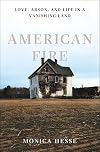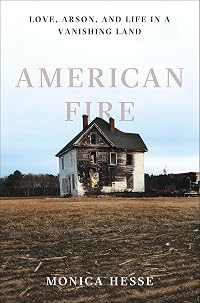
American Fire: Love, Arson, and Life in a Vanishing Land
by Monica Hesse
On This Page
Description
History. Sociology. True Crime. Nonfiction. Shocked by a five-month arson spree that left rural Virginia reeling, Washington Post reporter Monica Hesse drove down to Accomack County to cover the trial of Charlie Smith, who pled guilty to sixty-seven counts of arson. But Charlie wasn't lighting fires alone: he had an accomplice, his girlfriend Tonya Bundick. Through her depiction of the dangerous shift that happened in their passionate relationship, Hesse brilliantly brings to life the show more once-thriving coastal community and its distressed inhabitants, who had already been decimated by a punishing economy before they were terrified by a string of fires they could not explain. Incorporating this drama into the long-overlooked history of arson in the United States, American Fire re-creates the anguished nights that this quiet county spent lit up in flames, mesmerizingly evoking a microcosm of rural America - a land half gutted before the fires even began. show lessTags
Recommendations






Member Reviews
American Fire: Love, Arson, and Life in a Vanishing Land by Monica Hesse is a 2017 Liveright publication.
This is an incredible piece of true crime journalism that explores the people and events that transpired in Accomack County. Virginia in 2012/13.
Within a short five- month time frame, an astonishing number of arson fires were set, mainly in abandoned buildings and houses. This was not your typical case of pyromania- this turned out to be a 'rampage' crime- committed by a couple who claimed love was at the core of their actions.
This book takes readers through the beginning of the relationship between Charlie Smith and Tonya Bundick, when the fires started, the escalation of the crimes and the investigation which led to Charlie’s show more arrest.
The book’s construction is very much like reading a long form piece in a magazine or newspaper-but so stylishly executed, that despite knowing who the Firestarter is, the reader is compelled to turn pages until they see the culprits are caught and their motives fully examined.
The author’s emotional involvement in the story is very evident. The combination of an economic decline, the once passionate-but chaste- relationship between Charlie and Tonya that turns toxic and unhealthy, and the power plays that pits one against the other makes for a riveting read.
The book is not long, but it packs a real punch. The psychology behind arson is puzzling in the first place- not counting insurance fraud- but this case really is one for the books.
I sensed the author had compassion for all concerned, even Charlie and Tonya- but I couldn’t quite muster the same level of charity for the doers. I sensed both Charlie and Tonya got a real premeditated thrill from it, and I have wondered just how far they may have gone if left unimpeded.
However, there is one thing that really stands out in all this mayhem- The volunteer firefighters who logged in a whopping number of hours trying to control these fires. Amazing! For them, and the entire community affected by the spree, I gained the utmost respect.
Overall, a fascinating and deeply absorbing, and thought- provoking true crime piece! show less
This is an incredible piece of true crime journalism that explores the people and events that transpired in Accomack County. Virginia in 2012/13.
Within a short five- month time frame, an astonishing number of arson fires were set, mainly in abandoned buildings and houses. This was not your typical case of pyromania- this turned out to be a 'rampage' crime- committed by a couple who claimed love was at the core of their actions.
This book takes readers through the beginning of the relationship between Charlie Smith and Tonya Bundick, when the fires started, the escalation of the crimes and the investigation which led to Charlie’s show more arrest.
The book’s construction is very much like reading a long form piece in a magazine or newspaper-but so stylishly executed, that despite knowing who the Firestarter is, the reader is compelled to turn pages until they see the culprits are caught and their motives fully examined.
The author’s emotional involvement in the story is very evident. The combination of an economic decline, the once passionate-but chaste- relationship between Charlie and Tonya that turns toxic and unhealthy, and the power plays that pits one against the other makes for a riveting read.
The book is not long, but it packs a real punch. The psychology behind arson is puzzling in the first place- not counting insurance fraud- but this case really is one for the books.
I sensed the author had compassion for all concerned, even Charlie and Tonya- but I couldn’t quite muster the same level of charity for the doers. I sensed both Charlie and Tonya got a real premeditated thrill from it, and I have wondered just how far they may have gone if left unimpeded.
However, there is one thing that really stands out in all this mayhem- The volunteer firefighters who logged in a whopping number of hours trying to control these fires. Amazing! For them, and the entire community affected by the spree, I gained the utmost respect.
Overall, a fascinating and deeply absorbing, and thought- provoking true crime piece! show less
There is no mystery surrounding who the serial arsonists are in AMERICAN FIRE. We learn their identities in the first few pages. Instead Monica Hesse has another intention for her intriguing examination of events surrounding over 80 arsons of abandoned structures in rural Virginia over five months in 2012-2013. She seeks to explain the motives. In so doing, Hesse explores the impacts of local geography, sociology, economic, and especially the strange behavior of the arsonists. Does she discover an answer? Probably not. But her reliance on extensive interviewing does produce a nuanced portrait of a myriad of contributing factors as well as the community responses to the crimes. The following comment seems telling in this regard: show more “…inasmuch as there is an answer for these things, (they) involved hope, poverty, pride, Walmart, erectile dysfunction, Steak-umms . . . intrigue, and America.”
A key element in the story is its setting. Accomack County, Virginia is isolated on the Eastern Shore of Chesapeake Bay. A hundred years ago, it was the richest county in America benefiting from prosperous farms, coastal shipping and tourism. All of that is gone today. The economy is in decline, and the terrain is characterized by hundreds of abandoned buildings. Most people with jobs work for low wages in menial and repetitive labor for the chicken industry (Perdue or Tyson). Although clearly not thriving, the people seem to be persevering in a trusting environment where “doors went unlocked, bake sales and brisket fund-raisers were well attended.”
Hesse sees Accomack County as a metaphor for the economic decline in rural America in the 21st Century. As one of her main themes, she capitalizes on its inhabitants’ sense of having been left behind by the rest of America. However, the book stands out from most of the other recent examinations of the rise of the alt right in red state America by also considering the strangeness of the crime of arson, how crime waves can influence communities and the how love can drive people to exhibit inexplicably bizarre behaviors.
Characterizing Charlie Smith and Tonya Bundick as the “Bonnie and Clyde of the Eastern Shore” is a tortured analogy. About all this pair had in common with the famous outlaw duo was a co-dependent love story. Charlie and Tonya were well known in their community but lived on the margins. Their crimes weren’t particularly deadly as all of their targets were abandoned buildings and no one died as a result of the fires they set. Charlie was not very bright and had a penchant for drugs and petty crimes. Strangely, he once served as a volunteer firefighter. His key failing seems to have been a belief that he had found the love of his life in Tonya Bundick. But for some unexplained reason, he was unable to satisfy her sexually. Tonya was a strong-willed person who enjoyed being the center of attention. Undoubtedly, she manipulated her malleable partner to set those buildings alight. However, because she refused to be interviewed by Hesse and never admitted responsibility for the crimes, her motives remain unclear.
The actions by the community and first responders were indeed commendable. The community reacted with compassion and unity. “Nobody was driving drunk, nobody was burgling.” The police did their duty, sleeping in tents, manning checkpoints, mounting surveillance cameras and recruiting profilers. The firefighters slept at their stations and went out on multiple calls each night. As a reflection of community support for their work, they “became intimately acquainted with the baking skills of every sympathetic household on the Eastern Shore.” All told, Hesse calculates that the crimes required 26,378 hours of work by the Virginia State Police and 14,924 hours of overtime over five months.
The final capture of the culprits was exciting, but the legal aftermath was disappointing. show less
A key element in the story is its setting. Accomack County, Virginia is isolated on the Eastern Shore of Chesapeake Bay. A hundred years ago, it was the richest county in America benefiting from prosperous farms, coastal shipping and tourism. All of that is gone today. The economy is in decline, and the terrain is characterized by hundreds of abandoned buildings. Most people with jobs work for low wages in menial and repetitive labor for the chicken industry (Perdue or Tyson). Although clearly not thriving, the people seem to be persevering in a trusting environment where “doors went unlocked, bake sales and brisket fund-raisers were well attended.”
Hesse sees Accomack County as a metaphor for the economic decline in rural America in the 21st Century. As one of her main themes, she capitalizes on its inhabitants’ sense of having been left behind by the rest of America. However, the book stands out from most of the other recent examinations of the rise of the alt right in red state America by also considering the strangeness of the crime of arson, how crime waves can influence communities and the how love can drive people to exhibit inexplicably bizarre behaviors.
Characterizing Charlie Smith and Tonya Bundick as the “Bonnie and Clyde of the Eastern Shore” is a tortured analogy. About all this pair had in common with the famous outlaw duo was a co-dependent love story. Charlie and Tonya were well known in their community but lived on the margins. Their crimes weren’t particularly deadly as all of their targets were abandoned buildings and no one died as a result of the fires they set. Charlie was not very bright and had a penchant for drugs and petty crimes. Strangely, he once served as a volunteer firefighter. His key failing seems to have been a belief that he had found the love of his life in Tonya Bundick. But for some unexplained reason, he was unable to satisfy her sexually. Tonya was a strong-willed person who enjoyed being the center of attention. Undoubtedly, she manipulated her malleable partner to set those buildings alight. However, because she refused to be interviewed by Hesse and never admitted responsibility for the crimes, her motives remain unclear.
The actions by the community and first responders were indeed commendable. The community reacted with compassion and unity. “Nobody was driving drunk, nobody was burgling.” The police did their duty, sleeping in tents, manning checkpoints, mounting surveillance cameras and recruiting profilers. The firefighters slept at their stations and went out on multiple calls each night. As a reflection of community support for their work, they “became intimately acquainted with the baking skills of every sympathetic household on the Eastern Shore.” All told, Hesse calculates that the crimes required 26,378 hours of work by the Virginia State Police and 14,924 hours of overtime over five months.
The final capture of the culprits was exciting, but the legal aftermath was disappointing. show less
An interesting read. At the time of the fires, my office was in the county just north of Accomack, and we often traveled into Accomack on our route as large animal vets. It was a pretty terrifying time for the locals, and yes, we talked about it every day, sometimes all day long.
I felt like the author tried to be very respectful, and while admittedly I winced at some of the grammar displayed by the locals, that's truly how it works on the peninsula. I'm not embarrassed by them, but rather painfully aware that it makes them seem like funny yokels to outsiders. That can't be helped, I suppose, but my protective streak comes out when I see the risk of such exposure resulting in mocking... Thankfully the author never once comes across as show more mocking. I will say the telling presents the story as more titillating than I recall, but I think we were all busy being scared, while the rest of the country found it an interesting nightly news story.
There are interesting history tidbits throughout. The author attempts to give a real view of the area, and does a decent job. Overall an enjoyable look at Accomack, for this "born here," from a county just north. (And yes, she has it absolutely right. If you aren't born here, you are never a local. Don't even try it.) Definitely fun to see local names and places in a book, but as my father (a Delaware born-here, basically Delmarva is a law onto itself) likes to say: you know if you see us in the news, something's gone wrong. show less
I felt like the author tried to be very respectful, and while admittedly I winced at some of the grammar displayed by the locals, that's truly how it works on the peninsula. I'm not embarrassed by them, but rather painfully aware that it makes them seem like funny yokels to outsiders. That can't be helped, I suppose, but my protective streak comes out when I see the risk of such exposure resulting in mocking... Thankfully the author never once comes across as show more mocking. I will say the telling presents the story as more titillating than I recall, but I think we were all busy being scared, while the rest of the country found it an interesting nightly news story.
There are interesting history tidbits throughout. The author attempts to give a real view of the area, and does a decent job. Overall an enjoyable look at Accomack, for this "born here," from a county just north. (And yes, she has it absolutely right. If you aren't born here, you are never a local. Don't even try it.) Definitely fun to see local names and places in a book, but as my father (a Delaware born-here, basically Delmarva is a law onto itself) likes to say: you know if you see us in the news, something's gone wrong. show less
American Fire is the story of two damaged people--Charlie, a felon and former drug user and Tonya, a single mother--who meet, fall in love, and, for complicated reasons, set fires in abandoned buildings along the eastern Virginia coast. Their story is presented as emblematic of the fall of the Eastern Shore, once a prosperous commercial hub and tourist attraction, now a down on its heels rural area of vacant lots and bars. Told also are the stories of the dedicated volunteer firefighters who put out the conflagrations night after night, and the police who solved the crime. This true-crime tale is slight, but well-told and moving. Highly recommended.
I literally read this book in one sitting this morning. I woke up, made coffee and did not move from the sofa until it was finished and I only had 20 minutes to get ready for work. This was an entirely engrossing read about arsonists and the county they terrorized. It's about love, hate, economic decline, and the American dream. A string of over 60 fires breaks out in a small county, the volunteer fire departments worked over time, citizens mobilized, and people feared for their property. For five and a half months people lived on the edge of their seats. Remarkably nobody was killed or injured in any of the blazes. Wonderfully told, this nonfiction novel will suck you in.
As a narrative, this exceeded expectations—I enjoyed Hesse's accomplished but down-to-earth prose, and felt she did a decent job capturing the feel of rural Virginia without succumbing to simplistic narratives about small-town decay and obsolescence. While the book markets itself as depicting a "vanishing land," I don't think Hesse's narrative frames it quite that way.
Any prose work is going to be hard-pressed to capture as surreal a series of crimes as the Eastern Shore arson cases. I thought the story was at its best when depicting the community response, from volunteer firefighter camaraderie to Facebook speculation. Yet I'm not convinced there's any "there there" when it comes to analyzing the motivations of the perpetrators. It's show more true that the Eastern Shore is an ideal landscape for a would-be arsonist, but the events that led to the crimes feel more-or-less universal.
Perhaps this is its own lesson—if you approach a crime story looking for a metaphor, and find it, you may simply be a very good writer. Hesse dodges the trap, but what's left is just a very weird story. show less
Any prose work is going to be hard-pressed to capture as surreal a series of crimes as the Eastern Shore arson cases. I thought the story was at its best when depicting the community response, from volunteer firefighter camaraderie to Facebook speculation. Yet I'm not convinced there's any "there there" when it comes to analyzing the motivations of the perpetrators. It's show more true that the Eastern Shore is an ideal landscape for a would-be arsonist, but the events that led to the crimes feel more-or-less universal.
Perhaps this is its own lesson—if you approach a crime story looking for a metaphor, and find it, you may simply be a very good writer. Hesse dodges the trap, but what's left is just a very weird story. show less
I liked this story much more than I thought I would when I picked the book up because it fit a category of a challenge. The story really isn't the fires as much as it's a story of a rural community that has fallen on drastically devastating hard times with irrational behavior thrown into the smoldering pot. The author does a fantastic job of presenting a vivid picture of the situation. A visit to Accomack County, Virginia is not necessary in order to picture what life had become there. You didn't have to met Charlie to know who he is. What could be a straightforward story about a series of fires in this rural area suddenly becomes a story about the very souls of the people that lived through it.
Members
- Recently Added By
Author Information

7 Works 3,133 Members
Monica Hesse is a feature writer for the Washington Post. A finalist for a Livingston and a James Beard Award, she is also the author of Girl in the Blue Coat. She lives in Washington, Dc.
Some Editions
Awards and Honors
Awards
Common Knowledge
- Original publication date
- 2017
- People/Characters
- Charlie Smith; Tonya Bundick
- Important places
- Eastern Shore, Virginia, USA; Accomack County, Virginia, USA; Tasley, Virginia, USA; Virginia, USA
- Dedication
- For firefighters and lovers everywhere, but especially the ones in Tasley.
- First words
- It was cold and dry, and Deborah Clark found herself wondering, briefly, whether the dryness was important.
- Last words
- (Click to show. Warning: May contain spoilers.)A little after noon, they got back in their cars. The lunchtime traffic was bad but not too bad, and they hit the Accomack border some ninety minutes later, and everything was quiet and whatever passions had caused the fires had ended, and nothing was burning anymore.
- Publisher's editor
- Adams, Katie
- Blurbers
- Reding, Nick; Covington, Dennis; Greene, Melissa Fay
- Canonical DDC/MDS
- 364.1642
- Canonical LCC
- HV6638.5.U6
- Disambiguation notice
- "This book began as a six-thousand-word article in The Washington Post."
Classifications
- Genres
- General Nonfiction, Nonfiction
- DDC/MDS
- 364.1642 — Society, government, & culture Social problems and social services Crime Criminal offenses Crimes of property Violent offenses against property
- LCC
- HV6638.5 .U6 — Social sciences Social pathology. Social and public welfare. Criminology Social pathology. Social and public welfare. Criminology Crimes and offenses
- BISAC
Statistics
- Members
- 756
- Popularity
- 37,176
- Reviews
- 39
- Rating
- (3.82)
- Languages
- English
- Media
- Paper, Audiobook, Ebook
- ISBNs
- 9
- ASINs
- 2