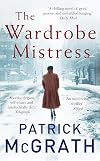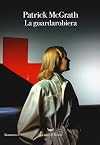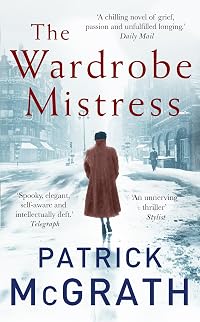
The Wardrobe Mistress
by Patrick McGrath
On This Page
Description
1947. London is in ruins, there's nothing to eat, and it's the coldest winter in living memory. To make matters worse, Charlie Grice, one of the great stage actors of the day, has suddenly died. His widow Joan, the wardrobe mistress, is beside herself with grief.Then one night she discovers Gricey's secret. Plunged into a dark new world, Joan realises that though fascism might hide, it never dies. Her war isn't over after all.Tags
Recommendations

















Member Recommendations

Member Reviews
Having read everything else McGrath has written, this one leaves me a little mystified. It feels unfinished and unrealized. Much is made of Frank hiding his current living situation and lying about it, but when Joan discovers the truth it’s uneventful and unimportant. Ditto with her meddling in the fascist group. I couldn’t even understand what her motivation was or her goal. She was pushed into it by others who seemed equally clueless about why. I did like the use of Grice’s clothes - first to resurrect and then to banish once the truth of his secret life was revealed. And the setting and circumstances were intersting, too - the theater life and Vera's process. Also Frank's improving situation and acting.
Normally so subtle and show more adept at depicting mental breakdown, I found Joan’s unraveling uneven and dull. Her final act comes out of nowhere. And among lovely gems like this - “...the memory of which in equal measure exited him to madness and maddened him with guilt.” p 204 are dull cliches like “a few mean sticks of furniture”. Oy. So unlike him to go for the hackneyed phrase. Alas I waited a long time to get this book which, as of this writing, still hasn’t been published in the States, and it was a let down. show less
Normally so subtle and show more adept at depicting mental breakdown, I found Joan’s unraveling uneven and dull. Her final act comes out of nowhere. And among lovely gems like this - “...the memory of which in equal measure exited him to madness and maddened him with guilt.” p 204 are dull cliches like “a few mean sticks of furniture”. Oy. So unlike him to go for the hackneyed phrase. Alas I waited a long time to get this book which, as of this writing, still hasn’t been published in the States, and it was a let down. show less
Patrick McGrath's latest novel is set in the London theatre community in the years right after the Second World War. The "Wardrobe Mistress" of the title is one Joan Grice, who is grieving following the sudden death of her actor husband Charlie Grice, a leading figure in Shakespearean drama. It is a difficult time for her, especially as the circumstances of his tragic demise are unclear - Joan's son-in-law Julius, husband of her daughter Vera (also an actress) might actually have had a hand in the accident. To complicate matters, Joan starts to believe that "Gricey" might have possessed a young actor who has taken on his leading role. And then there's the matter of Gricey's shocking, Fascist past...
McGrath is known as one of the leading show more contemporary authors of Gothic fiction, and this is what drew me to the book in the first place. I must say I was rather disappointed in this regard, as this is more of a "period drama" or historical/psychological thriller than your typical Gothic novel. That said, the work does feature a number of the genre's tropes - there is an ambiguous "haunting" which could be interpreted both literally and psychologically and there's also the theme of a secret past which rears its ugly head.
What irked me most however, was the novel's narrative voice. The tale is ostensibly related by an unnamed minor member of the theatrical world, but it is soon evident that this "third party" is an omniscient narrator who takes on the role of a Greek chorus. It is an original idea and one which fits nicely in a tale about the theatre. However, I often found it to be rather artificial and intrusive. Somehow, the idea of a "cockney" Greek chorus didn't work out for me.
On the plus side, the novel is effective in conveying the life and emotions of actors as they fashion and shape their on-stage role. The parallelism between a production of "The Duchess of Malfi" (in which Vera plays the lead role) and the tragic tale of the "wardrobe mistress" is also beautifully done. Indeed, whilst for me the novel was entertaining but unremarkable, theatre buffs would probably enjoy it immensely.
I received this title as an ebook from NetGalley in return for an honest review show less
McGrath is known as one of the leading show more contemporary authors of Gothic fiction, and this is what drew me to the book in the first place. I must say I was rather disappointed in this regard, as this is more of a "period drama" or historical/psychological thriller than your typical Gothic novel. That said, the work does feature a number of the genre's tropes - there is an ambiguous "haunting" which could be interpreted both literally and psychologically and there's also the theme of a secret past which rears its ugly head.
What irked me most however, was the novel's narrative voice. The tale is ostensibly related by an unnamed minor member of the theatrical world, but it is soon evident that this "third party" is an omniscient narrator who takes on the role of a Greek chorus. It is an original idea and one which fits nicely in a tale about the theatre. However, I often found it to be rather artificial and intrusive. Somehow, the idea of a "cockney" Greek chorus didn't work out for me.
On the plus side, the novel is effective in conveying the life and emotions of actors as they fashion and shape their on-stage role. The parallelism between a production of "The Duchess of Malfi" (in which Vera plays the lead role) and the tragic tale of the "wardrobe mistress" is also beautifully done. Indeed, whilst for me the novel was entertaining but unremarkable, theatre buffs would probably enjoy it immensely.
I received this title as an ebook from NetGalley in return for an honest review show less
Patrick McGrath's latest novel is set in the London theatre community in the years right after the Second World War. The "Wardrobe Mistress" of the title is one Joan Grice, who is grieving following the sudden death of her actor husband Charlie Grice, a leading figure in Shakespearean drama. It is a difficult time for her, especially as the circumstances of his tragic demise are unclear - Joan's son-in-law Julius, husband of her daughter Vera (also an actress) might actually have had a hand in the accident. To complicate matters, Joan starts to believe that "Gricey" might have possessed a young actor who has taken on his leading role. And then there's the matter of Gricey's shocking, Fascist past...
McGrath is known as one of the leading show more contemporary authors of Gothic fiction, and this is what drew me to the book in the first place. I must say I was rather disappointed in this regard, as this is more of a "period drama" or historical/psychological thriller than your typical Gothic novel. That said, the work does feature a number of the genre's tropes - there is an ambiguous "haunting" which could be interpreted both literally and psychologically and there's also the theme of a secret past which rears its ugly head.
What irked me most however, was the novel's narrative voice. The tale is ostensibly related by an unnamed minor member of the theatrical world, but it is soon evident that this "third party" is an omniscient narrator who takes on the role of a Greek chorus. It is an original idea and one which fits nicely in a tale about the theatre. However, I often found it to be rather artificial and intrusive. Somehow, the idea of a "cockney" Greek chorus didn't work out for me.
On the plus side, the novel is effective in conveying the life and emotions of actors as they fashion and shape their on-stage role. The parallelism between a production of "The Duchess of Malfi" (in which Vera plays the lead role) and the tragic tale of the "wardrobe mistress" is also beautifully done. Indeed, whilst for me the novel was entertaining but unremarkable, theatre buffs would probably enjoy it immensely.
I received this title as an ebook from NetGalley in return for an honest review show less
McGrath is known as one of the leading show more contemporary authors of Gothic fiction, and this is what drew me to the book in the first place. I must say I was rather disappointed in this regard, as this is more of a "period drama" or historical/psychological thriller than your typical Gothic novel. That said, the work does feature a number of the genre's tropes - there is an ambiguous "haunting" which could be interpreted both literally and psychologically and there's also the theme of a secret past which rears its ugly head.
What irked me most however, was the novel's narrative voice. The tale is ostensibly related by an unnamed minor member of the theatrical world, but it is soon evident that this "third party" is an omniscient narrator who takes on the role of a Greek chorus. It is an original idea and one which fits nicely in a tale about the theatre. However, I often found it to be rather artificial and intrusive. Somehow, the idea of a "cockney" Greek chorus didn't work out for me.
On the plus side, the novel is effective in conveying the life and emotions of actors as they fashion and shape their on-stage role. The parallelism between a production of "The Duchess of Malfi" (in which Vera plays the lead role) and the tragic tale of the "wardrobe mistress" is also beautifully done. Indeed, whilst for me the novel was entertaining but unremarkable, theatre buffs would probably enjoy it immensely.
I received this title as an ebook from NetGalley in return for an honest review show less
Doyen of post-War London theatre Charlie Grace has just been buried and his widow Joan is finding it hard to cope. Her daughter is troubled in her marriage to an older man and Joan is attracted to a young actor who has taken over Gricey's role in Twelfth Night. Worse than that Joan is haunted by her husband and the secrets of his wardrobe. Over the cold winter of 1947 Joan discovers things about her husband that she finds her to accept and has the opportunity to help others even if that leads to danger.
This is a short and sparsely written book. Whilst the writing is taught, the plot is vague in terms of details but vivid in terms of what the reader has to add in to it. I loved the descriptions of the simplicity of life among the poor show more theatrical folk and the facts about the fascists still at large in London even after the war. show less
This is a short and sparsely written book. Whilst the writing is taught, the plot is vague in terms of details but vivid in terms of what the reader has to add in to it. I loved the descriptions of the simplicity of life among the poor show more theatrical folk and the facts about the fascists still at large in London even after the war. show less
Ratings
Members
- Recently Added By
Lists

Walter Scott Prize Winners and Shortlist
66 works; 6 members

Books Read in 2018
4,360 works; 110 members
Author Information

32+ Works 5,242 Members
Patrick McGrath was born in London in 1950 and grew up near Broadmoor Hospital where his father was the medical superintendent for many years. He attended Stonyhurst College and received his BA in English from the University of London. Among other jobs, he worked as an orderly in a mental hospital and as a teacher before becoming a writer. He is show more seen as a leader of the neo-Gothic writers; his books include Spider, The Grotesque, Port Mungo, Trauma and Asylum. His novel Martha Peake won the Premio Flaiano Prize in Italy. McGrath resides in New York City and London. (Bowker Author Biography) Patrick McGrath is the author of Asylum and The Grotesque, among other novels. He lives in New York City and London and is married to the actress Maria Aitken. (Publisher Provided) show less
Awards and Honors
Common Knowledge
- Original publication date
- 2017
Classifications
- Genres
- Fiction and Literature, General Fiction, Historical Fiction, Suspense & Thriller
- DDC/MDS
- 823.914 — Literature & rhetoric English & Old English literatures English fiction 1900- 1901-1999 1945-1999
- LCC
- PS3563 .C3663 .W37 — Language and Literature American literature American literature Individual authors 1961-
- BISAC
Statistics
- Members
- 88
- Popularity
- 364,588
- Reviews
- 4
- Rating
- (3.59)
- Languages
- English, Italian
- Media
- Paper, Ebook
- ISBNs
- 7
- ASINs
- 1