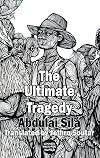
The Ultimate Tragedy
by Abdulai Sila
On This Page
Description
The Ultimate Tragedy is a tale of love and emerging political awareness in an Africa beginning to challenge Portuguese colonial rule.âe¨Ndani leaves her village to seek a better life in the capital, finding work as a maid for a Portuguese family. The mistress of the house, Dona Deolinda, embarks on a mission to save Ndani's soul through religious teaching, but the master of the house has less righteous intentions. Ndani is expelled from the house and drifts towards home, where she becomes show more the wife of a village chief. He has built a mansion and a school to flaunt his power to the local Portuguese administrator, but he abandons Ndani when he finds she's not a virgin. She eventually finds love with the school's teacher, but in tumultuous times, making a future with an educated black man involves a series of hurdles.âe¨By turns humorous, heartrending and wise, show lessTags
Recommendations












Member Reviews
The first novel from Guinea Bissau to be translated into English, it is set during the years leading up to the armed revolt against the Portuguese. This time of budding political consciousness and desire for action in the 1950s is the backdrop for a love triangle between a young woman, a local leader, and a semi-assimilated teacher. Each of the three narrates part of the story.
Ndani is thirteen when she follows the advice of her father's fourth wife and moves to the city to become a housemaid. She had been warned that Whites were not like Blacks and lived very differently, and the first couple of chapters are her attempts to understand them. The point of view then shifts to the Régulo, or minor king of a village, and his interactions show more with the White administrator of the region. He develops ideas about peaceful resistance against the Portuguese colonizers. The point of view then shifts again, this time to the Black teacher, educated by Portuguese priests to be a native mouthpiece for Christianity, and his relationships with the other two. The last chapter brings the reader back to Ndani.
Although the allusions are a bit heavy-handed at times, overall this was an interesting snapshot of a particular moment in Guinea Bissau's history. The evolution of perspective of the Portuguese colonizers is represented by the White woman for whom Ndani works. She goes from denigrating Blacks to wanting to convert them to starting schools to create native teachers who can evangelize on their behalf. Ndani is at first in awe of her White employers, but quickly learns that they can be cruel and capricious. The Régulo initially has a mutually beneficial relationship with the administration, but that rapidly deteriorates. The teacher was educated to believe in Catholicism, but realizes that his own people espouse similar ideas, without the hypocrisy displayed by the Portuguese colonizers. Everything is in flux as the country moves toward a fight for independence. show less
Ndani is thirteen when she follows the advice of her father's fourth wife and moves to the city to become a housemaid. She had been warned that Whites were not like Blacks and lived very differently, and the first couple of chapters are her attempts to understand them. The point of view then shifts to the Régulo, or minor king of a village, and his interactions show more with the White administrator of the region. He develops ideas about peaceful resistance against the Portuguese colonizers. The point of view then shifts again, this time to the Black teacher, educated by Portuguese priests to be a native mouthpiece for Christianity, and his relationships with the other two. The last chapter brings the reader back to Ndani.
Although the allusions are a bit heavy-handed at times, overall this was an interesting snapshot of a particular moment in Guinea Bissau's history. The evolution of perspective of the Portuguese colonizers is represented by the White woman for whom Ndani works. She goes from denigrating Blacks to wanting to convert them to starting schools to create native teachers who can evangelize on their behalf. Ndani is at first in awe of her White employers, but quickly learns that they can be cruel and capricious. The Régulo initially has a mutually beneficial relationship with the administration, but that rapidly deteriorates. The teacher was educated to believe in Catholicism, but realizes that his own people espouse similar ideas, without the hypocrisy displayed by the Portuguese colonizers. Everything is in flux as the country moves toward a fight for independence. show less
Ratings
Members
- Recently Added By
Lists

Best African and African diaspora books
111 works; 4 members

Guinea-Bissau
7 works; 1 member
Author Information

Some Editions
Series
Belongs to Publisher Series
Common Knowledge
- Canonical title
- The Ultimate Tragedy
- Original title
- A Última Tragédia
- Original publication date
- 1995
- People/Characters
- Ndani (Maria Daniela); The Teacher; Dona Maria Deolinda Gonçalves da Silva Leitão (Dona Deolinda); Bsum Nanki (The Régulo); Chief Cabrita (Administrator Cabrita); Mariazinha Leitão (show all 24); João Leitão; Zezinho Leitão; Maria Clara; Maria Eugénia; Maria Epifánia; Antoninho; Agostinho; Dona Lili; Dona Maria da Glória; Dona Maria Margarida; Mouzinho; Kamala Djonko; Chief Magalhães; Foreman Barbosa; Obem; Mbunh Lambá; Dona Cabrita; Antonio Alexandre da Costa Oliveira e Bravo
- Important places
- Guinea-Bissau; Bissau, Guinea-Bissau; Biombo, Guinea-Bissau; Quinhámel, Biombo, Guinea-Bissau; Catió, Tombali, Guinea-Bissau
- First words
- 'Mizzes, want houseboy?'
- Last words
- (Click to show. Warning: May contain spoilers.)She had to tell him she was dying of longing.
- Original language
- Portuguese; Guinea-Bissau Creole
- Canonical DDC/MDS
- 869.342
Classifications
Statistics
- Members
- 46
- Popularity
- 649,350
- Reviews
- 1
- Rating
- (3.50)
- Languages
- English, French, Portuguese
- Media
- Paper, Ebook
- ISBNs
- 4
- ASINs
- 1