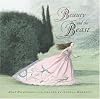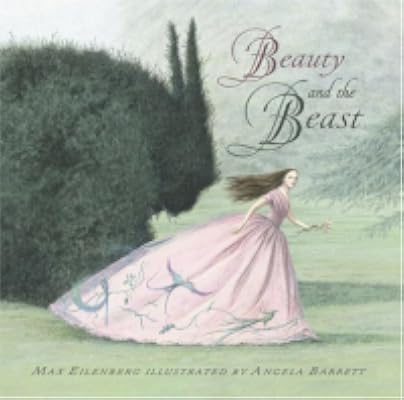
Beauty and the Beast
by Max Eilenberg
On This Page
Description
Through her great capacity to love, a kind and beautiful maid releases a handsome prince from the spell which has made him an ugly beast.Tags
Recommendations





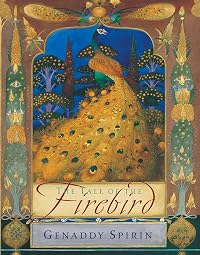
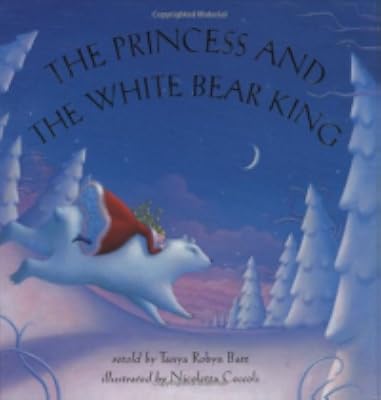
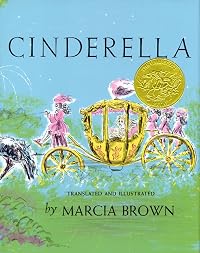
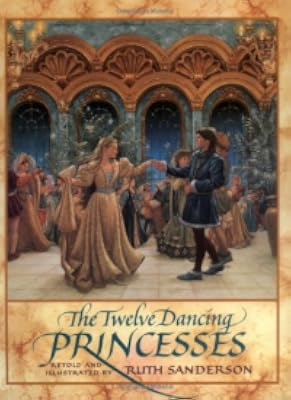



Member Recommendations

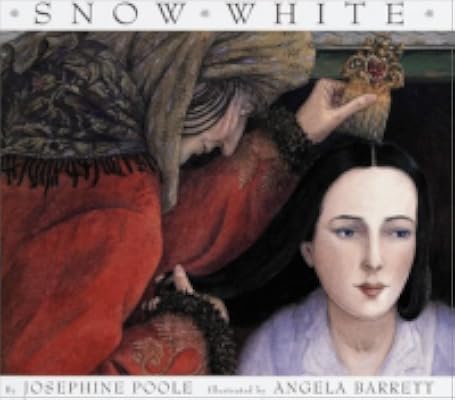
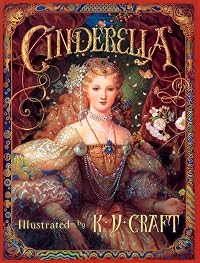
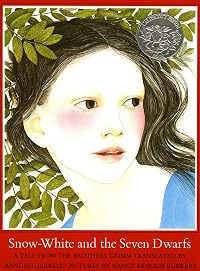
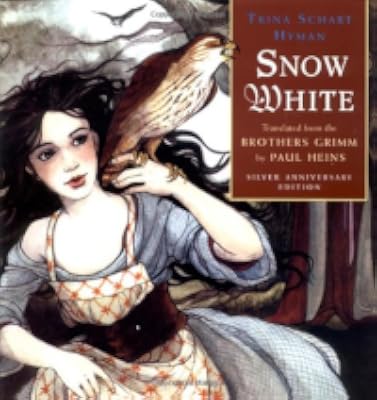
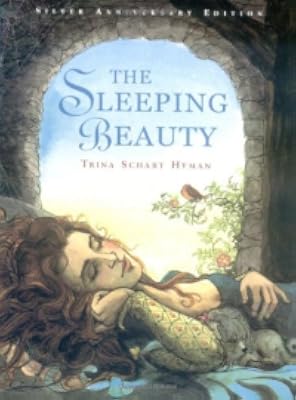
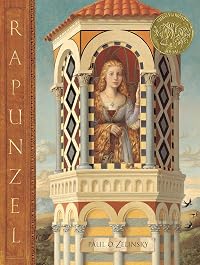
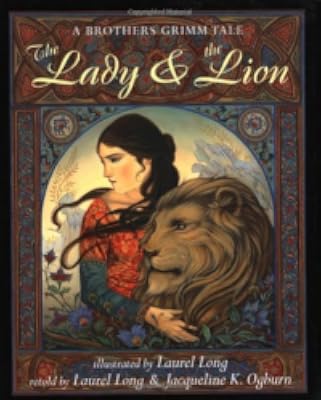
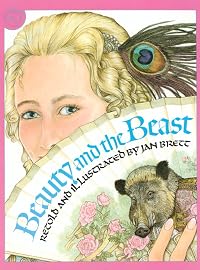
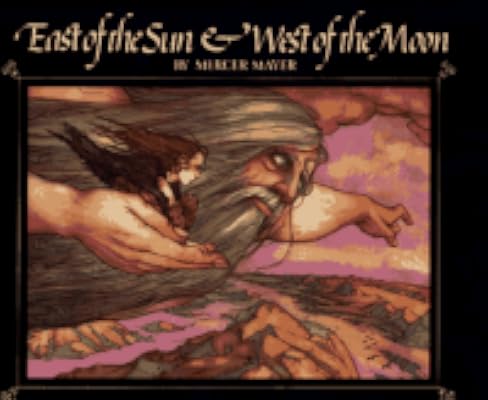
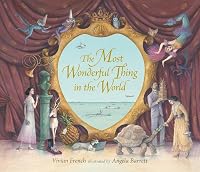
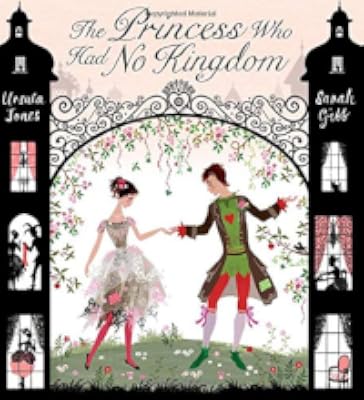
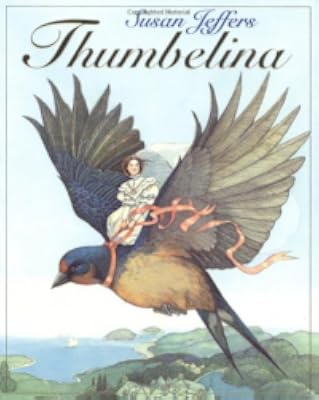
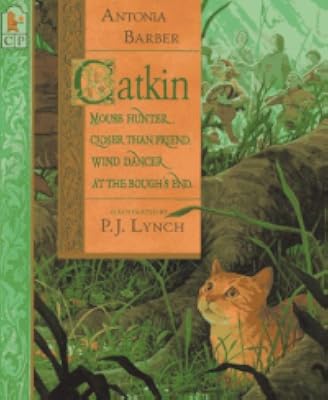
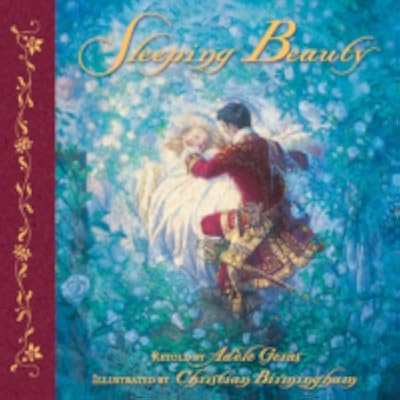
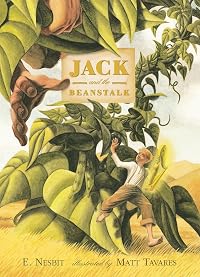
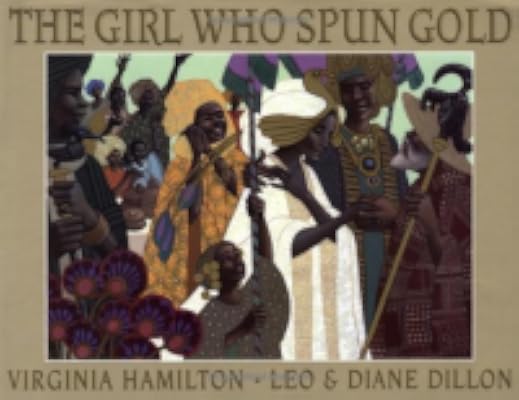
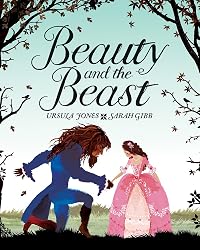
2below Both are excellent tellings of the fairy tale and feature beautiful art.
Member Reviews
This astonishingly beautiful book has managed to unseat Marianna and Mercer Mayer's lovely Beauty and the Beast as my very favorite retelling of this favorite story, and has, since I first picked it up a few years back, joined the company of those select fairy-tale adaptations - Vladyslav Yerko's The Snow Queen, Yvonne Gilbert's The Wild Swans, Sulamith Wülfing's The Little Mermaid - that I consider masterpieces of the genre. Everything about it, from Max Eilenberg's evocative expansion of the original tale, to Angela Barrett's intensely beautiful illustrations, draws the reader in: in to a world of mystery, enchantment and terror.
Fairy-tales may be beautiful, but they are rarely (unless violently assaulted by the likes of Disney) show more pretty, and while they frequently end with "happily ever after," it is the terror that precedes that ending which gives them their power, and allows them to speak to us still, so many years after being first put to paper. That darker side is very evident in Eilenberg's text, which places the tale in a nineteenth-century setting, explores the merchant's weaknesses (and I don't just mean the fateful plucking of the rose), and makes the Beast a truly horrifying creature. So many versions of this story envision the Beast as a man who happens to be in animal form. One always get the sense, from both narrative and artwork, that his "beastness" is something of a costume: something that he has put on, and will eventually (all going as expected) shed. Here, it seems much more a part of who he is, perhaps because the author isn't afraid, not just to make him fearsome, but to make him loathsome, with "claws dragging across the floor with a screech that set her (Beauty's) teeth on edge," and "a voice so hoarse it hurt her to listen."
Just as the terror is sharper in Eilenberg's narrative, so too are the emotions deeper, and more true. The language employed is richly descriptive and immensely satisfying, culminating in the haunting scene in which Beauty believes that she has lost her Beast: "Beauty was sobbing uncontrollably now. She had found love and lost it, and it was so much more than she had ever imagined, and the pain was unbearable. He was ugly, but he was beautiful - the most beautiful thing she had ever known - and now she couldn't tell him how much she loved his eyes and his mouth and his crooked nose, his shy kindness and the way he walked and his huge hands, because he had slipped away. 'I love you,' she cried, and her eyes were swimming with tears and the white snow was dazzling and he had gone. 'I love you,' she repeated, as if words would bring him back when the world was melting with grief and her heart bursting with pain, and it was too late and she felt herself slipping down and dissolving into sorrow." Of course, words do dissolve sorrow, and bring love back, and that is the second great strength of fairy-tales - that enchantment is made real, through language, and that the enchantment of language itself is made plain.
Eilenberg's narrative skillfully captures both the terror and wonder, inextricably bound together, of this tale, just as Angela Barrett brings them into the seen world, with her superlative artwork! I have long been an admirer of her fairy-tale illustrations - her Snow White is one of my favorite retellings of that story - and she does not disappoint here. There is always a sense of mystery and menace in her work - she does dark and eerie very well - even when the subject is ostensibly cheerful, and that quality makes her ideally suited to paint this particular tale. The multi-paneled page on which the Beast lurks, his tail stretched out behind him, over in the left-hand panel, as Beauty enjoys her days at his palace in some of the other panels, manages to convey a sense of lurking menace - a menace made all the more powerful for being embedded in a lovely montage of scenes in which Beauty appears to be enjoying herself. This sense of menace is more overtly depicted in the scene in which Beauty meets the Beast for the first time, gazing up at his impossibly imposing figure. Whether looking at a two-page spread - the gorgeous view of the castle, across the snow! Beauty, flung across an unconscious Beast! - a single-page painting, or her smaller inset and border illustrations, Barrett's artwork is simply mesmerizing! Truly, this Beauty and the Beast is both a visual and textual feast - I don't know how to recommend it highly enough! show less
Fairy-tales may be beautiful, but they are rarely (unless violently assaulted by the likes of Disney) show more pretty, and while they frequently end with "happily ever after," it is the terror that precedes that ending which gives them their power, and allows them to speak to us still, so many years after being first put to paper. That darker side is very evident in Eilenberg's text, which places the tale in a nineteenth-century setting, explores the merchant's weaknesses (and I don't just mean the fateful plucking of the rose), and makes the Beast a truly horrifying creature. So many versions of this story envision the Beast as a man who happens to be in animal form. One always get the sense, from both narrative and artwork, that his "beastness" is something of a costume: something that he has put on, and will eventually (all going as expected) shed. Here, it seems much more a part of who he is, perhaps because the author isn't afraid, not just to make him fearsome, but to make him loathsome, with "claws dragging across the floor with a screech that set her (Beauty's) teeth on edge," and "a voice so hoarse it hurt her to listen."
Just as the terror is sharper in Eilenberg's narrative, so too are the emotions deeper, and more true. The language employed is richly descriptive and immensely satisfying, culminating in the haunting scene in which Beauty believes that she has lost her Beast: "Beauty was sobbing uncontrollably now. She had found love and lost it, and it was so much more than she had ever imagined, and the pain was unbearable. He was ugly, but he was beautiful - the most beautiful thing she had ever known - and now she couldn't tell him how much she loved his eyes and his mouth and his crooked nose, his shy kindness and the way he walked and his huge hands, because he had slipped away. 'I love you,' she cried, and her eyes were swimming with tears and the white snow was dazzling and he had gone. 'I love you,' she repeated, as if words would bring him back when the world was melting with grief and her heart bursting with pain, and it was too late and she felt herself slipping down and dissolving into sorrow." Of course, words do dissolve sorrow, and bring love back, and that is the second great strength of fairy-tales - that enchantment is made real, through language, and that the enchantment of language itself is made plain.
Eilenberg's narrative skillfully captures both the terror and wonder, inextricably bound together, of this tale, just as Angela Barrett brings them into the seen world, with her superlative artwork! I have long been an admirer of her fairy-tale illustrations - her Snow White is one of my favorite retellings of that story - and she does not disappoint here. There is always a sense of mystery and menace in her work - she does dark and eerie very well - even when the subject is ostensibly cheerful, and that quality makes her ideally suited to paint this particular tale. The multi-paneled page on which the Beast lurks, his tail stretched out behind him, over in the left-hand panel, as Beauty enjoys her days at his palace in some of the other panels, manages to convey a sense of lurking menace - a menace made all the more powerful for being embedded in a lovely montage of scenes in which Beauty appears to be enjoying herself. This sense of menace is more overtly depicted in the scene in which Beauty meets the Beast for the first time, gazing up at his impossibly imposing figure. Whether looking at a two-page spread - the gorgeous view of the castle, across the snow! Beauty, flung across an unconscious Beast! - a single-page painting, or her smaller inset and border illustrations, Barrett's artwork is simply mesmerizing! Truly, this Beauty and the Beast is both a visual and textual feast - I don't know how to recommend it highly enough! show less
Stunningly beautiful illustrations coupled with a lovely rendering of this magical tale lured me into reading this book twice.
The illustrations are simply incredible, leaving me grasping to find a word to do them justice.
When a rich merchant looses his fortune, it is his daughter Beauty who stays by him while his other two selfish daughters whine and complain and are of no emotional support.
When the merchant seeks recovery of one of his lost ships carrying precious cargo, he learns it is of no avail in helping him out of debt. Weary and lost in a blizzard, he stumbles upon a magnificent castle where food, shelter and new clothing is found.
Grateful for his accommodations and the kindness provided, he does not know the benefactor until he show more plucks a beautiful red rose from a lush garden.
Immediately, an angry beasts demands payment via one of his daughters who must return to the castle and remain there. When the merchant returns home saddened and very upset, it is beauty who volunteers to return to the castle.
Wanting nothing in this beautiful castle, while at first horrified by the beast, she soon learns of his inner soul of kindness and grows to think of him as a friend. When he asks for marriage, she refuses. Asking only to return home for one week, she is transported back. Staying longer than the week, she has a vision that the beast is dying. Quickly returning, in grief, she vows to marry the beast, whereupon he turns into a prince and the live happily ever after.
This particular illustrated book will remain one of my favorites. The images call to be savored time and time again. show less
The illustrations are simply incredible, leaving me grasping to find a word to do them justice.
When a rich merchant looses his fortune, it is his daughter Beauty who stays by him while his other two selfish daughters whine and complain and are of no emotional support.
When the merchant seeks recovery of one of his lost ships carrying precious cargo, he learns it is of no avail in helping him out of debt. Weary and lost in a blizzard, he stumbles upon a magnificent castle where food, shelter and new clothing is found.
Grateful for his accommodations and the kindness provided, he does not know the benefactor until he show more plucks a beautiful red rose from a lush garden.
Immediately, an angry beasts demands payment via one of his daughters who must return to the castle and remain there. When the merchant returns home saddened and very upset, it is beauty who volunteers to return to the castle.
Wanting nothing in this beautiful castle, while at first horrified by the beast, she soon learns of his inner soul of kindness and grows to think of him as a friend. When he asks for marriage, she refuses. Asking only to return home for one week, she is transported back. Staying longer than the week, she has a vision that the beast is dying. Quickly returning, in grief, she vows to marry the beast, whereupon he turns into a prince and the live happily ever after.
This particular illustrated book will remain one of my favorites. The images call to be savored time and time again. show less
This version of the tale is a very well-done picture book. Illustrations at the borders are intricate, and engage the watcher and listener with visual detail concerning what he is hearing at the time, and more than what he is hearing. It's outstanding, the way the illustrations engage the mind, proposing questions about the plot events.
Some of the illustrations are full-on two-page spread with no text, and they are perfectly timed with the prose.
Some of the illustrations are full-on two-page spread with no text, and they are perfectly timed with the prose.
I bought this book for Angela Barrett's illustrations, which are absolutely are gorgeous.
The story follows the classic plotline of a wealthy merchant who loses his fortune and must take his daughters to live with him in the country. When one of his ships is recovered the businessman returns to the city to settle matters and on his way home is lost in a blizzard. The merchant finds himself stumbling down a road which leads to an enchanted castle, where he spends the night. Before leaving on his trip he had asked each daughter what gift she would like from the city, and his oldest two asked for clothes and jewelry. The youngest daughter, Beauty, asked for a rose. The merchant takes a rose for his daughter and is confronted by a terrible show more beast, who demands that he bring his daughter to live with the beast. The girl then lives with the Beast, and ends up breaking his curse when she declares that she loves him—which she doesn’t do until he is nearly dead from her absence when she visits her family.
The story gets rather tedious, being long and wordy and nothing new. But the pictures make it well worth it! show less
The story follows the classic plotline of a wealthy merchant who loses his fortune and must take his daughters to live with him in the country. When one of his ships is recovered the businessman returns to the city to settle matters and on his way home is lost in a blizzard. The merchant finds himself stumbling down a road which leads to an enchanted castle, where he spends the night. Before leaving on his trip he had asked each daughter what gift she would like from the city, and his oldest two asked for clothes and jewelry. The youngest daughter, Beauty, asked for a rose. The merchant takes a rose for his daughter and is confronted by a terrible show more beast, who demands that he bring his daughter to live with the beast. The girl then lives with the Beast, and ends up breaking his curse when she declares that she loves him—which she doesn’t do until he is nearly dead from her absence when she visits her family.
The story gets rather tedious, being long and wordy and nothing new. But the pictures make it well worth it! show less
Looks like a picture-book, but much too long for little ones. I, personally, don't care for the pictures, though some of the ideas for castle decor were intriguing. The story was pretty straightforward, including no mention of why the Beast was bespelled.
Beauty, two sisters and father are extremely wealthy until their fathers business burned down and he could no longer pay what he needed too. They sold everything they had a moved to a poor cold house outside of the city. Beauty’s father wanted to know what the one thing she wanted was. She told him she wanted a rose and so her father set out on a journey for the best rose money could buy. He got lost and he found the Beasts palace. When he came across a bush of beautiful roses he wanted to take one for beauty. The beast stopped him and ordered him to bring back one of his daughters however, the daughter had to come by her own free will. Her father chose her (beauty), she went to the palace and visited. Beast asked Beauty to stay with show more him there because he could not live without her. Beauty promised that she would return in a week. Once Beauty returned home she promised them she would stay a little longer. Beast began to die without her and when Beauty returned she found Beast dying. She told him she loved him and asked him to not leave her. Beast asked her to marry him, she said yes, they got married and he became a prince again. So it is a little different than that of what people may remember from reading or watching the Disney version, but still a good story over all. show less
I just love fairytale picture books and this one has such beautiful illustrations.
http://chetvergvecher.livejournal.com/224569.html
http://chetvergvecher.livejournal.com/224569.html
Members
- Recently Added By
Lists

Favorite Picture Books
479 works; 160 members

Favorite Fairy Tales
269 works; 103 members
Author Information
4 Works 393 Members
All Editions
Awards and Honors
Notable Lists
Common Knowledge
- Canonical title
- Beauty and the Beast
- Original publication date
- 2006-11-14
- People/Characters
- Beauty Fortune; The Beast; Ernest Fortune (father); Gertrude Fortune (sister); Hermione Fortune (sister)
- Dedication
- For Caz.
M. E.
For Nancy, Mitzy, Watson, and Babe.
A. B. - First words
- Once upon a time, there was an extremely wealthy merchant who lived in an extremely splendid house with his three extremely beloved daughters.
- Last words
- (Click to show. Warning: May contain spoilers.)Have I never told you the story of Beauty and the Beast?
Classifications
- Genres
- Children's Books, Picture Books
- DDC/MDS
- 398.20944 — Society, government, & culture Customs, etiquette & folklore Folklore & Folktales Folk literature History, geographic treatment, biography European folktales Folklore of France
- LCC
- PZ8 .E355 .B — Language and Literature Fiction and juvenile belles lettres Fiction and juvenile belles lettres Juvenile belles lettres
- BISAC
Statistics
- Members
- 236
- Popularity
- 137,414
- Reviews
- 10
- Rating
- (4.39)
- Languages
- English, French
- Media
- Paper
- ISBNs
- 6
- ASINs
- 1