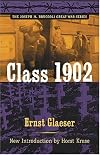
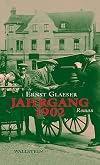
Class 1902
by Ernst Glaeser
On This Page
Description
This is an autobiographical novel of youth spent on the German home front during World War I. First published in Germany in 1928 as Jahrgang 1902, Glaeser's autobiographical novel centers on the experiences of the narrator, E., and his friends who come of age during the Great War but never know combat because the war ends before they can be drafted. Through their perspectives Glaeser provides glimpses into traumatic times on the German home front. Over the four years covered by the novel, E. show more witnesses the buildup and deployment of troops, the return of the wounded, deaths, hunger, and air raids. His own actions follow a quest for sexual experience and, moreover, the understanding of life he believes will come from such experience. As E. simultaneously spurns the onset of adulthood and yearns for the physical pleasures that might accompany such a transition, his life repeatedly intersects with the war, moving him in and out of dangers and eventually taking his girlfriend Anna from him before they can consummate their relationship. Through the vibrantly detailed episodes that make up the work, Glaeser gives a street-level vantage point on the sufferings of the German civilian population and shows the high cost of war even for those with no direct involvement in its outcome. Deemed ""a damned good book"" by Ernest Hemingway, Glaeser's work warrants reading today for its value as a historical document and as a novel of antiwar sentiments from a German perspective. In the new introduction to this edition, Kruse details the reception of the work against the historical backdrop of German novels of the era and the international rise of the antiwar genre in which the work participates. show lessTags
Recommendations





































Member Reviews
Belongs next to Remarque and Hemingway.
I had never heard of Ernst Glaeser before but I hope the reprinting of Class 1902 will make him known to a whole new audience. Anyone who has an interest in the First World War - or the literature of war in general - should read this book. While Remarque and Hemingway's classic novels concentrated on the horrors of the front and the necessity of sometimes making a separate peace, Glaeser's book is a little-known masterpiece about the home front in Germany, as seen through the eyes of a young boy as he watches the war, from the age of 12 to 16. Glaeser's hero, known simply as E., is often more interested in solving "the mystery" - adult sexuality - than he is in what's happening at the front. After show more witnessing a brutal sex act early in the story, E feels he doesn't want anything to do with sex, if that's the way it is. He equates it with a kind of murder. It isn't until a couple years later that he begins to understand that what he saw was not representative of the real "mystery." In the final pages of the book he finds himself on the precipice of solving the mystery. His innocence is indeed finally irrevocably lost, but not in the way you might expect. This book was first published eighty years ago in German. It made its English debut in 1929, the same year A Farewell to Arms was published. Hemingway called Glaeser's work "a damned good book." He was absolutely right. The translation, by Willa and Edwin Muir, was superb, and I doubt that much of anything was "lost in translation." E., Ferd and August emerge as very real and, even more importantly, sympathetic characters, boys in search of their place in an increasingly complex society as war looms on the horizon and finally descends with a vengeance that leaves them more concerned with finding enough to eat than with what's happening at either front, where their fathers are fighting and dying. Professor Horst Kruse's introduction is very helpful in putting Glaeser's book into a proper literary and cultural context. I cannot say enough about how absorbing and GOOD this book is. If you enjoyed Erich Maria Remarque's books about the Great War and the post-war era, then don't miss this one. - Tim Bazzett, author of Soldier Boy: At Play in the ASA show less
I had never heard of Ernst Glaeser before but I hope the reprinting of Class 1902 will make him known to a whole new audience. Anyone who has an interest in the First World War - or the literature of war in general - should read this book. While Remarque and Hemingway's classic novels concentrated on the horrors of the front and the necessity of sometimes making a separate peace, Glaeser's book is a little-known masterpiece about the home front in Germany, as seen through the eyes of a young boy as he watches the war, from the age of 12 to 16. Glaeser's hero, known simply as E., is often more interested in solving "the mystery" - adult sexuality - than he is in what's happening at the front. After show more witnessing a brutal sex act early in the story, E feels he doesn't want anything to do with sex, if that's the way it is. He equates it with a kind of murder. It isn't until a couple years later that he begins to understand that what he saw was not representative of the real "mystery." In the final pages of the book he finds himself on the precipice of solving the mystery. His innocence is indeed finally irrevocably lost, but not in the way you might expect. This book was first published eighty years ago in German. It made its English debut in 1929, the same year A Farewell to Arms was published. Hemingway called Glaeser's work "a damned good book." He was absolutely right. The translation, by Willa and Edwin Muir, was superb, and I doubt that much of anything was "lost in translation." E., Ferd and August emerge as very real and, even more importantly, sympathetic characters, boys in search of their place in an increasingly complex society as war looms on the horizon and finally descends with a vengeance that leaves them more concerned with finding enough to eat than with what's happening at either front, where their fathers are fighting and dying. Professor Horst Kruse's introduction is very helpful in putting Glaeser's book into a proper literary and cultural context. I cannot say enough about how absorbing and GOOD this book is. If you enjoyed Erich Maria Remarque's books about the Great War and the post-war era, then don't miss this one. - Tim Bazzett, author of Soldier Boy: At Play in the ASA show less
Ratings
Members
- Recently Added By
Author Information
17+ Works 86 Members
Some Editions
Common Knowledge
- Canonical title
- Class 1902
- Alternate titles
- Class of 1902
Classifications
- Genres
- Fiction and Literature, General Fiction, Historical Fiction
- DDC/MDS
- 833.912 — Literature & rhetoric German & related literatures German fiction 1900- 1900-1990 1900-1945
- LCC
- PT2613 .L3 — Language and Literature German, Dutch and Scandinavian literatures German literature Individual authors or works 1860/70-1960
- BISAC
Statistics
- Members
- 36
- Popularity
- 796,733
- Reviews
- 1
- Rating
- (4.00)
- Languages
- English, German, Swedish
- Media
- Paper, Ebook
- ISBNs
- 6
- ASINs
- 3