The Dead House
by Billy O'Callaghan
On This Page
Description
"This best-selling debut by an award-winning writer is both an eerie contemporary ghost story and a dread-inducing psychological thriller. Maggie is a successful young artist who has had bad luck with men. Her last put her in the hospital and, after she's healed physically, left her needing to get out of London to heal mentally and find a place of quiet that will restore her creative spirit. On the rugged west coast of Ireland, perched on a wild cliff side, she spies the shell of a cottage show more that dates back to Great Famine and decides to buy it. When work on the house is done, she invites her dealer to come for the weekend to celebrate along with a couple of women friends, one of whom will become his wife. On the boozy last night, the other friend pulls out an Ouija board. What sinister thing they summon, once invited, will never go. Ireland is a country haunted by its past. In Billy O'Callaghan's hands, its terrible beauty becomes a force of inescapable horror that reaches far back in time, before the Famine, before Christianity, to a pagan place where nature and superstition are bound in an endless knot"-- show lessTags
Recommendations


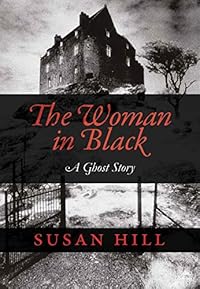
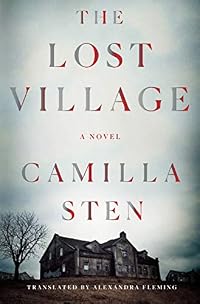
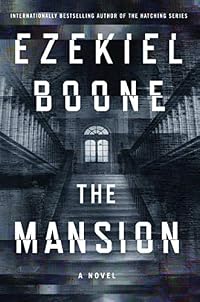
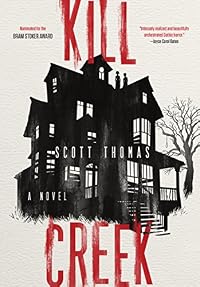

Member Reviews
Michael Simmons, the narrator of Billy O’Callaghan’s abysmally written ghost story, tells us early on that he used to work in the art world, promoting painters and sculptors. His narrative concerns a talented young artist, Maggie Turner, whom he “discovered” and then represented for many years. Although fragile and dreamy, Maggie could be counted on to produce six to eight fine paintings a year, and Michael could always find buyers. All that changed when Maggie got involved with a suave but abusive financier. A final beating by this man landed her in the hospital. After being released, she traveled to Ireland for a change of scene and to continue healing.
Most of O’Callaghan’s novel is focused around the ruined cottage that show more Maggie purchases in the southwest of Ireland. Boasting a spectacular view of the sea and the sky, the cottage dates back to famine times. There are standing stones nearby, and Maggie believes she can produce some extraordinary work here in this magical place where the past and the present co-exist. Once costly renovations have been completed, Maggie invites Michael and two female friends to stay for a weekend. Alison, the owner of a Dublin art galley, will eventually become Michael’s wife. Liz, a poet who lives in a nearby town, is committed to writing an epic work about ancient Ireland. She is interested in both history and the occult. It’s not surprising, then, that she brings along a homemade Ouija board so that the friends can make contact with any spirits who might be lingering about the place. And make contact they do.
At first, the spirit, who calls himself “The Master”, communicates in Irish, which Liz knows only a smattering of, but he obligingly switches to English. Ultimately, Maggie taps into his energy, becoming a sort of medium. In hushed, hypnotic tones, she channels details about the troubled history of the area and about the man who inhabited the cottage long before her. Some familiar details about the famine are presented, but there are some surprises, too. The Master, it turns out, wasn’t just a school teacher. As the famine worsened, he resurrected dark pagan practices in an effort to appease the gods of old.
As it happens, the séance allows The Master to re-enter the human realm. He takes up residence in the cottage that used to be his. Maggie, not surprisingly, deteriorates.
All this seems like a decent enough premise for a work of fiction. A capable writer might have shaped it into a good short story. O’Callaghan is not a capable writer. First of all, his novel is more padding than plot. Second, he has poor control of his material. Michael is one of the most dimwitted narrators I’ve ever encountered. When he hasn’t heard from Maggie in some time, he flies from London to Ireland, hires a car, and drives to the southwest, only to find that Maggie is not at home. Her cottage is squalid and riddled with vermin. The stench of death and decay is overpowering. There are dark and chaotic canvases lying about that don’t look a bit like Maggie’s work. Soon enough Michael discovers Maggie down by the shore—painting. She’s emaciated, hollow-eyed, disheveled, and rank smelling. She won’t let Michael stay overnight after his long drive because “the Master wouldn’t like it.”
What does Michael do when confronted with this person whom he has long looked upon as a little sister—a person who is now clearly deranged? He drives away quickly, reasoning that if he stayed he might unhinge his friend further. Are you kidding? It turns out Liz has also been to see Maggie several times and is aware of the artist’s physical and psychological deterioration. Liz, too, has done nothing. Again: what is it with these people?
Don’t get me started on O’Callaghan’s writing. The author provides no end of entirely inconsequential details. We get descriptions of the colour of the real estate agent’s hair and her early menopausal flushed face; an account of the number of strips of bacon, sausage links, and eggs on a breakfast plate; and information about the golden lower left cuspid, the heavily lidded eyes, and the restless mouth of a Caribbean taxi driver. I could go on. Don’t worry; I won’t, but I will ask: why include these particulars?
I’ll finish with a few of O’Callaghan’s more priceless passages, which would seem to indicate either complete tone-deafness to the nuance of words or a total inability to use a thesaurus correctly:
“The charred stench [from the ruins of the burned cottage] felt complete in its invasion, its stinging sharpness realigning the shape of her [my wife’s] face, and almost certainly my own, into a domineering rictus.”
“the wound lay open as a treacle blackness hiding pearly yellow secrets inside.” (No, these are not typos)
“My blood pressure was brimming against some dangerous numbers.” (Since when did blood pressure “brim”?)
“She sat perfectly still, her tossed, straw-coloured hair hanging in flumes down her back and around her narrow shoulders. Her voice had a forced calm that quivered along its lowest edges.” (flumes? the lowest edges of a voice?)
And, finally, regarding how police officers deal with missing-persons cases:
“Handling such relentlessly grim statistics demands coldness. The sheer scale and quantity of the reports will crush all but the most hardened of hearts, and embracing cases on a personal level would be tantamount to suicide.” (“embracing” cases?)
Warning: reading this book might be tantamount to the same thing! Do not “embrace” it!
Seldom do I encounterwriting of such poor quality. I don’t really care about the ghost story at this point; what I want to know is how this novel was even published. show less
Most of O’Callaghan’s novel is focused around the ruined cottage that show more Maggie purchases in the southwest of Ireland. Boasting a spectacular view of the sea and the sky, the cottage dates back to famine times. There are standing stones nearby, and Maggie believes she can produce some extraordinary work here in this magical place where the past and the present co-exist. Once costly renovations have been completed, Maggie invites Michael and two female friends to stay for a weekend. Alison, the owner of a Dublin art galley, will eventually become Michael’s wife. Liz, a poet who lives in a nearby town, is committed to writing an epic work about ancient Ireland. She is interested in both history and the occult. It’s not surprising, then, that she brings along a homemade Ouija board so that the friends can make contact with any spirits who might be lingering about the place. And make contact they do.
At first, the spirit, who calls himself “The Master”, communicates in Irish, which Liz knows only a smattering of, but he obligingly switches to English. Ultimately, Maggie taps into his energy, becoming a sort of medium. In hushed, hypnotic tones, she channels details about the troubled history of the area and about the man who inhabited the cottage long before her. Some familiar details about the famine are presented, but there are some surprises, too. The Master, it turns out, wasn’t just a school teacher. As the famine worsened, he resurrected dark pagan practices in an effort to appease the gods of old.
As it happens, the séance allows The Master to re-enter the human realm. He takes up residence in the cottage that used to be his. Maggie, not surprisingly, deteriorates.
All this seems like a decent enough premise for a work of fiction. A capable writer might have shaped it into a good short story. O’Callaghan is not a capable writer. First of all, his novel is more padding than plot. Second, he has poor control of his material. Michael is one of the most dimwitted narrators I’ve ever encountered. When he hasn’t heard from Maggie in some time, he flies from London to Ireland, hires a car, and drives to the southwest, only to find that Maggie is not at home. Her cottage is squalid and riddled with vermin. The stench of death and decay is overpowering. There are dark and chaotic canvases lying about that don’t look a bit like Maggie’s work. Soon enough Michael discovers Maggie down by the shore—painting. She’s emaciated, hollow-eyed, disheveled, and rank smelling. She won’t let Michael stay overnight after his long drive because “the Master wouldn’t like it.”
What does Michael do when confronted with this person whom he has long looked upon as a little sister—a person who is now clearly deranged? He drives away quickly, reasoning that if he stayed he might unhinge his friend further. Are you kidding? It turns out Liz has also been to see Maggie several times and is aware of the artist’s physical and psychological deterioration. Liz, too, has done nothing. Again: what is it with these people?
Don’t get me started on O’Callaghan’s writing. The author provides no end of entirely inconsequential details. We get descriptions of the colour of the real estate agent’s hair and her early menopausal flushed face; an account of the number of strips of bacon, sausage links, and eggs on a breakfast plate; and information about the golden lower left cuspid, the heavily lidded eyes, and the restless mouth of a Caribbean taxi driver. I could go on. Don’t worry; I won’t, but I will ask: why include these particulars?
I’ll finish with a few of O’Callaghan’s more priceless passages, which would seem to indicate either complete tone-deafness to the nuance of words or a total inability to use a thesaurus correctly:
“The charred stench [from the ruins of the burned cottage] felt complete in its invasion, its stinging sharpness realigning the shape of her [my wife’s] face, and almost certainly my own, into a domineering rictus.”
“the wound lay open as a treacle blackness hiding pearly yellow secrets inside.” (No, these are not typos)
“My blood pressure was brimming against some dangerous numbers.” (Since when did blood pressure “brim”?)
“She sat perfectly still, her tossed, straw-coloured hair hanging in flumes down her back and around her narrow shoulders. Her voice had a forced calm that quivered along its lowest edges.” (flumes? the lowest edges of a voice?)
And, finally, regarding how police officers deal with missing-persons cases:
“Handling such relentlessly grim statistics demands coldness. The sheer scale and quantity of the reports will crush all but the most hardened of hearts, and embracing cases on a personal level would be tantamount to suicide.” (“embracing” cases?)
Warning: reading this book might be tantamount to the same thing! Do not “embrace” it!
Seldom do I encounterwriting of such poor quality. I don’t really care about the ghost story at this point; what I want to know is how this novel was even published. show less
“The ground flowed in tumultuous order, a cascade of the wildest washed-out greens torn and split by jutting flashes of slate and limestone… And always, everywhere, sealing the picture, the ocean.”
Billy O’Callaghan sees with an artist's eye, analyses with a philosopher's mind, and writes with a poet's pen. So I said when I first encountered his work, last year. In this novel, the artist’s eye is even stronger, still mediated through the poet’s pen, but the analysis is rather more para-psychological than philosophical.
Mike is a successful art dealer, based in London. Maggie is an artist he discovers and who becomes a friend: “an innocent, if a scarred one. An avowed romantic, the kind who shatters when dropped.” Alison show more (another dealer) and Liz (a poet) are other friends of hers.
There is a remote coastal cottage, mired in Irish legend, and set in “elemental wildness” at the edge of the world, where the past is “thick as tar”.
“Holy men built monasteries in places like this, trying to capture part of the alchemy that coaxed time into standing still.”
There is running away, coming together, fear, fire, and the unknown and unknowable.
Colours at the Edge
“Everything about the world ahead of me was colour… The water was blue, but not blue, it was grey, or green or a kind of burnt silver that seemed far beyond the scope of something as simplified as paint.”
Featuring an artist and art dealers, this novel is infused with colour and ways of seeing, especially the unseen and the nearly seen, blurring at the edge of perception. Reality blurs, as do art, life, legend, and imagination.
“The light seemed to shift, and the open sky closed in with a kind of shadowy whiteness. A pale thin hide of cloud raised itself in every direction, coating the day.”
The imagery is as beautiful as I expect from O'Callaghan, particularly of water and light, so I submitted to the ebbs and flows of the familiar waters of his lyrical prose, despite the less familiar genre. I relished “The most submissive abandonment... the dissolving of one’s being in a lake whose surface is infinitely tactile” (from Calvino’s If On A Winter’s Night, which I reviewed here).
“Even the air has wildness. I feel as if I’m out here collecting colours.”
The lavish beauty of the landscape contrasts with unsettling supernatural elements, which never veer to the ludicrous, let alone comic (though there are familiar tropes).
Do You Believe in Ghosts?
No. Not even a bit, and I rarely read about them. If this hadn’t been written by my favourite new author of 2016, I doubt I’d have read it. (I don't believe in hobbits, dragons, or various humanoid aliens either. A book about such things has to conjure its world convincingly and enticingly - as this did.)
“We’d gone too far with the game [Ouija board], but already the edges were beginning to fray.”
At the outset, the narrator acknowledges that readers might be disbelieving. He merely asks for an open mind, but aware that “The stains of scepticism are just as hard to scrub away as those of faith”.
My stains remain, but I believe the personal truth of the story Mike tells, and I believe the wider, deeper truths it hints at: the fragility of reality, and of the human mind.
Rather than being haunted by sounds, smells, voices, or visions described, it left me haunted by questions about sanity, the meaning of art, and our obligations to those we care about.
Even if running away is possible, it may not be wise. We are all living near the edge, whether we realise it or not. Instead, imbibe the colours of life, and live with joy and hope before the laden mists of the past catch up, the moisture weighing us down and slowly leaching clarity from the view ahead. The colours fade first from the edges, until all is a damp grey blur. For me, being driven to madness by one's own mind is far scarier than being driven to it by supernatural forces.
"That is why I am afraid."
Quotes about Light, Water, Nature
Hidden for brevity; no plot spoilers.
• “Rain was this world’s natural and permanent condition, a soft, relentless fur that muted distances and clung to the mountainsides like the smoke of fairy fires.”
• “The noon light seeped momentarily chalky through the bluish knuckles of rain-cloud."
• “A strange spectral light, peculiarly heavy and in a constant state of flux.”
• “Dusk suited the ocean. The sun slipped away, having burnt the sky with the colours of heat and turning the water to blood and blackness.”
• “The first constellation fell into view, a silvery dusting, nameless to us, that kept its own order and had been climbing the night forever.”
• “Out in the distance, the water was deepening its colour, compressing more intently with every tidal pull… It was the very thing that artists saw.”
• “The silence had come down hard. The land… had become muted.”
• “A skinned form of seascape, contorted from the surface facts… the painting seemed to demand silence.”
• “The light gave up its shadowy glow and the edges of the world around us were gently lost, blurred by the smothering dusk.”
• “The downpour blurred the world outside, greying everything, giving the woods… a warped, skeletal pallor.”
Quotes about Art
Hidden for brevity; no plot spoilers.
• Maggie paints “vicious watercolours” with a “muddy confluence of colours, the wrong shades that somehow made up the sea, the ichorous waves.”
• “You painted the light… You realised what mattered most.”
• Art colleges “can knock the edge off mediocrity… but when the edge are what actually matter, such instruction can be fatal.”
• “Images that probably felt essential to the moment but which would mean less than little in the colder light of a month’s or a year’s perspective.” (Tourist snaps do not compare with art that’s felt and lived.)
• “I’ve started to see surfaces differently. Colours, too… Change the shades and everything changes.”
• “The paintings themselves no longer matter… What counts is the work…. That’s the only art involved. The rest is just commerce.”
Other Quotes
Hidden for brevity; no plot spoilers.
• “A voice trained to the gentle” (a policewoman).
• “Takeaways, food that could be ordered by number and eaten in a sprawl.”
• “There are two kinds of reality out here. There are the facts, and then there’s something else.”
• “In a city… reality is a thick sheet of glass, solid and impenetrable… Out here… just like the ocean, its surface can be easily broken.”
• “Pond-green eyes… a bottomless shade.”
• “We didn’t really need the alcohol but it helped soften the edge.”
• “The blanched colour choices emphasised by a burden of smudged light.”
• “Like photographic paper slowly giving up its captured truth to the plunge of a chemical bath, memories of the night before began to break the surface.”
• “The kiss and splatter of bacon in a pan.” (I’m hungry now.)
• “Mugs lined with the shadows of uncountable refills.”
• “A broad-cheeked type of about thirty, with her country edges showing.”
• “Maggie was impossible to ever really know. She existed on another plane; always half in a room and half somewhere else, always dreaming.”
• “You’re searching. And you should stop. Sometimes it’s better not to look. Better not to see.”
• “Details fade with the years… they lose the edge of their flavour.”
• “Her colours have dimmed… Perhaps if I was the praying kind she’d have remained closer to my surface.”
• “History haunted the present in places like this.”
• “The past will not remain in the past.”
More from Billy O'Callaghan
This is O'Callaghan's first novel. I’ve read and reviewed two of his three short story collections, which I highly recommend:
• The Things We Lose, the Things We Leave Behind, 5*, my review HERE.
• My Coney Island Baby, 5*, my review HERE. O’Callaghan’s second novel, based on a story in The Things We Lose.
• In Too Deep, 5*, my review HERE.
• You can read a decent-sized chunk of this story, free, courtesy of the Irish Examiner HERE.
He also won second prize in the prestigious Costa Short Story Competition 2016, announced on 31 January 2017.
Review in The New York Times. show less
Billy O’Callaghan sees with an artist's eye, analyses with a philosopher's mind, and writes with a poet's pen. So I said when I first encountered his work, last year. In this novel, the artist’s eye is even stronger, still mediated through the poet’s pen, but the analysis is rather more para-psychological than philosophical.
Mike is a successful art dealer, based in London. Maggie is an artist he discovers and who becomes a friend: “an innocent, if a scarred one. An avowed romantic, the kind who shatters when dropped.” Alison show more (another dealer) and Liz (a poet) are other friends of hers.
There is a remote coastal cottage, mired in Irish legend, and set in “elemental wildness” at the edge of the world, where the past is “thick as tar”.
“Holy men built monasteries in places like this, trying to capture part of the alchemy that coaxed time into standing still.”
There is running away, coming together, fear, fire, and the unknown and unknowable.
Colours at the Edge
“Everything about the world ahead of me was colour… The water was blue, but not blue, it was grey, or green or a kind of burnt silver that seemed far beyond the scope of something as simplified as paint.”
Featuring an artist and art dealers, this novel is infused with colour and ways of seeing, especially the unseen and the nearly seen, blurring at the edge of perception. Reality blurs, as do art, life, legend, and imagination.
“The light seemed to shift, and the open sky closed in with a kind of shadowy whiteness. A pale thin hide of cloud raised itself in every direction, coating the day.”
The imagery is as beautiful as I expect from O'Callaghan, particularly of water and light, so I submitted to the ebbs and flows of the familiar waters of his lyrical prose, despite the less familiar genre. I relished “The most submissive abandonment... the dissolving of one’s being in a lake whose surface is infinitely tactile” (from Calvino’s If On A Winter’s Night, which I reviewed here).
“Even the air has wildness. I feel as if I’m out here collecting colours.”
The lavish beauty of the landscape contrasts with unsettling supernatural elements, which never veer to the ludicrous, let alone comic (though there are familiar tropes).
Do You Believe in Ghosts?
No. Not even a bit, and I rarely read about them. If this hadn’t been written by my favourite new author of 2016, I doubt I’d have read it. (I don't believe in hobbits, dragons, or various humanoid aliens either. A book about such things has to conjure its world convincingly and enticingly - as this did.)
“We’d gone too far with the game [Ouija board], but already the edges were beginning to fray.”
At the outset, the narrator acknowledges that readers might be disbelieving. He merely asks for an open mind, but aware that “The stains of scepticism are just as hard to scrub away as those of faith”.
My stains remain, but I believe the personal truth of the story Mike tells, and I believe the wider, deeper truths it hints at: the fragility of reality, and of the human mind.
Rather than being haunted by sounds, smells, voices, or visions described, it left me haunted by questions about sanity, the meaning of art, and our obligations to those we care about.
Even if running away is possible, it may not be wise. We are all living near the edge, whether we realise it or not. Instead, imbibe the colours of life, and live with joy and hope before the laden mists of the past catch up, the moisture weighing us down and slowly leaching clarity from the view ahead. The colours fade first from the edges, until all is a damp grey blur. For me, being driven to madness by one's own mind is far scarier than being driven to it by supernatural forces.
"That is why I am afraid."
Quotes about Light, Water, Nature
Hidden for brevity; no plot spoilers.
• “Rain was this world’s natural and permanent condition, a soft, relentless fur that muted distances and clung to the mountainsides like the smoke of fairy fires.”
• “The noon light seeped momentarily chalky through the bluish knuckles of rain-cloud."
• “A strange spectral light, peculiarly heavy and in a constant state of flux.”
• “Dusk suited the ocean. The sun slipped away, having burnt the sky with the colours of heat and turning the water to blood and blackness.”
• “The first constellation fell into view, a silvery dusting, nameless to us, that kept its own order and had been climbing the night forever.”
• “Out in the distance, the water was deepening its colour, compressing more intently with every tidal pull… It was the very thing that artists saw.”
• “The silence had come down hard. The land… had become muted.”
• “A skinned form of seascape, contorted from the surface facts… the painting seemed to demand silence.”
• “The light gave up its shadowy glow and the edges of the world around us were gently lost, blurred by the smothering dusk.”
• “The downpour blurred the world outside, greying everything, giving the woods… a warped, skeletal pallor.”
Quotes about Art
Hidden for brevity; no plot spoilers.
• Maggie paints “vicious watercolours” with a “muddy confluence of colours, the wrong shades that somehow made up the sea, the ichorous waves.”
• “You painted the light… You realised what mattered most.”
• Art colleges “can knock the edge off mediocrity… but when the edge are what actually matter, such instruction can be fatal.”
• “Images that probably felt essential to the moment but which would mean less than little in the colder light of a month’s or a year’s perspective.” (Tourist snaps do not compare with art that’s felt and lived.)
• “I’ve started to see surfaces differently. Colours, too… Change the shades and everything changes.”
• “The paintings themselves no longer matter… What counts is the work…. That’s the only art involved. The rest is just commerce.”
Other Quotes
Hidden for brevity; no plot spoilers.
• “A voice trained to the gentle” (a policewoman).
• “Takeaways, food that could be ordered by number and eaten in a sprawl.”
• “There are two kinds of reality out here. There are the facts, and then there’s something else.”
• “In a city… reality is a thick sheet of glass, solid and impenetrable… Out here… just like the ocean, its surface can be easily broken.”
• “Pond-green eyes… a bottomless shade.”
• “We didn’t really need the alcohol but it helped soften the edge.”
• “The blanched colour choices emphasised by a burden of smudged light.”
• “Like photographic paper slowly giving up its captured truth to the plunge of a chemical bath, memories of the night before began to break the surface.”
• “The kiss and splatter of bacon in a pan.” (I’m hungry now.)
• “Mugs lined with the shadows of uncountable refills.”
• “A broad-cheeked type of about thirty, with her country edges showing.”
• “Maggie was impossible to ever really know. She existed on another plane; always half in a room and half somewhere else, always dreaming.”
• “You’re searching. And you should stop. Sometimes it’s better not to look. Better not to see.”
• “Details fade with the years… they lose the edge of their flavour.”
• “Her colours have dimmed… Perhaps if I was the praying kind she’d have remained closer to my surface.”
• “History haunted the present in places like this.”
• “The past will not remain in the past.”
More from Billy O'Callaghan
This is O'Callaghan's first novel. I’ve read and reviewed two of his three short story collections, which I highly recommend:
• The Things We Lose, the Things We Leave Behind, 5*, my review HERE.
• My Coney Island Baby, 5*, my review HERE. O’Callaghan’s second novel, based on a story in The Things We Lose.
• In Too Deep, 5*, my review HERE.
• You can read a decent-sized chunk of this story, free, courtesy of the Irish Examiner HERE.
He also won second prize in the prestigious Costa Short Story Competition 2016, announced on 31 January 2017.
Review in The New York Times. show less
Billy O'Callaghan’s debut novella is literary horror in the vein of Jackson’s The Haunting of Hill House set on the windswept shores of his native County Cork, where history is “a stew of fact and fable”. It is not the jump-in-your-seat horror that we have come to expect from movies but a slow-moving sense of dread that haunts your dreams and stays with you long after you have set it down. This kind of horror comes in large part from a deep drilldown into the hearts and minds of the story’s characters combined with a mysterious setting, something this prize-winning shanachie has nailed, deftly pulling the reader across oceans to a cottage on the shores of the Atlantic. “Here the world had simplified itself down to rocks, show more ocean, sky, wind and rain; these because everything else was fleeting, and you felt overwhelmed by such a sense of permanence all around, by the realisation that what you could see in any one moment and in any direction had always existed and always would. Holy men built monasteries in places like this, trying to capture part of the alchemy that coaxed time into standing still.”
O'Callaghan’s tale is woven throughout with strands of Irish gods, Irish legends, and Irish history, but in essence, it is a ghost story and he uses his mastery of the storyteller’s art from the start to pull us out of our comfort zones by posing a simple question at the outset.
”Do you believe in Ghosts?
“Because that’s really where it begins, with belief. We glimpse or experience something that defies explanation and we either accept the stretch in our reality or we choose to turn our heads away. It’s a question that torments even philosophers: Do you believe? There is little about life as we have come to know it that can’t be explained away on some basic scientific level. Yet when the wind howls, and we find ourselves alone with only the yellow pool of a guttering candle to hold back the darkness, our instinct, perhaps our innate need for something above and beyond, still screams otherwise.”
If this book has a flaw, it is one that is common for short story authors making the switch to novels. At times it seems as if there is not enough happening to justify the additional word count. It also seems to lack some of the resolution that readers of novels have come to expect. In the end, though, I see a lot of promise in this author’s work and look forward to reading more of his books.
*Quotations are cited from an advanced reading copy and may not be the same as appears in the final published edition. The review was based on an advanced reading copy obtained at no cost from the publisher in exchange for an unbiased review. While this does take any ‘not worth what I paid for it’ statements out of my review, it otherwise has no impact on the content of my review.
FYI: On a 5-point scale I assign stars based on my assessment of what the book needs in the way of improvements:
*5 Stars – Nothing at all. If it ain’t broke, don’t fix it.
*4 Stars – It could stand for a few tweaks here and there but it’s pretty good as it is.
*3 Stars – A solid C grade. Some serious rewriting would be needed in order for this book to be considered great or memorable.
*2 Stars – This book needs a lot of work. A good start would be to change the plot, the character development, the writing style and the ending.
*1 Star – The only thing that would improve this book is a good bonfire. show less
O'Callaghan’s tale is woven throughout with strands of Irish gods, Irish legends, and Irish history, but in essence, it is a ghost story and he uses his mastery of the storyteller’s art from the start to pull us out of our comfort zones by posing a simple question at the outset.
”Do you believe in Ghosts?
“Because that’s really where it begins, with belief. We glimpse or experience something that defies explanation and we either accept the stretch in our reality or we choose to turn our heads away. It’s a question that torments even philosophers: Do you believe? There is little about life as we have come to know it that can’t be explained away on some basic scientific level. Yet when the wind howls, and we find ourselves alone with only the yellow pool of a guttering candle to hold back the darkness, our instinct, perhaps our innate need for something above and beyond, still screams otherwise.”
If this book has a flaw, it is one that is common for short story authors making the switch to novels. At times it seems as if there is not enough happening to justify the additional word count. It also seems to lack some of the resolution that readers of novels have come to expect. In the end, though, I see a lot of promise in this author’s work and look forward to reading more of his books.
*Quotations are cited from an advanced reading copy and may not be the same as appears in the final published edition. The review was based on an advanced reading copy obtained at no cost from the publisher in exchange for an unbiased review. While this does take any ‘not worth what I paid for it’ statements out of my review, it otherwise has no impact on the content of my review.
FYI: On a 5-point scale I assign stars based on my assessment of what the book needs in the way of improvements:
*5 Stars – Nothing at all. If it ain’t broke, don’t fix it.
*4 Stars – It could stand for a few tweaks here and there but it’s pretty good as it is.
*3 Stars – A solid C grade. Some serious rewriting would be needed in order for this book to be considered great or memorable.
*2 Stars – This book needs a lot of work. A good start would be to change the plot, the character development, the writing style and the ending.
*1 Star – The only thing that would improve this book is a good bonfire. show less
In a first person voice unlike any other I’ve ever come across, O’Callaghan gifts us with a story that unfolds in just the way you’d want to hear it by the fireside: it is confessional, it is insightful, it is no-nonsense and direct, yet wields evocative words slipped in so seamlessly that the reader is pulled into the fantastic story in cresting waves that move the story forward while explaining the inner workings of the narrator’s vantage point. The reader understands the narrator, art dealer Michael Simmons, right out of the gate. He lays his cards on the table with no apology as he tells about his client, young, vulnerable, and frail painter, Maggie Turner, with whom he cultivates a mentor-like relationship verging on that show more of siblings, as he guides her career. That Michael is devoted to Maggie’s overall well-being helps us understand his acceptance of her capricious tendencies, and so it is that when Maggie decides to move from London to an isolated, desolate seaside location on Ireland’s rugged west coast, Michael has reservations, yet chalks them up to her artistic temperament needing artistic space.
The Dead House’s story is centered on one fateful night, during a weekend house party at Maggie’s renovated, pre-famine Irish cottage that involves a small group of friends, a bottle of whiskey, and a Ouija board. Everything careens in spine-tingling plausibility from there, in a dynamic that begins in seemingly harmless fun, yet quickly turns off-kilter with unintended consequences that sneak up over the readers shoulder with such disturbance that this book is best not read at night. And yet I’d be hard-pressed to label The Dead House a ghost story; though it is that, it is more. It is a treatise on friendship, a look at the ambiguity of new love, a tip-of-the-hat to Ireland’s storied past, and a lyrical love song to the unfathomable beauty of Ireland’s haunted, windswept terrain.
Let me now confess something I’ve never done before, after reading the last line of this book: I went back to the first page and began again. The reason I did this is because I was nowhere near ready or willing to let the narrator’s voice go; I was too invested, I was too concerned, and the fact that the story is so suspenseful that I read it with white-knuckled urgency made me fully aware, even as I read, that I simply had to go back and revisit its artful language. I’ll site an example of O’Callaghan’s genius with language here: “Another Sunday. Christ, the fools that time can make of us.” But I’m gushing. Because O’Callaghan deserves it. show less
The Dead House’s story is centered on one fateful night, during a weekend house party at Maggie’s renovated, pre-famine Irish cottage that involves a small group of friends, a bottle of whiskey, and a Ouija board. Everything careens in spine-tingling plausibility from there, in a dynamic that begins in seemingly harmless fun, yet quickly turns off-kilter with unintended consequences that sneak up over the readers shoulder with such disturbance that this book is best not read at night. And yet I’d be hard-pressed to label The Dead House a ghost story; though it is that, it is more. It is a treatise on friendship, a look at the ambiguity of new love, a tip-of-the-hat to Ireland’s storied past, and a lyrical love song to the unfathomable beauty of Ireland’s haunted, windswept terrain.
Let me now confess something I’ve never done before, after reading the last line of this book: I went back to the first page and began again. The reason I did this is because I was nowhere near ready or willing to let the narrator’s voice go; I was too invested, I was too concerned, and the fact that the story is so suspenseful that I read it with white-knuckled urgency made me fully aware, even as I read, that I simply had to go back and revisit its artful language. I’ll site an example of O’Callaghan’s genius with language here: “Another Sunday. Christ, the fools that time can make of us.” But I’m gushing. Because O’Callaghan deserves it. show less
I loved the pacing of this book - intentionally slow with a sense of underlying dread. It reminded me of some of my favorite Robert Aickman stories. The ending is truly unsettling.
Truly frightening spirits in a remote part of a country with an ancient history that is not a stranger to dealing with an often-frightening past.... welcome to Ireland. It’s a love story as well as a ghost story. Above all it’s an intriguing story that lingers in the mind of the reader long after the book is closed. The backstory tells of the years of famine in Ireland ….an era so horrendous that even the nonfiction accounts are scary. This is Billy O’Callagham’s first novel, but you can tell right away that he is an extremely talented storyteller that can give the reader vivid, chilling, descriptions of inescapable doom. Anyone that loves a good ghost story or as good horror filled story, will very likely like this one as show more much as I did. show less
Dead House by Billy O' Callaghan caught my eye while browsing a bookstore lately as the cover and artwork is stunning and I am a sucker for a good Irish ghost story.
image:
I did enjoy the novel and O'Callaghan certainly knows how to create a magical sense of time and place. His descriptive writing of Irish landscape and climate is beautiful and real and this was one of the strongest elements of this short novel.
I didn't however connect with any of the characters or was I able to conjure up an image of them as I read the story and this was disappointing. The story was chilling and I loved how little bits of Irish history shined through as the harshness of the famime is brutally described. I really liked the ending as the author left a show more lot to the readers imagination which is what a good ghost story is all about.
A short novel with lyrical and descriptive prose and I look forward to future works by this author. show less
image:
I did enjoy the novel and O'Callaghan certainly knows how to create a magical sense of time and place. His descriptive writing of Irish landscape and climate is beautiful and real and this was one of the strongest elements of this short novel.
I didn't however connect with any of the characters or was I able to conjure up an image of them as I read the story and this was disappointing. The story was chilling and I loved how little bits of Irish history shined through as the harshness of the famime is brutally described. I really liked the ending as the author left a show more lot to the readers imagination which is what a good ghost story is all about.
A short novel with lyrical and descriptive prose and I look forward to future works by this author. show less
Members
- Recently Added By
Lists

Books Read in 2019
4,052 works; 108 members
Author Information

17 Works 338 Members
Awards and Honors
Awards
Common Knowledge
- Canonical title
- The Dead House
- Original publication date
- 2017
- Canonical DDC/MDS
- 823.92
- Canonical LCC
- PR6115.C347
Classifications
Statistics
- Members
- 151
- Popularity
- 216,178
- Reviews
- 16
- Rating
- (3.65)
- Languages
- English
- Media
- Paper, Audiobook, Ebook
- ISBNs
- 8
- ASINs
- 2