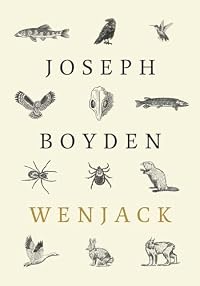
Wenjack
by Joseph Boyden
On This Page
Description
"An Ojibwe boy runs away from a North Ontario Indian School. He realizes too late just how far away home is. Along the way hes̉ followed by Manitous, spirits of the forest who comment on his plight, cajoling, taunting, and ultimately offering him a type of comfort on his difficult journey back to the place he was so brutally removed from."--Tags
Recommendations












Member Reviews
4.5/5. WENJACK is a heartbreaking story of an Ojibwe boy who escapes the residential school he has been forced to attend due to the government's push to culturally assimilate the indigenous people into the white man's world at the expense of losing his own heritage. I read this novella in less than an hour, but I will remember the experience for a long time. Controversy has surrounded Boyden because he is not part of the Ojibwe community. Some have criticized him for writing from that point of view. Cultural appropriation is a thorny discussion point, and I know too little to speak about it here. The book was extremely sympathetic to the Ojibwe people and their plight, so one might argue that Boyden shouldn't have been criticized. What, show more however, if he hadn't been empathetic? The bigger problem lies in the fact that Boyden claimed to have indigenous DNA, but solid proof is nowhere to be found. It's the opposite effect of what June did in YELLOWFACE. There, she blurred her background (with the help from her editors) to possibly seem to be Asian. Here, Boyden claimed outwardly that he had indigenous blood when the research so far shows he doesn't. All of this controversy takes away from Chanie Wenjack's story, which I feel should still be told. show less
Joseph Boyden's [b:Wenjack|30079906|Wenjack|Joseph Boyden|https://images.gr-assets.com/books/1469406055s/30079906.jpg|50500001] is probably the most important Canadian story published this year. Or possibly any year.
Telling the story of Chanie 'Charlie' Wenjack, a young boy who ran away from a Northern Ontario residential school in the 1960s, Boyden is sensitive and delicate. Even for a novella, Wenjack is short, but Boyden doesn't need more pages, he more than fills the ones he has. It's a hauntingly beautiful elegy.
Alternating between Chanie's perspective and the perspectives of the manitous that watch over him on this desperate journey back home, Wenjack firmly places Chanie, and the brothers he is with, as part of nature. The show more residential school they are forced to attend, where they are punished for speaking their own language, beaten for any minor transgressions, is anathema to them, a spiritual excommunication from their people, the chasm growing as English "civilization" is forced upon them.
Residential schools are among Canada's greatest transgressions against humanity, perpetuated against indigenous children. It's important to remember that 30% of indigenous children were forcibly ripped away from their family, exposed to physical and sexual abuse, deprived of their language and culture. Nearly every school was built with a cemetery adjacent, because so many children died. The last federally funded school closed in 1996.
Wenjack is beautifully written and the words stir the heart deeply. Boyden's use of language is evocative and easy to read, the subject matter weighing heavily on the reader in a way the prose doesn't. The line between fiction and non-fiction is blurred here, allowing us a glimpse into a world many have not thought of. This book should be mandatory for all students in Canada to read so they can give a face to the unheard victims of our own country. show less
Telling the story of Chanie 'Charlie' Wenjack, a young boy who ran away from a Northern Ontario residential school in the 1960s, Boyden is sensitive and delicate. Even for a novella, Wenjack is short, but Boyden doesn't need more pages, he more than fills the ones he has. It's a hauntingly beautiful elegy.
Alternating between Chanie's perspective and the perspectives of the manitous that watch over him on this desperate journey back home, Wenjack firmly places Chanie, and the brothers he is with, as part of nature. The show more residential school they are forced to attend, where they are punished for speaking their own language, beaten for any minor transgressions, is anathema to them, a spiritual excommunication from their people, the chasm growing as English "civilization" is forced upon them.
Residential schools are among Canada's greatest transgressions against humanity, perpetuated against indigenous children. It's important to remember that 30% of indigenous children were forcibly ripped away from their family, exposed to physical and sexual abuse, deprived of their language and culture. Nearly every school was built with a cemetery adjacent, because so many children died. The last federally funded school closed in 1996.
Wenjack is beautifully written and the words stir the heart deeply. Boyden's use of language is evocative and easy to read, the subject matter weighing heavily on the reader in a way the prose doesn't. The line between fiction and non-fiction is blurred here, allowing us a glimpse into a world many have not thought of. This book should be mandatory for all students in Canada to read so they can give a face to the unheard victims of our own country. show less
This little tiny book will break your heart, but it is a book that every Canadian should read. Joseph Boyden has made a story from a real boy called Charlie (Chaney) Wenjack. Charlie was taken from his home in Ogoki Post, northern Ontario in 1966 at the age of nine. He was taken to a residential school in Kenora which was over 600 miles away from his home and family. His family got Chaney home two years later in a casket. The story of little Chanie's effort to get away from the residential school where he was tortureed and abused broke my heart. The tragedy of residential schools in our country should never be forgotten. Thank you Joseph Boyden for putting young Chaney's face to this dark and shameful part of our Canadian history.
This book is ostensibly about the bad treatment of Indigenous children by the Canadian government. The protagonist, Chanie ("Charlie") Wenjack, is running away from residential school, and at risk of spoilers, I'll say that the book doesn't have a happy ending. The horrors of the residential schools are well-documented and worth reading about, whether in the report of the Truth and Reconciliation Commission or in survivor memoirs like The Education of Augie Merasty. This is an important topic for Canadians to read about, and Boyden's short novella offers a well-written fictionalized account that includes the interesting perspectives of the manitous, spirits whose viewpoints alternate in chapters with Chanie's own.
And yet. I couldn't show more help being turned off by Boyden's portrayal of the other Indigenous people in this story, and that's a pretty serious problem. The villain in this story should be the Canadian government, and the white settlers represented by that government. There is one brief and horrifying scene of sexual abuse by one of the adults in charge of the residential school, but the book somehow manages to present the only Indigenous man as almost equally culpable in Chanie's death: when Chanie and his two friends escape from the residential school and make it to the home of the friends' uncle, said uncle soon turns Chanie away. It's only after reaching the presumed safety of an Indigenous home that Chanie perishes, because they just don't have room for him.
Now, this book is based on a true story. Boyden doesn't mention in his afterword which aspects are real and which are fictionalized, so as soon as I finished reading I looked up the 1967 Maclean's article that first brought Chanie's death to public attention. I wanted to know the details of Chanie's encounter with his friends' uncle differed in the two accounts.
In Boyden's (fictionalized) account, the three boys arrive at the house, where they receive food (while the uncle himself goes hungry) and promptly go to sleep. In the morning, the uncle takes his nephews to his trapline, and says that there isn't enough room for Chanie in the canoe. During the night, he's told his wife to get rid of Chanie: "Your job is to send the stranger away. Someone broke something in him. We don't have tools to fix it." But Chanie independently decides to go on foot to the cabin by the trapline, and reaches it before they do. When the others arrive, the uncle doesn't even let him inside; he immediately tells him to go on his way to the school. "If you travel quick, you will beat most of the weather."
In the Maclean's (non-fiction) account, the boys stayed for several days at the uncle's house before he took his nephews up to the trapline (the comment about lack of space in the canoe is based on the factual account). When Chanie arrived on foot at the trapping cabin, he ate inside with the others; even though there was barely any food, it was shared with him. Everyone left in the morning. Chanie was told that he would have to walk back because there was no room in the canoe, but he said that was going to go home to his father.
For me, one of the key passages in the Maclean's article is this one: "No one told Charlie to go. Nobody told him to stay either. But as the days passed Charlie got the message." This is a pretty sharp contrast to Boyden's account, where Chanie was forced to leave the day after he arrived.
And while I was reading this, I was thinking of Alexandra Shimo's Invisible North, a contemporary account of life on a Northern Ontario reserve. Indigenous people there are still living in horrible conditions, imposed upon them by the Canadian government: insufficient food, lack of sanitation, etc. And yet Shimo observed in her time there that even when they were living 18 to a house, with children sleeping in shifts on the floor because space was so tight, nobody went homeless. People took care of each other as much as their limited resources allowed. Again, it's a pretty sharp contrast to Boyden's fictionalized account.
And of course, I'm reading all this in the context of the recent controversy surrounding Boyden's Indigenous ancestry. He describes himself as "a white kid from Willowdale with native roots", and he achieved fame as an Indigenous author writing about Indigenous topics. The fact that he grew up in white suburban privilege might have been enough of a problem in terms of receiving awards intended for Indigenous authors, but it was compounded by the fact that investigations into his genealogy failed to uncover any Indigenous ancestors. He once said he was Métis, a claim that he later retracted, and that was apparently born out of the misconception that "Métis" meant "anyone with mixed European/Indigenous heritage". I'm not particularly bothered by the details of this discussion—I imagine he has some distant Indigenous ancestors somewhere—but it has made me more aware and skeptical of his role as the voice of Indigenous culture. The key point for me is that regardless of who his great-grandparents were, the majority of his ancestors were European and he had a typical Toronto upbringing.
So there's the nagging question of, Is this the person who should be telling me about Indigenous life? And when he takes a non-fiction story and fictionalizes it in a way that makes some of the Indigenous characters look worse than the facts would suggest, that grows from a niggling concern to a potentially serious problem that prevented me from fully appreciating the book. It's a short, well-written story about an important topic, but I personally wasn't able to overcome my concerns about its authenticity. show less
And yet. I couldn't show more help being turned off by Boyden's portrayal of the other Indigenous people in this story, and that's a pretty serious problem. The villain in this story should be the Canadian government, and the white settlers represented by that government. There is one brief and horrifying scene of sexual abuse by one of the adults in charge of the residential school, but the book somehow manages to present the only Indigenous man as almost equally culpable in Chanie's death: when Chanie and his two friends escape from the residential school and make it to the home of the friends' uncle, said uncle soon turns Chanie away. It's only after reaching the presumed safety of an Indigenous home that Chanie perishes, because they just don't have room for him.
Now, this book is based on a true story. Boyden doesn't mention in his afterword which aspects are real and which are fictionalized, so as soon as I finished reading I looked up the 1967 Maclean's article that first brought Chanie's death to public attention. I wanted to know the details of Chanie's encounter with his friends' uncle differed in the two accounts.
In Boyden's (fictionalized) account, the three boys arrive at the house, where they receive food (while the uncle himself goes hungry) and promptly go to sleep. In the morning, the uncle takes his nephews to his trapline, and says that there isn't enough room for Chanie in the canoe. During the night, he's told his wife to get rid of Chanie: "Your job is to send the stranger away. Someone broke something in him. We don't have tools to fix it." But Chanie independently decides to go on foot to the cabin by the trapline, and reaches it before they do. When the others arrive, the uncle doesn't even let him inside; he immediately tells him to go on his way to the school. "If you travel quick, you will beat most of the weather."
In the Maclean's (non-fiction) account, the boys stayed for several days at the uncle's house before he took his nephews up to the trapline (the comment about lack of space in the canoe is based on the factual account). When Chanie arrived on foot at the trapping cabin, he ate inside with the others; even though there was barely any food, it was shared with him. Everyone left in the morning. Chanie was told that he would have to walk back because there was no room in the canoe, but he said that was going to go home to his father.
For me, one of the key passages in the Maclean's article is this one: "No one told Charlie to go. Nobody told him to stay either. But as the days passed Charlie got the message." This is a pretty sharp contrast to Boyden's account, where Chanie was forced to leave the day after he arrived.
And while I was reading this, I was thinking of Alexandra Shimo's Invisible North, a contemporary account of life on a Northern Ontario reserve. Indigenous people there are still living in horrible conditions, imposed upon them by the Canadian government: insufficient food, lack of sanitation, etc. And yet Shimo observed in her time there that even when they were living 18 to a house, with children sleeping in shifts on the floor because space was so tight, nobody went homeless. People took care of each other as much as their limited resources allowed. Again, it's a pretty sharp contrast to Boyden's fictionalized account.
And of course, I'm reading all this in the context of the recent controversy surrounding Boyden's Indigenous ancestry. He describes himself as "a white kid from Willowdale with native roots", and he achieved fame as an Indigenous author writing about Indigenous topics. The fact that he grew up in white suburban privilege might have been enough of a problem in terms of receiving awards intended for Indigenous authors, but it was compounded by the fact that investigations into his genealogy failed to uncover any Indigenous ancestors. He once said he was Métis, a claim that he later retracted, and that was apparently born out of the misconception that "Métis" meant "anyone with mixed European/Indigenous heritage". I'm not particularly bothered by the details of this discussion—I imagine he has some distant Indigenous ancestors somewhere—but it has made me more aware and skeptical of his role as the voice of Indigenous culture. The key point for me is that regardless of who his great-grandparents were, the majority of his ancestors were European and he had a typical Toronto upbringing.
So there's the nagging question of, Is this the person who should be telling me about Indigenous life? And when he takes a non-fiction story and fictionalizes it in a way that makes some of the Indigenous characters look worse than the facts would suggest, that grows from a niggling concern to a potentially serious problem that prevented me from fully appreciating the book. It's a short, well-written story about an important topic, but I personally wasn't able to overcome my concerns about its authenticity. show less
I was a young college student when I first heard the story of Charlie/Chanie Wenjack in a song written and sung by Willie Dunn. The haunting lyrics sung in a deep voice that reminded me of my friend, Floyd Red Crow Westerman, stayed with me, and to this day, 30 some years later, I can still hear the song in my head. Fast forward to 2020, the lyrics played through my mind as I read Wenjack by Joseph Boyden, a heartbreaking novella about little Charlie/Chanie and his attempt to run away from the cruelties of enforced boarding school to find his way home. He was one among many children who attempted to run away, and he made it farther than most, but not far enough. He died, cold and alone, along the railroad tracks that he hoped would lead show more him home, some 600 km away. He did not die in vain, as his death in 1966 sparked the initial investigation that would eventually lead to the closure of Indian boarding schools in Canada 30 years later in 1996. Charlie’s/Chanie’s story is just one among many, heartbreaking not only because of the singularity of his suffering and death, but also because he was just one little boy among the thousands of indigenous children who suffered the same fate. Written from the point of view of the Manitous, the spirits, as they inhabit each of the animals that observe little Charlie/Chanie on his journey, this short but beautifully written novella broke my heart. 5 stars show less
So short, but with such an emotional punch. I put this down at the end and cried. What monsters were we in Canada to create such schools and inflict such harm on people and their culture? Chanie's story needs to be read by everyone.
This is a courageous, beautifully-written tragedy written by one of the most important literary voices of the 21st century.
Alternating between the voices of the real-life character of Chanie Wenjack, the young boy who escaped from the horrors of a residential school, and the manitous of his natural world, Boyden creates an epic paean for not only Chanie, but all those who suffered, and still do, from this most shameful of Canadian practices.
Again Boyden has penned the quintessential Canadian story, stories, we're coming to understand, which are not always in celebration of what we've built, but of what we have endured and must yet create.
Alternating between the voices of the real-life character of Chanie Wenjack, the young boy who escaped from the horrors of a residential school, and the manitous of his natural world, Boyden creates an epic paean for not only Chanie, but all those who suffered, and still do, from this most shameful of Canadian practices.
Again Boyden has penned the quintessential Canadian story, stories, we're coming to understand, which are not always in celebration of what we've built, but of what we have endured and must yet create.
Members
- Recently Added By
Published Reviews
ThingScore 100
A spellbinding account of Chanie Wenjack, the Anishinaabe boy who died escaping a residential school...novelist Joseph Boyden has written Wenjack, a novella that deftly suffuses Chanie’s tragedy with traditional Aboriginal beliefs.
added by vancouverdeb
Lists

Native American / Indigenous Literature
172 works; 100 members
Author Information

10+ Works 4,904 Members
Joseph Boyden is a novelist and short story writer. His first novel, Three Day Road won the Amazon/Books in Canada First Novel Award and the Rogers Writers' Trust Fiction Prize. His second novel, Through Black Spruce, won the 2008 Scotiabank Giller Prize. Of Irish, Scottish and Anishinaabe heritage, Boyden writes about First Nations heritage and show more culture. He studied creative writing at York University and the University of New Orleans, and taught in the Aboriginal Student Program at Northern College. He is currently a Lecturer with the UBC Creative Writing Program. (Bowker Author Biography) show less
Common Knowledge
- Original publication date
- 2016
- People/Characters
- Charlie Wenjack
- Important places
- Northern Ontario, Canada
- First words
- Gimik-wenda-ina? Do you remember? I remember, me.
- Last words
- (Click to show. Warning: May contain spoilers.)We watch the boy warm in our presence, watch him dance and eat and share his shy smile, his dark eyes turned darker and sparkling.
Classifications
Statistics
- Members
- 280
- Popularity
- 114,752
- Reviews
- 18
- Rating
- (4.27)
- Languages
- English
- Media
- Paper, Audiobook, Ebook
- ISBNs
- 4
- ASINs
- 1